(DUBAI) — Air France suspended flights to Dubai until March 5, 2026, while Lufthansa Group halted services to and from Dubai until March 4, 2026, as European carriers extended Middle East disruptions after US-Israeli strikes on Iran on February 28, 2026.
Lufthansa Group also suspended flights to Tel Aviv, Beirut, Amman, Erbil, Dammam, and Tehran until March 8, 2026, widening the impact beyond the Gulf and into routes airlines view as higher risk.
Both groups framed the moves as risk-management decisions that can force passengers onto different routings, scramble connections and reduce seat availability on remaining services, as airlines try to keep schedules stable while protecting crews and aircraft.
The extensions follow the US-Israeli strikes on Iran on February 28, 2026, a development that airlines linked to a heightened regional risk environment affecting network planning across the Middle East.
European carriers have repeatedly adjusted operations in response to airspace warnings and shifting assessments, and the latest changes show airlines treating the region unevenly depending on the destination and the corridors needed to reach it.
Air France tied its decision-making to coordination with the French Civil Aviation Authority, known as the DGAC, and the European Union Aviation Safety Agency, known as EASA, which issued Security Information Bulletins advising airlines to avoid the Tehran and Baghdad Flight Information Regions.
Those bulletins also advised airlines to exercise extreme caution in the Damascus, Beirut, and Tel Aviv Flight Information Regions, a factor that can complicate flight planning even for services that do not intend to operate into the highest-risk areas.
Air France suspended all passenger services to Tel Aviv, Beirut, Dubai, and Riyadh until March 5, 2026, a list that spans both long-haul markets and regional connections that feed its wider network.
Customer options under Air France’s flexible rebooking and refund policies run through March 15, 2026, a window that can matter for passengers holding tickets marketed by Air France even when an itinerary includes partner airlines.
Codeshares and connecting itineraries can add complexity because a cancellation or suspension on one leg can cascade into missed onward flights, forcing rebooking onto alternate routings that may involve longer journey times and fewer seats.
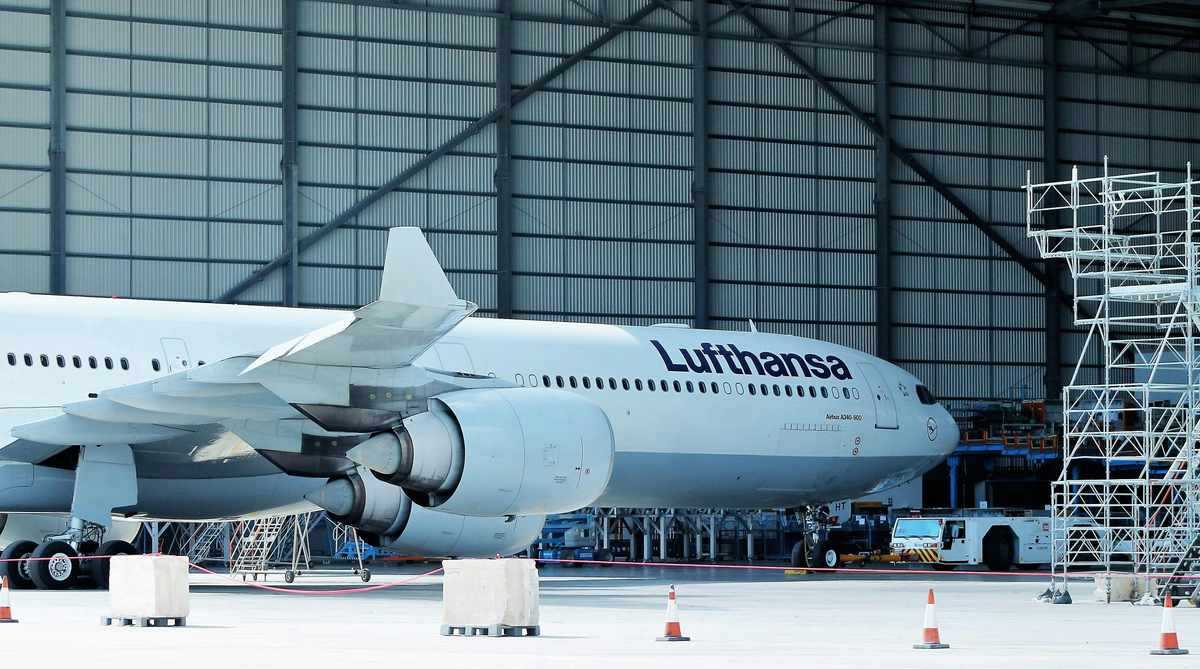
Lufthansa Group’s footprint spans multiple hubs and carriers, with airlines including Lufthansa, SWISS International Air Lines, Austrian Airlines, Brussels Airlines, ITA Airways, and Eurowings covered by the suspensions.
That group-wide approach can widen the disruption because travelers may hold tickets issued by one carrier while flying another, and itinerary changes can ripple through connecting flows as airlines try to rebook passengers across the group.
Suspension timing for Dubai differs by only days, while pauses for some other destinations extend longer than the Dubai halt in the current set of announcements, reflecting how airlines separate Gulf operations from routes linked more directly to the areas highlighted in the Security Information Bulletins.
The comparative timeline in the airline updates also pointed to a two-day difference in Dubai suspension deadlines and linked it to Lufthansa’s more conservative approach to Gulf operations while maintaining longer suspensions for higher-risk destinations like Tel Aviv and Tehran.
Further changes can come at short notice as security advisories evolve, with airline security teams weighing guidance from regulators such as the DGAC and EASA alongside their own route risk assessments, while rebooking and refund eligibility can still depend on ticket type, the operating carrier, and whether a flight was canceled or voluntarily changed.