- Regional airspace closures triggered dozens of flight cancellations and massive delays across major Egyptian airports.
- EgyptAir suspended flights to 13 destinations including Dubai, Beirut, and Doha due to escalating regional conflict.
- Cairo and Red Sea hubs absorbed 22 diverted flights, stretching airport resources and passenger handling capabilities.
(CAIRO, EGYPT) — Cairo International Airport recorded 72 flight cancellations and 60 delays, snarling terminals with missed connections, long queues and hurried rebookings as regional airspace closures rippled into Egypt’s busiest hub.
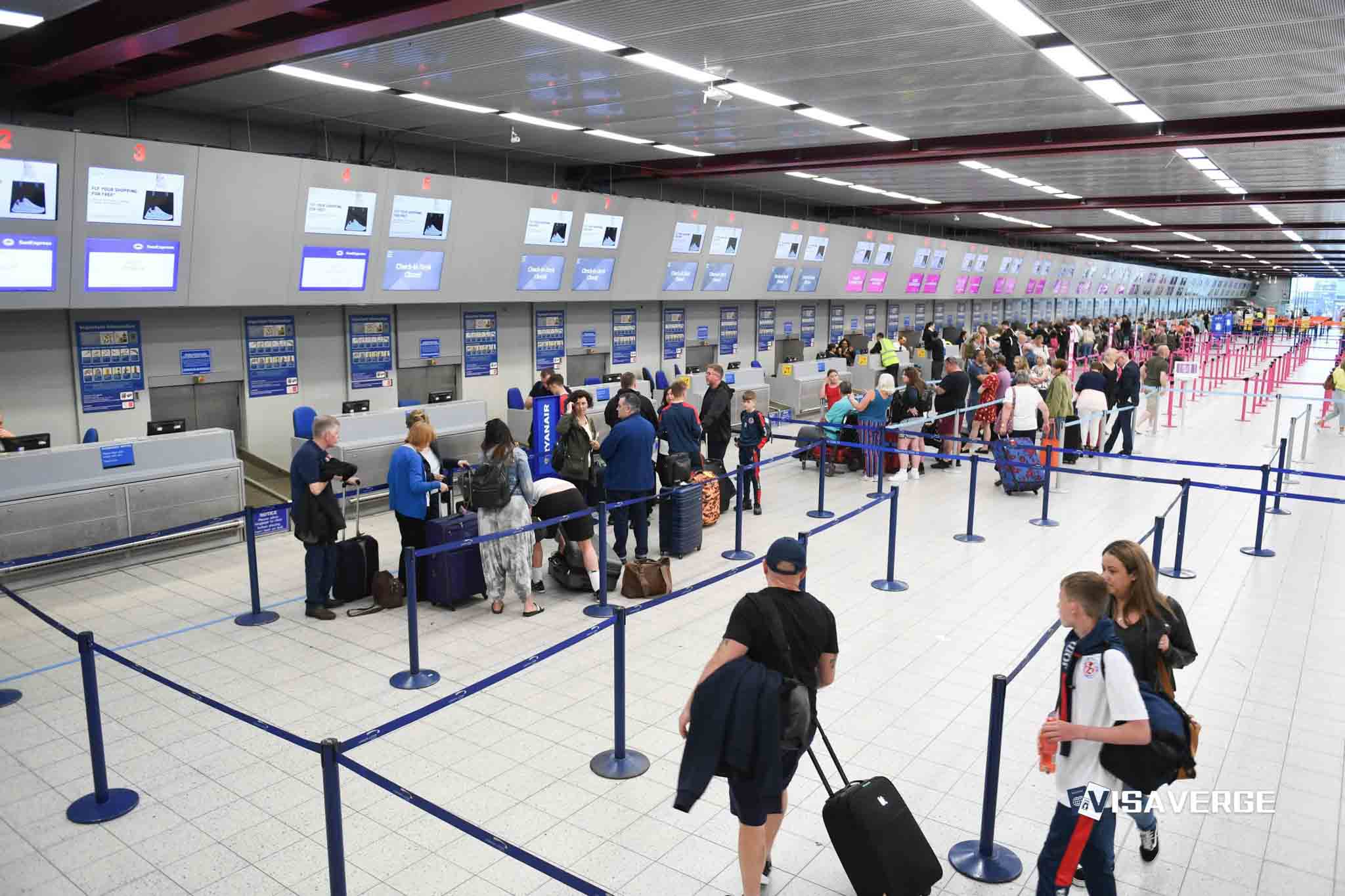
Passengers packed check-in areas and airline service counters as departures to key Gulf and Levant destinations dropped off schedules and inbound aircraft arrived with nowhere to continue, turning Egypt into a “stranded hub” where planes land but cannot leave.
Regional airspace closures and knock-on hub interruptions drove the spike, forcing airlines to suspend routes, reroute aircraft and cancel rotations that normally feed Cairo’s connection banks, airport and airline information showed.
The disruption spread quickly beyond Cairo into Egypt’s main tourism gateways, complicating travel for visitors headed to Red Sea resorts and tightening seat availability for anyone trying to reroute through Europe or on limited remaining services.
At Sharm El Sheikh International Airport, the day’s tally reached 3 cancellations and 36 delays, with Pegasus Airlines canceling Istanbul flights and stranding Turkish tourists at Red Sea resorts.
Hurghada International Airport logged 1 cancellation and 36 delays, with European charter traffic heavily impacted as aircraft and crews arrived late, turned around slowly or failed to operate after upstream cancellations.
Alexandria’s Borg El Arab Airport reported 2 cancellations and 1 delay, including a FlyDubai service to Dubai that remained grounded amid the wider Gulf-linked shutdown.
Domestic corridors also felt the pressure as Air Cairo recorded 31 delays on Cairo-Hurghada-Sharm routes, adding missed onward transfers for travelers who had already been shifted off international itineraries.
Egypt’s airports also absorbed diversion traffic as nearby airspace constraints tightened, with 22 diverted international flights recorded on Feb 28 across Egyptian airports, including 12 at Cairo, further stretching stands, turnaround resources and passenger handling.
EgyptAir suspended flights from Cairo to 13 destinations until further notice, covering Dubai, Abu Dhabi, Sharjah, Beirut, Doha, Amman, Dammam, Bahrain, Baghdad, Erbil, Kuwait, and two others, citing “escalating events in the region and their impact on air traffic.” The carrier said affected passengers can reschedule without fees through March 15, 2026.
Gulf and regional carriers compounded the hit at Cairo as rotations fell apart across networks rather than on single routes, with Emirates and Qatar Airways running 100% cancellations at CAI over the disruption window.
Qatar’s Doha route was severed as Hamad International Airport (DOH) stood closed as of 9 AM March 3, in what was described as a third postponement, and Qatar reported 495 network-wide cancellations Feb 28-Mar 3 at an 81.68% rate.
Other airlines facing disruptions included Royal Jordanian, Gulf Air, Air Arabia and Pegasus, with Pegasus cancellations cited on specific services including PC 818 Istanbul-Erbil and PC 756 Istanbul-Beirut.
The airline actions turned routine connection planning into a rolling scramble, with travelers discovering at the airport that inbound aircraft might land on time but outbound legs to the Gulf, Iraq, Lebanon or Jordan had vanished, leaving limited same-day alternatives.
Even for passengers who secured reroutes, the network effect created new bottlenecks as missed turns and late crews spilled into later banks, raising the chance that rebooked journeys would also slip, particularly where one cancellation erased an aircraft’s next several segments.
The tightening stems from conflict-driven airspace shutdowns after US/Israeli strikes on Iran and Iranian retaliation, a chain of events that also pushed carriers to avoid corridors or curtail departures across parts of the Gulf.
Strikes killed Iran’s Supreme Leader Ayatollah Ali Khamenei, senior officials, and 133 civilians (over 100 children at a girls’ school), prompting Gulf airspace closures in UAE, Qatar, Kuwait, and other areas cited in airline and operational updates.
Those restrictions forced airlines to cancel flights outright, route around closed airspace, or hold aircraft out of position, while hubs faced interruptions that prevented normal aircraft and crew rotations from reaching Cairo, Sharm El Sheikh, Hurghada and Alexandria on schedule.
Egyptian airspace remained open, but that did not prevent congestion as diverted aircraft and irregular operations increased pressure on gates, air traffic sequencing and ground services in an environment where many scheduled departures could not operate.
Minister of Civil Aviation Sameh El-Hefny oversaw operations 24/7 via the Cairo Air Navigation Center and crisis units, as Egypt’s airports handled diversions while carriers weighed route suspensions tied to external airspace decisions.
A snapshot of Gulf-linked activity illustrated how quickly the constraints translated into canceled movements, with Cairo operating 69 of 116 scheduled Gulf flights on Feb 28 while 47 did not operate, reducing the flow of passengers and crews that normally sustain onward departures.
For travelers, the immediate reality became a rebooking backlog, crowded terminals and a shrinking pool of seats on alternate routings as airlines tried to accommodate passengers onto later departures or different city pairs.
Hotels extended stays for stranded passengers and tour operators arranged shuttles, particularly for Red Sea resort travelers whose flight changes created mismatches between arrival and departure dates and left them waiting for new confirmations.
Resort-area operators faced booking chaos with “no clear timeline” for returns, a strain that grew as rolling delays pushed some departures into the next day and forced travelers to seek additional nights at properties that were already juggling check-in schedules.
Crowding built at airline desks as passengers sought paper confirmations for tour operators, requested baggage retrieval for itineraries that no longer existed, or tried to preserve onward connections that depended on reaching Gulf hubs.
The knock-on effects also reached long-haul trips where Cairo functions as a transfer point, with reroutings to London/Paris/New York affected as cancellations and delays cascaded through schedules and connection windows narrowed.
The U.S. Embassy in Cairo urged Americans to monitor risks and prepare for delays, a signal of elevated uncertainty for travelers weighing whether to head to the airport early, remain at hotels, or wait for airline notifications before moving.
Airlines advised passengers to check apps and websites for flight status and to expect last-minute changes as schedules updated in response to shifting airspace constraints and the availability of aircraft and crews.
For many travelers, the combination of suspended routes, diverted aircraft and congestion meant that even confirmed bookings did not guarantee departure at a specific time, with standby queues and sudden gate changes adding friction to already strained terminals.
Egypt’s airports stayed open as the disruption unfolded, and aviation officials framed the problems as stemming from Gulf closures rather than Egyptian operational issues, even as Egypt’s role as a diversion destination increased the day-to-day load on airport systems.
EgyptAir said it continued to monitor conditions for more changes, and airlines across the region signaled that they would adjust schedules as airspace decisions and hub operations evolved.
Diversions and capacity constraints remained drivers of delay even without full closures in Egypt, leaving passengers to plan for fluid schedules until regular routings and hub connections across the Gulf and Levant stabilize.