(MASSACHUSETTS) — Six refugees joined Jewish Family Service of Western Massachusetts and the International Institute of New England on Friday, February 27, 2026, in filing a federal lawsuit that challenges the Trump-Vance administration’s new “Refugee Detention Policy” in the U.S. District Court for the District of Massachusetts.
The complaint names the Department of Homeland Security and Immigration and Customs Enforcement as defendants, along with DHS Secretary Kristi Noem and Acting ICE Director Todd Lyons.
Plaintiffs, represented by Democracy Forward and the International Refugee Assistance Project, asked the court to vacate two recent DHS memoranda and halt enforcement nationwide while the case proceeds, including through a preliminary injunction request meant to avert harm.
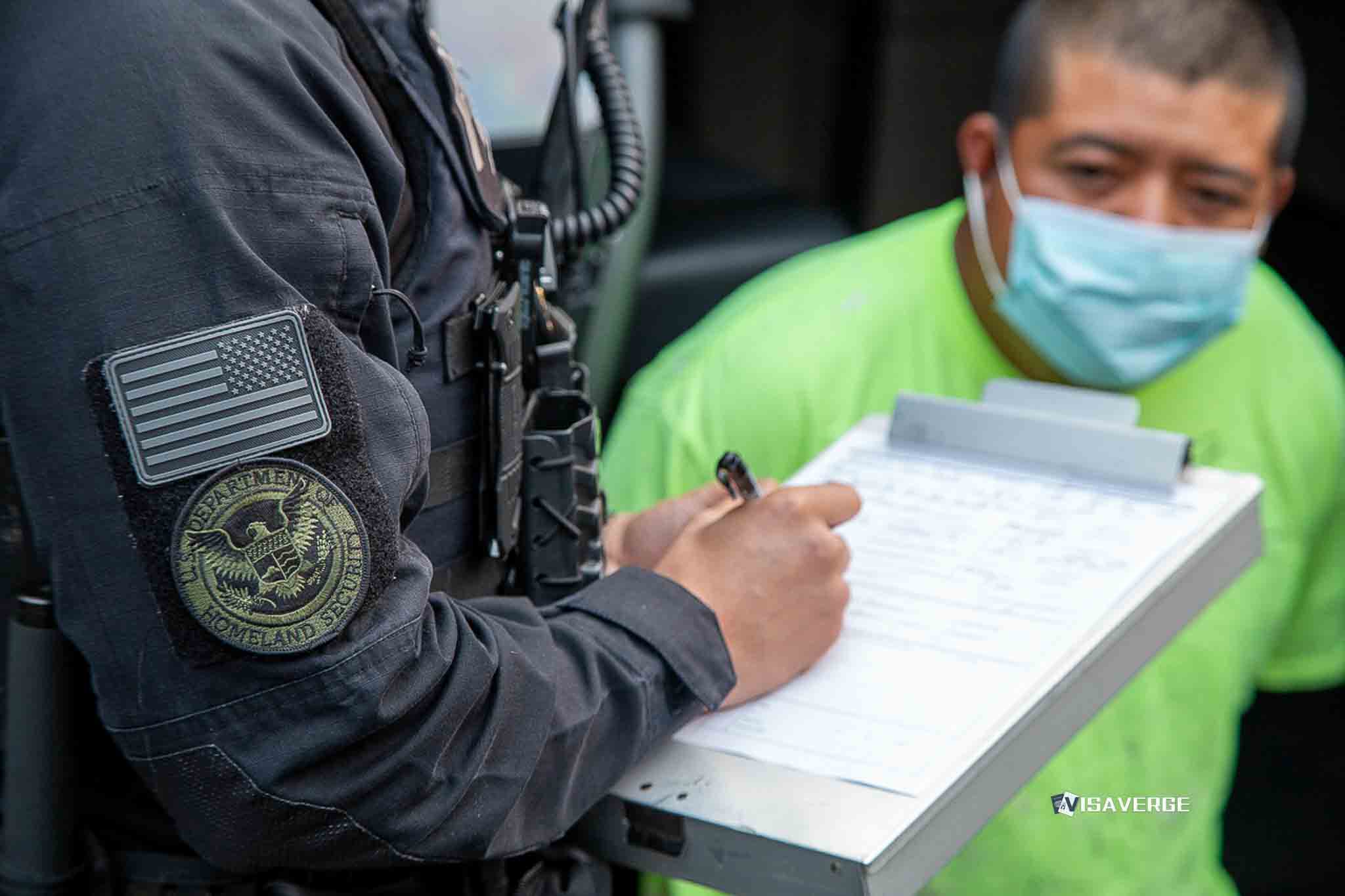
At the center of the dispute sits “Operation Post-Admission Refugee Reinvestigation and Integrity Strengthening,” known as Operation PARRIS, which the lawsuit describes as mandating warrantless arrest and indefinite detention of lawfully admitted refugees who have lived in the United States for over one year without adjusting to permanent resident status or who have pending applications.
Under the policy the plaintiffs challenge, refugees can face detention even if they pose no deportability risk or criminal threat, the lawsuit says, calling it a reversal of 45 years of practice.
The suit also frames the initiative as a high-stakes shift for people who were admitted as refugees and then moved into the long process of restarting their lives, often while waiting for U.S. Citizenship and Immigration Services to decide adjustment applications.
Mona C., a Massachusetts refugee and one of the plaintiffs, described the fear the policy has created for her family. “I fled death threats and waited nearly a decade to resettle as a refugee in the United States. My family has worked hard to restart our lives, but now I am worried that ICE might arrest me,” she said. “Who will take care of my children if I am arrested and detained? We came to the U.S. to live in peace and safety, not to relive the horrors of our past.”
Farida, an Afghan refugee living near Springfield, Massachusetts, also joined the suit after hearing of detentions elsewhere. “I heard my friends in Minnesota who are refugees were detained by ICE. I was really shocked,” she said.
In Afghanistan, Farida worked as a research assistant on women’s empowerment and faced Taliban harassment en route to work. She resettled in early 2024, and her green card has been pending 15 months.
The lawsuit ties those fears to what it calls a built-in “trap,” alleging the government has frozen adjudications and then treated the resulting delays as a basis for enforcement.
The complaint says Operation PARRIS targets up to 100,000 refugees with stalled USCIS applications, a number the plaintiffs argue reflects a broad population of lawfully admitted people who can find themselves in legal jeopardy despite pursuing the standard pathway to permanent status.
Plaintiffs argue the policy applies to refugees who have lived in the United States for more than one year and have not adjusted to permanent resident status, including those with pending or stalled applications, and that it does so through warrantless arrests and indefinite detention.
Beyond the requested vacatur of the two DHS memoranda, the plaintiffs also bring claims under the Administrative Procedure Act, including arguments that the policy is arbitrary and capricious and that it lacked notice-and-comment rulemaking.
The lawsuit also cites constitutional claims, including Fourth Amendment unreasonable seizures and Fifth Amendment due process violations, as well as violations of the Immigration and Nationality Act.
Skye Perryman, President and CEO of Democracy Forward, framed the challenge as a dispute over legal authority and basic constitutional protections. “The Constitution does not permit the government to jail people without statutory authority or due process,” she said.
Ghita Schwarz, Senior Director of U.S. Litigation at the International Refugee Assistance Project, described the policy’s reach as extending beyond any one state. “The Trump administration is clear it intends to take its terror campaign against refugees in Minnesota national,” she said.
The challenge also comes from resettlement organizations that say they have seen refugees rattled by the threat of detention tied to appointments and paperwork, and that they now face questions they cannot answer with certainty for people who believed their lawful status protected them.
Rabbi James Greene, CEO of Jewish Family Service of Western Massachusetts, said the policy threatens refugees with detention without the usual criminal predicates. “DHS is threatening them with arrest and detention for an indefinite period of time without any crime, without any cause, and without any reason. The Bible’s most often repeated commandment is to welcome the stranger,” he said.
Greene’s agency said at least 1,000 clients are vulnerable.
Jeff Thielman, identified as a leader of the International Institute of New England, called the requirement at the core of the policy unworkable as described in the lawsuit’s public framing. The policy is an “impossible requirement” since refugees can’t apply for green cards until after one year, he said, adding that roughly 700 of their refugees could be detained.
Sara Bedford, chief operating officer of Jewish Family Service of Western Massachusetts, said the initiative carries a cost that goes beyond legal paperwork and into the mental and emotional stability of families. The policy “retraumatizes and revictimizes community members. breaks the promise at the core of the refugee resettlement program,” Bedford said.
The complaint describes the Refugee Detention Policy as a sharp change to how the government treats refugees who have been admitted lawfully and are in the period after arrival when they may still be gathering documentation, attending appointments, and waiting for USCIS decisions.
DHS justifies the change as “additional vetting,” and the lawsuit and advocates point to letters issued for USCIS appointments that they say carry possible detention risks.
Advocates say the interaction between appointment letters, pending adjustment applications, and enforcement has produced fear and disruption, with the lawsuit and its supporters pointing to reports of arrests and family separations in Minnesota.
At the time of writing, no arrests were reported in Massachusetts yet.
The plaintiffs argue that refugees face a catch-22 when adjudications stall, because people can remain in limbo while still being exposed to detention tied to the passage of time and their unresolved status.
USCIS has frozen adjudications for many countries, leaving over 100,000 in limbo.
For the organizations that helped bring the suit, that limbo is not an abstract legal condition but a daily problem in advising families who believed the resettlement process came with clear expectations and a workable path toward stability.
The lawsuit also places the Massachusetts plaintiffs into a broader national picture that includes Minnesota, where detentions have been reported and where court action has unfolded separately.
As of March 2, 2026, no ruling had been issued on the preliminary injunction request in the Massachusetts case.
A related Minnesota temporary restraining order expired recently, with a decision expected soon in that matter.
Plaintiffs characterized the Massachusetts filing as the first lawsuit challenging the policy, a framing that puts early emphasis on whether one court will step in quickly to pause enforcement as the legal fight unfolds.
A nationwide halt to enforcement, if granted, would pause the operation of the policy across the country while litigation continues, according to the relief the plaintiffs seek, and would matter most immediately for refugees who fear that routine interactions tied to their pending applications could lead to detention.
For Mona C., the case is tied to the life she says she has tried to rebuild after years of waiting. “We came to the U.S. to live in peace and safety, not to relive the horrors of our past,” she said.