- Federal prosecutors filed five doxxing cases against anti-ICE protesters in Los Angeles recently.
- Two protesters were convicted of stalking after livestreaming an ICE agent to his home.
- Defense lawyers argue these prosecutions risk criminalizing protest and chilling First Amendment rights.
(LOS ANGELES, CA) — Federal prosecutors in Los Angeles have filed five doxxing cases against anti-ICE protesters since President Trump’s reelection, a sharp increase that authorities frame as needed to protect ICE personnel and protesters call an attempt to chill demonstrations.
The prosecutions, all brought in Los Angeles, have tied allegations of doxxing and stalking to confrontations outside federal facilities and to efforts to identify and track ICE employees in public. Officials have argued the cases respond to threats, intimidation and operational-security risks for agents and their families.
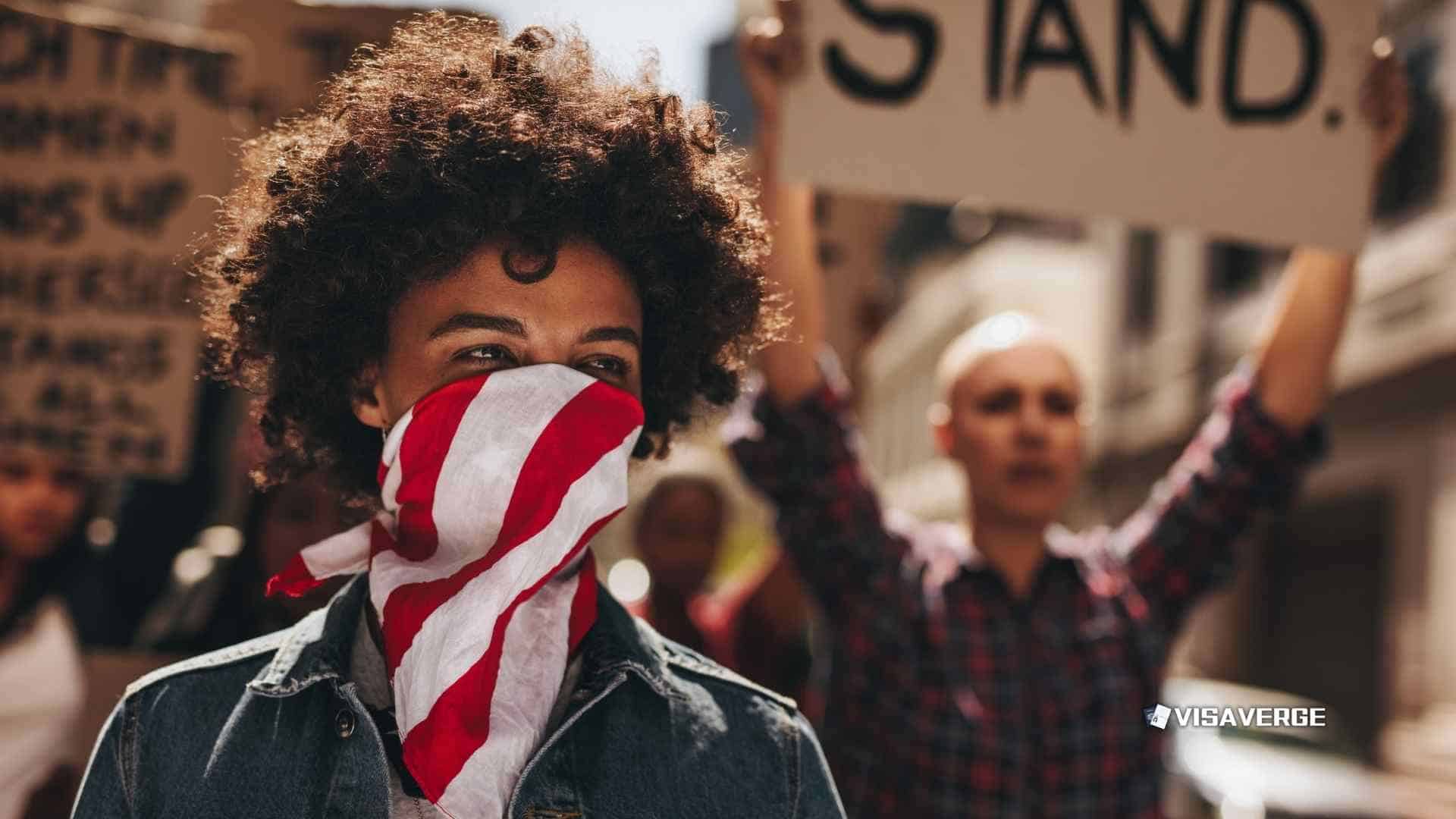
The filing pattern has placed immigration enforcement at the center of a widening conflict over public protest tactics and federal law enforcement’s response, especially when demonstrators document ICE activity or confront agents near federal buildings.
On August 28, 2025, prosecutors said, a confrontation escalated into a livestreamed encounter that later became the most prominent of the recent cases. Investigators alleged the incident moved from downtown Los Angeles to a residential neighborhood as demonstrators focused on a specific ICE agent.
Prosecutors said Cynthia Raygoza of Riverside, California, and Ashleigh Brown of Colorado, both 38, followed ICE agent Rogelio Reyes Huitzilin from a downtown L.A. federal building to his home, while livestreaming the pursuit on Instagram. Authorities said the women shouted his location to onlookers as his wife and children were nearby.
The government alleged Raygoza cursed at Huitzilin, threatened violence, and yelled, “your neighbor is an ICE agent.” Prosecutors treated the livestreaming the pursuit and the alleged home-following as conduct that went beyond political speech and into targeting.
Huitzilin testified in February 2026 that the family relocated out of fear, his son withdrew from high school, and his wife believed protesters would return due to anti-ICE hostility. Prosecutors have used that testimony to argue the conduct had real-world consequences for an agent’s household.
A federal jury convicted Raygoza and Brown of one count of stalking last week, a charge that carries up to 5 years in prison. Sentencing is set for June 8, 2026.
Jurors acquitted Raygoza and Brown of conspiracy to disclose personal information, and co-defendant Samane Sandra Carmona, 25, of Panorama City, was acquitted of both charges. Prosecutors have treated the split verdict as evidence that jurors distinguished between protest activity and alleged targeting.
Prosecutors also dropped doxxing charges against Brown after determining she did not reveal the agent’s home address, which they treated as an essential element. The same court fight left Brown facing stalking and conspiracy trial this year, even as the case also produced last week’s stalking conviction.
Beyond the August 2025 case, officials pointed to other matters they say show a broader threat environment around immigration enforcement. Among the examples cited were voicemails stating, “I hope your kids get deported by accident” and “it’s what’s going to happen to your family.”
ICE acting director Thomas Homan described the threats as part of a “coordinated campaign of violence.” Prosecutors have tied that argument to a push for stronger federal charges, including doxxing charges, when demonstrators fixate on an individual agent.
Defense lawyers and activists have said the prosecutions risk criminalizing protest tactics, particularly when demonstrators film agents, narrate events in real time, or seek to publicize what they see as abuses. They describe the cases as having a chilling effect on protests, especially around federal buildings tied to immigration enforcement.
Ellis McBroom, a defense attorney, called it “despicable to imprison a person for exercising their 1st Amendment rights,” and accused officers of fabricating assaults to justify excessive force. Lawyers have argued that prosecutors are stretching stalking and doxxing theories in ways that deter demonstrations and documentation.
Attorney David Bernstein warned prosecutors may escalate doxxing and stalking charges performatively for the administration, and pointed to outcomes in a separate set of protest-related cases. Bernstein said grand juries rejected nearly a third of 71 assault cases filed last year, through acquittals or dismissals.
Raygoza, identified in the case as a protester, made a separate argument captured in court footage. “Justice is for all, not just who you choose to give it to,” she said.
The push for new doxxing charges has unfolded alongside turbulence in related protest prosecutions in Los Angeles, including cases tied to clashes at federal detention sites. In one set of matters at L.A.’s Metropolitan Detention Center, charges against Jonathon Redondo-Rosales were dismissed with prejudice by U.S. District Judge Cynthia Valenzuela on February 12, 2026.
Valenzuela dismissed the case after Federal Protective Service officer Zachary Conte failed to disclose three prior convictions and misrepresented an assault, according to the case account. Redondo-Rosales spent 6 months in custody.
Federal prosecutors and ICE officials have cast the doxxing charges and stalking allegations as necessary to protect agents whose work makes them targets, while critics say the government is using criminal law to police protest. That clash has sharpened in Los Angeles, where enforcement actions and demonstrations have repeatedly intersected near federal buildings.
Doxxing prosecutions remain rare nationally, with in-person clashes from published agent info even scarcer, but the Los Angeles cases have highlighted a federal focus on protecting ICE personnel under Trump policies. Prosecutors have used the L.A. filings to argue that online and street-level tactics can merge into direct pressure on agents at home.
In the August 2025 case, prosecutors emphasized the alleged ripple effects on Huitzilin’s family life after the incident drew attention to his residence. Increased onlooker traffic post-incident forced the family to another county, disrupting children’s education and affecting a 3-year-old son’s disability-related benefits tied to L.A. County, according to the case details presented in court.
Supporters of the prosecutions have argued the cases draw a line between protesting government policy and targeting individual public servants and their families. Critics have countered that aggressive charging blurs that boundary and invites heavier policing of demonstrations where ICE is present.
With the next step in the Raygoza and Brown case set for sentencing, the Los Angeles filings have become a test of how far federal prosecutors will go in using doxxing charges and stalking counts against protesters focused on immigration enforcement. Bernstein said he expected more aggressive pursuits, as authorities and activists continue to spar over accountability, safety and the risks of confrontation when an ICE agent becomes the subject of public protest.