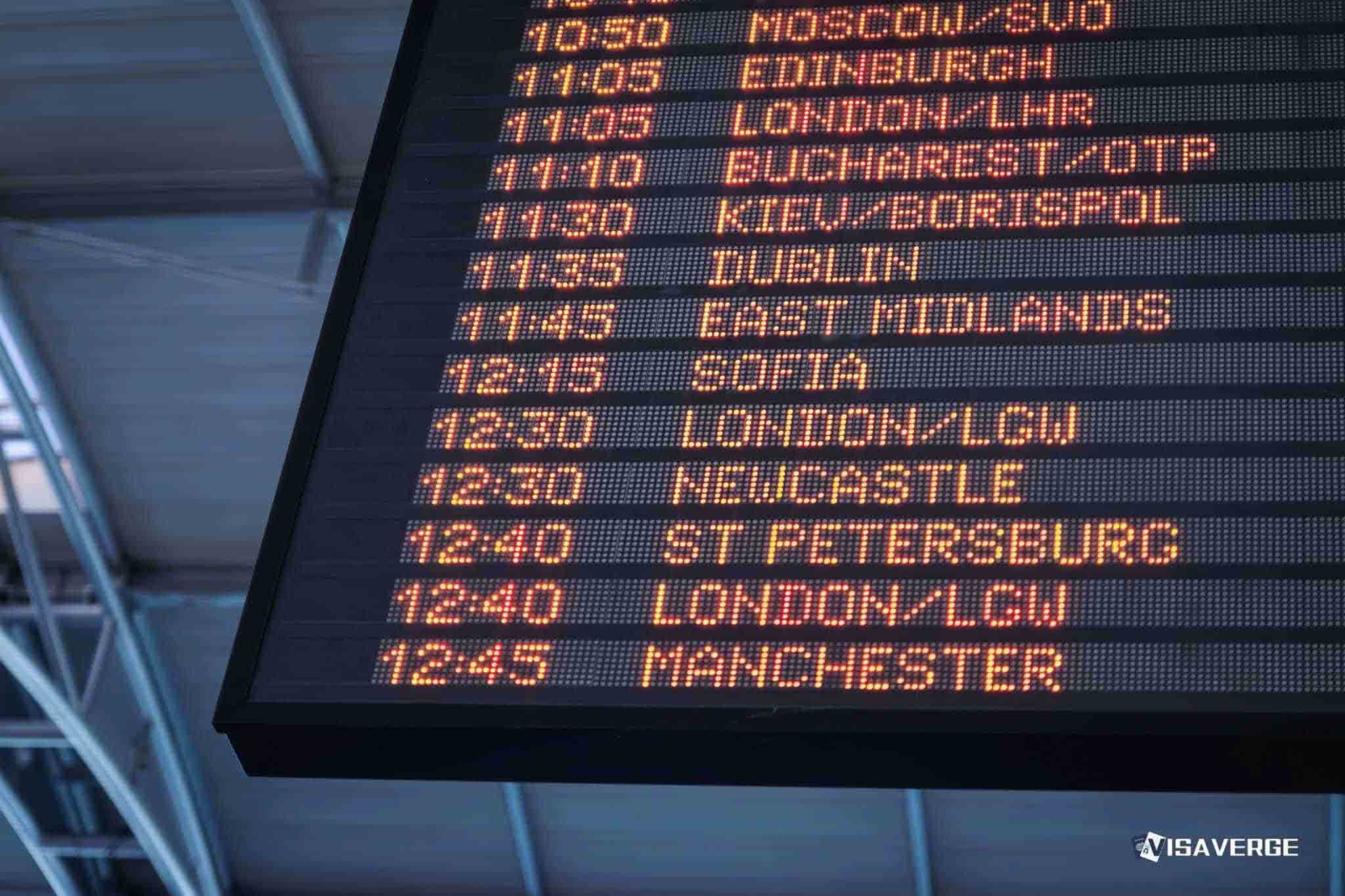
- Airlines canceled over 12,300 flights across seven Middle East airports following US and Israeli strikes on Iran.
- Major hubs like Dubai, Doha, and Abu Dhabi suspended commercial operations through early March 2026.
- Over 20,000 passengers were stranded in the UAE alone, creating massive rebooking backlogs and airport congestion.
(DUBAI, UAE) — Airlines canceled more than 12,300 Flights Cancelled across seven major Middle East airports after US and Israeli strikes on Iran starting February 28, 2026, disrupted airspace and upended long-haul connections through Gulf hubs.
The cancellations covered February 28 through March 3, 2026, and hit primary transfer gateways for travelers moving between Europe, Asia and Africa via the Gulf, including Dubai International, Doha and Abu Dhabi.

Flightradar24 reported the cancellation total and the data window, and the figures were corroborated across multiple sources. Around 20,200 passengers were affected in the UAE alone, a sign of crowding, missed connections and rebooking backlogs as schedules shifted by the hour.
Carriers across the region extended suspensions into March 4 and beyond, while airports and airlines warned passengers not to travel without confirmation because access restrictions and rolling departure permissions left terminals at risk of congestion.
Emirates suspended all scheduled flights to and from Dubai until 23:59 UAE time on March 4, while it continued limited repatriation and freighter flights and prioritized earlier bookings. The Dubai-based airline advised passengers not to go to the airport unless directly contacted or holding confirmed bookings.
Etihad Airways extended the suspension of all commercial flights to and from Abu Dhabi until March 5 UAE time, and it restricted airport access for travelers without confirmed tickets.
flydubai extended suspensions until 15:00 UAE time on March 3, reflecting the stop-start nature of operations as airlines waited for route clearances and assessed crew and aircraft positioning.
Air Arabia suspended UAE flights until 15:00 on March 4, and it extended flight pauses to Lebanon, Jordan, Syria and Iraq until March 5. The airline said limited flights remained possible with direct notifications, as it worked through disrupted rotations and passenger re-accommodation.
Oman Air canceled flights to and from a wide set of destinations until March 6, spanning Amman, Dubai, Bahrain, Doha, Dammam, Kuwait, Copenhagen, Baghdad, Khasab and other points in its network affected by rerouting constraints and knock-on delays.
Gulf Air suspended operations tied to Bahrain airspace closure, and it scheduled its next update for 11:00 local time on March 4, underscoring how quickly airline notices could shift with new airspace advisories.
The seven airports affected stretched across the UAE, Qatar, Kuwait and Bahrain, complicating rerouting options because alternatives often required crossing the same constrained corridors. The airport list included major long-haul transfer gateways such as Dubai, Doha and Abu Dhabi, which many travelers use to connect between continents.
Within the UAE, the disruption reached both Dubai’s main hub and other airports that handle significant regional and international traffic, increasing pressure on rebooking systems as passengers tried to switch departure points. The reported figure of around 20,200 affected passengers in the UAE alone signaled the scale of demand pushing into airline call centers and airport customer-service desks.
Outside the Gulf carriers, international airlines also cut or rerouted services as Middle East corridors tightened and review timelines stayed uncertain.
Turkish Airlines kept multi-country and multi-route suspensions across the region on an ongoing basis, covering a sweep of destinations that included Bahrain, Dammam, Riyadh, Iran, Iraq, Jordan, Kuwait, Lebanon, Oman, Qatar, Syria and the UAE.
Air France suspended flights involving Tel Aviv, Beirut, Dubai and Riyadh through March 5, reflecting broader pressure on east-west routings that normally traverse or skirt regional airspace.
Finnair suspended services to Dubai and Doha through March 6, while Norwegian suspended Dubai flights with an end date of March 4 as it reviewed the situation.
North American carriers also adjusted, with Delta Air Lines pausing the New York-Tel Aviv route through March 8. American Airlines temporarily suspended Doha-Philadelphia, and Air Canada set a longer suspension window affecting Dubai and Tel Aviv through March 23.
Air India canceled flights across the UAE, Saudi Arabia, Israel and Qatar with an end date shown as March 2 (extended), reflecting extensions that airlines issued as the situation evolved.
Even when airlines kept some flights operating, reroutes often required longer flight times, technical stops, and new transit points that could trigger different entry or transit rules for passengers. Airlines’ schedules remained subject to change as they balanced airspace restrictions, slot availability, crew duty limits and where aircraft were parked after diversions and cancellations.
Repatriation flights began resuming in limited waves at UAE airports in coordination with authorities, but most scheduled services remained canceled. Airlines framed the resumptions as gradual, with timings dependent on airspace conditions and operational permissions.
Across multiple carriers, passenger messaging converged on the same points: wait for direct contact, rely on a confirmed booking before traveling, and avoid adding to airport congestion during rapidly shifting departure windows. For many travelers, the practical challenge was not only finding an available seat, but also confirming that a flight would operate once check-in and security access rules tightened.
A cluster of dates drove airline decisions and passenger planning as notices updated through March 3 and March 4.
February 28, 2026 marked the start of the crisis and immediate operational impacts following US and Israeli strikes on Iran, setting off the initial wave of suspensions and cascading diversions.
March 3, 2026 served as the reporting cutoff referenced for the cancellation total, capturing six days of disruption and reflecting how quickly cancellations accumulated across the region’s busiest transfer points.
March 4 through March 6 appeared repeatedly as suspension review or end windows across several carriers’ advisories, including Dubai-focused disruptions tied to Emirates and others, and broader pauses by airlines assessing what routes could operate safely and legally.
March 8 and March 23 stood out as longer markers for select routes, including Delta’s stated pause through March 8 and Air Canada’s longer suspension window through March 23, highlighting how some carriers prepared for extended uncertainty.
Flightradar24’s tracking of cancellations offered a high-level measure of disruption across the affected airports, while the passenger impact figure reported for the UAE pointed to the human and operational strain that followed from the flight data.
As travelers pursued refunds and rebooking, documentation became a practical safeguard in disputes over itinerary changes and fare conditions, especially for multi-leg journeys routed through Gulf hubs. The same records also mattered for travel insurance claims, employer letters related to delayed work travel, and immigration-related appointment rescheduling when missed flights disrupted carefully timed plans.