- The Army placed 1,500 active-duty soldiers on alert for potential deployment to Minneapolis amid ongoing protests.
- A defense official clarified that units are preparing options rather than executing an immediate deployment order.
- Governor Tim Walz mobilized the National Guard to provide state-level support for local law enforcement agencies.
MINNEAPOLIS — The U.S. Army has put approximately 1,500 active-duty soldiers from the 11th Airborne Division on alert for a potential deployment to Minneapolis to support federal law enforcement as protests continue against Immigration and Customs Enforcement operations in the Twin Cities, reports say.
The alert posture involves two battalions stationed in Alaska, described as one of the Army’s top infantry units, and comes amid escalating tensions tied to ICE enforcement activity in the region.
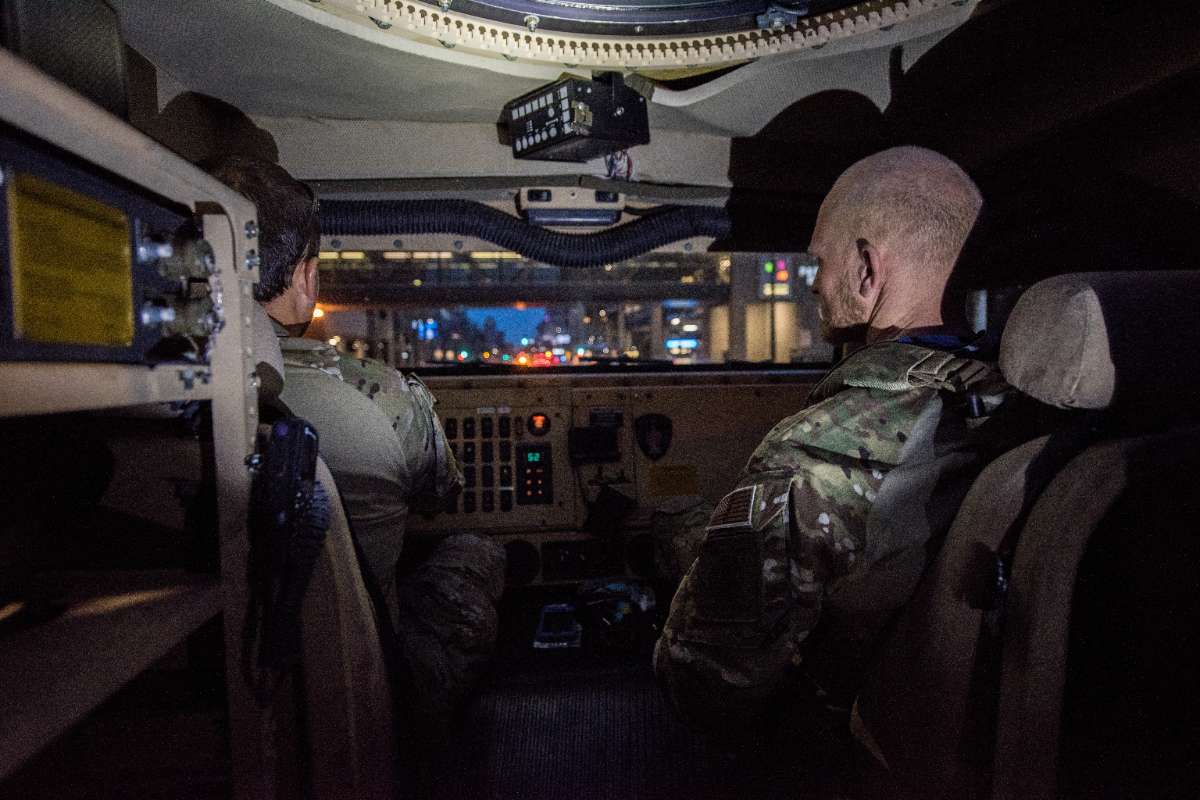
A defense official told ABC News that
“this doesn’t mean they will deploy; we are preparing options,”
A clarification that underscored the difference between contingency planning and an executed decision to move active-duty troops into a U.S. city.
President Trump has not yet made a final decision on whether the deployment will occur, the defense official said, even as the alert status has fueled questions across Minneapolis about what could happen next and which authorities would be involved.
Standby status typically signals that a unit has been directed to raise readiness, review mission requirements, and prepare for possible movement if ordered, without presuming that an order will come. For residents watching events unfold in Minneapolis, the distinction matters because readiness steps can occur quietly while public-facing actions—troop movements, formal coordination announcements, or changes in visible security posture—depend on separate decisions.
The concerns have been sharpened by the proximity of the reported planning to immigration-related demonstrations, where the lines between enforcement activity and public-order responses can be easily blurred. Immigration enforcement actions are carried out by federal authorities, while responses to protests often involve local law enforcement, and the legal authorities and command structures differ if National Guard forces or active-duty military personnel become involved.
The alert status for the 11th Airborne Division is being discussed as tensions rise in the Twin Cities, where protests have been linked to ICE operations. Separate reporting has described immigration officers headed to Minneapolis, adding to a backdrop in which demonstrators and immigrant communities have been tracking federal enforcement activity closely.
Pentagon planning for domestic contingencies can include building out options that range from logistical support to security-related tasks, but officials often stress that preparing options is not the same as executing them. That distinction was captured in the defense official’s statement to ABC News, which framed the current posture as preparatory rather than a commitment to deploy.
In practice, confirmation of an actual deployment is typically tied to formal orders and official public releases, along with visible coordination announcements with state and local authorities. Without those steps, an alert can remain a planning posture that never turns into movement.
The potential Minneapolis deployment has also landed in a national political debate after President Trump suggested last week that he might invoke the Insurrection Act, a federal law that permits the President to deploy military forces on U.S. soil to suppress domestic disturbances.
Trump later walked back those comments on Friday, saying he did not believe there was reason to enact it at that time. The shift highlighted how public statements about extraordinary authorities can change quickly as situations evolve.
Mention of the Insurrection Act carries particular weight in cities experiencing immigration-related protests because it can heighten anxiety about the role of the military and intensify concerns over protest policing. For immigrant communities, the debate can also amplify uncertainty about which agency is acting at any given moment—ICE conducting enforcement operations, local police handling demonstrations, the National Guard providing support under state authority, or active-duty forces operating under federal orders.
Trump last invoked this authority in 1992 during the LA Riots. The historical reference is frequently cited in discussions of when and how presidents have considered or used domestic military authorities, though the present situation in Minneapolis has its own set of circumstances and decision points.
Separate reporting has detailed earlier remarks in which Insurrection Act talk intersected with Minnesota protests, reflecting the way the legal question has moved alongside the day-to-day developments in Minneapolis.
For residents of Minneapolis, the central practical question remains what, if anything, changes on the ground. Without a decision by President Trump to deploy active-duty troops, the most immediate official action described so far has been at the state level.
Minnesota Governor Tim Walz has already mobilized the Minnesota National Guard, which is prepared to assist local law enforcement if needed. Guard forces, when operating under a governor’s control, have a different legal status and command structure than active-duty forces.
That difference can shape what the public sees and who is accountable for decisions in real time. State-controlled Guard support may be directed toward tasks that local authorities request, while active-duty involvement would reflect federal decision-making and a separate chain of command.
Walz’s mobilization places Minnesota’s response squarely in the category of preparedness, aimed at supporting local law enforcement if conditions require it. The reports did not describe specific public-safety measures being announced alongside the mobilization.
The overlap of immigration enforcement and public demonstrations can produce confusion, particularly in fast-moving situations where several agencies operate in the same area. In Minneapolis, that confusion has been heightened by the reporting about the 11th Airborne Division’s alert status and by the discussion of the Insurrection Act, even as officials have not confirmed a final decision to deploy active-duty troops.
For demonstrators and immigrant communities, the uncertainty can be felt in practical ways—how to interpret an increase in federal activity, how to assess the likelihood of additional security forces, and how to weigh what is confirmed against what remains contingent. The defense official’s remark to ABC News sought to draw that line clearly by emphasizing that officials were “preparing options.”
The reports linking the alert to protests against ICE operations have also placed a spotlight on the broader national debate about immigration enforcement and oversight, with lawmakers and advocates watching how enforcement actions play out in communities. Related coverage has noted how ICE reforms have drawn attention as immigration enforcement protests intensify.
At the same time, the mobilization of the Minnesota National Guard and the reported standby status for the 11th Airborne Division add a layer of operational complexity to the public narrative. The Guard’s role, as described, is to be prepared to assist local law enforcement if needed, while the active-duty unit’s role remains potential and dependent on a decision that the defense official said had not been made.
Officials’ emphasis on contingency planning reflects a familiar pattern in government responses to unrest concerns, where agencies may stage resources, plan for various outcomes, and coordinate behind the scenes while maintaining that no decision has been reached. For Minneapolis, the distinction is especially sensitive because it touches on immigration enforcement, protest activity, and the rare possibility—raised and then walked back by the president—of invoking a law associated with domestic military deployment.
The reports did not describe what specific operational tasks the 11th Airborne Division would be assigned if deployed, nor did they detail how federal law enforcement support would be structured. What is confirmed in the reporting is the alert status itself, the unit’s identity, its Alaska base, the approximate number of soldiers on standby, and the link being drawn to unrest concerns connected to ICE activity in the Twin Cities.
The caution signaled by the defense official’s quote also points to what many residents will be watching for next: official confirmation through orders and formal announcements, and clear coordination statements that spell out roles and responsibilities among federal authorities, state forces, and local law enforcement.
Protests tied to ICE enforcement activities in the Twin Cities remain the backdrop to the reported alert and the state mobilization, with the public conversation shaped by the interplay between immigration enforcement and public-order concerns. As officials and residents track developments, the key signals are likely to be formal decisions about deployment, any public safety directives issued by local or state authorities, and verified guidance for demonstrations that clarifies how different agencies are operating in Minneapolis.