- The House passed a $1.2 trillion funding package including $10 billion for ICE enforcement operations.
- Seven Democrats supported the bill, though Rep. Tom Suozzi later expressed regret following a killing in Minneapolis.
- Increased funding translates to expanded arrest and detention capacity under federal immigration statutes.
The U.S. House’s passage of a sweeping DHS funding bill—including billions for Immigration and Customs Enforcement—has triggered a rapid intraparty backlash among some Democrats, after deadly and controversial ICE enforcement actions in Minneapolis became a flashpoint for constituents and lawmakers.
On January 23, 2026, the House approved a $1.2 trillion funding package that includes roughly $64 billion for the Department of Homeland Security and $10 billion for ICE, with seven Democrats joining Republicans in a 220–207 vote. While appropriations bills do not directly rewrite immigration statutes, they can meaningfully expand DHS and ICE operational capacity, including arrest operations, detention bed space, transportation, and contracting.
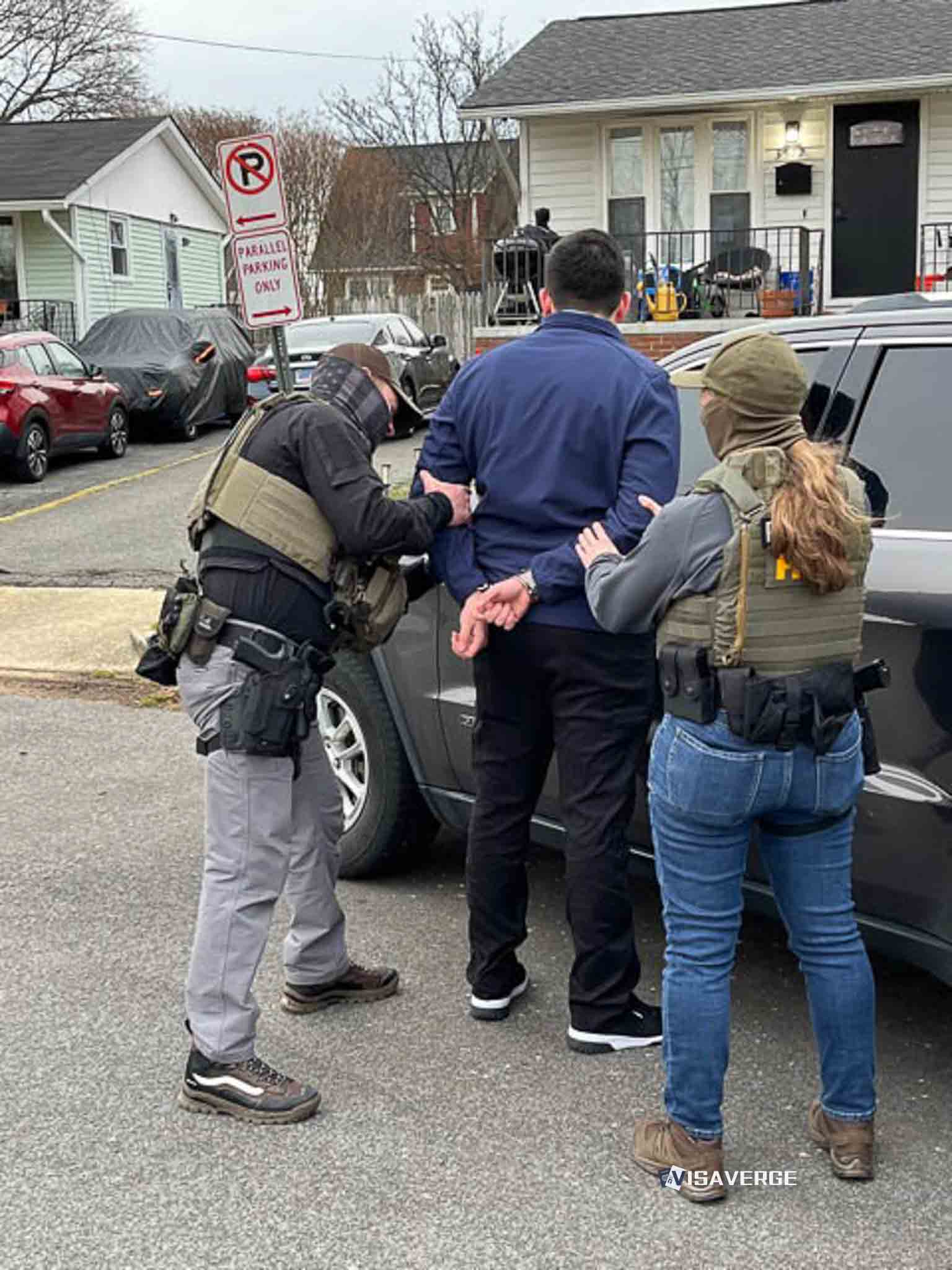
What the DHS and ICE funding means legally
ICE’s day-to-day enforcement authority is grounded primarily in the Immigration and Nationality Act, including arrest and detention authorities under INA § 236 (pre-removal) and INA § 241 (post-order detention), with implementing regulations across 8 C.F.R. parts 236 and 241. Additional funding can translate into more worksite enforcement, more home arrests, and increased detention capacity, which in turn increases the number of people placed into removal proceedings before EOIR immigration courts.
Because immigration enforcement frequently intersects with constitutional protections, expanded operations also raise the stakes for Fourth and Fifth Amendment litigation. In removal proceedings, motions to suppress or terminate based on alleged unlawful stops, arrests, or regulatory violations remain difficult but are not impossible in egregious fact patterns. The Board of Immigration Appeals has long required a showing of prejudice for certain regulatory-violation claims. See Matter of Garcia-Flores, 17 I&N Dec. 325 (BIA 1980).
Warning: Even when an arrest is contested as unlawful, removal proceedings may continue. Suppression arguments are fact-specific and can vary by federal circuit.
Tom Suozzi cites Minneapolis operations and expresses regret
Rep. Tom Suozzi (D-N.Y.) publicly expressed regret on January 26, 2026, for voting in favor of the funding measure. In his statement, Suozzi said he “failed” to treat the vote as a referendum on ICE’s actions in Minneapolis, acknowledging anger from constituents and taking responsibility for the vote.
Suozzi tied his remorse to the January 24, 2026 killing of Alex Pretti, described as a 37-year-old U.S. citizen and ICU nurse, during ICE operations. He urged President Trump to end “Operation Metro Surge” in Minneapolis. Although the public debate is political, the underlying legal issues are concrete: when enforcement actions result in death or injury, investigations may involve federal civil-rights oversight, internal DHS review, and potentially tort or constitutional litigation depending on the facts.
The healthcare dimension is also notable. When frontline medical workers are harmed during enforcement activity, hospitals and public health systems may feel immediate effects, including staffing strain and heightened community fear that can deter patients from seeking care.
Laura Gillen doubles down on criticism and calls for Noem’s impeachment
Rep. Laura Gillen (D-N.Y.)—also a “yes” vote—did not retract her vote. Instead, she intensified criticism of ICE and DHS across January 25–26, 2026, calling for the immediate impeachment of DHS Secretary Kristi Noem.
Gillen defended her vote as necessary to fund DHS components beyond ICE, including FEMA, TSA, and the Coast Guard. She also argued that voting “no” would leave ICE funded at prior levels rather than forcing a reduction. Legally, this reflects a recurring appropriations reality: lawmakers often face up-or-down choices in omnibus packages, where targeted constraints on a single component (like ICE) may be difficult without separate riders or line-item restrictions.
Deadline watch: The bill is awaiting Senate action. Funding deadlines and shutdown risks can change quickly once Senate leadership sets a floor schedule.
The seven Democrats who crossed party lines—and where they stand
The seven Democrats who joined Republicans were Henry Cuellar, Vicente Gonzalez, Jared Golden, Marie Gluesenkamp Perez, Don Davis, plus Suozzi and Gillen. Based on public statements, Suozzi is the only member of this group to express explicit remorse to date. Gonzalez defended his vote, and Gillen has focused on Secretary Noem’s impeachment without withdrawing support for the underlying package.
Constituent pressure grows as Senate Democrats signal resistance
The political pressure follows backlash over ICE raids in Minnesota, including Pretti’s killing and a prior killing of a U.S. citizen protester. Senate Minority Leader Chuck Schumer has opposed advancing the package with DHS funding, raising the prospect of a standoff that could bring a shutdown risk into the immigration arena.
Meanwhile, 145 House Democrats have reportedly co-sponsored impeachment articles targeting Secretary Noem. Impeachment is a political-constitutional process rather than an immigration adjudication tool, but it can shape agency leadership, priorities, and oversight intensity.
Cuellar, by contrast, has stood by the vote as responsible governance amid shutdown threats. For immigrants and mixed-status families, the immediate legal takeaway is less about speeches and more about operational tempo: appropriations levels can influence how frequently ICE initiates arrests, detainers, and detention transfers.
Practical caution: Do not assume public controversy will pause enforcement. In many cases, ICE operations continue during political disputes and even during litigation.
Practical guidance for people who may be affected
If you or a family member may be impacted by increased ICE activity:
- Know your posture. Whether you are in proceedings, have a final order, or have a pending application can change risk and options under INA § 240 (removal proceedings) and related regulations.
- Document encounters carefully. Write down dates, locations, names, badge numbers if known, and witnesses. This may matter for bond, suppression, or civil-rights review.
- If detained, act fast. Bond eligibility and timing can depend on detention authority and the jurisdiction’s case law. Ask about bond under INA § 236(a) where applicable.
- Use official information channels. For basic agency information, see EOIR case status and ICE detention locator. For benefit applicants, track USCIS case status.
Because enforcement-related claims and detention challenges can turn on fine factual details and circuit law, consult a qualified immigration attorney promptly, especially if there is any arrest, detention, or signed paperwork involved.
⚖️ Legal Disclaimer: This article provides general information about immigration law and is not legal advice. Consult a qualified immigration attorney for advice about your specific situation.
Resources:
- AILA Lawyer Referral