- The Supreme Court condemned the expansion of Punjab’s NRI quota to protect merit-based medical admissions.
- National N-E-E-T qualification remains strictly mandatory for all candidates seeking admission through the NRI category.
- Courts prioritize bona fide status over financial incentives, rejecting attempts to use quotas as revenue-generating tools.
(PUNJAB) — The Supreme Court’s reported criticism of Punjab’s expanded NRI quota in medical colleges points to a narrow but important rule for current and future admission disputes: seats reserved for non-resident Indians cannot be widened or used in a way that cuts around merit, statutory counseling rules, or the mandatory NEET qualification requirement.
That practical effect reaches beyond one counseling cycle. Any Punjab policy that increases NRI-category seats, loosens documentation standards, or treats NRI admission as separate from national eligibility norms would face immediate legal pressure.
Courts typically examine three questions first: whether the candidate actually qualifies as a bona fide NRI, whether the seat allocation fits governing medical education rules, and whether the applicant has cleared NEET as required for MBBS admission.
The reported Supreme Court stance also fits a line of Indian admission-law cases that treat quota design as reviewable when it weakens merit without a clear statutory basis. In medical admissions, courts have been especially skeptical where reserved categories appear to become a revenue device.
That concern is sharper in Punjab because NRI seats often carry significantly higher fees, creating an incentive to expand the category beyond its original justification.
No authenticated case caption, neutral citation, or full judgment text appears in the material summarized here, so the dispute is best read through the holding described in current reporting: the Supreme Court condemned expansion of Punjab’s NRI-seat pool where that expansion appeared to undercut merit-based selection.
In practical terms, that means colleges and state authorities may face judicial intervention if NRI admissions move beyond a tightly defined exception.
The second pillar is even less flexible. NEET qualification remains mandatory for admission to NRI quota seats. That is consistent with the structure of national medical admissions, where the National Eligibility cum Entrance Test functions as the threshold screen for all candidates, including those claiming NRI status.
A candidate’s foreign residence, family connection abroad, or willingness to pay NRI-category fees does not substitute for NEET eligibility.
Punjab counseling authorities and medical colleges therefore operate inside two legal constraints at the same time. They may reserve a limited category of seats for bona fide NRI candidates if the governing framework permits it, but they cannot waive baseline academic eligibility.
That combination explains why recent litigation has focused on both seat allocation and document scrutiny.
Warning: An NRI claim that lacks proof of overseas residence, sponsorship, or family relationship may be rejected even if the candidate has otherwise participated in counseling. Courts often review the paper trail closely in medical-seat disputes.
The factual pattern behind these cases is familiar. A state or institution enlarges NRI seats, broadens who may apply under that category, or fills unclaimed seats through a relaxed process. Petitioners then argue that the move displaces higher-ranked candidates and converts an exceptional quota into a parallel track.
Judges look at the notification language, the counseling record, the order of seat conversion, and the documents used to establish NRI status.
In Punjab, the central legal fault line is the definition of a bona fide NRI candidate. Courts generally distinguish between a genuine non-resident Indian, or a ward sponsored by an eligible NRI relative under recognized rules, and an applicant who invokes the label only at the admission stage.
That distinction matters because a broad reading of NRI status can dilute open-merit competition while preserving the higher-fee structure attached to these seats.
The interaction with National Medical Commission norms is critical. If Punjab’s admission policy conflicts with national standards governing eligibility, counseling sequence, or category treatment, the conflict would usually favor the central regulatory framework.
Medical education cases repeatedly turn on whether a state measure supplements national rules or departs from them. A departure that affects entry standards or seat distribution is more likely to draw judicial correction.
The Supreme Court concern described in current reporting reflects that hierarchy. The court’s objection is not simply that NRI reservations exist. The objection is that expansion without a defensible legal basis can distort admissions.
Once a quota grows beyond its permitted scope, a court may view the policy as arbitrary, inconsistent with merit principles, or incompatible with the broader medical-admission scheme.
That matters for future litigation in two kinds of cases. First, candidates denied seats may challenge Punjab notifications that increase NRI allotments or alter conversion rules midstream. Second, candidates admitted under the NRI quota may face scrutiny if their documents do not establish genuine eligibility.
In both settings, the record created during counseling becomes decisive. Petitioners usually need the admission brochure, category rules, cutoffs, rank lists, and proof of how seats moved between categories.
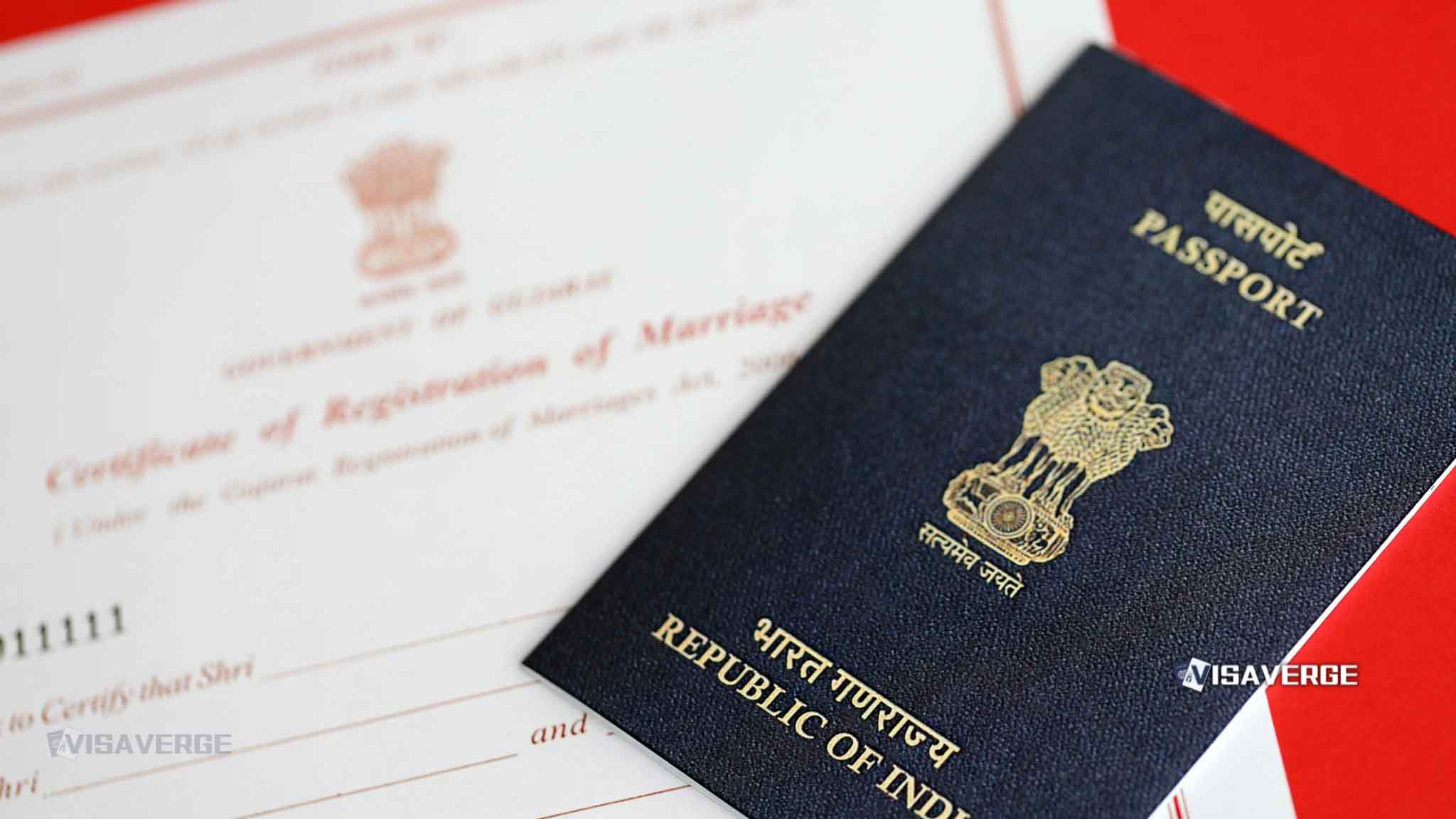
Document risk: NEET scorecards, proof of qualifying percentile, passport records, visa or residence evidence, sponsor affidavits, and relationship documents often become central exhibits. Inconsistent records can undermine an admission even after allotment.
There does not appear to be a classic U.S.-style circuit split here, but there is a familiar pattern of state-level variation followed by Supreme Court correction. Different states have framed NRI categories differently, particularly on who qualifies as a ward and when unused NRI seats may be converted.
The legal trend, however, has been toward tighter review rather than broader discretion. Courts have shown little tolerance for category expansion that changes the competitive balance after the process begins.
No significant dissent has been identified in the material summarized here. The more useful analytical point is that Indian courts often separate permissible reservation design from impermissible manipulation of admission mechanics. A quota may survive in principle while parts of its implementation fail.
Punjab institutions therefore cannot assume that compliance with one part of the scheme, such as collecting NRI documents, cures a defect in another part, such as excessive seat expansion.
Students and families considering the Punjab NRI route should expect two layers of scrutiny. The first is eligibility under the governing admission brochure and applicable medical education rules.
The second is authenticity: whether the NRI relationship, residence status, and sponsorship documents actually match the claim made during counseling. Colleges typically cannot cure a defective admission later by collecting missing records after challenge litigation begins.
Colleges face their own exposure. If an institution fills NRI seats in a way later found unlawful, the resulting admissions can become subject to cancellation orders, revised counseling directions, or seat reallocation. Fee disputes often follow.
Administrators usually try to defend these policies as necessary for institutional finance, but courts have repeatedly treated financial arguments as secondary when merit and eligibility rules are compromised.
Punjab applicants contesting an NRI-seat decision would usually need prompt legal review of the counseling notice, the prospectus, category definitions, and the timing of any policy change. Delay can become a practical obstacle in medical admissions because counseling rounds move quickly and courts often weigh disruption to the academic calendar.
Early intervention by counsel is often decisive in preserving a challenge or defending an allotment.
The present takeaway from the reported Supreme Court position is direct. The NRI quota remains a narrow category, not an alternate admissions channel. NEET qualification remains mandatory.
Punjab authorities and medical colleges may face strong judicial scrutiny if they expand NRI seats, dilute the definition of bona fide NRI status, or permit admissions that conflict with NMC-linked norms.
Anyone facing a disputed NRI admission, cancellation risk, or counseling challenge should consult an advocate experienced in education and constitutional litigation as early as possible, because these cases turn on the exact notification, the exact documents, and the exact stage of counseling.
⚖️ Legal Disclaimer: This article provides general information about immigration law and is not legal advice. Consult a qualified immigration attorney for advice about your specific situation.