- New Jersey Bill S3112 restricts masks for enforcement personnel during immigration operations within the state.
- The proposed legislation aims for increased accountability while allowing exceptions for undercover or medical needs.
- Proposed penalties include fines and jail time for violators, raising questions about federal-state legal authority.
1) Overview of New Jersey bill S3112 (mask restrictions during immigration enforcement)
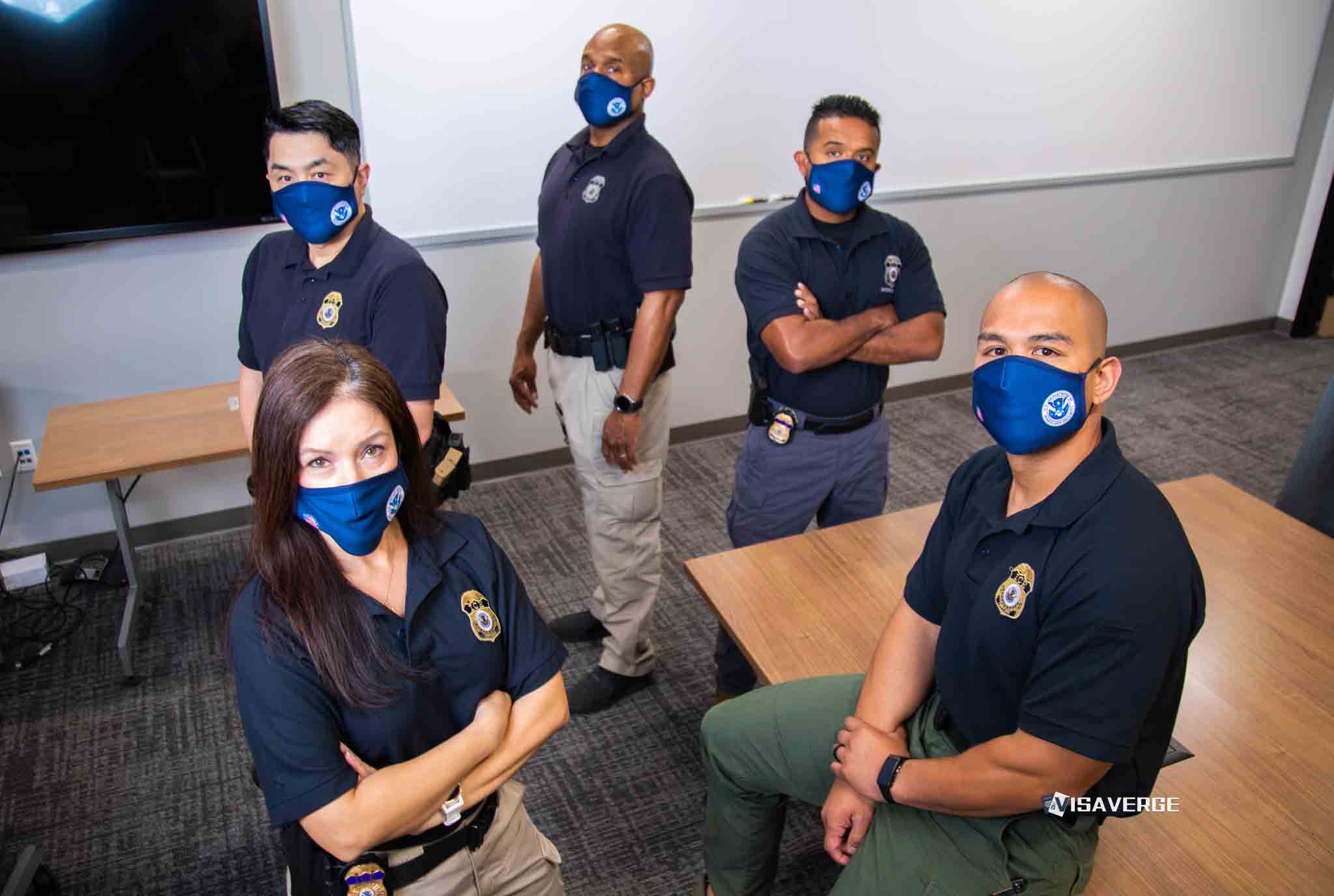
As of Wednesday, February 11, 2026, New Jersey Senate Bill S3112 is a proposed state measure that would restrict when certain immigration enforcement personnel may wear masks during covered enforcement activity in New Jersey. the bill is aimed at limiting masked participation in specified immigration enforcement operations, with stated goals that supporters often frame as promoting identification and accountability. Opponents often raise safety, operational, and privacy concerns.
The proposal matters to several groups:
- Immigrants and mixed-status families who may be affected by visible enforcement actions.
- Community observers, journalists, and advocates who want clear rules and accountability.
- Healthcare providers and clinics concerned about patient fear and access to care when enforcement activity is nearby.
- Travelers and foreign nationals (including New Zealand citizens in the U.S.) trying to assess real-world enforcement practices versus proposed state limits.
It is important to separate proposed state law from federal immigration authority. Federal immigration enforcement authority generally comes from the Immigration and Nationality Act, including INA § 287 (enforcement powers) and related regulations like 8 C.F.R. § 287.5 (authorized immigration officers). A New Jersey bill does not change federal immigration law by itself. If enacted, it would raise practical and legal questions about how state penalties might interact with federal operations.
S3112 also includes exceptions (discussed below) and proposes penalties for violations. The exact fine amounts and jail exposure are best confirmed in the current bill text.
Warning (don’t overread headlines): A bill number and a news summary are not the same as an enacted law. Always confirm the current text and status on the NJ Legislature website before relying on summaries.
2) What can be confirmed right now (and what may still be pending) as of February 2026
As of Feb. 11, 2026, readers should be cautious about claims that S3112 “has a new hearing” unless that hearing appears on an official schedule. Hearing information can be hard to confirm for several reasons:
- Committee agendas can change quickly, sometimes with short notice.
- A bill’s history page may not immediately reflect a planned hearing.
- The Legislature may post a hearing on a committee calendar before the bill history reflects it.
It also helps to distinguish common legislative stages:
- Introduction and referral to a committee.
- Committee consideration, which may include hearings and possible amendments.
- Floor votes in the Senate and Assembly.
- Transmission between chambers, conference, and final passage.
- Governor action (sign, veto, conditional veto).
When you see “no listing found” on a calendar, it often means one of these is true: the hearing is not scheduled, it is scheduled under a different committee page, it was rescheduled, or it has not yet been posted publicly.
The safest approach is to verify hearing status using the official NJ Legislature bill page and the relevant committee’s posted agenda.
3) How to track S3112 hearings, amendments, and bill status (step-by-step)
This process is for anyone who needs a repeatable method to confirm what is happening with S3112—without relying on social media claims or secondhand summaries.
Step 1 — Pull the official bill page (and save it)
Where to check: the NJ Legislature official website.
Documents to collect:
- The bill’s current text (HTML or PDF).
- The bill’s history/actions list.
- Any posted statement or sponsor information.
Why it matters: Bills can be amended. You need the latest version to know what the proposal actually says.
Step 2 — Read the bill history like a checklist
On the bill page, locate the history or actions section.
Documents to collect:
- A dated copy (print to PDF or screenshot) of the actions/history page.
- The version identifier of the bill text you reviewed.
Decision point: If the history shows an amendment or substitute bill, you must switch to the newest text. Older summaries may become inaccurate.
Tip for weekly tracking: Pick one weekday each week to re-check the bill history and the committee agendas. Consistent checks reduce confusion when calendars change.
Step 3 — Identify the current committee and check that committee’s agenda
Bills typically move through committees. The bill page usually indicates the committee assignment.
Documents to collect:
- The committee agenda showing the bill number (if listed).
- Any hearing notice with date, time, and location or virtual instructions.
Potential delay: Even when a bill is listed, the hearing may be postponed. That postponement might appear on an agenda update rather than the bill history.
Step 4 — Confirm the hearing details from two official postings
A strong confirmation usually means you can point to (1) the bill page and (2) the committee agenda.
Documents to collect:
- The agenda posting itself.
- A timestamped note of where it was posted and when you accessed it.
Decision point: If the agenda lists the bill but the bill page does not reflect it, treat the agenda as a lead, not final proof of what will occur.
Step 5 — Ask the sponsor’s office targeted questions
If you cannot confirm a hearing date, contact the sponsor’s office with precise questions.
What to send (your “mini packet”):
- Bill number: S3112.
- The committee you believe has jurisdiction.
- Your specific request: “Is S3112 scheduled for a committee hearing? If yes, which committee, what date, and will testimony be accepted?”
Keep your message short. Ask for the source of the information.
Step 6 — Track amendments by comparing versions
If a new version is posted, compare the operative sections on masks, exceptions, and penalties.
Documents to collect:
- Old text version and new text version (save both).
- A short list of changed sections you observed.
4) Key provisions and exceptions: what the bill would allow and prohibit
While readers should rely on the current posted text, S3112 is commonly summarized as restricting masked participation by covered immigration enforcement personnel during specified enforcement operations in New Jersey.
General rule (functional summary)
If enacted as described, the bill would generally prohibit covered personnel from wearing a mask during the covered enforcement activity.
Exceptions (as described in the source summary)
Two major exceptions have been described:
- Undercover officers.
- Practical question: Who qualifies as “undercover,” and under what assignment or authorization?
- Answer: Check the bill text for definitions or cross-references.
- Medical-grade masks with physician documentation.
- Practical question: What counts as “medical-grade,” and what is acceptable “physician documentation”?
- Answer: The details matter. The bill text may define the terms or leave them open. Open terms can create enforcement disputes.
Because this is a state proposal, even if enacted, it would operate as state law and would be interpreted through New Jersey’s enforcement and court systems. It would not rewrite federal authority under INA § 287 or related rules. It could, however, set up legal conflicts that may be litigated.
5) Penalties, enforcement mechanics, and what it could mean in real situations
S3112 has been described as creating criminal exposure for violations, including possible jail time and monetary fines. In real terms, “criminal exposure” means a person accused of violating the state law could face arrest, charges, court appearances, and collateral consequences.
Key practical enforcement questions often include:
- Who would investigate and charge? Typically, state or local authorities enforce state criminal laws. Federal personnel raise added complications.
- What evidence might matter? Identification of the person involved, whether the conduct fit the bill’s covered activity, and whether an exception applied.
- How would exceptions be evaluated? For example, how physician documentation would be reviewed, and by whom.
These issues are also where state–federal tension can arise. Federal authority and immunity doctrines can become relevant, and outcomes can vary based on facts and later court rulings.
Warning (public safety and legal risk): If you encounter an enforcement operation, keep distance and avoid interference. Interfering with law enforcement can trigger serious criminal allegations. If you document events, do so lawfully and safely.
6) Verify the latest text and status before relying on summaries
Because legislative information changes quickly, use a simple verification protocol each time you share or act on an update:
- Go to the NJ Legislature site and open S3112.
- Confirm you are reading the latest version of the text.
- Review the bill history for the newest actions and committee assignment.
- Check the relevant committee agenda/calendar for hearing postings.
- Make a timestamped record (save a PDF or screenshot) of what you saw and when.
- If the record is unclear, contact the sponsor’s office or committee staff with the bill number and a narrow question.
For immigration-specific concerns, remember that federal enforcement authority generally arises under statutes like INA § 287 and regulations such as 8 C.F.R. § 287.5. A state proposal may affect accountability mechanisms inside the state, but it does not automatically change federal enforcement standards.
Deadline watch: If you plan to submit testimony, many committees require advance submission and may limit speaking time. Confirm the committee’s instructions as soon as a hearing is posted.
Legal resources (official and practitioner directories)
- EOIR Immigration Court information: U.S. Department of Justice — EOIR
- USCIS (benefits and forms): USCIS
- INA and federal immigration statutes (reference): 8 U.S. Code (Cornell Law School)
Resources:
- AILA Lawyer Referral
⚖️ Legal Disclaimer: This article provides general information about immigration law and is not legal advice. Immigration cases are highly fact-specific, and laws vary by jurisdiction. Consult a qualified immigration attorney for advice about your specific situation.