- Najaf International Airport faces significant flight disruptions due to an intense aviation fuel supply dispute.
- A political clash involves rival blocs and state entities over contract control and fuel pricing.
- Travelers should expect cancellations and schedule changes as fueling access remains restricted and contested.
(NAJAF, IRAQ) — Najaf International Airport is facing flight suspensions and disruptions as a private fuel supplier tied to one political bloc clashes with a state-run distributor over pricing, payments, and control over fuel access.
Section 1: Overview of the dispute
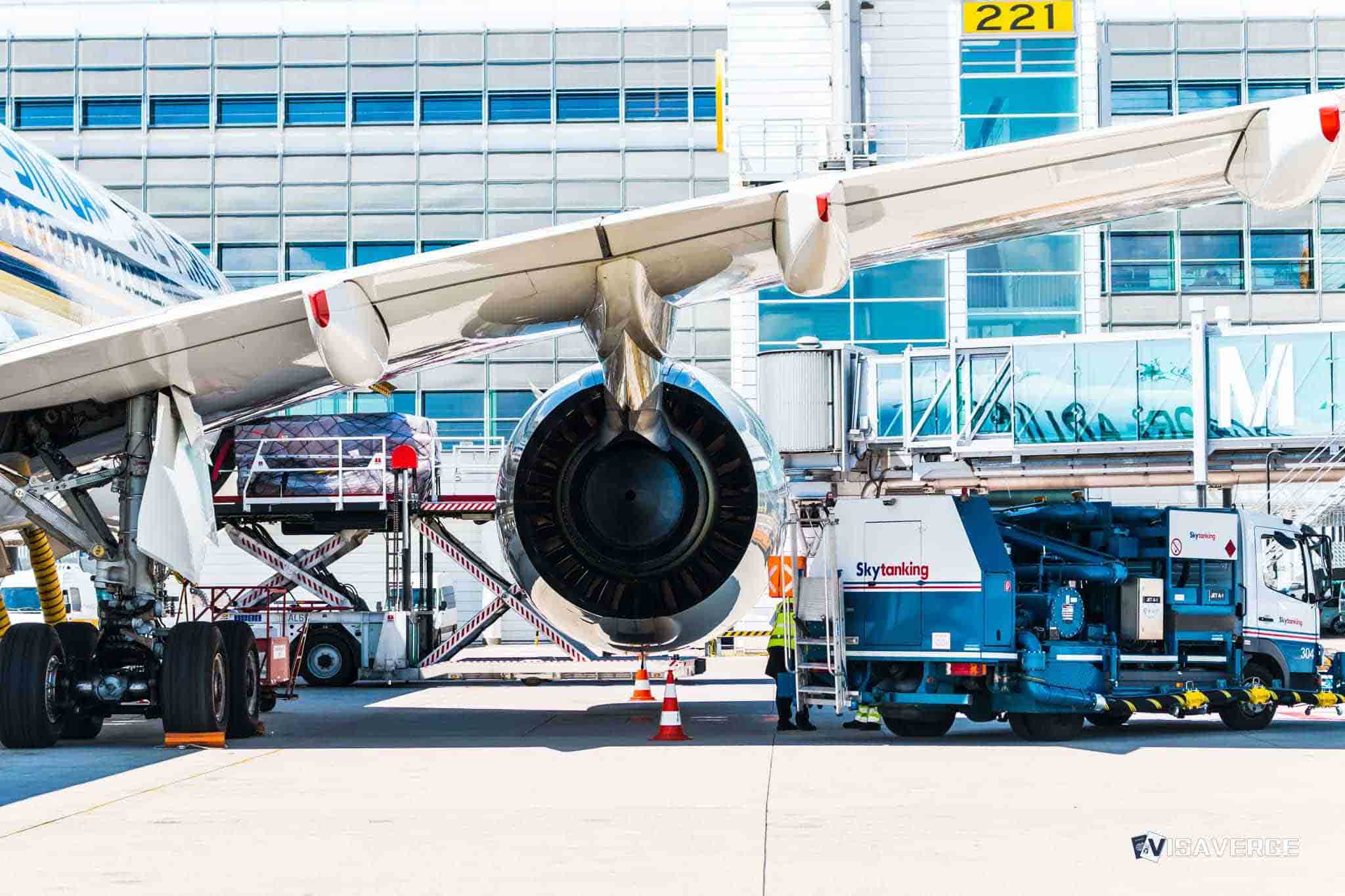
Najaf International Airport runs on more than runways and air traffic control. It also depends on a steady, authorized flow of aviation fuel. When the fuel supplier can’t deliver—or can’t reach the airport—departures stop, arriving aircraft may divert, and airlines start trimming schedules to avoid being stranded on the ground.
A fuel supply contract at an airport typically controls four basics: who is allowed to bring fuel in, where fuel is stored, how the fuel is metered and billed, and how quickly aircraft can be fueled between flights. That “between flights” window is the turnaround. If fueling slows down, an aircraft misses its planned departure slot. Then the delay spreads across the day.
In Najaf, the dispute has escalated because fuel access is also a lever of local power. Airport-adjacent contracts can mean revenue, jobs, and influence over a facility that handles 2 to 3 million passengers annually. Najaf’s role in religious tourism raises the stakes further, since many travelers arrive in groups on fixed itineraries.
Pricing is part of the argument, including a per-liter change from $0.90 per liter to $1 per liter, a $0.10 per liter increase. Yet the core risk for travelers is simpler. If the fueling chain breaks, flights don’t move.
Section 2: The Core Dispute
At the center is a contract lifecycle problem: an expiring aviation fuel supply contract, and a fight over what replaces it. Under the existing arrangement, a private company affiliated with the Islamic Dawa Party supplies fuel to the airport. The Islamic Dawa Party is led by former Prime Minister Nouri al-Maliki.
A competing model is now being pushed by the Oil Products Distribution Company. Its leadership in Najaf is affiliated with the National Wisdom Movement (Al-Hikma), led by Ammar al-Hakim. The proposal is for the state-run Oil Products Distribution Company to supply fuel directly to the airport, rather than through the private supplier structure.
Airports often struggle during fuel transitions even when fuel exists elsewhere in the country. The friction points are practical and fast-moving:
- Handover and authority: Who has the right to dispatch fuel trucks, schedule deliveries, and approve access to controlled areas.
- Inventory and storage: Which party can use storage tanks, pipelines, and fueling points, and under what safety rules.
- Metering and invoicing: Which meters and paperwork count as “official” for payment, taxes, and audits.
- Permits and safety compliance: Airports usually require badges, escorts, insurance, and safety approvals for vehicles and staff.
Each of those steps can halt fueling without a single aircraft mechanical problem. When access control becomes contested, airlines are left waiting for a clear “yes” on who can fuel them and how they will be billed.
Section 3: Pricing and Payment Issues
Money arguments in airport fueling turn operational quickly. Fuel is not just a commodity in a tank. It is a delivered service that depends on equipment, storage, staffing, and secure movement inside the airport perimeter.
Under the prior setup, the supply chain involved a middle layer that bought fuel and resold it to airlines with a margin. After the contract expired, the direct-sale approach changed who collected revenue and who absorbed risk, such as delayed payments or disputed invoices. That kind of change can harden positions overnight, because each side fears losing a dependable stream of income.
The per-liter figures illustrate why tempers rose: the earlier price cited in the dispute was $0.90 per liter, later shifting to $1 per liter after expiration, a $0.10 per liter increase. Even small per-liter moves can add up for airlines that run frequent services, especially when religious tourism demand keeps flight schedules dense.
Service fees are another flashpoint. Airports commonly charge fees linked to land use, storage tanks, maintenance, and security. Those charges help cover the physical footprint needed to fuel aircraft safely and quickly. When a supplier or subcontractor is accused of not paying those fees, the airport side may try to restrict access to tanks or ramp areas. The supplier side may respond by arguing it has authority to operate anyway. Either way, fueling becomes the battleground.
Hassan Abu Al-Subh, head of the Integrity Committee in the Najaf Provincial Council, has said unpaid airport service fees contributed to disrupted flight movement. For airlines operating Najaf routes, that type of standoff can feed into broader decisions: whether to reduce frequency, swap aircraft, pad schedules, or move passengers via other airports if operations become unreliable.
| Route | Carrier | Status | Alternative |
|---|---|---|---|
| Najaf International Airport (general operations) | Airlines operating Najaf routes | Reported suspensions and irregular operations risk if fueling access is constrained | Rebook via another Iraqi gateway when offered; consider ground transfer to Najaf if feasible |
| Najaf International Airport (religious tourism peaks) | Airlines operating Najaf routes | Higher crowding risk if flights consolidate or cancel | Adjust arrival windows and group transfers; allow extra time for re-accommodation |
| Najaf International Airport (turnaround-dependent schedules) | Airlines operating Najaf routes | Delays possible if fueling and dispatch slow aircraft turnaround | Seek later departures or alternate-day tickets where airlines permit changes |
Section 4: Operational Impact
Fuel disputes can stop flights even if fuel exists nearby. The key choke point is access. If fuel trucks cannot enter the airside area, or if dispatch authorization is challenged, aircraft cannot be fueled on schedule. A parked aircraft becomes a planning problem for the airline. Crews time out, gates clog, and incoming flights may have nowhere to park.
Several Iraqi travel agencies reported suspension of flights from Najaf Airport beginning Friday, citing fuel supply issues. In practice, “flight suspension” reports can show up in different ways. Some carriers cancel outright. Others consolidate passengers onto fewer departures. Diversions are also possible, with flights landing at another airport to refuel or to avoid being stuck after arrival.
The Oil Products Distribution Company has said it is ready to supply fuel, while also claiming its vehicles were prevented from operating by the Najaf Provincial Council. That kind of conflict is especially damaging because it affects dispatch tempo. Dispatch is the day-to-day instruction set that tells vehicles when and where to move. If dispatch becomes contested, airlines cannot plan safe turnaround times.
Najaf’s passenger profile makes the disruption sharper. With 2 to 3 million passengers annually and heavy religious tourism traffic, cancellations can create crowding in terminals and pressure on hotel and ground transport capacity. Group travelers are often on fixed schedules for visits and ceremonies. Missing one flight may cascade into missed bookings, lost deposits, or shortened trips.
From an immigration and documentation standpoint, this remains a transportation disruption with political context, not an asylum or removal issue. Still, schedule changes can affect entry and exit plans. Passengers typically should keep passports and any entry paperwork accessible during rebooking, since airlines may reissue tickets and update passenger records.
✅ What affected travelers should do now: monitor flight notices, contact airlines for rebooking options, and consider alternative travel plans if Najaf operations remain constrained
⚠️ Expect potential schedule disruptions and possible diversions or cancellations tied to fueling access and dispatch constraints
Section 5: Political Context
Control of revenue-linked state facilities often drives competition because these sites generate steady cash flow and local influence. Najaf International Airport is under local government oversight, and airport revenue helps fund city services. That creates strong incentives for rival blocs to fight over who controls adjacent contracts.
The dispute sits within broader Shia political dynamics. One side is linked to the Islamic Dawa Party associated with Nouri al-Maliki. Another side is linked to the National Wisdom Movement (Al-Hikma) associated with Ammar al-Hakim, operating through roles connected to the Oil Products Distribution Company. The Najaf Provincial Council is a central actor because access decisions and local fee enforcement can determine who actually moves fuel on the ground.
For aviation stability, the most meaningful resolution signals are practical rather than rhetorical:
- A formal contract renewal or a clear new award for fuel supply responsibilities
- Written access authorizations that allow trucks, staff, and equipment to operate airside
- A payment settlement mechanism for disputed service fees and any arrears
- Normalized flight movement, reflected in fewer cancellations and predictable turnaround times
Until those signals appear, airlines operating Najaf routes may keep schedules flexible and passengers should plan for changes on short notice.
This article discusses a political dispute affecting aviation operations and may influence travel plans. For travelers, verify current flight statuses with airlines and official airport advisories.
Information reflects reported disputes and does not constitute legal or financial advice.