- The U.S. shuttered the DEA office in Santo Domingo indefinitely following serious corruption allegations.
- Supervisor Meliton Cordero faces charges for bribery and visa fraud involving 119 applications.
- Ambassador Leah Campos ordered the closure to safeguard public trust and mission integrity.
The U.S. has shuttered its Drug Enforcement Administration (DEA) office in Santo Domingo indefinitely amid bribery and visa-fraud allegations against a senior supervisor, signaling heightened scrutiny of immigration-related processes tied to the embassy.
U.S. Ambassador Leah Campos announced the closure of the DEA office at the U.S. Embassy in the Dominican Republic, saying the step took effect immediately and would last “until further notice.” The action follows the arrest and charging of DEA supervisor Meliton Cordero in Washington, D.C.
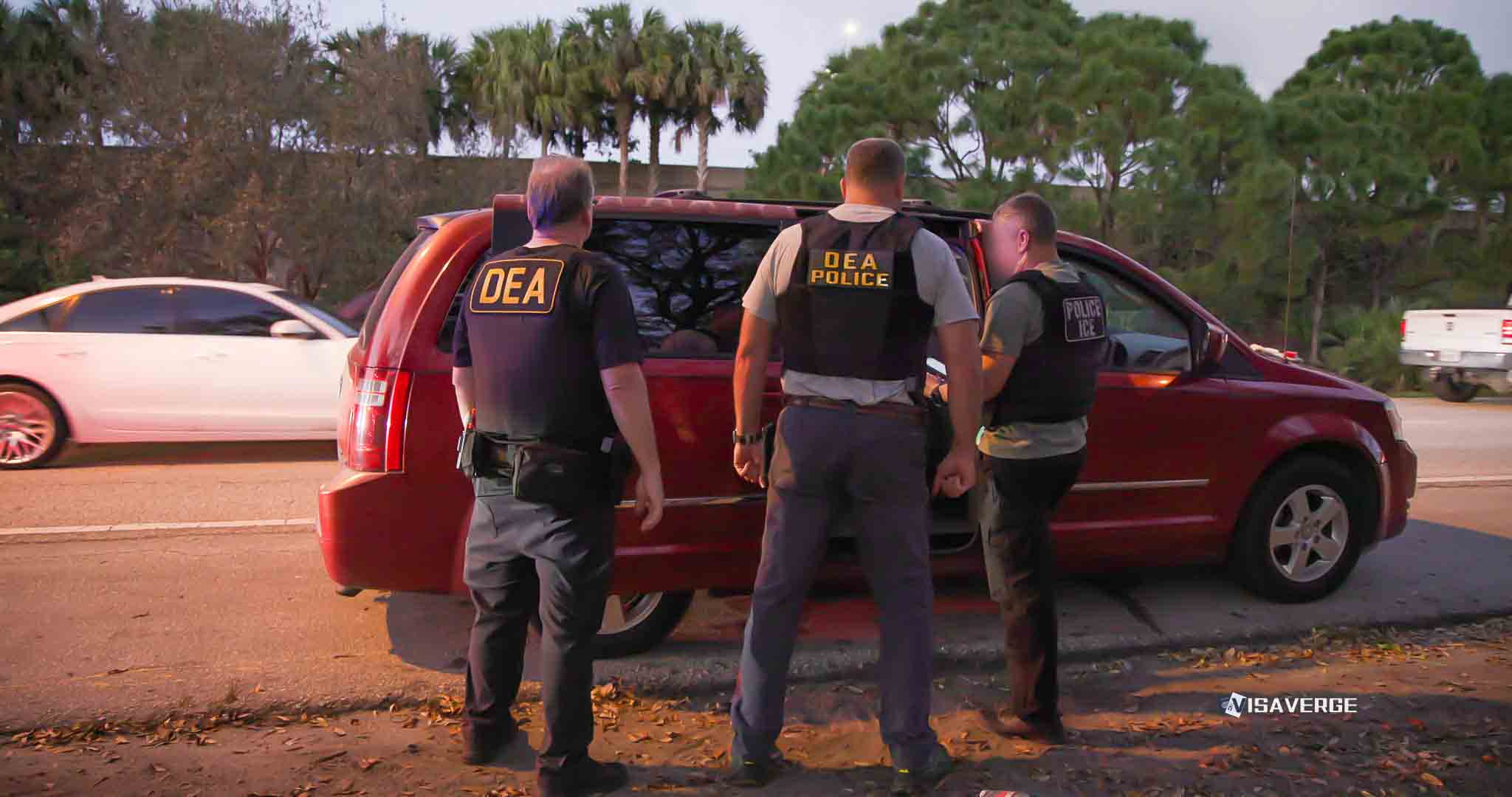
An indefinite closure typically means an operational pause rather than a declared permanent shutdown. Even so, the move can have fast spillover for embassy governance, including internal controls and integrity checks that touch consular work.
Campos framed the decision as a safeguard for public trust in official functions at the mission. Visa-related allegations involving a U.S. law enforcement official can also trigger heightened attention to how referrals, access, and special handling requests are documented inside an embassy.
The effective date for the closure was the same day Campos announced it, as reflected in the government’s effective-date notice.
Meliton Cordero served as a DEA supervisor assigned to the U.S. Embassy in the Dominican Republic, a post that can place officials close to law enforcement partners and, at times, visa-related information flows. Supervisory roles are sensitive because they carry authority and access that can be misused, prosecutors say, when officials trade influence for money.
Charging decisions were announced by the U.S. Attorney’s Office for the District of Columbia, which has jurisdiction over many federal cases with ties to U.S. government operations. The office filed charges in Washington, D.C., placing the case in a forum frequently used for federal public-corruption matters.
Ambassador Leah Campos acted as the senior U.S. government representative at the mission, with responsibility for embassy management and conduct standards. Her closure order signals that the embassy leadership is treating the allegations as an institutional risk, not only an individual case.
Dominican Foreign Minister Roberto Alvarez served as the Dominican Foreign Ministry’s public voice in acknowledging the closure and the stated rationale. His comments placed the closure in a diplomatic frame, while pointing to internal U.S. oversight at the embassy.
U.S. Attorney Jeanine Pirro emphasized accountability and the government’s view that visa-related misconduct cuts against stated immigration enforcement priorities. Her statement also links the case to integrity expectations that can affect how missions handle sensitive requests tied to nonimmigrant visas.
| Entity | Role/Function | Relevance to immigration/visa integrity |
|---|---|---|
| Drug Enforcement Administration (DEA) | U.S. federal law enforcement agency focused on narcotics enforcement | DEA personnel can interact with embassy operations where integrity controls matter, including referrals and access tied to nonimmigrant visa processes |
| DEA supervisor Meliton Cordero | Supervisor assigned to the U.S. Embassy in the Dominican Republic | Alleged bribery and visa fraud raise concerns about improper influence over nonimmigrant visa outcomes and potential post-incident integrity reviews |
| U.S. Attorney’s Office for the District of Columbia | Federal prosecuting office in Washington, D.C. | Filed the bribery and visa-fraud charges, creating a formal accountability path that can prompt broader compliance checks |
| U.S. Embassy in the Dominican Republic | U.S. diplomatic mission in Santo Domingo | Site of the DEA office closure and the internal investigation reference; may drive controls affecting consular workflows |
| Ambassador Leah Campos | Chief of mission leading the U.S. Embassy in the Dominican Republic | Ordered the closure “until further notice,” signaling a strict posture on integrity lapses linked to visa fraud |
| Dominican Foreign Ministry | Dominican Republic’s foreign affairs authority | Publicly acknowledged the closure and connected it to an internal embassy investigation, shaping bilateral messaging |
| Dominican Foreign Minister Roberto Alvarez | Senior Dominican government official | Confirmed Campos tied the closure to an internal investigation, highlighting diplomatic coordination and reputational stakes |
| U.S. Attorney Jeanine Pirro | U.S. Attorney | Publicly framed the case as unacceptable conduct affecting immigration priorities and integrity standards |
Prosecutors allege Cordero accepted “thousands of dollars” to help foreign nationals obtain U.S. nonimmigrant visas, an accusation that puts visa integrity at the center of a public-corruption case. In many cases, visa-fraud allegations draw close scrutiny because they can involve misuse of official position, falsified records, or improper access to decision-makers.
Charging documents allege that during a six-year assignment at the embassy, Cordero expedited at least 119 visa applications. Prosecutors also allege that at least one of those applications was fraudulent.
The U.S. Attorney’s Office for the District of Columbia charged Cordero with bribery and visa fraud. Those charges generally indicate prosecutors believe they can meet federal evidence standards in court, while the defendant retains the right to contest the allegations through the judicial process.
Visa fraud is treated seriously under U.S. law because it may compromise screening and admission decisions and can ripple into later immigration benefits. Consular processing is handled by the State Department, not USCIS, but integrity concerns can affect post-incident checks that intersect with DHS systems and later filings.
For travelers and petitioners, the immediate lesson is narrower than rumors often suggest: a law enforcement scandal does not automatically void unrelated visas. Still, integrity reviews may increase documentation demands in some cases, and applicants may see more questions when records show unusual handling or third-party involvement.
Santo Domingo sits at a strategic point for U.S. counter-narcotics efforts in the Caribbean. The Dominican Republic has recently presented itself as a close U.S. partner, including allowing the United States to use an air base and airport for anti-drug operations.
That cooperation has been tied to operations resulting in more than 130 deaths in strikes on suspected trafficking vessels, according to public statements reported alongside the closure. Any disruption to a U.S. operational footprint can affect coordination patterns, even if other channels remain active.
Roberto Alvarez said Campos attributed the DEA office closure to “an internal investigation at her embassy.” An internal investigation reference suggests the embassy is examining conduct, controls, and management practices, not only the alleged acts of one supervisor.
Such reviews can matter for immigration compliance because embassies operate with layered oversight. When allegations involve nonimmigrant visas, missions may re-check access logs, referral practices, and whether any cases received improper acceleration or special treatment.
Campos delivered the clearest public rationale, tying the closure to a strict integrity posture. “I will not tolerate even the perception of corruption anywhere in the Embassy I lead,” she said. “To that end, today I am announcing the closure of the DEA office in Santo Domingo until further notice.”
Jeanine Pirro framed the allegations as a breach of trust that intersects with immigration enforcement messaging. “Instead, he is alleged to have broken the law, squandered this special trust and undercut the president’s immigration priorities,” Pirro said. “This behavior by any government official is unacceptable and will not be tolerated.”
Dominican authorities acknowledged the U.S. action without disputing U.S. control over its mission operations. Alvarez’s description of the closure as tied to an internal investigation placed the episode within formal accountability channels rather than bilateral conflict.
Official document titles and full citations for the case and closure statements are listed in the government’s source-attribution materials released with the announcement.
✅ What readers should monitor next: official reopening notices, updates from the U.S. Embassy in the Dominican Republic, and any announced investigations or procedural changes affecting visa applications.
Operationally, an indefinite pause at a DEA office can create uncertainty about how U.S. drug enforcement coordination is handled day to day. Agencies can rely on interim coverage, temporary assignments, or coordination through other posts, though officials have not announced a specific arrangement.
For immigration-related processes, the larger issue is how missions respond when allegations involve visa fraud. In many cases, embassies and partner agencies tighten audit trails, require clearer written justifications for expedited handling, and re-check whether any applicants benefited from improper influence.
Applicants with pending nonimmigrant visa matters connected to Santo Domingo may want to watch for official notices from the U.S. Embassy in the Dominican Republic that describe any operational changes. Some cases may face additional screening or requests for supporting documents, and some travelers may experience longer waits if integrity checks expand.
USCIS does not adjudicate nonimmigrant visas at consulates, but heightened fraud concerns can still affect later steps. When fraud indicators appear in records, people filing subsequent petitions or applications may receive Requests for Evidence or Notices of Intent to Deny, depending on the benefit type and facts.
Records and transparency can matter more during such periods. Applicants and sponsors typically benefit from keeping copies of filings, fee receipts, and communications, and from relying on official channels rather than third-party promises of special access.
The immediate marker for the public will be any formal “until further notice” update, either reopening the DEA office or setting out revised operating terms. Another key marker will be court milestones in Washington, D.C., where the bribery and visa-fraud case against DEA supervisor Meliton Cordero will proceed under standard federal process.
This article involves legal proceedings and potential impact on visa processes; information is based on official statements and charging documents.
Readers should consult official USCIS/embassy guidance for current procedures and timelines.