(MINNEAPOLIS) — The United Nations Human Rights Office called on Tuesday for a swift, independent and transparent investigation into the fatal shooting of 37-year-old U.S. citizen Renee Nicole Good by a federal immigration officer in Minneapolis during a massive federal enforcement surge in Minnesota.
UN rights office spokesperson Jeremy Laurence, speaking from Geneva, said the killing must be examined under international human rights standards on the use of lethal force. “Under international human rights law, the intentional use of lethal force is only permissible as a measure of last resort against an individual representing an imminent threat to life. We take note of the FBI investigation and insist on the need for prompt, independent and transparent investigation into the killing of Ms. Good,” Laurence said.
Accounts of the Shooting
federal agencies and minnesota officials are offering sharply different accounts of what happened on January 7, 2026, when Jonathan Ross, an officer with U.S. Immigration and Customs Enforcement (ICE) Enforcement and Removal Operations (ERO) Special Response Team, shot Good in South Minneapolis while she was in her vehicle.
Federal officials say Ross acted in self-defense against a vehicle being used as a weapon. Local officials and video evidence, as described in public accounts of the case, suggest Good was turning away when shots were fired.
Context: Federal Surge and Operations
The shooting has become a flashpoint for civil-rights scrutiny and public debate over the scope and tactics of what federal officials describe as a wide enforcement effort in the Twin Cities. Readers can expect a fast-moving sequence of federal statements, policy steps and legal action in the days after the killing, alongside competing claims over oversight and accountability.
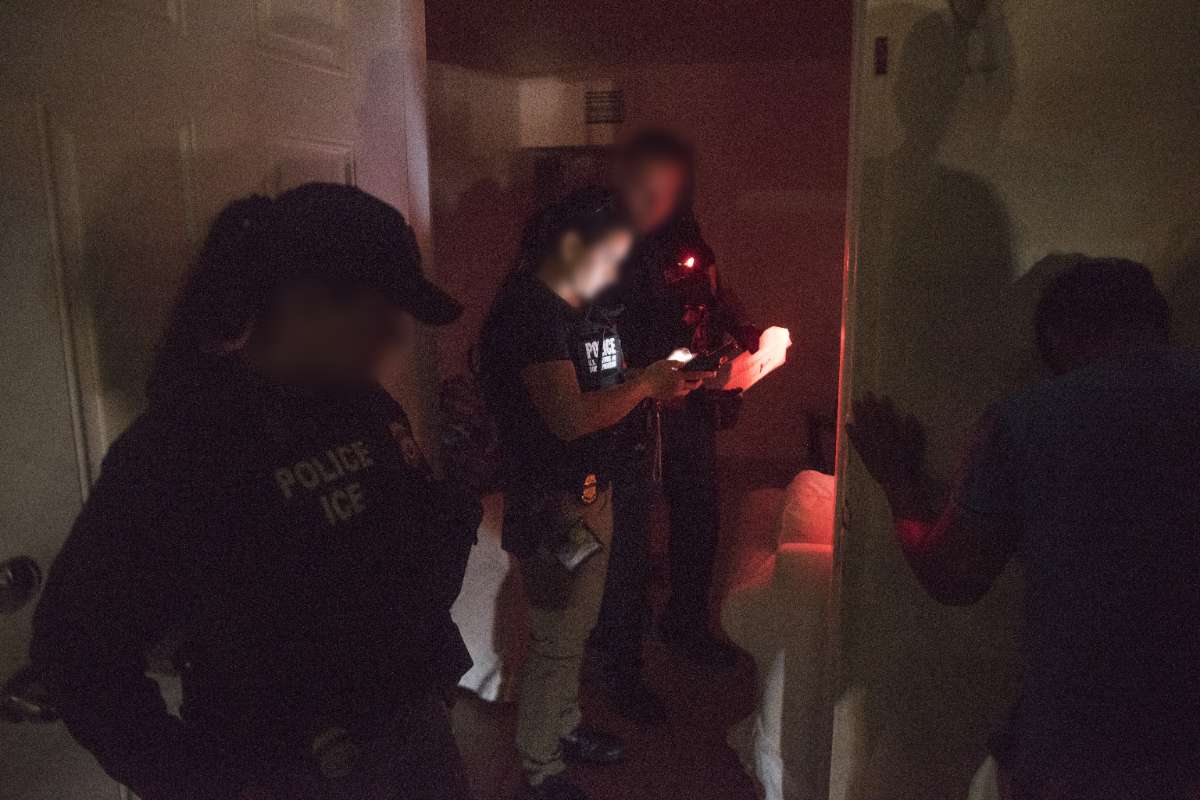
The fatal shooting unfolded amid a federal operation involving over 2,000 agents. the broader enforcement push has been framed by DHS as a multi-agency surge, while state leaders and Minneapolis officials have criticized what they see as a lack of transparency around federal actions and the investigation.
Within days, the timeline expanded beyond the shooting itself. Federal officials publicly defended the officer, DHS announced additional personnel, USCIS rolled out a separate background-check initiative aimed at refugees in Minnesota, and Minnesota filed suit seeking to stop the surge.
The enforcement effort was branded Operation Metro Surge, a DHS initiative launched in December 2025 that flooded the Twin Cities with thousands of federal agents from ICE, CBP, and HSI. In the days after the shooting, the federal government also announced Operation PARRIS, an initiative aimed at re-examining refugee background checks.
Operation PARRIS and Policy Steps
A separate policy step added to the sense of escalation. Operation PARRIS, short for Post-admission refugee reverification and integrity strengthening, was announced on January 9, 2026, targeting 5,600 refugees in Minnesota for background check re-examinations and potential deportation proceedings.
The federal response to the shooting featured unusually blunt language from senior officials. DHS Secretary Kristi Noem labeled the incident “domestic terrorism” as she defended Ross’s actions.
“She then proceeded to weaponize her vehicle. This was clearly a law enforcement action, where the officer acted on his training and defended himself and his life and his fellow colleagues,” Noem said in remarks dated January 8–11, 2026.
On January 11, Noem announced a further surge of “hundreds more” agents to the region. The department’s statements cast the operation as a necessary enforcement action and portrayed the shooting as a response to an immediate threat.
Additional Federal Statements
USCIS Spokesperson Matthew Tragesser described Minnesota as a focal point for immigration enforcement priorities tied to fraud investigations. “Minnesota is ground zero for the war on fraud. USCIS’ show of force in Minnesota demonstrates that USCIS will not stand idly by as the U.S. immigration system is weaponized by those seeking to defraud the American people. American citizens first, always,” Tragesser said on January 7, 2026.
Vice President JD Vance also defended the officer publicly. At a White House briefing on January 8, 2026, Vance called the event “an attack on law and order” and described Good as “a victim of left-wing ideology.”
State and Local Response
Minnesota officials, however, have pointed to the investigation’s structure and the handling of evidence as central concerns. The FBI has taken “sole control” of the investigation, explicitly excluding the Minnesota Bureau of Criminal Apprehension (BCA), according to the account of the jurisdiction dispute.
Governor Tim Walz and Attorney General Keith Ellison criticized what they described as a lack of transparency, and the State of Minnesota filed a federal lawsuit on January 12, 2026, to halt the surge as unconstitutional.
The legal clash adds a governance dimension to a case already drawing attention for its lethal outcome. Minnesota’s lawsuit, along with criticism from state leadership, frames the surge and the investigation as questions of constitutional limits, accountability and oversight when federal agents conduct large-scale operations inside a state.
Exclusive federal control over an investigation can shape how quickly information becomes public and which agencies gain access to evidence and witnesses. State officials’ focus on the BCA’s exclusion underscores how oversight disputes can become part of public confidence in the investigation, especially when video evidence becomes central to competing narratives.
International Scrutiny and the UN
The UN’s involvement adds international scrutiny to what is otherwise a domestic law-enforcement and immigration-enforcement controversy. Laurence’s statement framed the investigation as a question of compliance with international human rights law standards governing intentional lethal force, and it called for independence and transparency even as it noted the FBI probe.
Such language has resonance in U.S. debates over accountability because it centers not only on whether a shooting was justified, but on whether the investigative process itself is credible to the public and to affected communities.
Broader National Debate and Community Impact
The dispute also sits within a wider national debate over immigration enforcement. The incident, as described in public accounts, has intensified scrutiny of the “America First” immigration crackdown and raised questions about the use of lethal force against a U.S. citizen during an immigration operation.
Good’s family described her as a mother of three and a poet who had recently moved to Minneapolis. The family has called for “humanity, empathy, and care” while seeking justice.
Community impacts described in Minneapolis include school lockdowns, business closures, and widespread fear in immigrant communities as the surge unfolded. The effect of large federal operations can extend beyond targeted enforcement actions, shaping mobility, daily routines and community trust.
A similar shooting occurred in Portland, Oregon, on January 8 involving CBP agents, an incident that was cited in public accounts as contributing to heightened national tensions. Reporting on the Minneapolis case has treated the Portland shooting as part of a broader moment of intensified scrutiny around federal enforcement tactics, without connecting the investigations.
Operation Metro Surge, as described by DHS, brought together personnel from multiple federal agencies, including ICE, CBP and HSI. In practice, large deployments can mean visible agent presence in neighborhoods, stops and arrests, and an atmosphere of disruption that local leaders say can affect both immigrants and U.S. citizens.
Operation PARRIS, announced separately from the surge, focuses on what USCIS described as background check re-examinations for 5,600 refugees in Minnesota. Such re-verification initiatives can carry high stakes for individuals whose legal status depends on eligibility assessments and screening results.
The combination of a fatal shooting, a surge involving over 2,000 agents, and a policy initiative targeting 5,600 refugees has created overlapping fronts of controversy: the use of force, the scale of operations, the scrutiny of immigration benefits, and the investigation’s independence.
Information Flow and Official Releases
For residents trying to track the fast-changing developments, updates have been channeled through federal, state and city communications. USCIS posted a newsroom release dated 01/09/2026 titled DHS Launches Landmark USCIS Fraud Investigation in Minnesota.
Minnesota’s attorney general’s office posted a release dated 01/12/2026 titled Ellison and cities sue to halt ICE surge. Minneapolis posted a city release dated 01/12/2026 titled Press Release on Federal Surge and Lawsuit.
Those official updates sit alongside the central unresolved questions raised by the shooting itself: whether Ross faced an imminent threat at the moment he fired, what video evidence shows, and whether an investigation controlled solely by the FBI can satisfy demands for independence and transparency voiced by the UN Human Rights Office and echoed by Minnesota leaders.
Laurence’s statement made clear the UN was watching not only the facts of the encounter but the integrity of the process that follows. “We take note of the FBI investigation and insist on the need for prompt, independent and transparent investigation into the killing of Ms. Good,” he said.
The fatal shooting of U.S. citizen Renee Nicole Good by an ICE officer has sparked international condemnation and a constitutional crisis in Minnesota. While federal agencies defend the act as self-defense, state officials and the UN demand transparency. The incident coincides with massive federal immigration surges and new refugee re-verification policies, leading Minnesota to sue the federal government to halt the operations.