- A New Jersey federal judge recently challenged mandatory detention rulings from the Fifth Circuit.
- Immigration habeas corpus petitions are surging in federal courts due to prolonged custody.
- The shift follows a 2025 memo limiting access to bond hearings for many detainees.
(NEW JERSEY) — A February 2026 detention ruling from a federal judge in NJ, issued days after a divided Fifth Circuit decision favoring broader mandatory detention, is shaping the current surge of immigration habeas corpus petitions and giving detained immigrants a clearer federal-court pathway to challenge prolonged custody without a bond hearing.
The immediate practical impact is procedural, not a guaranteed release. Detained noncitizens and their lawyers are testing whether DHS can treat certain long-time U.S. residents as “applicants for admission” under INA § 235 and hold them without bond. District judges, including in New Jersey, are being asked to step in quickly when detention appears to stretch on without individualized custody review. That dynamic has contributed to a sharp rise in filings in the District of New Jersey.
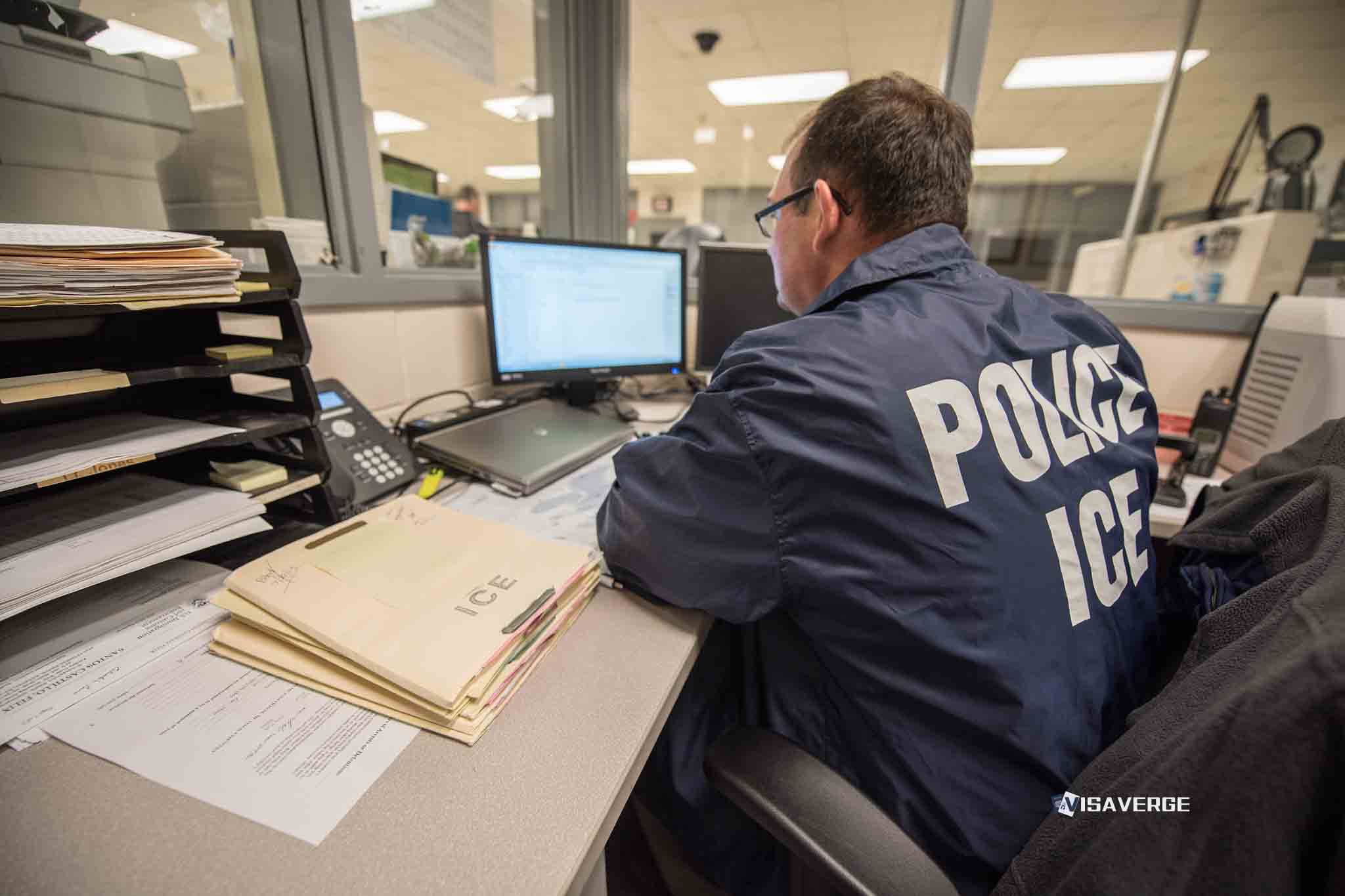
1) Overview: Why immigration habeas filings are rising, and why NJ is a focal point
An immigration-related habeas corpus petition is a lawsuit filed in federal court challenging the legality of custody. In this context, it typically argues that immigration detention is unlawful, unreasonably prolonged, or imposed without required process. Habeas does not re-try removability. It focuses on detention authority and custody review.
A few definitions help:
- Habeas petition: A federal court filing that asks a judge to review whether detention violates the Constitution, a statute, or both.
- Mandatory detention: Detention required by the immigration statute for certain categories, often with no immigration judge bond hearing. Examples include INA § 235(b) custody for many “applicants for admission,” and INA § 236(c) custody for certain criminal grounds.
- Bond hearing: A hearing before an immigration judge to decide whether ICE custody should continue, typically under INA § 236(a), and governed by EOIR custody procedures.
What changed, at a high level, is the enforcement and processing posture described by government officials and reflected in litigation filings. Practitioners report more cases being charged and processed in ways that trigger INA § 235 custody rules. That tends to reduce routine access to immigration judge bond hearings. When bond is unavailable, federal habeas becomes the main tool to seek a custody review.
New Jersey matters because it has a major detention footprint and a heavy immigration court workload. That combination concentrates detained cases, lawyers, family impacts, and federal-court litigation. It also concentrates the government’s response burden. U.S. Attorney’s Offices must defend these petitions on short deadlines. District courts must triage emergency requests.
The numbers are stark, but readers should focus on what they mean. When filing volume multiplies quickly, courts face scheduling pressure. Attorneys face capacity limits. Detained people may wait longer for hearings. Families may struggle to locate and communicate with loved ones.
Warning: Habeas petitions often move fast. Some courts set briefing schedules in days, not weeks. Missing a deadline can end a case quickly.
2) Official statements and framing from government sources (as of Feb. 2026)
Federal agencies have publicly defended the current detention posture. They frame the litigation spike as a byproduct of enforcing immigration statutes “as written.”
DHS spokesperson Tricia McLaughlin said on February 10, 2026: “We are applying the law as written,” and described full enforcement as tied to community safety. Those statements align with DHS’s core role. ICE arrests and detains. It decides charging posture in removal proceedings. It then litigates custody issues through government counsel.
The Department of Justice has emphasized operational strain and has criticized what it characterizes as judicial interference. A DOJ spokesperson said on February 10, 2026 that if judges “followed the law,” the habeas caseload would not be “overwhelming.” DOJ’s role is distinct. It defends habeas petitions in federal court, usually through U.S. Attorney’s Offices.
Attorney General Pam Bondi, responding on February 9, 2026 to a favorable Fifth Circuit detention ruling, called it a “significant blow” against “activist judges.” That statement reflects DOJ leadership’s framing of detention litigation as a separation-of-powers dispute.
New Jersey political leaders, meanwhile, have described state-level goals that intersect with federal detention operations. Governor Mikie Sherrill and other officials have referenced limiting ICE operations on state property and opposing new detention capacity, including in Roxbury, NJ. State officials do not set federal detention authority. But state facility access and local permitting battles can affect where detainees are held and how quickly detainees can meet counsel.
3) Key facts and statistics: Why the metrics matter
The core point for readers is not only “how many.” It is “how fast” and “where.” Rapid increases create friction at every stage.
New Jersey’s immigration court docket is among the nation’s heaviest. That matters because a larger detained docket tends to correlate with more emergency custody litigation in federal court. Detained cases generate time-sensitive filings. Lawyers and courts have less flexibility.
Nationally, the pace of filings is being described as an “avalanche.” Even when individual cases are routine, volume alone can slow review. It can also reduce the time available for careful fact development.
The trend is not limited to NJ. Reports from other states show similar spikes. Minnesota has been cited as an example of a rapid increase from a low baseline to hundreds of filings in a short period. That kind of acceleration is a system-stress indicator. It affects federal dockets, attorney availability, and detention-conditions oversight.
Consequences show up quickly. Courts may issue shorter page limits. Judges may consolidate similar claims. Government lawyers may request extensions due to staffing limits. Detained petitioners may seek temporary restraining orders when medical issues or overcrowding are alleged.
4) Legal context and judicial response: The tension over INA § 235 custody
The legal pathway often looks like this:
- ICE arrests or takes custody.
- DHS files a Notice to Appear in immigration court under INA § 240.
- DHS asserts a detention authority. That choice affects bond access.
- If no bond hearing is available, counsel may file habeas in federal district court.
INA § 235 is central to the current wave. Section 235 governs inspection and certain detention of “applicants for admission.” Many people associate “applicants for admission” with the border. Litigation now tests broader application, including for some people arrested in the interior.
A divided Fifth Circuit panel, in a February 6, 2026 ruling described in public reports, allowed indefinite detention without bond hearings for certain noncitizens treated as “applicants for admission,” even if they had lived in the U.S. for years. That is significant because the Fifth Circuit includes Texas, Louisiana, and Mississippi, and it can influence national litigation strategies.
In New Jersey, on February 9, 2026, U.S. District Judge Christine O’Hearn granted relief to a detained immigrant in a decision that stated she was “unpersuaded” by the Fifth Circuit’s reasoning. While district court orders do not bind other judges, they can be persuasive, especially when they explain why statutory or constitutional concerns require individualized review.
This sets up a familiar pattern in immigration detention law. Different courts may read detention statutes differently. Conflicts can persist until circuit courts align or the Supreme Court resolves the issue.
Two immigration precedents provide helpful background on custody mechanics, even though habeas is federal-court litigation. In Matter of Joseph, 22 I&N Dec. 799 (BIA 1999), the BIA addressed when immigration judges may consider whether ICE has properly placed a person in mandatory detention under INA § 236(c). In Matter of Guerra, 24 I&N Dec. 37 (BIA 2006), the BIA listed factors for discretionary bond under INA § 236(a). Those decisions underscore the practical gap. If DHS proceeds under a theory that bars bond, the normal EOIR custody framework may not apply, pushing litigants toward habeas.
Warning: Detention rules can vary by circuit. NJ is in the Third Circuit. A ruling in the Fifth Circuit may be cited, but it is not automatically controlling in NJ.
5) Impact on individuals and operations: Emergency petitions, staffing strain, and NJ friction points
Many “emergency” habeas filings are conditions-based. They may allege inadequate medical care, extreme overcrowding, unsafe temperatures, or barriers to attorney access. Courts generally require credible factual support. Claims are often supported by declarations, medical records, or facility documentation when available.
These cases are operationally demanding. U.S. Attorney’s Offices must respond quickly, sometimes overnight, with declarations from ICE and detention facilities. In Minnesota, U.S. Attorney Daniel Rosen described offices working “continuously” and “overtime” to keep pace, according to filings cited in reports.
New Jersey adds state and local friction points. Debates about ICE access on state property can affect where detention occurs and how detainees are transported. Opposition to proposed new detention space in Roxbury, NJ adds another variable. When capacity shifts, detainees may be moved. Transfers can disrupt attorney relationships and delay filings due to lost contact.
This operational pressure can influence timelines. It may slow briefing. It may also prompt more quick decisions on limited records, which can increase appeals.
6) The policy shift driving the surge: The July 2025 memo and INA § 235 processing
Public reporting attributes much of the current surge to a July 2025 memo from Acting ICE Director Todd Lyons. The memo is described as directing agents to process more people under INA § 235 rather than INA § 236, including some arrested in the interior. Operationally, that shift matters because INA § 235(b) detention is commonly treated as mandatory, with limited access to immigration judge bond.
When bond hearings are unavailable, the legal pressure moves to federal court. Lawyers often argue that prolonged detention without individualized review raises constitutional due process concerns. The government often responds that Congress authorized detention under the statute and that courts should defer to that framework.
Eligibility and posture still matter. Port-of-entry encounters, entries between ports, prior removal orders, parole, and charging choices can change the statutory analysis. Timing also matters. Some claims arise after weeks in custody. Others arise after months.
Deadline: If you receive a federal court order setting a briefing schedule in a habeas case, comply exactly. Courts may deny relief for late filings, even when the underlying issues are serious.
7) Official sources and where to verify data
Readers tracking this trend should verify information through primary sources:
- USCIS policy messaging that can intersect with detention posture: USCIS newsroom
- EOIR caseload context and adjudication statistics: EOIR adjudication statistics (DOJ)
A basic verification approach is simple. Check the date. Identify the issuing agency or court. For court records, confirm the docket number and the judge’s order.
Practical takeaways for detainees and families in NJ
- Ask what detention statute ICE is using. “235,” “236(a),” and “236(c)” can change bond options.
- Document medical and access issues early. Conditions claims usually need evidence, not only argument.
- Move quickly when relief is time-sensitive. Emergency filings require fast coordination and exact compliance.
- Expect jurisdiction-specific outcomes. What succeeds in one circuit may not succeed in another.
Given the stakes and speed, anyone considering a habeas filing, or facing prolonged detention without bond, should speak with an experienced immigration attorney. Many cases also require coordination between immigration court counsel and federal-court counsel.
⚖️ Legal Disclaimer: This article provides general information about immigration law and is not legal advice. Immigration cases are highly fact-specific, and laws vary by jurisdiction. Consult a qualified immigration attorney for advice about your specific situation.
Resources:
- AILA lawyer search