- A federal lawsuit challenges the visa pause affecting 75 countries and impacting thousands of applicants.
- The policy targets immigrant visa issuance based on nationality and public charge self-sufficiency concerns.
- Legal action seeks to block the indefinite pause citing arbitrary agency actions and family separation.
(NEW YORK) — A federal lawsuit filed Monday is seeking to halt a State Department “visa ban” that paused immigrant visa issuance for nationals of 75 countries effective January 21, 2026, a move that plaintiffs say has stranded families and employers despite approved cases.
Overview: Clash over 75-country immigrant visa pause
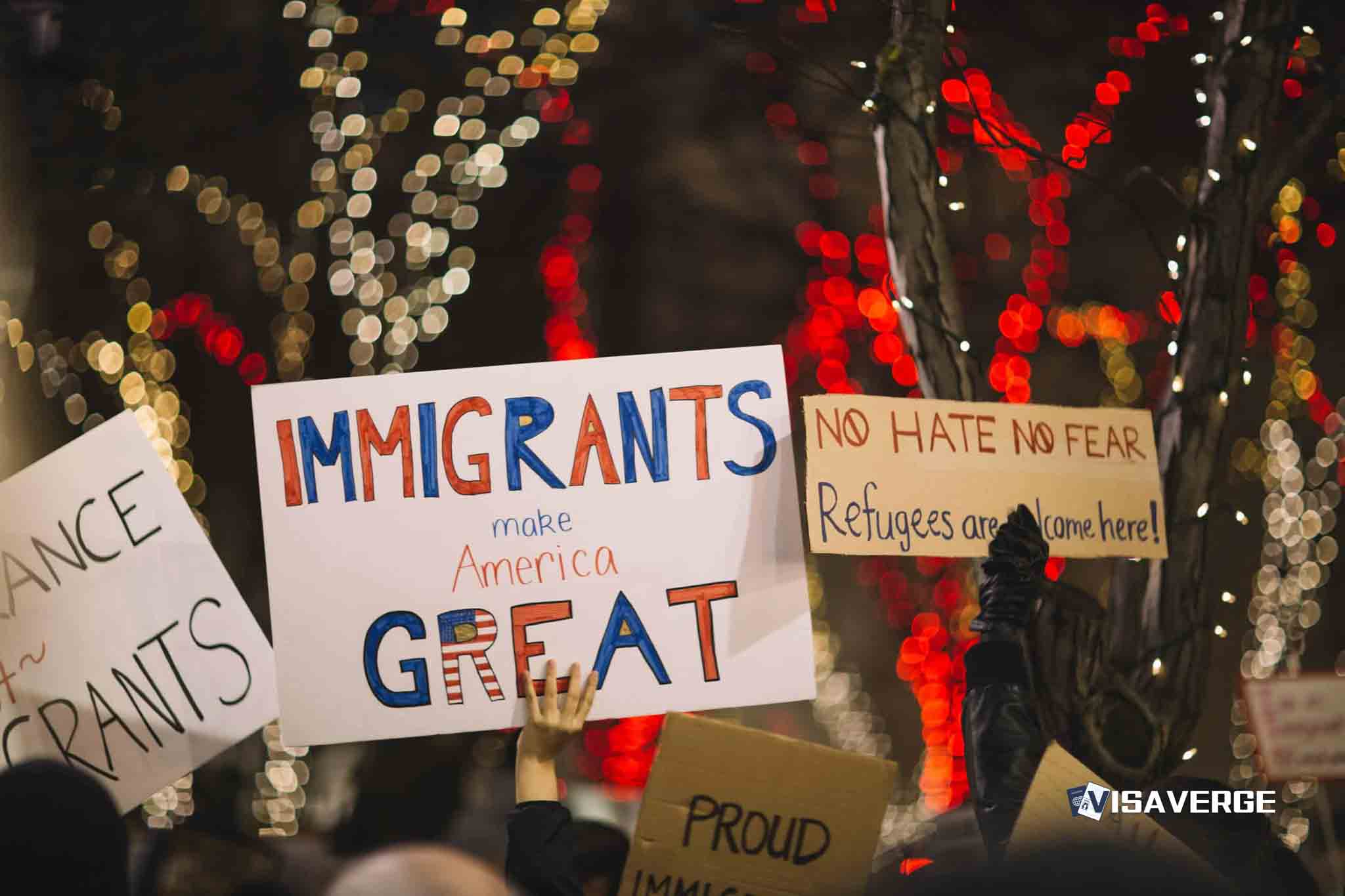
On February 2, 2026, a coalition that includes New York U.S. citizens and immigrant rights organizations filed CLINIC v. Rubio in the U.S. District Court for the Southern District of New York (SDNY).
The suit asks the court to block an indefinite Department of State (DOS) pause on issuing immigrant visas—the visas that lead to lawful permanent residence (green cards) through consular processing abroad.
The challenged policy took effect in the early hours of January 21, 2026, following DOS guidance issued in mid-January. The plaintiffs contend the government replaced case-by-case adjudication with a sweeping nationality-based bar, framed as a “public charge” and screening measure.
The policy’s breadth matters because it reaches a large share of would-be immigrants processed at U.S. consulates worldwide.
Warning: An immigrant visa “hold” can affect approved cases. Approval of an underlying petition does not guarantee visa issuance at a consulate.
Policy details: scope, effective date, and exceptions
The pause applies to immigrant visas issued overseas by DOS, not to nonimmigrant visas such as B-1/B-2 visitor visas, F-1 student visas, or many temporary work visas. That distinction is procedural and practical.
Immigrant visas are typically issued only after a document-heavy process that includes the DS-260, civil documents, a medical exam, and a consular interview. When issuance is paused, applicants may still see interviews postponed, cases placed in administrative status, or final printing and issuance withheld.
For many families and employers, the immediate effect is “stuck at the finish line.” A case can be documentarily complete, and even interviewed, yet still not result in a visa foil and sealed packet.
Applicants should expect consulates to follow centralized instructions, often communicated through internal cables and public guidance.
The policy includes limited exceptions, which in practice often turn on documentation and how nationality is recorded. For example, a dual national may be able to proceed if traveling on a passport from a non-covered country, but consular officers may still review the record carefully for identity and eligibility.
Certain diplomatic categories and Special Immigrant Visa (SIV) pathways are also described as carved out.
Importantly, the reporting around this policy indicates that immediate relatives of U.S. citizens are not automatically exempt. That does not mean a relative can never qualify for an exception. It does mean families should not assume that “spouse of a U.S. citizen” ends the inquiry at the consulate.
Public charge context: “Public charge” is a ground of inadmissibility under INA § 212(a)(4). In consular processing, the concept is commonly addressed through the affidavit of support framework for many family-based cases under INA § 213A.
The new pause is described as a broader application of public-charge-related screening, layered onto nationality-based restrictions.
Deadline: If your medical exam or police certificate will expire soon, speak with counsel before redoing documents. Re-documenting too early can create new timing problems.
Official statements and framing from the administration
In public messaging, DOS has framed the pause as both a screening measure and a self-sufficiency measure. A State Department spokesperson said visas are “a privilege,” and emphasized preventing misuse of public benefits and enhancing “screening and vetting.”
Secretary of State Marco Rubio echoed that theme in Senate testimony, describing a broad review of policies to ensure immigrants are financially self-sufficient.
For readers, the key operational point is how such messaging becomes practice. Consulates do not set policy country by country. They typically implement Washington guidance through cables and standard operating procedures.
When instructions are categorical, officers generally have limited discretion to issue outside enumerated exceptions, even where equities are strong.
Legal framework and potential challenges
The complaint in CLINIC v. Rubio is described as advancing familiar litigation theories in large-scale immigration restrictions.
One likely focus is the Administrative Procedure Act (APA), which governs many federal agency actions. An APA claim often argues the government acted without a reasoned explanation, failed to consider important aspects of the problem, or adopted a policy that is arbitrary and inconsistent with the statute.
Plaintiffs may also contest whether the agency adequately explained the basis for an across-the-board pause.
Another likely theme is a constitutional challenge tied to nationality-based classifications. While immigration law gives the political branches broad authority, courts still examine whether the government followed required procedures and whether the stated rationale aligns with the action taken.
Outcomes can also differ depending on posture. Consular decisions are often insulated by doctrines associated with consular processing, while broader policy directives may be more susceptible to review.
Early stages in SDNY may include requests for a temporary restraining order (TRO) or preliminary injunction. Those requests typically turn on irreparable harm, likelihood of success, and the public interest.
A court order, if issued, could pause enforcement, narrow the policy, or require the agency to reconsider its approach.
Warning: Litigation can move quickly, but it can also produce narrow rulings. A court may grant partial relief that does not cover every applicant or visa category.
Impact on individuals and communities
The practical impacts described in the suit and related accounts are immediate in New York and beyond.
Family-based cases
Plaintiffs include U.S. citizens separated from spouses and adult children abroad. Even short delays can cascade into missed births, medical caregiving gaps, and prolonged separation.
Because immigrant visa processing requires time-sensitive documents, delays can force families to repeat steps. Medical exams expire. Police certificates can “age out.” Updated financial evidence may be demanded.
Employment-based cases
Employers and workers may face blown start dates and licensing timelines, including for professionals. Reports cite blocked visas for workers in high-preference categories such as EB-1 and EB-2, where the petition stage can be lengthy and expensive.
Even when an I-140 petition is approved, consular issuance is the last gate. A pause at issuance can derail relocation, credentialing, and project staffing.
This “limbo” dynamic is often the most damaging. The applicant has done everything asked, yet cannot get the final document needed to travel and start life in the United States.
What to watch next and where to find official updates
Near term, SDNY proceedings may include an initial conference, expedited briefing on injunctive relief, and early orders clarifying the status quo. Readers should also watch for any revised DOS guidance that clarifies exceptions or consular procedures.
As of February 3, 2026, USCIS has not announced a matching pause for adjustment of status (Form I-485) filed inside the United States. Still, “heightened scrutiny” could show up through more evidence requests, longer security checks, or stricter financial sufficiency inquiries.
Applicants should track both DOS consular updates and USCIS operational changes.
For official information, monitor:
- DOS policy and press updates
- Immigrant visa processing information
- USCIS announcements
For the lawsuit itself, the SDNY docket will reflect hearing dates and filings.
Timeline: If you have a consular interview scheduled, confirm directly with the consulate and your NVC account. Do not make irreversible travel plans until issuance is confirmed.
Recommended actions (next 7–30 days)
- Confirm where your case is stuck: NVC, post interview, or issuance. Save screenshots and emails.
- Check exception strategies: Dual nationality, passport use, and category-specific carve-outs can be document-sensitive.
- Protect time-sensitive documents: Ask counsel whether to redo a medical exam or police certificate now or wait.
- Employers should plan contingencies: Consider remote start options and updated start dates where feasible.
- Consult an immigration attorney promptly if you are from an affected country, have urgent humanitarian factors, or have a near-term interview.
Resources:
- AILA Lawyer Referral
⚖️ Legal Disclaimer: This article provides general information about immigration law and is not legal advice. Immigration cases are highly fact-specific, and laws vary by jurisdiction. Consult a qualified immigration attorney for advice about your specific situation.