- Matter of Guerra remains the standard for bond hearings regarding flight risk and danger assessments.
- The One Big Beautiful Bill Act funds massive detention expansion through $170 billion in enforcement investment.
- Large-scale warehouse hubs may complicate access to counsel and evidence gathering for detainees.
Holding and practical impact. The Board of Immigration Appeals’ bond framework in Matter of Guerra, 24 I&N Dec. 37 (BIA 2006) remains the central precedent for ICE custody redetermination hearings under INA § 236(a). In plain terms, Guerra confirms that immigration judges may weigh a broad set of factors to decide whether a person is a flight risk or danger, and what bond amount is appropriate.
That flexible, fact-driven standard takes on new urgency as detention expands through larger hubs and more frequent transfers. In many cases, the outcome of a bond hearing may turn less on a single document and more on how well a detainee can document community ties, medical needs, and custodial history despite being moved among ICE detention centers.
1) Massive funding and the One Big Beautiful Bill Act: capacity versus authority
In July 2025, Congress enacted the one big beautiful bill act, a reconciliation measure described by the administration as a multi-year enforcement investment. Public reporting and agency messaging describe roughly $170 billion in immigration enforcement funding through 2029, with significant detention construction and operations support.
Two distinctions matter legally:
- Appropriations vs. operational authority. Funding can expand beds, contracts, and staffing. It does not, by itself, rewrite the INA’s detention statutes. ICE still must operate within INA § 236 (pre-order detention) and INA § 241 (post-order detention).
- Detention “capacity” vs. average daily population. “Capacity” is the number of beds available. The detained population is how many are actually held on a given day. Both can rise together, especially if arrests increase.
dhs officials have emphasized “efficiency” and “scale” in public statements, including remarks attributed to DHS leadership in january 2026 about expanding detention space alongside nationwide enforcement activity. The policy argument is operational. The legal consequences show up in bond hearings, continuance requests, and access-to-counsel disputes.
Funding growth can increase transfers to remote facilities. Transfers can disrupt attorney access and evidence gathering. Those disruptions often surface at bond hearings and first master calendar hearings.
2) Large-scale warehouse-style centers and what they change for detainees
ICE planning described in late 2025 and early 2026 reflects a model shift toward large processing and detention hubs, including conversions of industrial facilities. Operationally, large hubs tend to standardize intake, medical screening, and transport. They also tend to increase the tempo of inter-facility movement.
Legally, this can affect several pressure points:
- Bond preparation under Matter of Guerra. Guerra invites evidence of stable residence, work history, family ties, prior compliance, and criminal history. Transfers make it harder to gather originals, secure witnesses, and coordinate counsel.
- Court access and venue friction. Remote detention can complicate attendance at hearings. Video hearings can help, but they also raise practical issues for confidential attorney communication.
- Family contact. Large hubs often rely on phone and video contact. For some families, distance effectively reduces visits, even when “access” exists on paper.
Because Guerra is discretionary, detainees in remote facilities frequently need a tighter record. That record often includes letters of support, proof of address, medical documentation, and evidence of compliance with prior court obligations.
Deadline risk: Bond motions and supporting packets often move quickly once an attorney enters an appearance. Families should gather identity documents, lease records, pay stubs, and medical records immediately.
3) Personnel surge and the hiring blitz: why custody decisions may accelerate
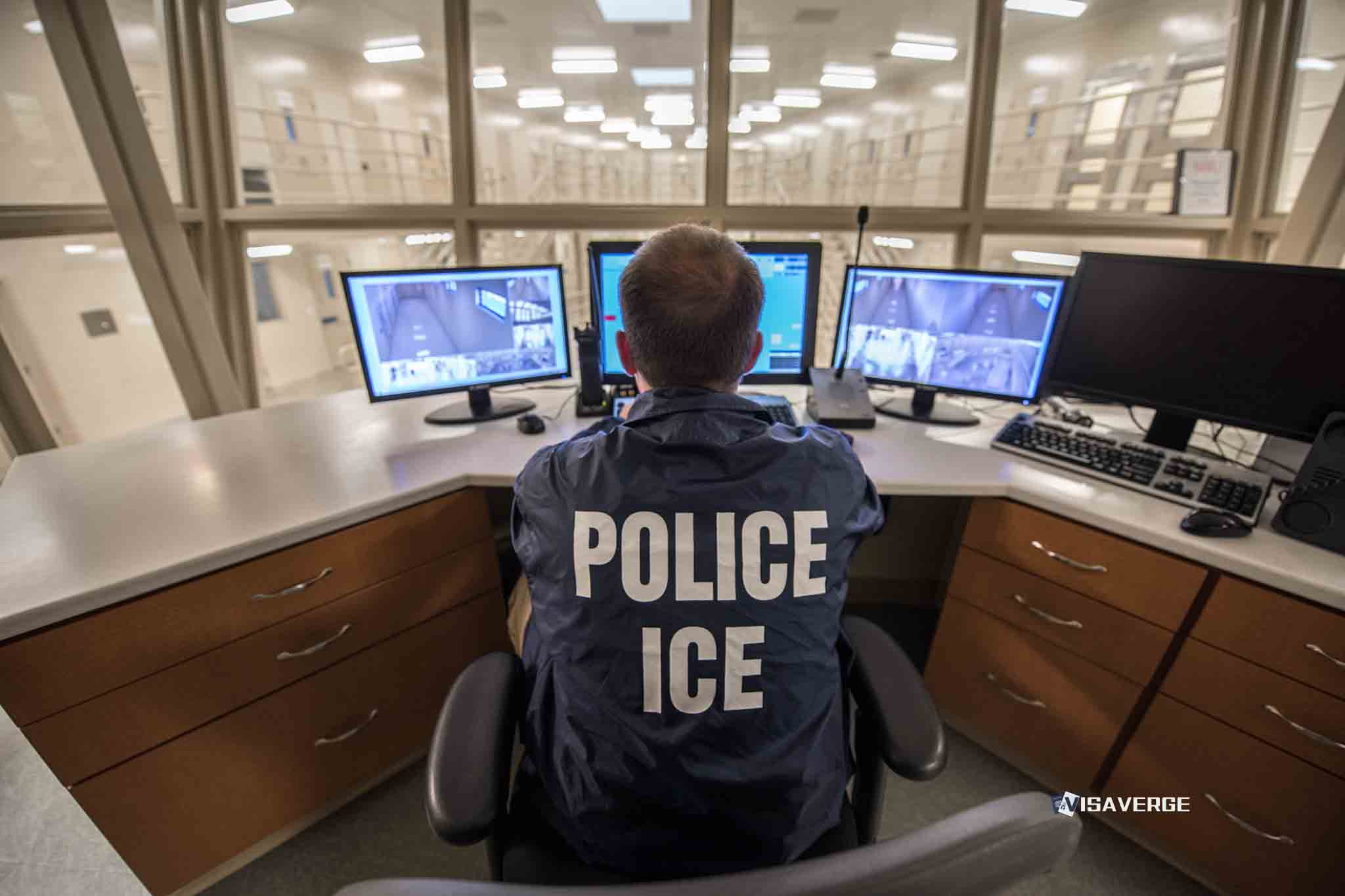
A sharp increase in ice staffing typically expands several functions at once: arrest operations, detention transportation, field office processing, and case support. When transportation and bed space increase together, transfers can become routine rather than exceptional.
CBP hiring increases may also affect the interior. Faster border processing and more frequent issuance of charging documents can lead to more cases moving into detention pipelines. USCIS recruiting framed around enforcement priorities may also affect how benefit adjudications intersect with referrals.
None of this changes Guerra’s legal test. It can change the speed of events surrounding it. When detention decisions accelerate, the practical ability to present favorable evidence becomes more important.
4) USCIS enforcement shift, Final Rules, and the NTA pipeline into immigration court
A key development described by DHS and USCIS is a Final Rule issued in September 2025 that reorients USCIS toward a more enforcement-forward posture, including assertions of expanded officer authorities. A “Final Rule” is published in the Federal Register and typically takes effect on a set date, followed by agency guidance and training.
Even with shifting agency missions, removal proceedings still begin the same way: a Notice to Appear (NTA) is filed with the immigration court, and the case proceeds under EOIR procedures. In many cases, ICE then determines custody placement under INA § 236.
NTA volume matters because it influences court dockets and detention demand. It also raises old jurisdictional questions about NTA defects. The BIA has held that certain missing information can be cured for jurisdictional purposes. See Matter of Bermudez-Cota, 27 I&N Dec. 441 (BIA 2018). Federal courts have not been uniform on related issues after Pereira v. Sessions and Niz-Chavez v. Garland, and outcomes can vary by circuit.
Where this intersects with Guerra is practical: more NTAs and more detained filings mean bond hearings may be scheduled quickly, sometimes before families can stabilize evidence.
Do not assume an NTA defect ends proceedings. Circuit law varies, and litigation strategy can backfire if it delays bond preparation.
5) 287(g) growth and local jail screening: the pipeline into ICE custody
Expanded INA § 287(g) partnerships can increase arrests that originate in local custody. In many jurisdictions, “jail screening” models allow local agencies to identify noncitizens for ICE action after booking. “Task force” models can raise additional concerns because immigration enforcement may follow stops or investigations unrelated to serious crimes.
For detainees, the common pattern is fast movement: local arrest, local jail booking, ICE detainer, and transfer to an ICE facility. That sequence can complicate attorney retention and evidence collection.
Under Guerra, criminal history is relevant, but so are rehabilitation evidence and community ties. A local-jail-to-ICE transfer can compress the timeline for presenting those mitigating facts.
6) Key statistics and oversight: why conditions evidence may appear in bond records
Publicly discussed 2025–2026 trends include rising detained populations, increased reported custody deaths, and changing arrest composition. Oversight debates often focus on medical care, heat exposure, transfer frequency, and staffing ratios.
Although Guerra focuses on danger and flight risk, conditions and medical facts can still matter in several ways:
- Ability to comply with supervision. Severe medical conditions can support arguments for release on reasonable conditions.
- Bond amount. Evidence that a family can house and support the person can reduce perceived flight risk.
- Alternative custody requests. Counsel may seek conditions of release, including check-ins, where available.
Oversight channels include DHS OIG investigations, GAO reviews, congressional inquiries, civil litigation, and ICE’s own public-facing data. Each tool has limits. Some produce retrospective findings rather than real-time relief.
7) Impact, transparency disputes, and where to verify official information
Public reporting in January 2026 described limits on unannounced congressional visits to detention sites. Policies on access affect transparency because site visits often surface time-sensitive issues, including medical care and use-of-force concerns.
Claims framed as “highest since” a prior year require consistent definitions, reporting windows, and data sources. Readers should check whether a figure is fiscal-year or calendar-year based, and whether it includes all facility types.
For primary-source verification, these official resources are the best starting points:
- ICE detention statistics and facility information: ICE’s Detention Management pages and dashboards (best for trends and operational snapshots).
- DHS policy announcements and leadership statements: DHS newsroom (best for stated priorities and program descriptions).
- USCIS policy and public releases: USCIS newsroom (best for agency posture and program changes affecting applicants).
- Immigration court procedures and updates: EOIR (best for court operations and practice manuals).
Information in this area changes quickly. Detention location, custody status, and court scheduling can shift without much notice. For individual cases, the only reliable approach is case-specific review.
Practical takeaways for families and counsel (through the lens of Matter of Guerra)
- Treat the bond record like the main event. Under Matter of Guerra, 24 I&N Dec. 37 (BIA 2006), judges can weigh many facts. Discretion cuts both ways. Strong documentation can matter.
- Plan for transfers. Large hub models can increase moves. Keep a digital folder with IDs, proof of address, medical records, and support letters.
- If medical issues exist, document them early. Medical records can support custody arguments and safer release conditions.
- Know your circuit. Issues tied to NTAs and procedural defects can vary by jurisdiction. Strategy should reflect local precedent.
- Get qualified counsel fast. Detained cases move quickly. Early attorney involvement often improves evidence quality and hearing readiness.
Strong recommendation: Anyone detained, or at risk of detention, should consult a qualified immigration attorney immediately. Detention, bond eligibility, and NTA litigation involve jurisdiction-specific rules and fast deadlines.
Resources (attorney and nonprofit directories):
⚖️ Legal Disclaimer: This article provides general information about immigration law and is not legal advice. Immigration cases are highly fact-specific, and laws vary by jurisdiction. Consult a qualified immigration attorney for advice about your specific situation.
This analysis explores the intersection of the Matter of Guerra bond framework with the massive $170 billion enforcement expansion under the One Big Beautiful Bill Act. It highlights how warehouse-style detention hubs and personnel surges accelerate custody decisions. The report emphasizes that while operational capacity is growing, legal standards for flight risk remain discretionary, making proactive evidence collection and attorney retention essential for those facing ICE detention.