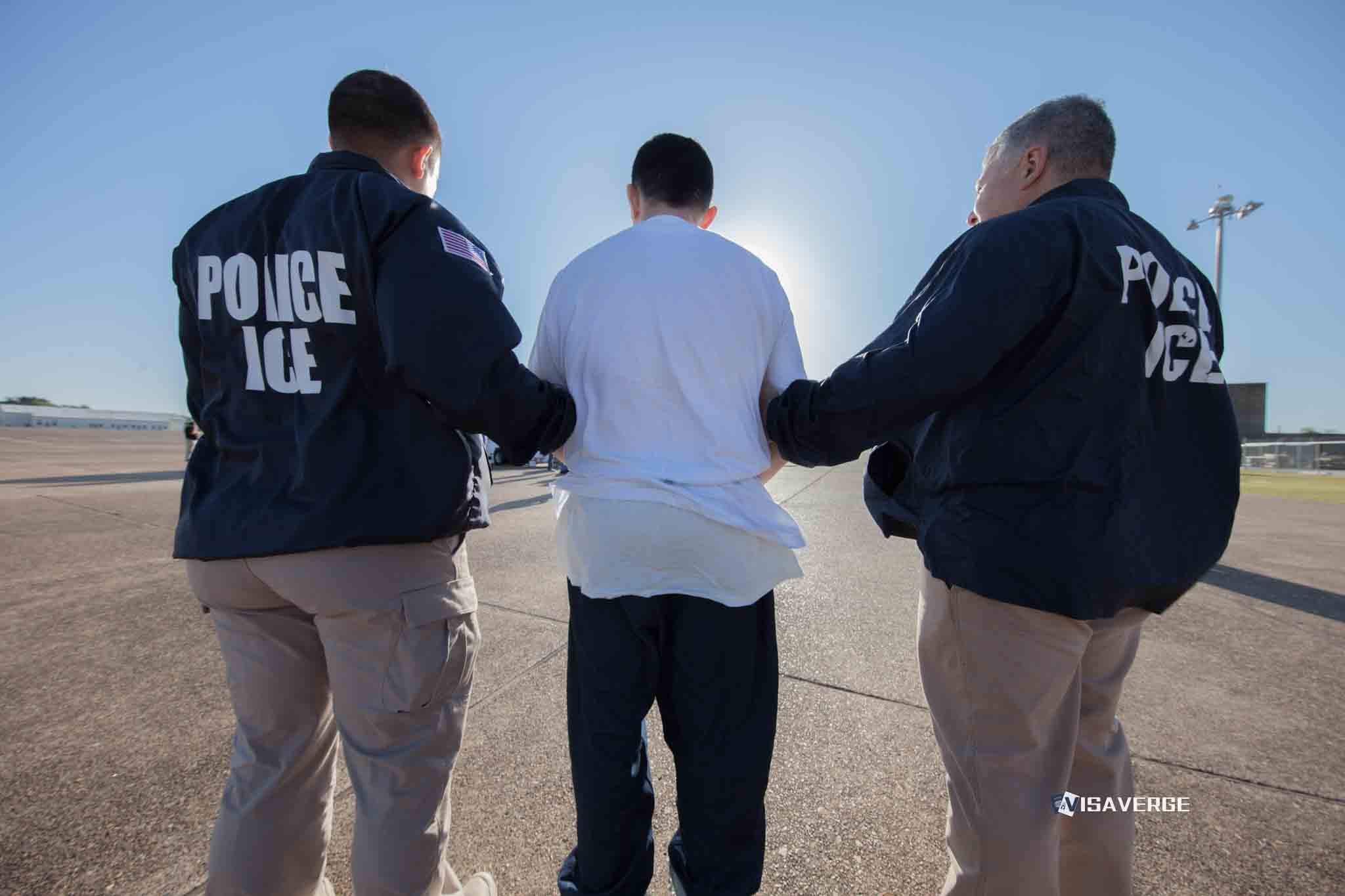
(MINNEAPOLIS, MINNESOTA) — Parents and children in the United States generally have a right to family unity protections and to timely information and access when a child is taken into immigration custody, but Sebastian’s case shows how those rights can become difficult to exercise when ICE detained a teen in an interior arrest and labeled him an “unaccompanied minor” despite a parent living in the U.S.
Sebastian is a 16-year-old Ecuadorian asylum-seeker. ICE detained him in north Minneapolis in early January 2026 while he was driving alone. According to the account provided, agents took his phone shortly after he called his father. Sebastian was then routed into a federal child-custody placement system. He was sent to a federally contracted facility described as the Bridgeway shelter. His father could not readily learn where he was.
This incident matters legally because it highlights a tension that comes up in real cases: a child may be treated as “unaccompanied” for custody purposes even when a parent is present in the United States. That label can affect where the child is held, how calls are supervised, and how hard it is for a parent and lawyer to locate and advocate for the child.
1) The right at issue: family contact, counsel access, and basic due process when ICE detained a child
Several overlapping legal protections can apply when ICE detained a minor in the U.S., whether the child is undocumented, a visa holder, or seeking asylum.
Key legal bases include:
- Fifth Amendment (Due Process Clause). Noncitizens in the U.S. generally have due process protections in immigration detention and removal proceedings. Due process often centers on notice, the chance to be heard, and fair procedures.
- INA § 240 (removal proceedings) and related regulations at 8 C.F.R. § 1240 (EOIR court procedures). These provisions govern how removal cases proceed once DHS initiates them.
- Right to counsel at no government expense in removal proceedings: INA § 292 and 8 C.F.R. § 1240.10(a)(1)-(3) require immigration judges to advise respondents of the right to be represented, at no cost to the government, by counsel of their choice.
- Special rules for children. “Unaccompanied alien child” is defined in statute at 6 U.S.C. § 279(g)(2) (Homeland Security Act provisions transferred to HHS/ORR practice). That definition drives whether a child is typically placed with the Office of Refugee Resettlement (ORR) and its shelter network.
These sources do not guarantee a parent will always be immediately told a child’s location. They also do not prevent DHS from taking enforcement action. They do, however, frame the basic expectation that procedures must be fair, and that access to counsel and family contact should not be arbitrarily blocked.
Who has these rights?
- U.S. citizens have constitutional rights, but are not subject to removal. Citizen parents may still need to assert their parental rights and insist on documentation.
- Lawful permanent residents (LPRs) and visa holders have due process rights and may be placed in removal proceedings in some cases.
- Undocumented people, including asylum-seekers, also have due process rights once in the U.S. The right to counsel in immigration court applies regardless of status, though it is not government-funded.
2) What the “unaccompanied minor” pathway can look like after an interior ICE encounter
Sebastian’s account reflects a pattern families report when a youth is taken during an interior stop. The child is separated from the parent, and the situation shifts quickly from an ICE event to a child-custody placement problem.
In Sebastian’s case, he was transferred to the Bridgeway shelter, described as a federally contracted shelter for immigrant children. Placement in a shelter typically means the child cannot leave freely. Calls may be supervised. Staff may impose rules about what can be said, including limits on sharing the facility’s location.
For parents, the practical problem is not only emotional. It is procedural. If you cannot locate your child, you may not be able to deliver identity documents, show proof of parentage, or coordinate legal strategy. Families can also lose time while agencies decide who “owns” the custody question.
A child can end up in this system after an interior ICE detention when agents assert that the minor is without a parent “available” at the moment of encounter. That on-the-scene assessment can drive rapid transfer decisions. It can happen even if a parent is nearby, or reachable by phone, or living in the same city.
Warning: Parents sometimes assume that showing up at a local ICE office will lead to quick answers. In many cases, the child may already have been transferred. Ask for written information, including the child’s “A-number,” and document who you spoke with.
How to exercise the right in practice when you cannot locate your child
- Collect identifiers immediately. Ask for the child’s full name as used in custody records, date of birth, and any “A-number” or booking number.
- Preserve contact proof. Save call logs, text messages, voicemails, and screenshots. These can later support timelines and credibility.
- Request records in writing. If an agency refuses to disclose location, ask what policy they rely on. Ask where to send proof of guardianship.
- Contact qualified counsel quickly. Many family-location efforts depend on attorney-to-agency communication and persistent follow-up.
3) The policy shift described: from border-centered processing to interior operations
Historically, many readers associated “unaccompanied minor” processing with border apprehensions. A child arrives alone, is processed as a “UAC,” and is transferred to ORR custody. That baseline remains common at the border.
Sebastian’s case is presented as something different: an interior operation resulted in a UAC-style custody track. “Interior operations” refers to enforcement away from the border. These can include targeted operations, traffic-stop-based encounters, or coordinated actions such as the referenced Operation Metro Surge in Minnesota.
Why does the label matter? Because once a child is treated as “unaccompanied,” the downstream process can change in ways that affect family unity:
- The child may be routed into a shelter network that is difficult for parents to track.
- Communication may be controlled and supervised.
- The parent may face a documentation burden before release is even considered.
- The parent may not know which agency is making decisions at each step.
This is not only a “where is my child” issue. It can also affect the child’s removal case. For example, missing early deadlines or failing to appear in immigration court can carry severe consequences.
Deadline Alert: If your child receives an immigration court date, missing it can lead to an in-absentia removal order. Ask counsel to confirm EOIR hearing dates through official channels. See EOIR’s main site.
4) Locating Sebastian: a model for urgent, fact-driven intervention
Sebastian’s family ultimately located him through a mix of legal action, investigation, and in-person advocacy. Families should not assume the same sequence will work in every case. Still, the methods illustrate what tends to move a stalled situation.
Emergency legal action
The family contacted attorney Claire Glenn, who filed an emergency wrongful-detainment petition. In general terms, emergency filings like this aim to force fast review of custody and legality. Depending on the facts, such actions may be framed as habeas-type relief in federal court, or as emergency motions tied to agency detention authority. The proper vehicle is jurisdiction-specific and fact-dependent.
Investigative tracing and documentation
An investigator at the Legal Rights Center reportedly traced Sebastian’s phone calls to identify where he was held. In practice, location tracing often relies on patterns: repeated supervised calls, blocked numbers, time-of-day rules, and phone metadata. Families can assist by recording every call attempt and every staff instruction.
In-person claiming and verification
On January 26, Glenn arrived in person to claim Sebastian. In-person advocacy can matter because it forces real-time answers. It also allows verification of the child’s well-being and helps establish a chain-of-custody record. Families may be asked for:
- Proof of identity.
- Proof of parentage or guardianship.
- Proof of residence and a stable plan for the child.
- Information about pending immigration proceedings.
When a parent goes in person, they should be prepared for screening procedures and limited access rules. They should also be prepared for the possibility that agency staff will refer them elsewhere.
Warning: Do not present false documents or guess at facts when speaking to federal staff. Misstatements can be used later in immigration proceedings. If you do not know an answer, say so and follow up in writing.
5) Government response: classification and access are often the real dispute
DHS stated that ICE does not target children or teenagers, and that when ICE “encounters” a minor without their parent, agents coordinate with federal agencies responsible for child custody to ensure safety. That framing emphasizes child welfare and interagency protocols.
Critics, including immigration attorney Koziol Chavez, described the same events as a functional erasure of family ties through the “unaccompanied” label. The criticism is procedural: once that label is applied, the family may lose meaningful access, and the child may be moved through systems that are difficult to penetrate.
For families, official statements about “safety” do not necessarily answer the urgent questions:
- Where is my child right now?
- What is the child’s A-number and custody status?
- Which agency is making release decisions?
- What documents are required, and where do I send them?
In many cases, the dispute is not only about the initial arrest facts. It is about documentation, classification, and whether agencies will treat a parent as available and appropriate for reunification.
6) Broader context: other youths, recurring information gaps, and early legal support
Sebastian reportedly met two other boys at the Michigan shelter where he was held. He understood both were detained by ICE, and one was from Minnesota. No information was provided about what happened to them, and their outcomes are unknown.
Even without those details, the reported interactions suggest a recurring pathway: youth encountered by ICE away from the border can be routed into shelter custody, then become hard to locate. That pattern can be especially destabilizing for children with pending asylum claims or other relief options, where continuity and stability matter.
Families can use this context as a planning signal:
- Expect that you may need to prove parentage and suitability quickly.
- Expect that you may need counsel to communicate across agencies.
- Expect that phone access may be limited and supervised.
- Expect that time matters, because immigration deadlines continue even while location questions are unresolved.
What to do if you believe rights were violated
If your child is ICE detained and you cannot locate them, or you believe the “unaccompanied minor” label was wrongly applied, consider these steps:
- Seek qualified legal counsel quickly. Ask whether emergency court action is appropriate and where. The right filing depends on custody posture and jurisdiction.
- Create a written timeline. Include the stop or arrest location, time, who spoke to whom, and what was said. Attach screenshots and call logs.
- Request records. Ask for the child’s A-number and custody location. If refused, request the refusal in writing.
- Check immigration court posture. If a Notice to Appear (NTA) was issued, confirm EOIR case status. EOIR’s resources.
- If medical or mental health needs exist, document them. Ask counsel about how to request appropriate care while in custody, and keep copies of prior diagnoses and prescriptions.
Deadline Alert: Asylum and other relief can involve strict filing rules. For asylum, the one-year filing rule under INA § 208(a)(2)(B) may apply in many cases, with exceptions. A child’s custody status can complicate timing, so get individualized legal advice.
Legal help and official resources
- EOIR (Immigration Courts) information: EOIR
- USCIS (asylum and benefits information): USCIS
- Law and regulations (Cornell LII): Cornell LII
If you need a lawyer or nonprofit assistance:
- AILA Lawyer Referral
Legal Disclaimer: This article provides general information about immigration law and is not legal advice. Consult a qualified immigration attorney for advice about your specific situation.