- Federal investigators are examining potential FACE Act violations following a protest at Cities Church in St. Paul.
- The protest targeted Pastor David Easterwood, who is also ICE’s Acting Field Office Director for the region.
- The incident follows the fatal shooting of Renee Nicole Good during a large-scale federal immigration operation.
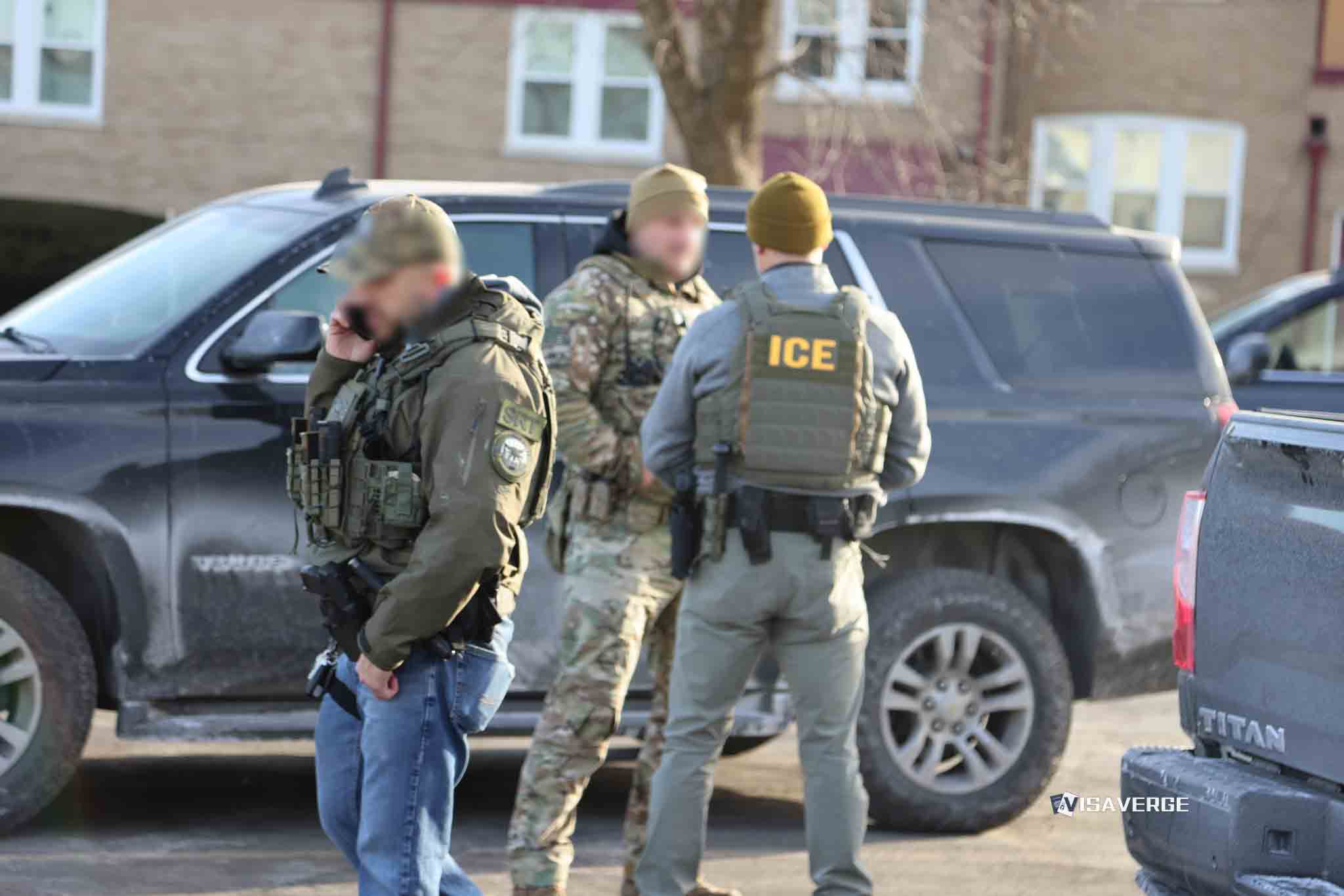
(ST. PAUL, MINNESOTA) — Federal investigators are examining whether a January 18, 2026 protest at Cities Church disrupted religious worship in a way that may violate the FACE Act, as prosecutors and DHS/ICE respond to tensions tied to a large-scale immigration enforcement operation.
Federal prosecutors said January 19, 2026 statements from the Department of Justice (DOJ) and Department of Homeland Security (DHS) marked the start of a formal inquiry, not a charging decision. The inquiry centers on anti-ICE protesters who entered a Sunday service at Cities Church in St. Paul, Minnesota.
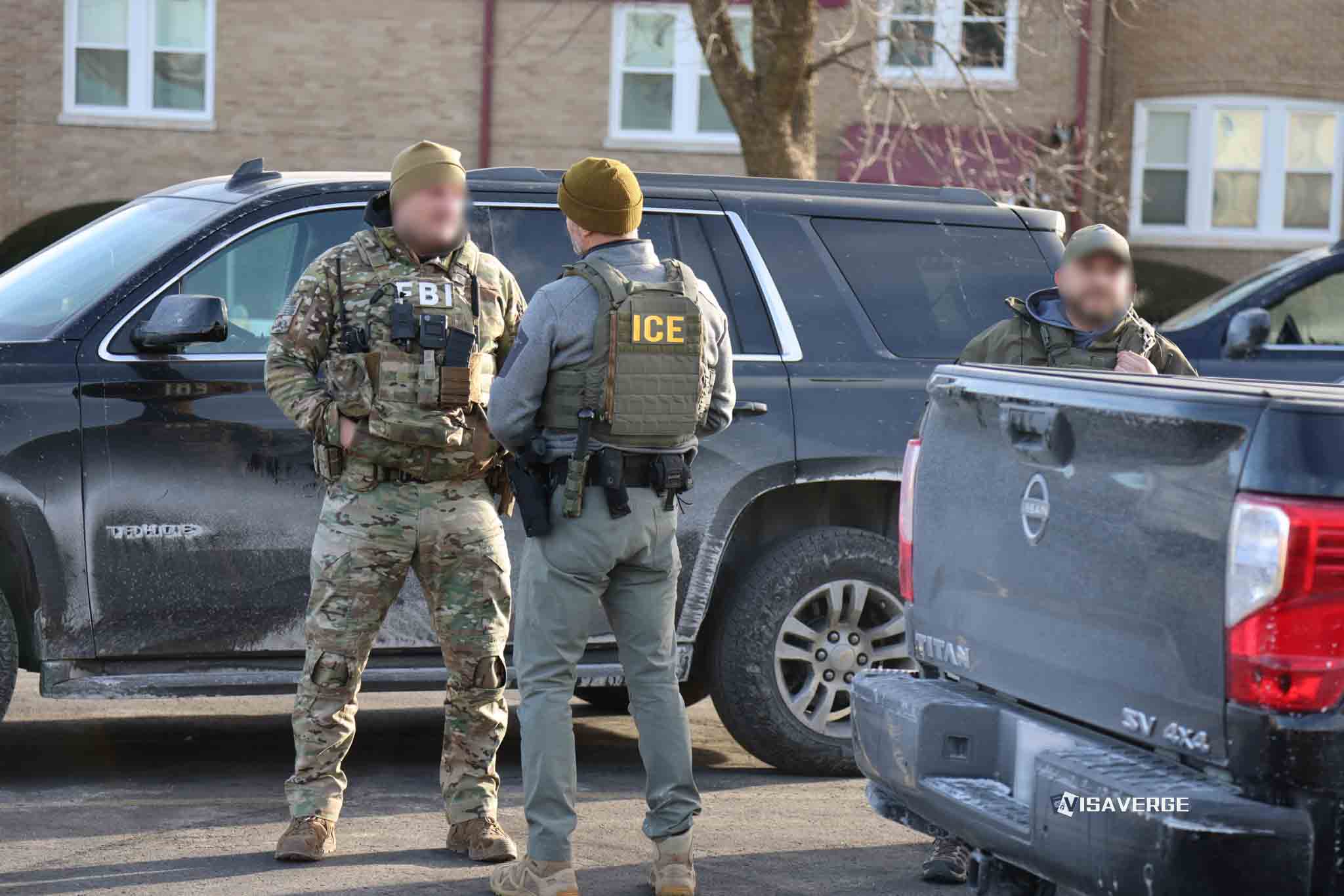
Pastor David Easterwood, identified by officials as the target of the protest, also serves as the Acting Field Office Director for ICE’s St. Paul Field Office. His dual role has put a local congregation at the center of a national fight over immigration enforcement and public demonstrations.
Accounts of the incident
Accounts described protesters interrupting worship inside the sanctuary. The investigation’s early focus is whether conduct at the church crossed from protected speech into intentional interference with congregants’ access to religious worship.
Readers tracking the case should separate three things: what happened in the sanctuary, what the government says it is investigating, and what the law requires before any criminal or civil case can be brought.
Statements from officials
Assistant Attorney General Harmeet Dhillon, who leads the Civil Rights Division (DOJ), said January 19, 2026 that her division is investigating potential violations of the Freedom of Access to Clinic Entrances Act, commonly called the FACE Act.
“The @CivilRights is investigating the potential violations of the federal FACE Act by these people desecrating a house of worship and interfering with Christian worshippers,” Dhillon said.
Dhillon added, “A house of worship is not a public forum for your protest! It is a space protected from exactly such acts by federal criminal and civil laws!” Her statement signaled that federal civil rights prosecutors, not only local U.S. attorneys, are taking a direct role.
Attorney General Pam Bondi said January 19, 2026 she is directing the investigation after speaking with the pastor. “Attacks against law enforcement and the intimidation of Christians are being met with the full force of federal law,” Bondi said.
Bondi also criticized state and local leaders, saying, “If state leaders refuse to act responsibly to prevent lawlessness, this Department of Justice will remain mobilized to prosecute federal crimes and ensure that the rule of law prevails.” Her directive frames the inquiry as part of a broader federal push to respond to immigration-related protests.
ICE issued a separate statement January 18, 2026 that described protesters as “agitators” targeting officers and churches. “Agitators aren’t just targeting our officers. Now they’re targeting churches, too,” the statement said.
- Any arrest or citation—especially involving allegations of interference, threats, or property damage—can trigger immigration consequences beyond the criminal case
- Noncitizens (including lawful permanent residents) should assume fingerprints and booking data may be shared across systems
- If contacted by federal agents, statements can be used in both criminal and immigration proceedings; ask for counsel before answering substantive questions
- If you have pending immigration applications, consult counsel promptly to assess disclosure obligations and risk mitigation
DHS press office messaging blamed local leadership for unrest, saying “[Gov. Tim Walz and Mayor Jacob Frey] are responsible for whipping these mobs into a frenzy and then allowing them to run rampant. We won’t be deterred. ICE isn’t going anywhere.” Such statements can harden local tensions, especially when residents already fear contact with immigration authorities.
White House press secretary Karoline Leavitt said January 19, 2026 the administration supported the DOJ response. “President Trump will not tolerate the intimidation and harassment of Christians in their sacred places of worship,” Leavitt said, calling it a “full investigation.”
What an investigation involves
An investigation typically involves interviews, video review, collection of digital evidence, and legal analysis of statutes and constitutional limits. Prosecutors may close an inquiry without charges, seek criminal charges, or pursue civil action where authorized.
Prosecutors generally evaluate intent and conduct. A loud protest outside on public property may be protected, while threats, trespass, blocking entrances, or coordinated disruption inside a sanctuary may be treated differently under the law.
Investigators also weigh location and timing. Conduct in a private sanctuary during a service can be viewed as more intrusive than leafleting on a sidewalk, even if the message is political.
⚠️ Note that an announced investigation is not the same as charges; readers should distinguish between ongoing fact-finding and potential charges.
Source statements and impacts
| Source | Date | Statement Summary | Impact on Investigation |
|---|---|---|---|
| Civil Rights Division (DOJ) | January 19, 2026 | Harmeet Dhillon said the division is investigating potential FACE Act violations tied to interference with worship | Signals civil rights enforcement review and possible criminal or civil referral |
| Department of Justice (DOJ) | January 19, 2026 | Attorney General Pam Bondi said she is directing the investigation and warned of prosecution for federal crimes | Indicates DOJ leadership attention and prioritization of evidence-gathering |
| ICE | January 18, 2026 | ICE said “agitators” were targeting officers and churches and moving “hotel to hotel, church to church” | Frames incident as officer safety and interference issue for investigators |
| White House | January 19, 2026 | Karoline Leavitt said a “full investigation” was launched and condemned intimidation in places of worship | Raises political visibility, but does not determine charging outcomes |
Groups, participants, and context
Racial Justice Network and Black Lives Matter Minnesota were identified in reporting as participating in the protest. Officials have not publicly detailed each participant’s conduct, and prosecutors generally assess individual actions rather than group labels.
The protest’s intensity follows the January 7, 2026 fatal shooting of Renee Nicole Good, a 37-year-old U.S. citizen and mother of three, by an ICE agent during an enforcement action. Protesters at the church chanted “Justice for Renee Good,” linking the sanctuary disruption to anger over ICE operations.
Operation Metro Surge, a large-scale immigration enforcement operation, has been described by DHS as a surge that deployed over 2,400 federal agents to the Twin Cities and resulted in more than 2,500 arrests as of mid-January 2026. Those metrics, repeated in public messaging, have become a flashpoint in local debates over public safety and civil liberties.
A January 15, 2026 ACLU Minnesota filing (Tincher v. Noem Case Filing) identified David Easterwood as the acting director of the ICE field office overseeing Operation Metro Surge. That litigation backdrop matters because leadership roles can become part of how advocates frame accountability, even when a separate criminal inquiry focuses on a discrete event.
Jonathan Parnell, the lead pastor, described the church disruption as “shameful” and said the service ended early. Parnell said children in the sanctuary were “terrified,” a detail prosecutors may weigh when evaluating whether conduct intentionally interfered with worshippers’ access to worship.
Immigrant advocates have also framed Easterwood’s church role as a trust issue. Attorney Nekima Levy Armstrong described the dual role as a “betrayal of the gospel,” language that reflects a broader fear that religious spaces could become associated with enforcement power.
Impacts on communities and enforcement climate
For immigrant communities, high-profile investigations can cut both ways. Some residents may feel safer reporting threats to worshippers, while others may avoid contact with police or federal agencies, fearing exposure to ICE or immigration scrutiny.
A federal judge has also imposed restrictions on ICE tactics in the region, including barring agents from retaliating against peaceful protesters or observers. Such limits can change day-to-day behavior at demonstrations, but they do not authorize entry into private worship services, and they do not bar prosecutors from investigating a separate incident inside a church.
Operation Metro Surge provides the broader operational context for why this protest drew national attention. Large enforcement surges often mean more agents, more coordinated actions, and more public sightings of federal officers in daily life.
Those conditions can change risk calculations for immigrants and mixed-status families. Workplace and community encounters may rise, detention capacity can be strained, and local legal services may see greater demand.
Legal center of the inquiry: the FACE Act
The legal center of the inquiry is the FACE Act, 18 U.S.C. § 248, a law often discussed in the context of reproductive health clinics but also applicable to places of religious worship. In plain terms, it can prohibit using force, threats of force, or physical obstruction to intentionally interfere with someone’s exercise of religious freedom at a place of worship.
Prosecutors generally evaluate intent and conduct. A loud protest outside on public property may be protected, while threats, trespass, blocking entrances, or coordinated disruption inside a sanctuary may be treated differently under the law. The First Amendment still matters in both settings, and viewpoint alone is not the test; actions are.
Practical guidance for communities and individuals
Practical steps can reduce confusion during fast-moving events, though outcomes depend on individual facts and jurisdiction. People who may face encounters with ICE often keep copies of key documents, plan childcare contingencies, and write down emergency contacts.
During any law enforcement encounter, many people ask if they are free to leave and request legal counsel when appropriate. Individuals should avoid relying on rumor-driven posts and instead confirm claims through official releases or trusted legal service providers.
✅ If you are part of a faith community or immigrant advocacy group, verify statements with official sources and prepare a rights-focused safety plan for congregations.
Official information is usually easiest to track through primary government channels. DOJ Civil Rights Division updates and press releases are posted at DOJ Civil Rights Division, and broader DOJ releases appear on justice.gov.
Federal statutory text for the FACE Act is available through Cornell Law School’s Legal Information Institute at Cornell LII. Court filings are typically accessed through PACER, and readers should treat secondhand summaries as less reliable than documents filed in court.
USCIS does not direct ICE enforcement operations, but enforcement-driven anxiety can affect how communities engage with government more broadly. When trust erodes, victims and witnesses may hesitate to report crimes or cooperate, which can affect public safety and community stability.
Anyone seeking updates should look for specific identifiers: named agencies, dated statements, and direct quotations. Anonymous screenshots and reposted claims rarely carry the same weight as signed statements on official domains.
Legal disclaimer
This article discusses ongoing legal process and government statements. It should not be construed as legal advice.
Consult a qualified attorney for individual legal questions related to FACE Act cases and immigration enforcement.