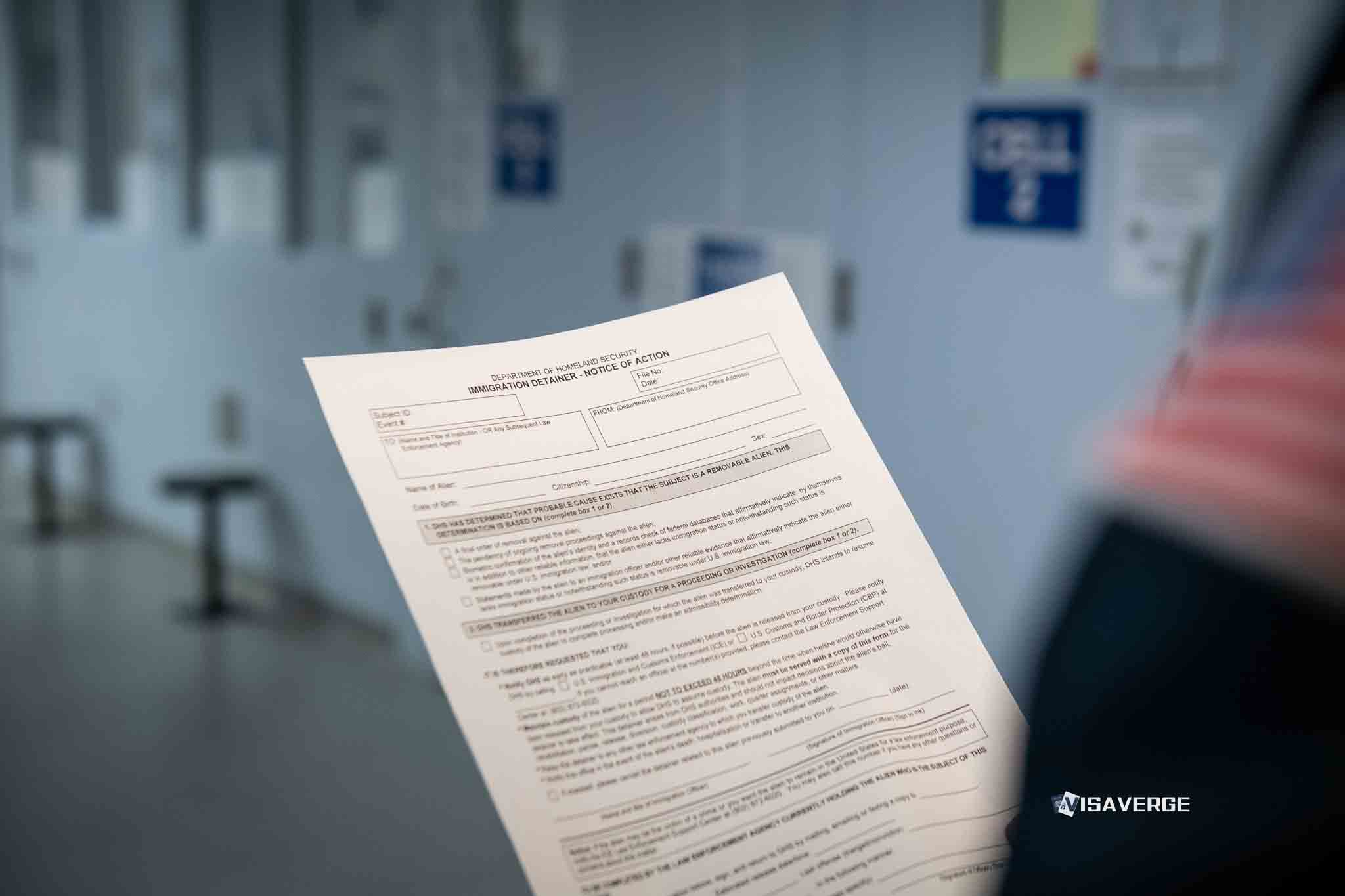
- Federal courts curbed mass deportation tactics in early 2026, citing due process and Fourth Amendment violations.
- A Minnesota judge blocked refugee detentions under Operation PARRIS, requiring individualized legal authority for arrests.
- Courts warned agencies against treating administrative warrants as judicial warrants for private home entries.
(UNITED STATES) — A set of late-January 2026 federal court orders restricting interior enforcement tactics is reshaping how far the government can push “mass deportation” initiatives—especially when arrests, transfers, and detention practices collide with constitutional due process and basic custody limits.
The most immediate practical impact is on refugee detentions and other arrests carried out under fast-moving operations like Operation PARRIS and the broader Minnesota enforcement push sometimes described as “Metro Surge.” In several rulings, judges did not bar removal enforcement altogether. Instead, they paused specific tactics—such as warrantless or procedurally thin custody moves—and required clearer legal authority, individualized process, and demonstrable compliance with court orders.

This case analysis explains (1) what the courts actually stopped versus what may continue, (2) the legal theories driving the decisions, and (3) what affected refugees, TPS holders, and noncitizen students should watch next as appeals and compliance litigation unfold. For background on agency roles, readers can compare DHS enforcement statements at the DHS newsroom with adjudications and immigration court procedures administered through the EOIR court system.
Overview: Federal courts challenge mass deportation efforts
As of Sunday, February 1, 2026, multiple federal courts have stepped in with temporary restraining orders and related directives that curb how the executive branch implements interior enforcement. These orders matter because they target the “how,” not just the “whether,” of arrests and detention.
Across the January litigation, three themes repeat:
- Due process limits on custody and transfers. Courts scrutinized detention decisions affecting people with lawful status or lawful presence. That includes refugees already admitted to the United States and individuals with pending benefit applications.
- Fourth Amendment questions about entries and arrests. Judges and litigants focused on whether administrative paperwork is being treated like a judge-signed warrant.
- Agency process and compliance. Courts signaled that repeated failures to follow orders can trigger escalating remedies, including sanctions and reporting requirements.
A central tension is that DHS asserts urgent public safety and anti-fraud necessities, while courts insist that urgency does not erase constitutional and statutory procedure. These rulings are also procedurally uneven. Some are emergency TROs, not final merits judgments. That difference matters for how long protections last and whether appeals may narrow them.
Official statements and public messaging
DHS has publicly framed its interior operations as necessary for national security and public safety, and as a response to alleged fraud in the immigration system. In public messaging about Operation PARRIS, DHS indicated it would continue litigating and seek to reverse the order restricting refugee arrests and detention in Minnesota.
White House officials have also characterized injunctions as improper interference with executive priorities. That rhetoric may play well politically, but it does not change what an order requires on the ground. A TRO is binding on covered officers and agencies. Noncompliance can expand judicial oversight quickly.
The practical point for readers is to separate political statements from operational reality. A court order may still allow arrests with proper process, or allow detention where statutes mandate it. It may simply require individualized determinations and lawful warrant practices.
Warning: Do not rely on press statements to decide whether you must attend an ICE check-in, biometrics, or court hearing. Missing a required appearance can trigger severe immigration consequences.
Key court rulings and legal facts
Below is a summary of principal rulings and legal points from January litigation. These sections are written to introduce interactive tools that will display detailed case listings and orders; the tools will provide the visual and structured data presentation.
Operation PARRIS: refugee arrests and detention curtailed in Minnesota
In the Minnesota litigation, a federal judge issued emergency relief blocking arrests and detention of certain lawfully resettled refugees in the state. The court’s framing emphasized that refugees admitted through the U.S. Refugee Admissions Program generally have lawful presence and, in many cases, work authorization. The court also emphasized limits on “warrantless detention” in this context.
The legal theory is not that refugees are immune from enforcement. Refugees can be placed in removal proceedings under the INA in appropriate cases. The point is that status, admission, and procedural posture matter. Courts are skeptical of broad sweeps that treat lawful residents or lawfully present refugees like they have no cognizable liberty interests.
Compliance and contempt risk
A separate Minnesota order included unusually sharp warnings about repeated violations of court orders, describing a pattern that could lead to personal appearances and sanctions. This matters beyond Minnesota. If judges come to believe agencies are “gaming” emergency litigation, they may impose:
- written compliance certifications,
- expedited discovery into operational directives,
- limits on transfers to out-of-state detention, and
- more detailed injunction terms.
Those remedies can constrain “mass deportation” initiatives even where underlying enforcement authority exists.
Speech protections for noncitizen students and faculty
In a Massachusetts ruling involving campus advocacy and “ideological deportation” concerns, a federal judge recognized that lawfully present noncitizens typically possess First Amendment rights. The order reportedly narrowed the government’s ability to target students and faculty for protected advocacy.
This does not mean all conduct is protected. Immigration consequences may still flow from conduct that triggers criminal grounds, national security grounds, or status violations under the INA. The point is that protected speech alone is a weak basis for adverse action, and courts may demand clear evidence of lawful grounds.
Challenges to hold rooms and courthouse arrest practices
In Northern California, civil rights groups sought to block or vacate a policy allowing short-term detention in temporary holding facilities and to stop certain courthouse arrest practices. These challenges often combine due process arguments, Administrative Procedure Act (APA) claims, and access-to-courts concerns.
Even if the government can arrest a removable person, courts may restrict arrest practices that chill attendance at proceedings or undermine fair process.
How BIA custody precedent fits in
Although these January orders come from federal district courts, the custody questions intersect with immigration court bond doctrine. The Board’s leading bond-factor decision, Matter of Guerra, 24 I&N Dec. 37 (BIA 2006), explains that custody determinations should be individualized and consider factors like flight risk and danger.
When enforcement programs appear to apply categorical detention assumptions without individualized analysis, that tension becomes litigation fuel.
Warning: A TRO may not automatically result in release for every detainee. Some people remain subject to mandatory detention statutes or separate criminal holds.
Policy details and enforcement tactics
The sections below describe recurring policy features and operational tactics seen in recent enforcement efforts. These paragraphs lead into interactive tools that will provide detailed policy text, directives, and enforcement maps.
“Metro Surge” as an operational model
The Minnesota “Metro Surge” concept reflects a large-scale deployment model: surge staffing, rapid intake processing, and quick transfers to detention space—often out of state. Courts scrutinize such models because operational speed increases the risk of mistaken identity, defective paperwork, and missed access-to-counsel opportunities.
Administrative warrants versus judicial warrants
A recurring point in these cases is the difference between an ICE administrative warrant (often on Form I-200 or I-205) and a judge-signed warrant.
- Administrative warrants are internal executive documents. They may authorize immigration officers to arrest a person under immigration authority in certain circumstances.
- They typically do not authorize officers to enter a private home without consent. Home entry generally requires valid consent or a judicial warrant, absent exigent circumstances.
This Fourth Amendment line becomes central when operations involve home entries, force allegations, or disputed consent.
USCIS “hold and review” as an enforcement multiplier
The policy fight is not limited to ICE. USCIS processing decisions can shape enforcement outcomes by delaying or freezing benefit adjudications, thereby increasing uncertainty and vulnerability.
Here, a USCIS memo—Policy Memo PM-602-0194—implemented a “hold and review” posture affecting nationals of 39 designated countries. Even when framed as risk screening, broad pauses can lead to expired work authorization renewals, delayed status extensions, increased referrals to enforcement in some scenarios, and APA challenges asserting unlawful blanket rules.
Readers tracking TPS should monitor official TPS alerts for country-specific court-driven timing changes.
Deadline watch: If your work permit (EAD) renewal depends on a pending application, confirm whether you qualify for automatic extensions under 8 C.F.R. § 274a.13(d). Timing errors can cost jobs.
Context and significance
These cases highlight classic separation-of-powers friction. The executive branch has broad authority to enforce immigration law under Article II and the INA. But that authority is not unlimited, and courts routinely require compliance with administrative and constitutional constraints.
- compliance with the APA for policy-level shifts,
- adherence to due process in detention and removal steps, and
- respect for constitutional protections, including the Fourth and First Amendments.
Operational controversies—such as use-of-force incidents, disputed home entries, and funding fights—can also influence litigation posture. Courts may become more skeptical when plaintiffs show a pattern of rushed decisions, unclear guidance, or repeated noncompliance.
Impact on affected individuals
Refugees in Minnesota and out-of-state transfers
For refugees swept into Operation PARRIS, the immediate impact is that emergency orders may restrict continued detention and may curb transfers that interfere with access to counsel and court review. Families should understand that release terms can include reporting requirements.
The government may also pursue appeals or narrower injunction language.
TPS holders facing shifting termination timelines
TPS litigation often moves quickly and varies by jurisdiction. A single-judge order may pause a termination date, alter re-registration windows, or preserve work authorization temporarily. But stays on appeal can reverse those protections with little notice.
Students and academics
Noncitizen students and faculty should distinguish protected speech from actions that create separate immigration exposure. A court order that protects advocacy does not cure unrelated issues like falling below a full course of study, unauthorized employment, or criminal conduct triggering removability.
Mixed-status families
Even when an order limits a specific operation, ICE may continue enforcement under other authorities. Families should plan for rapid document access and legal triage. Court orders can also be geographically limited, and the same legal issue can be treated differently across circuits.
Warning: Do not sign documents you do not understand in detention, including stipulated removal or “voluntary departure” papers. Ask for counsel and an interpreter.
Practical takeaways
- Ask what authority is being used. “Administrative warrant” is not the same as a judge’s warrant, especially for home entry.
- Document lawful status and admissions. Refugees, TPS holders, and students should keep copies of I-94 records, approval notices, and EADs accessible.
- Track court posture. TROs can expire, convert to preliminary injunctions, or be stayed on appeal. Timing changes fast.
- Custody is case-specific. Even with favorable rulings, detention decisions often turn on individualized factors and statutory categories.
- Get legal advice early. These disputes involve overlapping constitutional, APA, and INA issues. Small factual differences can change outcomes.
Given the stakes—detention, transfer, loss of work authorization, and removal—anyone affected by Operation PARRIS, courthouse arrest practices, or USCIS “hold and review” delays should consult a qualified immigration attorney promptly.
Resources
– AILA Lawyer Referral
– Immigration Advocates Network
⚖️ Legal Disclaimer: This article provides general information about immigration law and is not legal advice. Immigration cases are highly fact-specific, and laws vary by jurisdiction. Consult a qualified immigration attorney for advice about your specific situation.