- Prince George’s County bans ICE from using county property for detention through a new executive order.
- Maryland lawmakers prohibit 287(g) agreements statewide, ending local law enforcement cooperation with federal immigration agents.
- Officials are implementing ‘safe spaces’ signage and blocking occupancy permits to limit ICE’s operational footprint.
(PRINCE GEORGE’S COUNTY, MARYLAND) — Prince George’s County has moved to limit ICE operations on county property and publicly shield residents, while Maryland lawmakers push to end 287(g) agreements, setting the stage for legal and political battles over local-federal immigration coordination.
County Executive Aisha Braveboy signed Executive Order No. 9-2026 on February 19, 2026, ordering an immediate moratorium on using any county property as a detention center. The order also designates county buildings, garages, and parking lots as “safe spaces” from ICE.
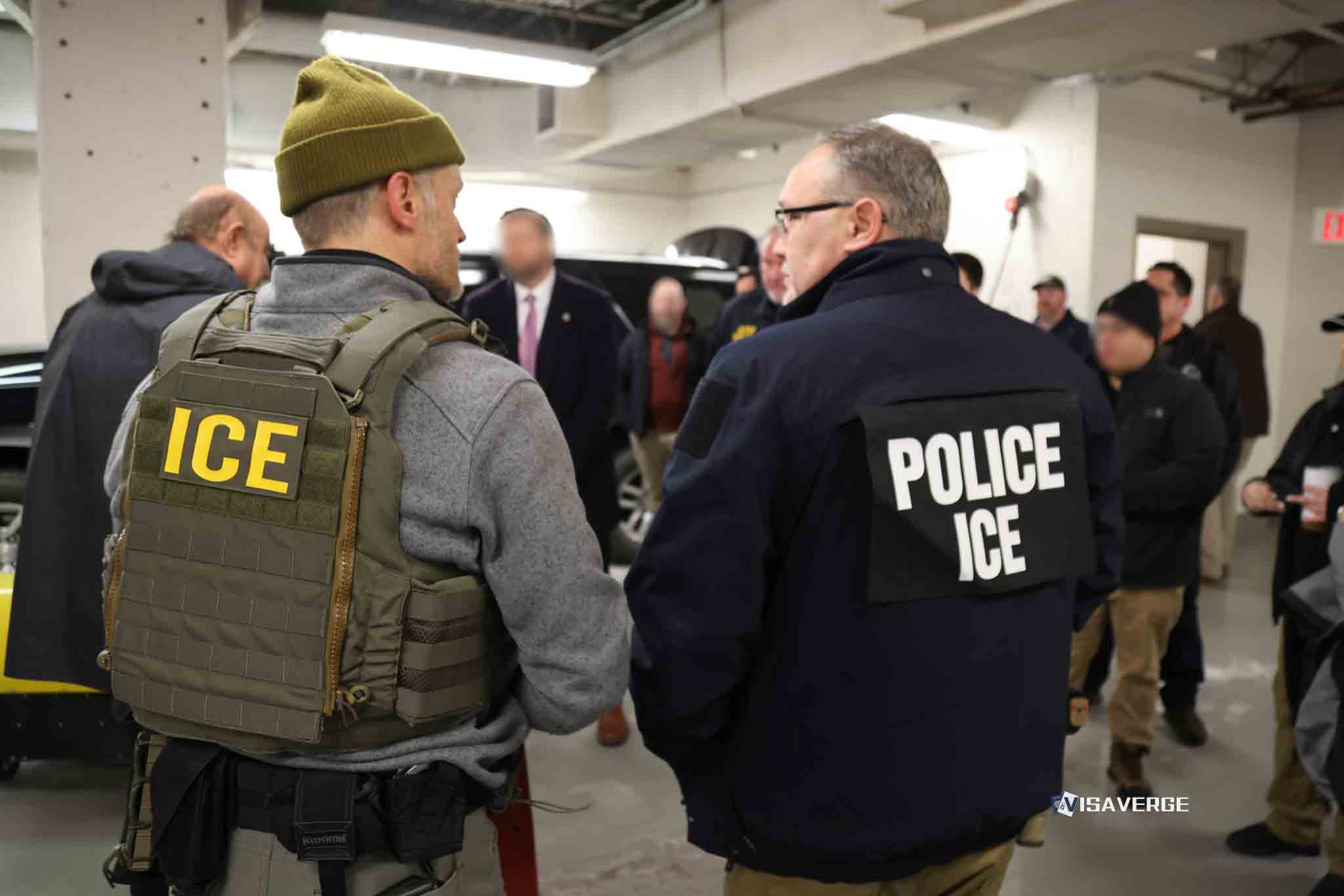
Braveboy said the order relies on the county executive’s authority over county property and the county permitting process. In practice, the directive aims to prevent county-controlled sites from being used for detention-related purposes and to make residents aware of where the county says ICE activity is not welcome.
Large bilingual English-Spanish “safe spaces” signs are expected in about two weeks at covered county locations. Officials framed the signage as a public notice meant to be easily read and accessible to residents who may be anxious about enforcement activity.
Executive Order No. 9-2026 also targets a key administrative choke point: the county’s permitting office. The Department of Permitting, Inspections and Enforcement is prohibited from issuing an occupancy permit for ICE use.
An occupancy permit generally authorizes a building’s use after permitting and inspections. By blocking that step for ICE, the county seeks to stop ICE from legally occupying or operating in a space where a county permit would otherwise be required.
Even with the “safe spaces” designation, the order does not claim power over federal enforcement actions off county property. It also does not change federal immigration law, though it may change where and how county facilities can be involved.
Braveboy announced the order at a public event with County Council Chair Krystal Oridha, U.S. Rep. Glenn Ivey, representatives of We Are CASA, and local mayors. “We are taking decisive action to protect our diversity and those residents who chose to call America and Prince George’s County home,” Braveboy said.
Braveboy also used sharper language to describe the county’s stance. “The disregard for human life will not be tolerated in Prince George’s County. Not today. Not tomorrow. Not Ever,” she said.
Plans are already in motion to convert the executive order into county council legislation. A law passed by the council can outlast an executive order, which a future county executive could rescind or revise more quickly.
Turning the policy into legislation typically means drafting a bill, introducing it on the council agenda, and holding public hearings before a vote. That process can also clarify definitions, enforcement mechanisms, and how county agencies must report compliance.
Ivey, who appeared with county leaders on February 19, has also pressed federal agencies directly. He co-authored a letter with Sens. Chris Van Hollen and Angela Alsobrooks seeking answers from the Department of Homeland Security and ICE by February 27, 2026.
A congressional inquiry of that kind typically seeks records and explanations about policies, contracts, and operational justification. It can increase oversight pressure, but it does not directly stop federal officers from carrying out enforcement allowed under federal authority.
Ivey has argued that ICE detention conditions warrant scrutiny. “The animal shelters in Prince George’s County are better maintained than the ICE detention centers,” he said.
He also pointed to ICE’s broader posture since President Donald Trump’s return on January 20, 2025. Ivey cited operations such as sending 3,000 ICE officers to Minnesota as an example of the scale he says communities are reacting to.
[!ACTION] ✅ For residents and advocates: monitor DHS/ICE inquiries timeline and stay engaged with local officials through public comment periods and town halls
Local debate has been sharpened by a proposed Hyattsville lease site. Ivey led an “ICE Out” rally in Hyattsville focused on a possible ICE lease of up to 20,000 square feet at 6505 Belcrest Road, near the Mall at Prince George’s.
Opponents fear a lease in a busy commercial-residential area could be converted into a detention-related facility, even if the stated use changes over time. Lease terms and siting decisions can affect detention capacity by shaping where federal agencies can stage operations or hold people.
One resident account offered at the rally highlighted the human toll residents associate with detention. Fourth-grader Liliana Ramirez said ICE detained her father on December 30, 2025, at a Frederick County construction site, leaving her family struggling. “Since my dad was taken, our home felt empty. My mom cried a lot,” Ramirez said.
County leaders have tried to pair hard limits with reassurance. County Council Member Wala Blegay urged residents not to withdraw from daily life. “Do not be afraid. We are here to help you,” Blegay said.
State action has also shifted the enforcement framework. Gov. Wes Moore signed emergency bills HB 444 and SB 245 on February 17, 2026, creating what supporters call a statewide 287(g) ban.
The federal 287(g) program generally allows local law enforcement agencies to enter agreements that delegate certain immigration enforcement functions to trained local personnel working with ICE. Supporters often call it a force multiplier, while critics say it blurs lines between local policing and federal immigration enforcement.
Under HB 444 and SB 245, 287(g) agreements are barred statewide, and nine Maryland jurisdictions were required to terminate them immediately. In operational terms, termination can require agencies to unwind memoranda of understanding, revise policies, and retrain staff on what they can and cannot do during stops, jail bookings, and custody transfers.
Moore framed the bills as a safeguard for local policing and public accountability. “We will not allow untrained, unqualified and unaccountable agents to deputize our brave local law enforcement officers,” Moore said.
Senate President Bill Ferguson used even harsher language. Ferguson called the end of 287(g) agreements a step away from what he described as “unconstitutional terrorism” by ICE.
| Policy/Action | Scope/Effect | Timeline | Key Officials |
|---|---|---|---|
| Executive Order No. 9-2026 | Moratorium on using county property as a detention center; county buildings, garages, and parking lots designated “safe spaces”; bars county-issued occupancy permits for ICE use | Signed February 19, 2026; signage expected in about two weeks | Aisha Braveboy, Krystal Oridha, Wala Blegay |
| HB 444 and SB 245 (“287(g) ban”) | Bans 287(g) agreements statewide; ends deputized local performance of certain ICE functions under those agreements | Signed February 17, 2026; nine Maryland jurisdictions required to terminate immediately | Wes Moore, Bill Ferguson |
| Congressional oversight request to DHS/ICE | Seeks explanations and records about ICE activity and related arrangements; increases scrutiny but does not directly halt federal enforcement | Response requested by February 27, 2026 | Glenn Ivey, Chris Van Hollen, Angela Alsobrooks |
Resistance to the state’s 287(g) ban has formed quickly. Frederick County Sheriff Chuck Jenkins said he plans to challenge the new law in court, calling it a constitutional violation.
A lawsuit may seek an injunction to block enforcement or a ruling on how far state authority reaches over local agencies’ ability to cooperate with federal immigration enforcement. Such cases often turn on statutory language and state constitutional provisions governing local powers.
Republicans in Annapolis have criticized the package as political messaging. House Minority Leader Jason Buckel called it “political theater,” a label supporters reject as agencies begin changing written policies and practices.
Elsewhere in Maryland, some local officials have taken steps that signal support for ICE presence. Washington County approved a resolution supporting ICE after DHS bought a Hagerstown warehouse for over $100 million.
Large infrastructure purchases can change enforcement capacity by creating space for storage, processing, or administrative operations, even when detention is not explicitly announced. Local resolutions may also shape intergovernmental tone, which can affect day-to-day cooperation.
In Prince George’s County, Braveboy’s team has presented Executive Order No. 9-2026 as a public line-drawing measure during a period of heightened anxiety. Officials have stressed that the county can control its own property and permitting, even as ICE retains federal authority elsewhere.
Residents looking to confirm what the order says should read the full text. The executive order is posted on the Prince George’s County website, typically in sections where executive orders, press releases, or county executive directives are archived.
County council action can also be tracked through official meeting agendas and bill-tracking pages, where introductions, hearing dates, and votes are recorded. Those listings can help residents see whether the executive order is being converted into a county law and whether amendments change the policy’s reach.
Public-records requests may also be available for certain county documents tied to permitting, contracts, or correspondence, though responses can depend on Maryland disclosure rules and applicable exemptions. Residents should stay within the law and rely on official notices rather than rumors shared on social media.
[!WARNING] ⚠️ Note on verification: readers should confirm the full executive order on the county website and track council actions through official meeting agendas and bill-tracking pages
As the county posts “safe spaces” signs and the state enforces HB 444 and SB 245, the next concrete checkpoint is February 27, 2026, when DHS and ICE were asked to respond to Maryland’s federal lawmakers.
This article covers immigration enforcement policy changes; readers should not rely on it for legal advice. For official guidance, consult county communications and state legislative texts.