- Two ICE agents were placed on administrative leave after lying under oath regarding a Minneapolis shooting.
- Video evidence contradicted official claims that agents were ambushed and attacked with a shovel and broom.
- Federal prosecutors dropped all felony charges against the men previously accused of assaulting the immigration officers.
The Department of Homeland Security and U.S. Immigration and Customs Enforcement acknowledged on February 13, 2026 that two federal immigration agents appear to have lied under oath about a shooting in Minneapolis, a rare admission that officials said has triggered internal and criminal scrutiny.
ICE Acting Director Todd Lyons said a joint review with the Department of Justice found video evidence that contradicts what the two officers swore to in court filings and testimony, and he ordered both agents placed on administrative leave while an internal investigation continues.
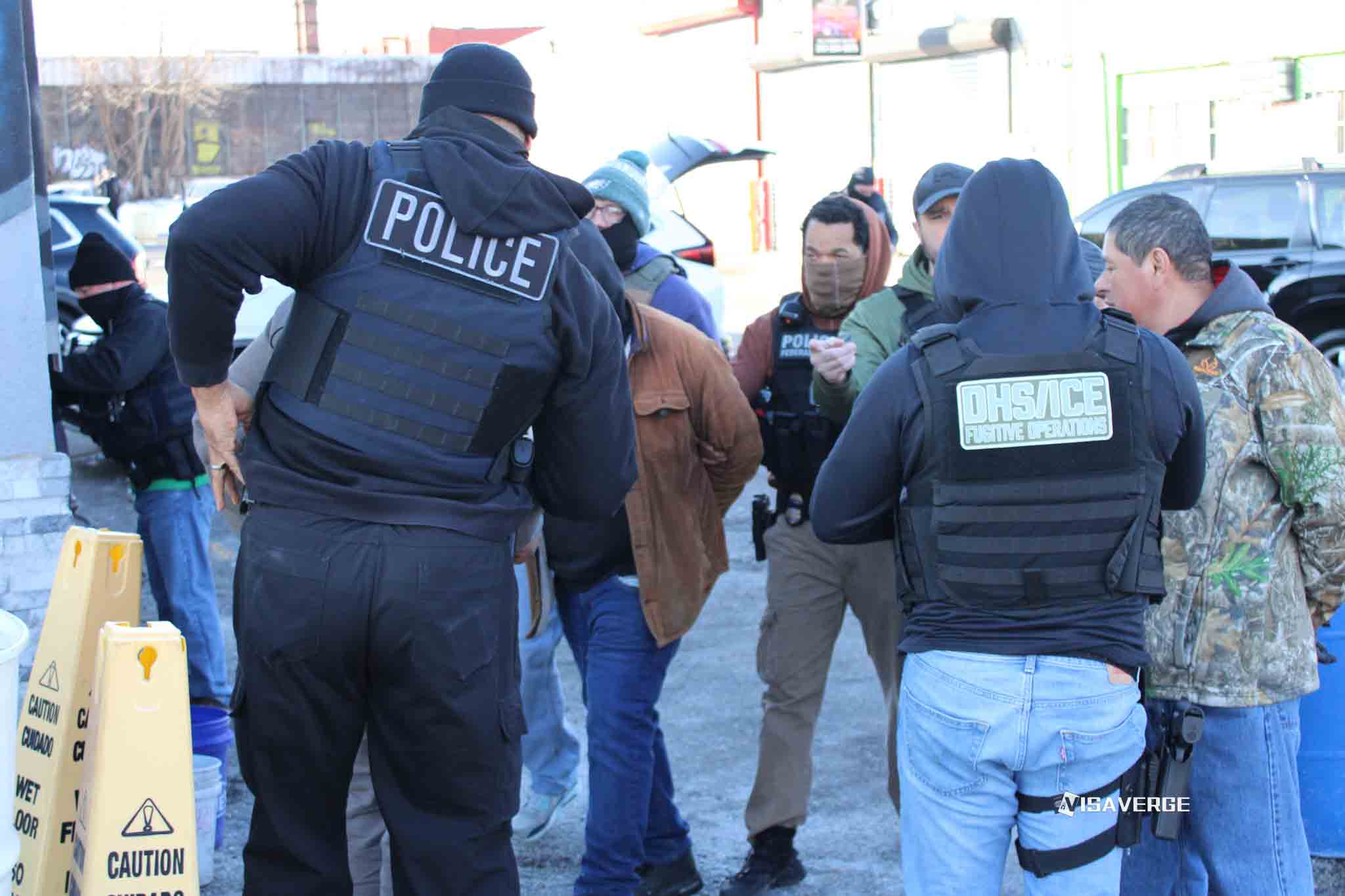
The acknowledgment came after prosecutors moved to drop felony assault charges against the man who was shot, Julio Cesar Sosa-Celis, and a co-defendant, Alfredo Alejandro Aljorna, citing evidence that undercut the government’s original account of what happened during the January encounter in north Minneapolis.
On January 14, 2026, two ICE agents confronted Sosa-Celis, a 24-year-old Venezuelan immigrant, and an agent fired a shot that struck him in the leg during the encounter.
A day later, on January 15, 2026, DHS Secretary Kristi Noem and other officials publicly framed the incident as an “attempted murder of federal law enforcement,” saying agents were “ambushed and attacked” by three individuals using a snow shovel and a broom handle during a “targeted traffic stop.”
That characterization mattered because it placed the shooting inside a narrative of a violent assault on immigration agents, and it helped set the tone for federal enforcement messaging during the early weeks of a large deployment in Minnesota.
The public account began to shift on February 12–13, 2026, when U.S. Attorney for the District of Minnesota Daniel N. Rosen filed a motion to dismiss all charges against Sosa-Celis and Aljorna, citing “newly discovered evidence” that he said was “materially inconsistent” with what the officers had sworn to in affidavits and testimony.
U.S. District Court Judge Paul A. Magnuson dismissed the felony assault charges with prejudice on February 12, 2026, meaning they cannot be refiled.
In his statement on February 13, Lyons described the evidentiary turn as the product of a review that compared sworn accounts to video, and he tied the decision to place the agents on leave to the seriousness of the allegations about their testimony.
“A joint review by ICE and the Department of Justice of video evidence has revealed that sworn testimony provided by two separate officers appears to have made untruthful statements. Both officers have been immediately placed on administrative leave pending the completion of a thorough internal investigation,” Lyons said.
He added that the matter now reaches beyond an administrative review inside ICE and into potential criminal exposure tied to statements made in court.
“Lying under oath is a serious federal offense. The U.S. Attorney’s Office is actively investigating these false statements. The men and women of ICE are entrusted with upholding the rule of law and are held to the highest standards of professionalism, integrity, and ethical conduct. Violations of this sacred sworn oath will not be tolerated,” Lyons said.
DHS spokesperson Tricia McLaughlin said potential discipline and prosecution depend on what investigators ultimately find, signaling that the department is treating the credibility of sworn statements as an accountability question, not a public-relations dispute.
“Upon conclusion of the investigation, the officers may face termination of employment, as well as potential criminal prosecution,” McLaughlin said.
Federal investigations treat alleged false testimony as high severity because courts and prosecutors rely on affidavits and sworn statements to justify arrests, detention decisions and charging, and a credibility breach can affect how other evidence is viewed in a case.
Lyons and McLaughlin did not commit to an outcome for the two agents, and their statements did not announce charges against the officers. Both described the situation as contingent on ongoing investigative steps led by ICE, the DOJ and the U.S. Attorney’s Office.
The basic outline of the incident remains that two ICE agents participated in the north Minneapolis encounter and one shot Sosa-Celis in the leg, but the government’s explanation for why force was used turned on competing versions of what happened immediately before the shot.
Rosen’s motion attributed the change in legal posture to video footage that he said conflicted with what the agents asserted in affidavits and later testified to, a reversal that prosecutors said left them unable to continue pursuing the felony assault case.
The dismissal also applied to Aljorna, bringing the case against both men to an end and removing the possibility of refiling the same felony assault charges because Magnuson dismissed them with prejudice.
DHS and ICE acknowledged the false-testimony concern after the prosecutorial reversal, and Lyons said the U.S. Attorney’s Office is actively investigating, a posture that suggests potential criminal exposure could follow if prosecutors conclude the statements meet the standard for federal offenses.
The shooting unfolded during Operation Metro Surge, a large federal deployment in Minnesota that drew scrutiny not only because of its scale but also because it coincided with other shootings involving federal agents in January 2026.
As the operation expanded, the scale of enforcement activity increased the chance of confrontations, intensified demands on oversight systems and sharpened community attention on how immigration agents used force and described incidents in official reports.
Two U.S. citizens, Renee Macklin Good and Alex Pretti, died in separate January 2026 shootings by federal agents, incidents that became part of the broader backdrop in which the Minneapolis case drew public and political attention.
Trump administration officials announced the end of Operation Metro Surge this week amid widespread protests and a congressional standoff over DHS funding, placing the Minneapolis case inside a wider debate about operational tactics, transparency and federal-local coordination.
Lyons told Congress that ICE has conducted dozens of investigations into officers’ use of force in the past year, reflecting a rise in internal review activity that agency leaders have cited as evidence of tightening oversight.
In use-of-force incidents, agencies typically separate administrative review from any criminal process. Internal steps can include pulling body-worn camera or other video, interviewing agents and witnesses, examining dispatch and medical records, and determining whether policy violations occurred, while prosecutors separately evaluate whether any criminal statutes apply.
For Sosa-Celis and Aljorna, dismissal and exoneration resolved the criminal case but did not erase the consequences of being accused of a serious assault on federal law enforcement, an allegation that can shape detention decisions, legal costs and public reputations even after a court dismissal.
Their attorney, Brian D. Clark, said the men were “overjoyed” that justice was served while pointing to the personal toll of the shooting and the ensuing court fight, which he described as tied to a “reckless” decision to fire and to the narrative that followed.
The case also strained federal relations with local Minnesota leadership, after Governor Tim Walz and Minneapolis Mayor Jacob Frey criticized the “militarized” nature of the federal surge, a dispute that touched both on enforcement priorities and on how quickly and accurately officials described confrontations involving immigration agents.
For communities affected by large enforcement operations, incidents that end in a dismissal can still leave lingering damage, including fear of future encounters, skepticism about official statements and hesitation about cooperation when residents believe accounts may change only after video evidence emerges.
The Minneapolis case also illustrates how prosecutorial decisions can turn on evidence that surfaces after initial charging. When prosecutors cite “newly discovered evidence” that is “materially inconsistent” with sworn accounts, the legal system’s corrective mechanism can be swift, but it depends on the integrity of the evidentiary record and the willingness of agencies to confront discrepancies.
Readers trying to track the procedural status of a fast-moving enforcement incident can learn different things from different kinds of official records. An initial press release can show what an agency chose to tell the public at a given moment, while later corrections, investigative statements and court filings can show how the government’s position changed when evidence was reviewed.
ICE’s public updates, including administrative actions such as leave decisions, often appear in its newsroom materials, which the agency maintains at its ICE Newsroom.
Charge and dismissal status, along with the language prosecutors use to explain reversals, can be verified through the U.S. Attorney’s Office and federal court records, including materials posted by the U.S. Attorney’s Office, District of Minnesota.
The original public narrative of the Minneapolis shooting appeared in a DHS press release that officials later treated as discredited once the video review and sworn-statement concerns emerged; DHS maintains its public-facing materials on its site, including the Department of Homeland Security, where updates can reflect shifting investigative and legal conclusions.