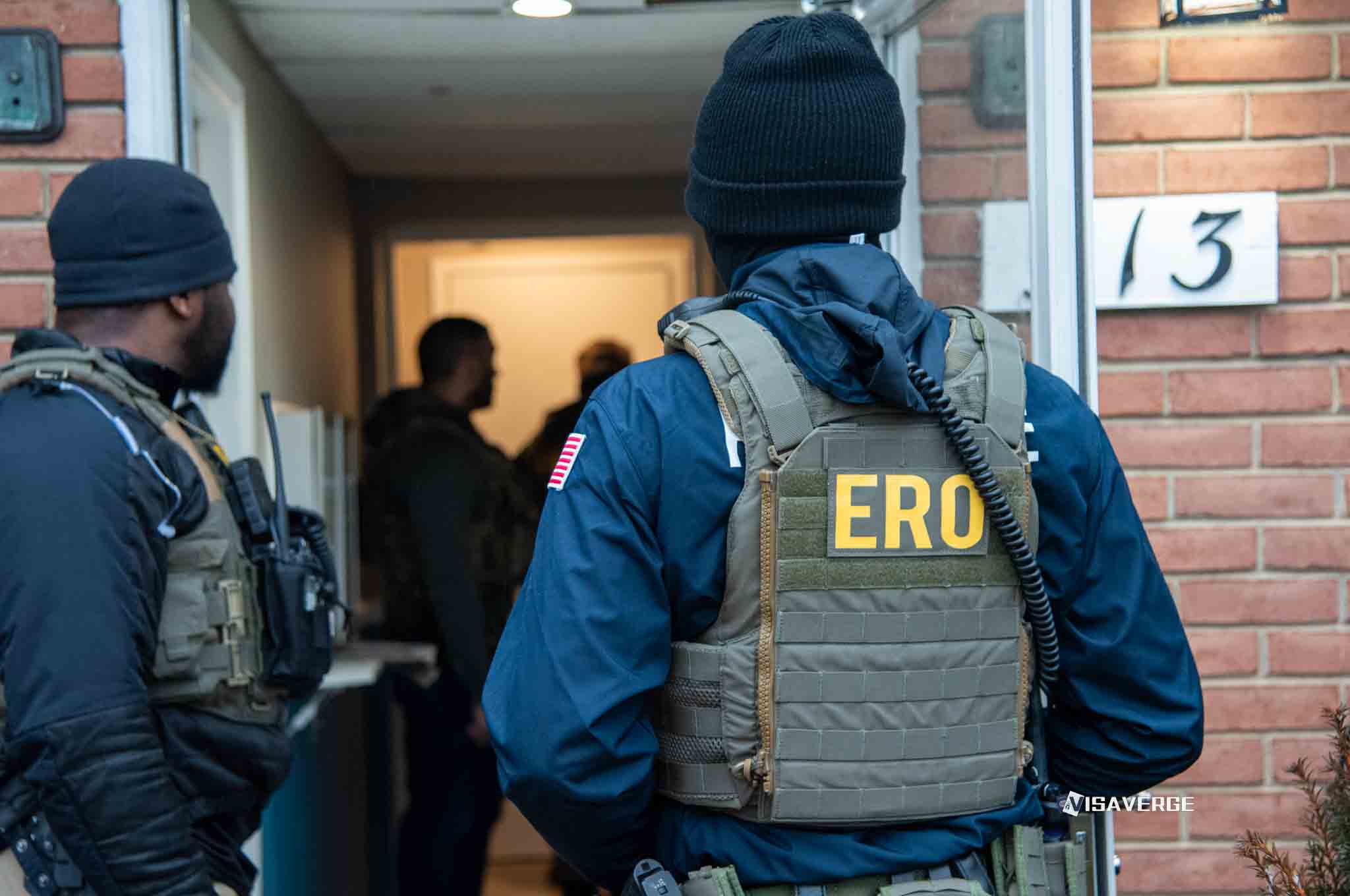
- Florida has spent about $573 million on state-led immigration enforcement over approximately three years.
- Remote detention at ‘Alligator Alcatraz’ limits access to counsel and complicates bond hearing preparation.
- Federal bond decisions rely on Matter of Guerra factors like flight risk and criminal history.
(FLORIDA) — A key legal pressure point emerging from Florida’s DeSantis-era immigration enforcement buildout is custody: when arrests increase and detention expands to remote sites, the practical “front door” issue for many families becomes whether a noncitizen can win release on bond—and how quickly they can access counsel to do it.
That question is governed less by state policy than by federal immigration custody law and Board of Immigration Appeals precedent, especially Matter of Guerra, 24 I&N Dec. 37 (BIA 2006). In Guerra, the BIA held that Immigration Judges deciding bond under INA § 236(a) weigh discretionary factors such as flight risk and danger, including family ties, employment history, criminal record, prior immigration violations, and the viability of relief.

In the current Florida context, Guerra’s balancing framework becomes more consequential because detention at a remote facility can slow evidence gathering and attorney access—both of which often drive the bond record.
What follows explains the spending and funding structure now driving Florida’s enforcement footprint, then connects it to the custody and due-process issues immigration lawyers are litigating daily.
1) Overview of Florida’s immigration enforcement spend: what the headline total does—and doesn’t—mean
Florida lawmakers were told in early February 2026 that Florida taxpayers have funded about $573 million in immigration enforcement efforts over roughly three years, according to a report by the Florida Division of Emergency Management (FDEM) delivered to the Legislature.
At a practical level, that figure matters for two reasons. First, it signals the scale of the operational surge: more personnel deployments, more transfers, and more detention capacity.
Those choices change where people are held, how quickly they can speak with counsel, and how rapidly bond hearings can be prepared. Second, it frames public accountability: a headline “total cost” can reflect reported spending through a particular channel, not necessarily every related cost across all state agencies.
The total may include emergency deployments, contracts, and detention-related spending tied to the program. It may exclude some indirect expenses, or costs borne through separate budgets, local cooperation, or federal systems after transfer.
Florida leaders have framed the spending as part of an ongoing “immigration emergency” response. Readers should distinguish three concepts:
- Appropriation: authority to spend up to an amount.
- Spending/Expenditure: money actually paid out.
- Reimbursement: later repayment from another source, if approved and disbursed.
2) Funding sources, appropriations, and reimbursement status: why “approved” doesn’t mean “paid”
FDEM reports the spending has been drawn from Florida’s Emergency Preparedness and Response Fund, a mechanism created to support emergency actions. In this context, it functions as the primary state channel to finance immigration enforcement activities while larger policy fights play out.
In February 2025, Gov. Ron DeSantis signed SB-2C, which appropriated $298.8 million for additional enforcement capacity. Appropriations can create or expand entities, set line items, and authorize spending for stated purposes.
They do not, by themselves, show how quickly funds are obligated through contracts or paid out after invoices, audits, and procurement review. Florida’s reimbursement story adds another layer: FDEM’s account is that a $608 million FEMA reimbursement request was approved in September 2025, but $0 had been received as of February 2026 because the payment process is “on hold” for verification.
That “hold” matters for cash flow. A reimbursement lifecycle typically works like this:
- Request/submission. With supporting documentation.
- Eligibility and initial approval. Often conditional.
- Verification and audit review. Including procurement and cost allowability checks.
- Obligation and disbursement. The point when money actually moves.
In December 2025, FEMA stated in response to records requests that no reimbursement had been approved and that the process was on hold pending verification. Whatever the precise internal posture, simple: states can spend first and wait months—or longer—for repayment that may be reduced, delayed, or denied depending on documentation and eligibility rules.
For readers tracking federal agencies’ public positions, the underlying ecosystem is visible at https://www.fema.gov/grants and broader federal immigration coordination statements at https://www.dhs.gov/newsroom.
Appropriations and “reimbursement approvals” are not the same as money received. For litigation and oversight, payment records often matter more than political statements.
3) “Alligator Alcatraz”: why detention facility costs spike, and what to look for
A major portion of Florida’s reported spend centers on a state-built detention facility at the Dade-Collier Training and Transition Airport in the Everglades, commonly branded “Alligator Alcatraz.” The site selection sits at the center of the controversy because it is remote and environmentally sensitive.
Remoteness also affects attorney access, visitation, and medical logistics. FDEM’s reported figures describe more than $360 million absorbed by construction and contracts.
Operating costs have been estimated publicly at $450 million annually, though detention “operating” estimates can swing based on capacity, staffing, transportation frequency, medical needs, and vendor pricing.
Cost categories that commonly drive detention spikes include:
- Upfront procurement: construction, modular units, fencing, surveillance, and communications.
- Staffing: overtime, recruiting, training, and retention in hard-to-staff locations.
- Transportation: transfers to courts, hospitals, airports, and other facilities.
- Medical care: on-site services, emergency response, and specialist transport.
- Security and vendor contracts: per-diem rates, food service, maintenance, and renewals.
For accountability, readers often learn the most from procurement terms, change orders, renewal options, and per-diem pricing structures. Those documents are also where litigation can intersect with finance, because contracting details may bear on federal involvement and compliance obligations.
4) Federal involvement and political context: DHS vs. FEMA, and why messaging diverges from payment
Florida’s enforcement posture is politically salient, but the federal interface is mostly administrative. DHS can shape operational coordination, detention capacity planning, and intergovernmental messaging.
FEMA administers grants and reimbursements under its programs, applying documentation and verification standards. Public statements can influence expectations, but operational statements do not substitute for disbursement records.
DHS Secretary Kristi Noem said in June 2025 that DHS was expanding “facilities and bed space” in partnership with Florida. DHS spokesperson statements indicated Florida could request FEMA funds to offset housing and care costs.
When FEMA places a payment process “on hold,” timelines can stretch. That has downstream effects on budgeting and on how quickly the state can expand or sustain detention operations without reallocating money from other priorities.
5) Legal challenges, environmental reviews, and court actions: what a closure order and an appellate stay do
Environmental organizations, including Friends of the Everglades, and the Miccosukee Tribe have sued over the Everglades detention site. The central theories described publicly include alleged failures to complete required environmental review and alleged bypassing of federal processes that plaintiffs say should apply.
A federal court closure order generally requires operations to pause or cease while the case proceeds, often based on preliminary findings about likely legal violations or irreparable harm. An appellate stay, by contrast, usually pauses the closure order while the appeal is pending.
A stay is not a final merits decision. In the reported posture here, the Eleventh Circuit stayed a closure order, with reasoning tied to federal-law triggers and the facility’s not yet receiving federal money.
That linkage is legally important: in many environmental and administrative-law disputes, the degree of federal involvement or federal funding can affect jurisdictional analysis and whether certain federal compliance duties attach.
The case posture also shows why reimbursement status becomes more than accounting. Payment records can be litigated as factual evidence of federal participation, even when politicians describe partnership in broad terms.
If a stay is entered, briefing schedules and emergency motions can accelerate. Parties should track the docket closely and assume timelines may change with little notice.
6) Impact on individuals: detention conditions, access to counsel, and lawful ways to seek help
On-the-ground enforcement activity affects individuals and families first through arrest, then through detention placement and access to counsel. Florida law enforcement participation includes 287(g)-related activity under INA § 287(g), which permits DHS to delegate certain immigration enforcement functions to trained state and local officers under agreement.
The state reports more than 4,900 apprehensions by the Florida Highway Patrol since March 2025. Once detained, the rights framework is federal: noncitizens in removal proceedings have the privilege of being represented at no expense to the government.
Immigration Judges must advise respondents of that privilege and of available legal services under 8 C.F.R. § 1240.10(a). Remote detention can make that right harder to exercise in practice, especially when attorney visits are limited and phone or video access is constrained.
This is where Matter of Guerra, 24 I&N Dec. 37 (BIA 2006) can have real bite. Bond decisions often depend on fast, credible documentation. Remote detention can slow collection of identity records, proof of residence, family ties, medical evidence, and rehabilitation records.
It can also delay the attorney-client preparation needed to address the Guerra factors. Reports from advocacy groups have raised human rights concerns at the Everglades site, including use of solitary confinement and shackling during transfers.
Allegations like these can become relevant in custody redeterminations, requests for prosecutorial discretion, or conditions-of-confinement complaints, depending on facts and jurisdiction.
Practical, lawful steps families and advocates often take include:
- Locate a detainee through ICE’s locator and confirm facility rules for attorney visits and calls.
- Request records via FOIA where appropriate, and keep copies of medical requests and grievances.
- Contact consular officials when the detainee is a foreign national who wants consular notification.
- Document conditions carefully without violating facility rules or risking retaliation.
EOIR court information and hearing logistics are available through https://www.justice.gov/eoir.
Bond hearings can be scheduled quickly. Delays in collecting identity, housing, and sponsor evidence can materially affect outcomes under Guerra’s discretionary factors.
Practical takeaways for Florida immigration cases now
- Custody planning is case strategy. After a Florida arrest tied to 287(g)-related activity, counsel often must triage bond, venue, and evidence immediately.
- Track the money, but litigate the record. Reimbursement “holds” and payment status may matter in related litigation. In immigration court, judges still decide bond under federal standards.
- Remote detention increases due-process friction. Document access barriers. Ask for continuances when counsel access is delayed. Build a clear record under 8 C.F.R. § 1240.10(a).
- Do not assume outcomes. Bond and relief depend on facts, criminal history, prior orders, and circuit law.
Because detention, bond, and enforcement consequences can escalate quickly—and because Florida’s enforcement posture intersects with federal custody law—consulting a qualified immigration attorney is strongly advised, especially for anyone with prior removal orders, criminal history, or pending asylum or cancellation claims.
Resources (official and legal aid)
- EOIR (Immigration Court)
- DHS Newsroom
- FEMA Grants
- AILA Lawyer Referral
- Immigration Advocates Network
⚖️ Legal Disclaimer: This article provides general information about immigration law and is not legal advice. Immigration cases are highly fact-specific, and laws vary by jurisdiction.
Consult a qualified immigration attorney for advice about your specific situation.