(CALIFORNIA) — A federal lawsuit seeks to block California’s January 1, 2026 effective date of two laws—SB 627 and SB 805—that restrict or require visibility of federal immigration enforcement activities, prompting a clash between state policy and federal authority.
At issue are Senate Bill 627 (No Secret Police Act) and Senate Bill 805 (No Vigilantes Act), both backed by California lawmakers after aggressive immigration operations in 2025 that drew public backlash. The U.S. Department of Justice argues the measures are unconstitutional as applied to federal immigration enforcement officers, and it has asked a federal court to stop California from enforcing them against ICE and CBP agents. California officials frame the laws as transparency and accountability rules aimed at reducing fear in immigrant communities.

The legal fight, now teed up in the U.S. District Court for the Central District of California, puts two constitutional concepts front and center: the Supremacy Clause and intergovernmental immunity. Officer safety claims also sit at the core of the dispute, with the Department of Homeland Security citing large reported increases in threats and assaults against ICE personnel.
What the DOJ lawsuit seeks to stop
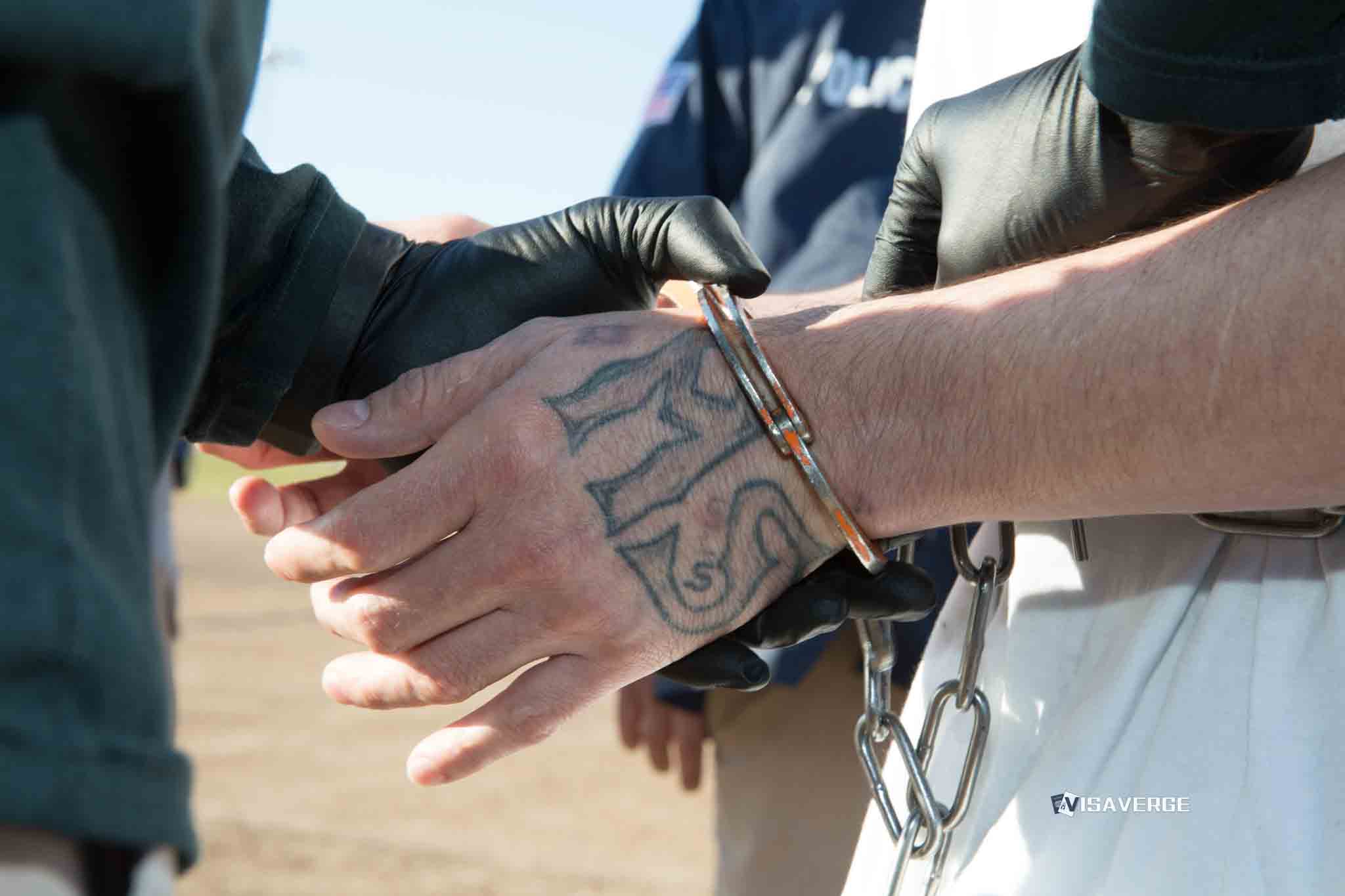
SB 627 targets face coverings used by law enforcement while performing duties. In practice, it aims at masks that obscure identity, such as ski masks and balaclavas. SB 805 focuses on identification, requiring non-uniformed agents to show an agency name plus a name or badge number.
Federal officials say the laws would expose agents to doxxing and retaliation. California lawmakers say masking and unclear identification can make lawful enforcement look like abductions, and that the public needs visible accountability.
The U.S. v. California case was filed by the U.S. Department of Justice on November 17, 2025. The case seeks to prevent California from applying SB 627 and SB 805 to federal officers, arguing the state cannot set the rules for how the United States carries out federal immigration enforcement.
Table 1: Legal status and timeline of actions
| Item | Details |
|---|---|
| SB 627 and SB 805 enacted | Signed on September 22, 2025; both set to take effect January 1, 2026 |
| DOJ lawsuit filed | U.S. v. California (2025-11-17) filed November 17, 2025 in the U.S. District Court for the Central District of California |
| DHS public position | DHS Newsroom statement dated November 19, 2025 supports the DOJ lawsuit and argues the laws violate the Supremacy Clause |
| State reporting portal | California launched an online portal on December 4, 2025 to report masked federal activity |
| Preliminary stay | On December 9, 2025, U.S. District Judge Christina A. Snyder issued a preliminary ruling staying California from enforcing provisions against federal agents while litigation proceeds |
| Current posture (Jan. 2, 2026) | SB 627 and SB 805 are in effect statewide, but state penalties against federal agents are paused under the stay |
⚠️ DOJ lawsuit and preliminary stay mean state penalties against federal agents are paused; readers should watch for further court rulings that could affect enforcement and officer safety policies
How SB 627 works, and why exemptions matter
Senate Bill 627 (No Secret Police Act) bans many identity-concealing face coverings for officers performing duties. The statute, however, includes several carve-outs:
- Undercover operations are exempt.
- SWAT or tactical gear used for physical safety is exempt.
- Medical masks, such as N95s, are exempt.
- The California Highway Patrol (CHP) is exempt — a detail that matters in the federal court fight.
SB 627 carries sharp civil consequences. A violation is a misdemeanor, and the law adds a path to minimum statutory damages of $10,000 if an officer violates the mask ban while committing certain torts, such as false arrest. In that situation, the officer also loses qualified immunity under the state law’s framework.
For federal lawyers, that structure is not just a policy disagreement. It is part of the constitutional argument. The U.S. Department of Justice says California is attempting to regulate federal officers in the performance of federal duties, and that the state is treating federal officers differently than similarly situated state officers.
How SB 805 regulates identification in the field
Senate Bill 805 (No Vigilantes Act) requires non-uniformed federal agents conducting enforcement to visibly display their agency name and a name or badge number. Supporters argue this reduces confusion during operations, especially when agents use unmarked vehicles and plain clothes.
Federal officials respond that forced disclosure of identifying information in the field can be used to target agents and their families. The DHS position ties the issue to broader claims about threats against federal personnel.
Table 2: Key actors and their positions
| Actor | Position / Statement | Source |
|---|---|---|
| U.S. Department of Justice | Filed U.S. v. California seeking to block SB 627 and SB 805 as unconstitutional under the Supremacy Clause and intergovernmental immunity | DOJ complaint on justice.gov (November 17, 2025) |
| Pamela Bondi | “Law enforcement officers… do not deserve to be doxed or harassed… These laws cannot stand.” | justice.gov (November 17, 2025) |
| Department of Homeland Security | Argues the laws interfere with federal enforcement and increase risks to agents | dhs.gov (November 19, 2025) |
| Tricia McLaughlin | Said both laws violate the Supremacy Clause and that California does not control federal law enforcement | dhs.gov (November 19, 2025) |
| Gavin Newsom | Characterized masked tactics as “dystopian” and akin to “secret police” intimidation | California Governor’s Office statements cited in public reporting and state messaging |
| Scott Wiener | California Senate sponsor; backed restrictions after 2025 raids with masked agents and unmarked vehicles | California Senate bill history and public statements around SB 627 |
| Sasha Renée Pérez | California Senate sponsor; supported identification and masking limits tied to community fear and accountability | California Senate bill history and public statements around SB 805 |
| Christina A. Snyder | Issued preliminary stay on December 9, 2025 barring enforcement against federal agents during litigation | U.S. District Court for the Central District of California docket and order |
The constitutional clash: Supremacy Clause and intergovernmental immunity
The Supremacy Clause makes federal law supreme over conflicting state law. That principle often blocks states from directly controlling how federal officers perform federal duties. The U.S. Department of Justice argues SB 627 and SB 805 do exactly that by dictating what federal immigration enforcement officers may wear and what identification they must show during operations.
Intergovernmental immunity is related but distinct. It generally prevents states from discriminating against the federal government or regulating it in a way that impairs federal functions. The CHP exemption becomes central here: federal lawyers say California cannot excuse its own statewide police force from masking limits while imposing constraints on federal agents performing comparable public safety missions.
California’s counter-argument, as reflected in the bills and public messaging, is that the state is setting baseline conduct rules for law enforcement activity occurring inside California. Supporters also argue that visible identification supports lawful policing and due process, especially for people stopped on the street or at homes.
Courts typically weigh these disputes with care. A state may regulate general conduct within its borders, but it often cannot control the federal government’s methods when federal officers act under federal authority. The preliminary stay suggests the federal court saw enough constitutional risk to pause enforcement against federal officers while it evaluates the merits.
Officer safety versus transparency, in hard numbers
DHS has tied its position to safety claims. In late 2025, DHS reported an 8,000% increase in death threats and a 1,000% increase in assaults against ICE agents. Those figures are being used to justify identity-protective measures, including masking in some operations.
California’s sponsors, Scott Wiener and Sasha Renée Pérez, pressed the opposite concern: masked agents in plain clothes can look like criminals, not law enforcement. That perception can cause panic, especially in immigrant communities that may already fear deportation, scams, or impersonation.
Both claims can be true at once:
- Public-facing identification may deter abuse and reduce confusion.
- Identity protection may reduce targeting and retaliation.
The legal question is who gets to choose the balance when the actors are federal officers.
If you’re seeking asylum or relief, document all dates and interactions, keep copies of notices, and consult a qualified immigration attorney to understand how ongoing litigation may affect your case.
What this means for immigrants and communities in California
USCIS does not conduct street enforcement, and the dispute does not directly change USCIS benefit adjudications. Still, uncertainty around field enforcement can affect families seeking relief. Arrests and detentions can disrupt pending asylum claims, family petitions, or other applications. Timing matters in many cases.
DHS has also signaled that federal agencies may not follow the state masking rule. A DHS statement dated September 22, 2025 said: “We will NOT comply with Gavin Newsom’s unconstitutional mask ban.” In practical terms, immigrants may still see masks during ICE operations even after January 1, 2026, especially while the stay remains in place.
California’s December 4, 2025 online portal to report masked federal activity adds another layer. Reports may assist state tracking and public messaging, but the December 9, 2025 stay means SB 627 and SB 805 penalties cannot be applied to federal agents for now. Individuals who witness an operation should consider safety first and avoid interfering.
Legal service providers in San Francisco and across California are watching the case closely. If the stay is lifted later, federal agencies could face renewed pressure to change tactics, at least within California. If the United States wins, California’s approach may be sharply limited.
✅ If you are an immigrant in California, understand the ongoing legal uncertainty and consult trusted legal counsel for asylum or relief options as the case evolves
This article discusses ongoing legal proceedings and regulatory matters. It is not legal advice.
Consult a qualified attorney for guidance on individual immigration relief options and consequences.
The U.S. Department of Justice is challenging California’s SB 627 and SB 805, which regulate mask-wearing and identification for law enforcement. Federal officials claim these laws unconstitutionally interfere with immigration enforcement and risk officer safety. California maintains the rules ensure accountability and reduce community fear. Currently, a preliminary stay protects federal agents from state penalties while the District Court evaluates the constitutional merits of the case.