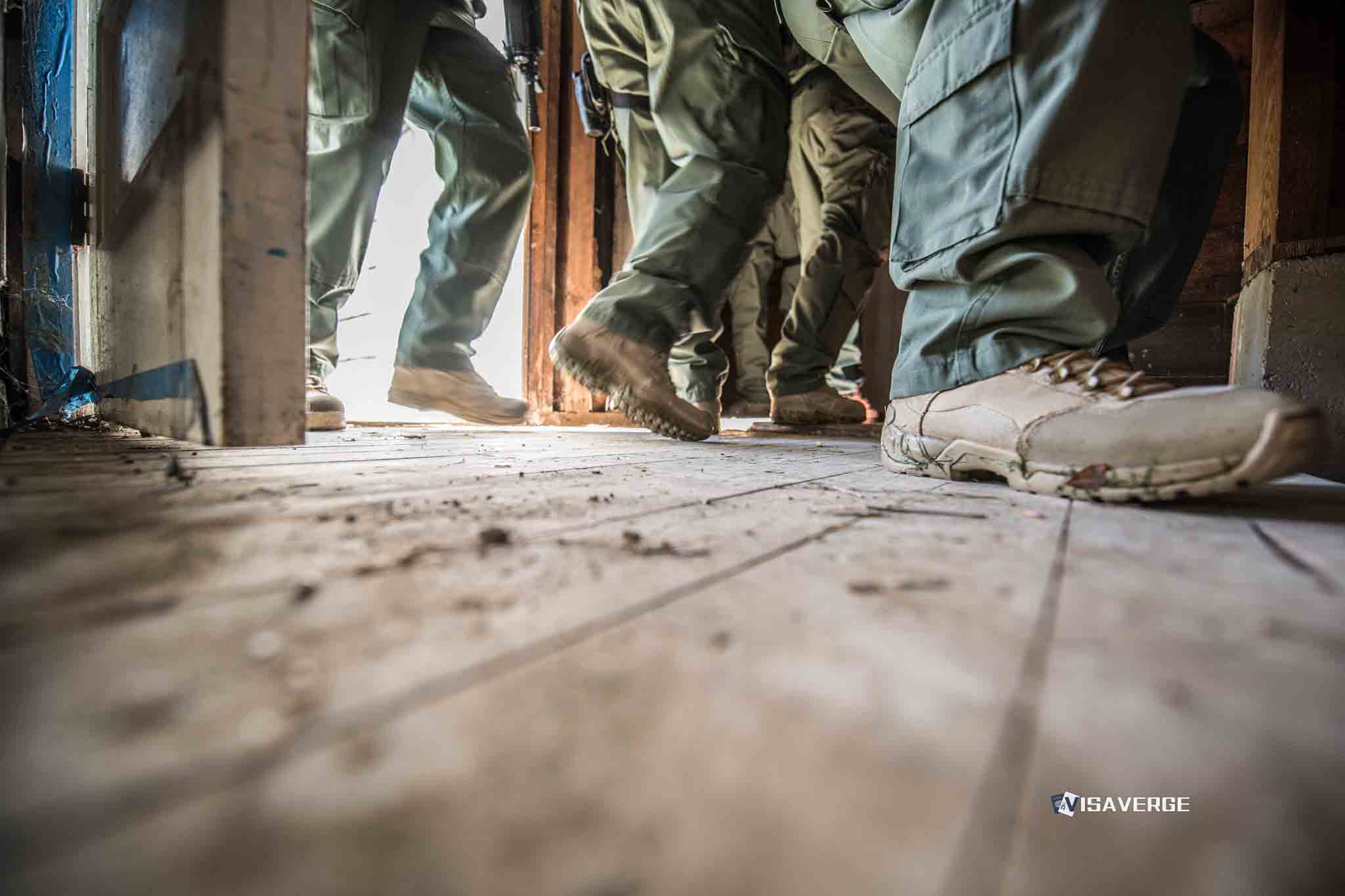
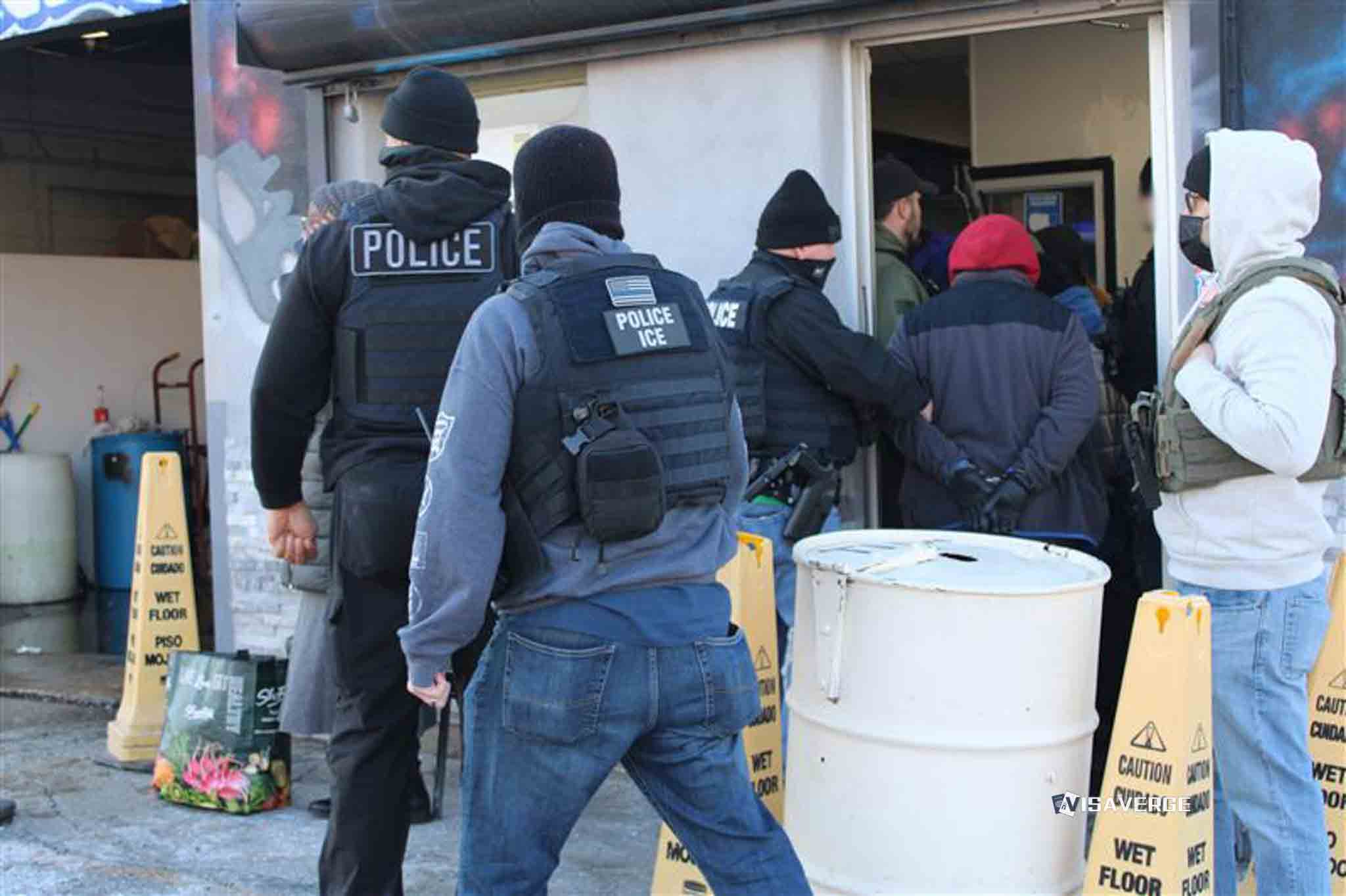
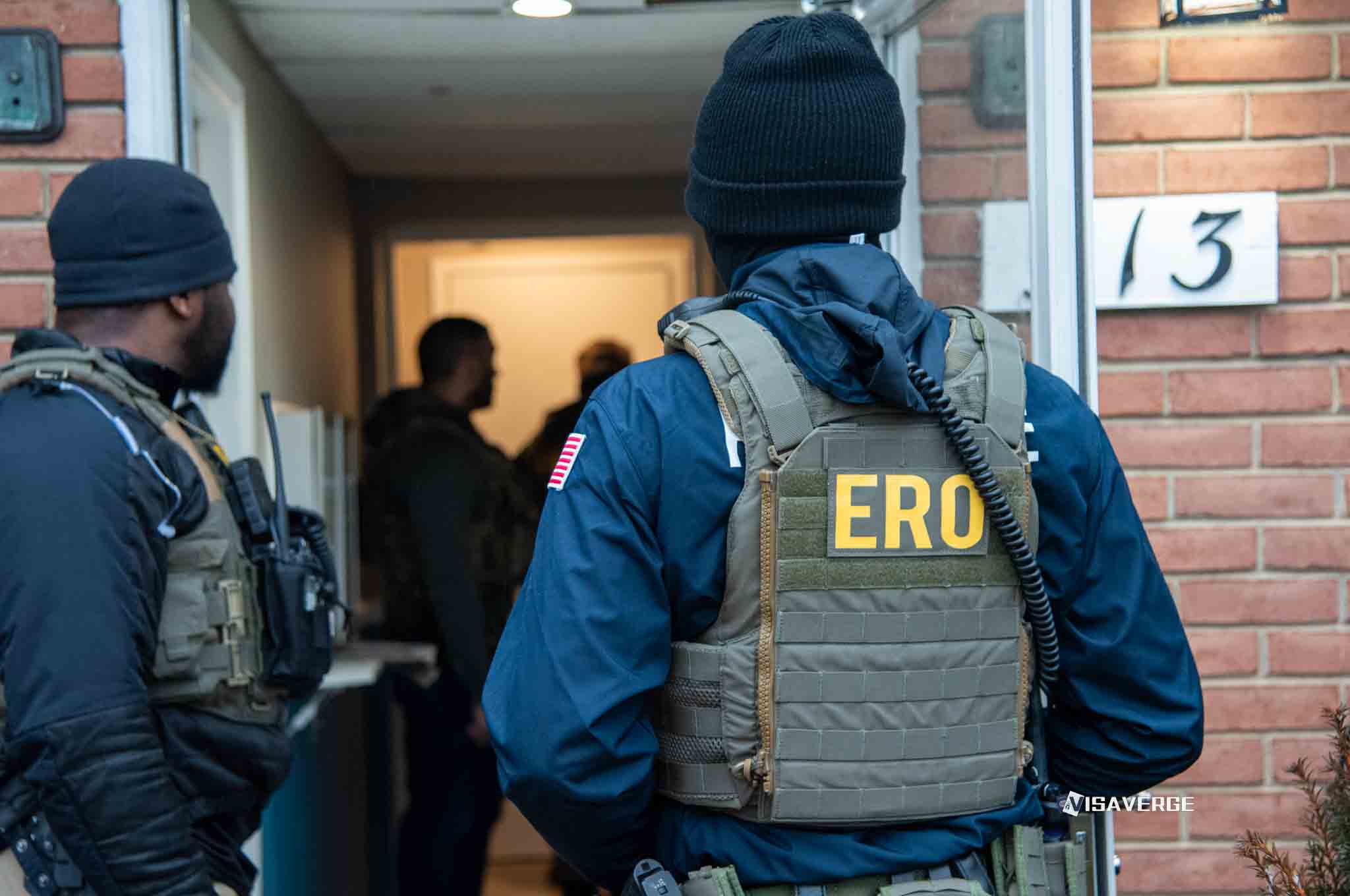
- Mayor Brandon Johnson’s executive order requires CPD to document federal immigration enforcement actions.
- Documentation and body-camera footage could provide essential evidence for legal challenges in immigration court.
- The order focuses on identifying federal supervisors and ensuring medical care for individuals injured during operations.
(CHICAGO, ILLINOIS, UNITED STATES) — Mayor Brandon Johnson’s new “ICE on Notice” executive order puts the Chicago Police Department on a path to systematically record, preserve, and refer alleged criminal conduct by federal immigration agents, a move that could materially affect how immigration attorneys build suppression and termination arguments in removal proceedings.
The order’s practical legal impact turns on a familiar evidentiary problem in immigration court: many claims of unlawful stops, excessive force, or unlawful home entries fail because respondents cannot prove what happened.
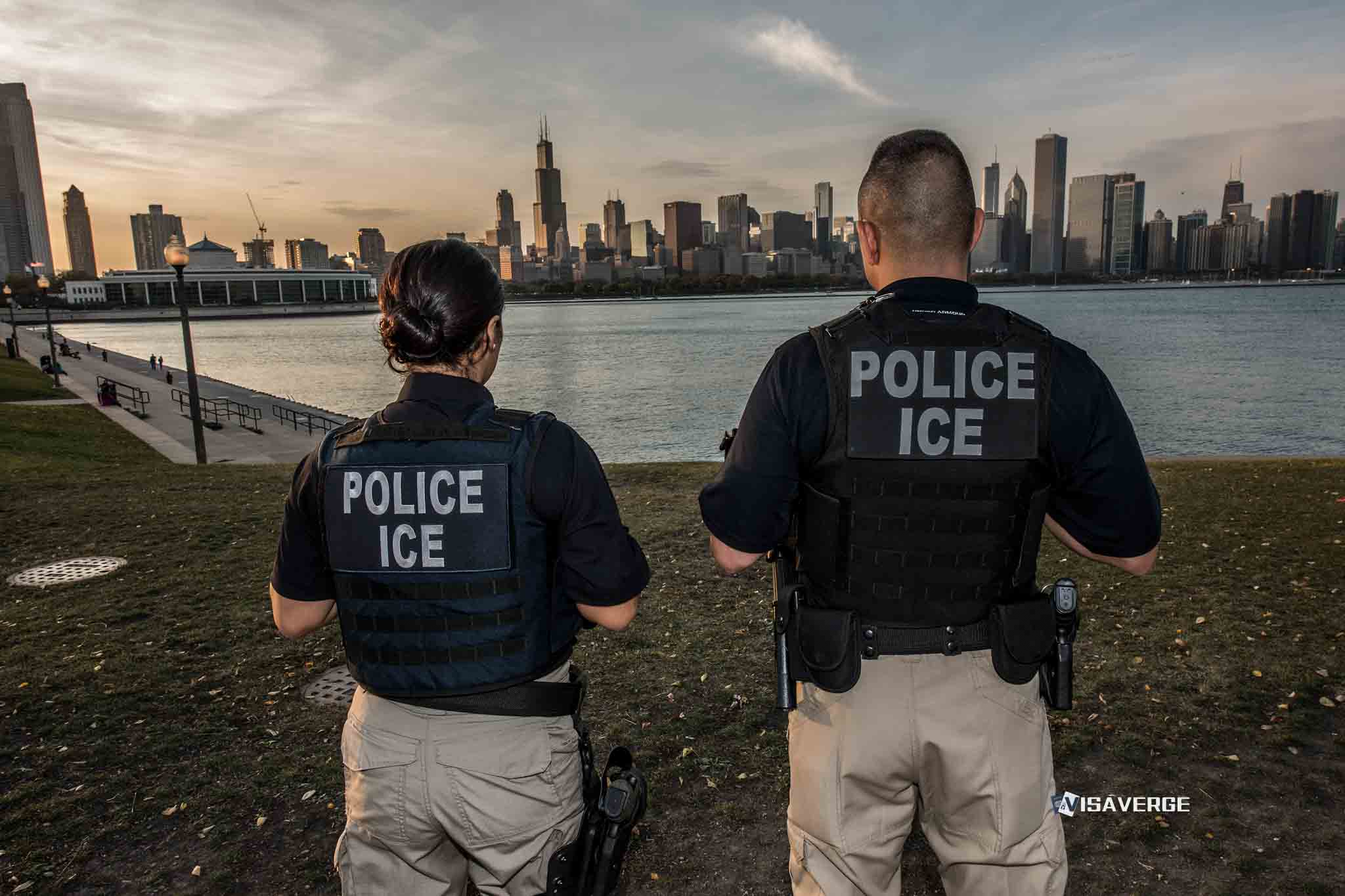
When contemporaneous police documentation and body-worn camera footage exist, that record may help respondents meet the initial burden required to seek exclusion of evidence or other remedies.
The Board of Immigration Appeals has long held that respondents generally must make a prima facie showing before an Immigration Judge will entertain suppression. See Matter of Barcenas, 19 I&N Dec. 609 (BIA 1988).
A better record can also support arguments that regulatory violations prejudiced the respondent. See Matter of Garcia-Flores, 17 I&N Dec. 325 (BIA 1980).
1) Overview: what “ICE on Notice” is meant to change
Signed on January 31, 2026, “ICE on Notice” is framed as an operational directive for city agencies, not a rewrite of federal immigration law.
Its central aim is to change day-to-day interactions when CPD officers witness or respond to encounters involving federal agents, including ICE and CBP.
In broad terms, the order instructs CPD to document allegations of illegal activity by federal immigration agents and to preserve evidence.
For immigrants and advocates, the significance is less about stopping enforcement in real time and more about creating a reliable evidentiary trail.
For local agencies, the order signals that CPD should treat alleged criminal conduct by federal agents similarly to other alleged criminal conduct.
That includes documenting injuries, preserving recordings, and routing potential felonies to local prosecutors.
2) Official statements and positions from DHS and the City
DHS has publicly denied wrongdoing and has emphasized professionalism, training, and officer safety.
The agency’s public messaging also casts federal operations as focused on public safety threats.
City leadership, by contrast, has described the order as a response to reported misconduct and community fear, and as a mechanism to preserve evidence.
Those competing narratives matter because implementation often depends on interagency cooperation.
When agencies publicly dispute basic facts, line officers may approach encounters more defensively.
Communities may also treat official statements as signals of future escalation or restraint, even when legal authority has not changed.
A separate issue is messaging about “cooperation.” Federal immigration enforcement generally remains a federal function.
Yet local policing decisions—what to record, what to retain, and what to refer—can still affect later litigation in both criminal court and immigration court.
Warning: A city order cannot, by itself, invalidate a federal arrest or stop. It may, however, help document facts that become relevant in court challenges.
3) Key policy details: what CPD is directed to do and why it matters
Operationally, the order focuses on four areas: documentation, referrals, identification, and medical response.
First, CPD is directed to document federal enforcement actions officers witness, particularly when there are allegations of illegal activity.
If CPD develops evidence of a felony violation, the matter is to be referred to the Cook County State’s Attorney’s Office.
Second, the order emphasizes body-worn camera retention and evidence preservation when incidents involve federal agents.
In immigration court, recordings can be decisive because removal proceedings are civil, and the usual criminal discovery tools are limited.
Video may also help resolve contested questions like consent to entry, the sequence of commands, or the presence of force.
Third, CPD officers are instructed to attempt to identify the supervising federal officer on scene, and to record a name and badge number, or to note refusals.
This matters because claims of unlawful conduct frequently stall when the responsible officer cannot be identified.
Identification also supports later subpoena efforts in criminal cases and may support civil rights litigation.
Finally, the order directs officers to call emergency medical services when someone is injured during a federal immigration operation.
That medical response has a healthcare dimension beyond emergency care: hospital records may corroborate injury timing, severity, and causation.
They can also become evidence in later court proceedings.
Warning: People injured during enforcement operations should seek medical care promptly. Delaying care can worsen health outcomes and can complicate later proof of what occurred.
4) Context: Operation Midway Blitz and the legal environment
The executive order is tied to “Operation Midway Blitz,” a multi-agency federal surge that began in September 2025.
DHS has described the operation as a public-safety response and has linked its name to a Chicago-area fatality involving an undocumented driver.
Reporting has described large-scale participation and staging arrangements involving federal personnel.
The operation’s tactics have also been shaped by litigation over crowd-control tools and use-of-force constraints.
A federal district judge reportedly imposed restrictions on certain tools, and the Seventh Circuit later stayed that order.
In practice, stays and injunctions can change what agents do on the ground, even when the underlying enforcement mission continues.
For immigrants, the core point is that federal enforcement intensity can shift quickly due to court orders, operational priorities, and resource deployments.
A local executive order does not control federal tactics, but it may affect what evidence is preserved when disputes arise.
5) Impact, statistics, and why terminology matters
Reported figures tied to the surge have fueled community concern and political conflict.
News analysis cited a sharp increase in arrests, and reporting has also asserted that a substantial share of those detained lacked criminal records.
Those statistics can shape behavior, including school drop-offs, work attendance, and willingness to call 911 or cooperate as witnesses.
It is important to distinguish three terms that are often conflated.
- An arrest is a seizure by law enforcement.
- A detention in the immigration context often refers to custody during removal processing, which can occur with or without criminal charges.
- A criminal conviction requires a criminal court process with constitutional protections that do not map neatly onto immigration proceedings.
Community responses described in reporting—escort systems for children and neighborhood alert campaigns—reflect perceived risk, not necessarily confirmed illegality.
Still, fear can affect public safety. If victims and witnesses avoid police contact, crimes may go unreported, and investigations may suffer.
From a case-analysis perspective, the order’s most concrete downstream effect is evidentiary.
If CPD records show force, injuries, or entry into homes, those facts may support motions in immigration court.
But the legal standard remains demanding after INS v. Lopez-Mendoza, 468 U.S. 1032 (1984), which generally limited suppression in removal proceedings while leaving room for egregious violations.
How this intersects with immigration court doctrine (and circuit differences)
In removal proceedings, ICE typically proves alienage and removability through documents like Form I-213, admissions, and records checks.
When respondents claim those documents are tainted by unlawful conduct, they may seek to suppress evidence or terminate proceedings.
The BIA’s prima facie requirement in Matter of Barcenas means Immigration Judges commonly require specific factual allegations supported by evidence, not speculation.
That is where “ICE on Notice” documentation could matter. A CPD report noting injuries, refusal to identify supervisors, or body-camera footage may help satisfy the initial threshold.
Regulatory-violation arguments also remain fact-bound. Under Matter of Garcia-Flores, a respondent generally must show both a violation and resulting prejudice.
Video evidence and contemporaneous reporting can help establish the violation and its connection to the evidence ICE seeks to use.
Outcomes may also vary by federal circuit. Some circuits have been more receptive to suppression in immigration proceedings for egregious constitutional violations, while others apply a narrower approach.
Chicago sits in the Seventh Circuit, and practitioners should evaluate Seventh Circuit precedent carefully before relying on out-of-circuit standards.
What the order does not do
The order does not grant immigration status, stop removals, or create a new defense under the Immigration and Nationality Act.
It also does not change eligibility for common relief such as asylum (INA § 208), withholding of removal (INA § 241(b)(3)), CAT protection, or cancellation of removal (INA § 240A).
Those forms of relief still require meeting statutory elements and credibility standards.
It also does not guarantee that evidence will be disclosed to immigration counsel.
In practice, attorneys may need to pursue public records requests, litigation subpoenas where available, or coordination with criminal defense counsel if charges exist.
Deadline note: If you are arrested or detained, immigration filing deadlines can move quickly. Missing an Immigration Court filing date can lead to deemed waiver of applications or an in absentia order.
Practical takeaways for immigrants, families, and counsel
If you or a family member has an encounter involving ICE or CBP in Chicago and CPD is present, write down names, unit numbers, time, location, and witness contact information.
Ask whether body-worn camera footage was activated. Preserve your own phone videos and messages.
If there are injuries, seek medical care and keep discharge paperwork. Healthcare documentation may later corroborate the timeline and severity of harm.
If you are afraid of seeking care, consult a lawyer or local legal services organization about safer ways to document injuries.
For attorneys, “ICE on Notice” suggests a new potential source of third-party evidence.
That evidence may support motions to suppress, requests for subpoenas, bond arguments, and credibility rehabilitation.
It may also assist in parallel criminal or civil proceedings, though those tracks have different burdens and remedies.
Because the stakes are high and the law varies by jurisdiction, people affected by Operation Midway Blitz or related enforcement should consult qualified counsel promptly.
Early legal guidance can help preserve evidence, avoid damaging statements, and assess relief options under the INA.
Official government sources and references (starting points)
For readers tracking official updates, the most reliable sources remain agency and city primary documents:
- USCIS News (benefits, not enforcement): https://www.uscis.gov/news
Resources:
- Find a lawyer (AILA)
This article provides general information about immigration law and is not legal advice. Immigration cases are highly fact-specific, and laws vary by jurisdiction. Consult a qualified immigration attorney for advice about your specific situation.