- USCIS benefit processing times generally range from 3–14 months depending on form type and location.
- DHS is expanding body-worn camera use for ICE and CBP to improve enforcement transparency.
- Applicants should verify current fees at uscis.gov to avoid application rejections and processing delays.
As of February 2026, most family- and employment-based USCIS benefits continue to fall in the 3–14 month range, depending on the form and office. The trend is mixed. Many applicants report faster receipt notices. Some see longer waits after interviews or RFEs. Processing times are USCIS estimates and vary by category, service center, and field office. The official tool is https://www.visaverge.com/uncategorized/processing-times/.
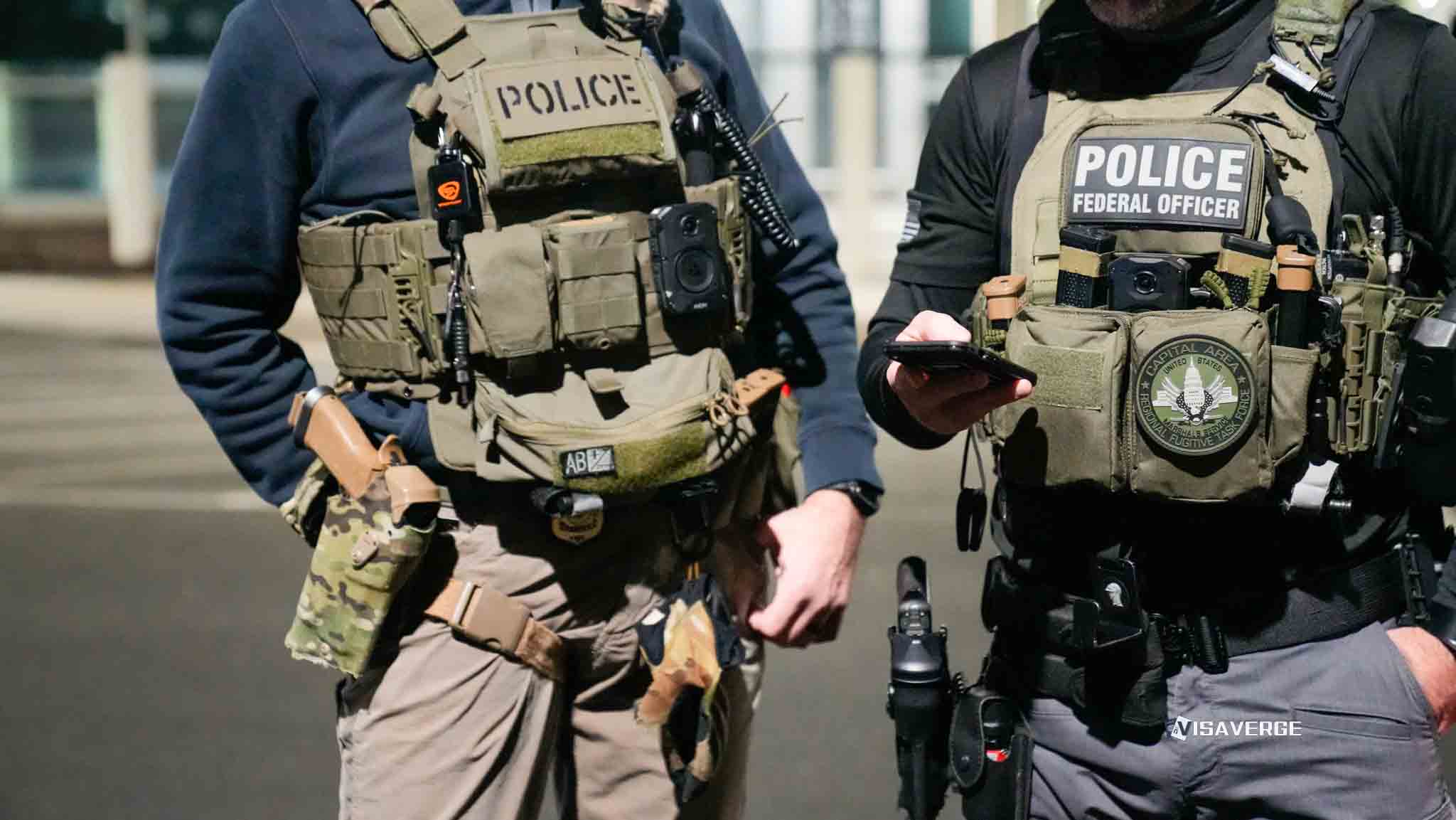
At the same time, the Department of Homeland Security is expanding Body Cameras for immigration enforcement. That change sits mostly with ICE and CBP, but it can affect case evidence. It can also affect timelines when an incident triggers added review.
⏱️ Processing Time (Est.): As of February 2026, common USCIS ranges include I-485: 8–14 months, I-765: 3–7 months, and N-400: 6–12 months. Confirm at https://www.visaverge.com/uncategorized/processing-times/.
DHS body-worn cameras: what’s changing and why it matters for USCIS applicants
DHS body-worn cameras are officer-worn recording devices used during enforcement encounters. These encounters can include arrests, stops, searches, and transport. DHS components involved include ICE and CBP. The current policy direction is broader deployment, clearer activation expectations, and more focus on transparency.
DHS leadership has described the push as a trust measure after high-profile enforcement encounters. The policy shift is also framed as officer protection. This renewed focus comes during the Trump Administration, after public pressure and congressional attention on enforcement activity.
Even when USCIS is not the enforcing agency, your immigration case can be affected. A pending Form I-485, Application to Register Permanent Residence or Adjust Status case may face delays if USCIS requests extra records. That can include police reports, court dispositions, or DHS incident documentation.
Official statements and the near-term timeline
DHS Secretary Kristi Noem announced an immediate deployment in Minneapolis, with expansion “as funding is available.” President Donald Trump publicly endorsed the use of body cameras as generally favorable to law enforcement. Acting ICE Director Todd Lyons told Congress he welcomed body cameras broadly and stated body camera footage will be released. CBP Commissioner Rodney Scott emphasized that full program funding is needed to support transparency at scale. DHS Assistant Secretary Tricia McLaughlin confirmed DHS is expanding nationwide.
Operationally, “as funding is available” usually means phased rollout. It can also mean uneven coverage across locations and units. It can take time to buy devices, train officers, and set up storage and audits.
Key facts and policy details: what to expect in real encounters
DHS has tied the body camera push to a large enforcement effort in the Twin Cities. Scale matters because a large operation creates heavy demands on training, supervision, and data storage.
In practice, there is a difference between:
- Cameras owned by the agency
- Cameras actively deployed to officers
- Personnel consistently covered during encounters
Even with a mandate, cameras may be unavailable due to device shortages. Cameras may also be off due to malfunction or policy exceptions. Typical exceptions can include sensitive sources, privacy concerns, or safety concerns.
Transparency promises can also mean different things. Release may occur through internal review, inspector general review, court discovery, or limited public release. It is not always immediate, and it is not always public.
How this policy shift can affect immigration processing
Body camera expansion is not a USCIS processing reform by itself. Still, it can affect timelines when an incident becomes part of your file. That can happen in several ways:
- USCIS issues an RFE for arrest records or court outcomes.
- USCIS pauses a case for additional security checks.
- A field office delays a decision after a complex interview.
- Your attorney requests records that take time to obtain.
Many applicants worry about delays after an RFE. This is common. Responding completely and quickly is often the best way to reduce added waiting.
⚠️ Common Mistake: Submitting an RFE response with missing certified dispositions, missing translations, or no cover letter. This can trigger another RFE.
Estimated processing times by form and office (USCIS estimates)
Processing times are estimates as of February 2026. Always confirm your category in the USCIS tool.
| Location / Office | Form I-485 (AOS) | Form I-765 (EAD) | Form I-131 (Advance Parole) |
|---|---|---|---|
| NBC (then local field office) | 8–14 months | 3–7 months | 4–9 months |
| Texas (TSC) | 10–16 months | 3–6 months | 4–9 months |
| Nebraska (NSC) | 8–14 months | 4–7 months | 4–10 months |
| Vermont (VSC) | 10–18 months | 4–8 months | 5–11 months |
| California (CSC) | 9–15 months | 3–7 months | 4–10 months |
Form fees to plan for (verify before filing)
Fees can change. Use uscis.gov/fees before you file.
| Form | Purpose | Fee (as of Feb 2026) | Typical Processing (est.) |
|---|---|---|---|
| I-485 | Green card in the U.S. | $1,225 (includes biometrics) | 8–14 months |
| I-765 | Work permit (EAD) | $410 | 3–7 months |
| Form N-400, Application for Naturalization | U.S. citizenship | $760 | 6–12 months |
💰 Current Fee: Confirm the exact amount at uscis.gov/fees. Incorrect fees often cause a rejection and restart your timeline.
Expedite requests: when they may help
USCIS may expedite in limited situations. Common bases include severe financial loss, urgent humanitarian reasons, or government interests.
- File the application first, unless USCIS allows a pre-filing expedite.
- Gather proof, like shutoff notices, eviction notices, or medical letters.
- Request expedite through your USCIS online account at my.uscis.gov, or by calling 1-800-375-5283.
- Respond fast if USCIS asks for supporting documents.
Expedites are discretionary. Approval is not guaranteed.
How to check case status and stay on track
- Create or sign in to your account at my.uscis.gov.
- Enter your receipt number in “Case Status.”
- Turn on case alerts for updates.
- Review your “Documents” tab for notices and RFEs.
If you plan international travel, do not depart without approved advance parole when required. A pending Form I-131, Application for Travel Document can take months. Leaving without proper authorization may be treated as abandoning an I-485.
Next steps: confirm your form’s category and office at https://www.visaverge.com/uncategorized/processing-times/, verify your fee at uscis.gov/fees, and keep your address current using Form AR-11 through your USCIS online account.
📋 Official Resources: Download forms at uscis.gov/forms. Check processing times at egov.uscis.gov/processing-times. Fees and processing times are subject to change—always verify current information at uscis.gov.