- The ACLU filed a lawsuit alleging federal agents violated constitutional rights during an Idaho horse arena raid.
- Authorities used narrow criminal warrants to justify mass immigration detentions of hundreds of Latino attendees.
- Everyone in the U.S. maintains the right to refuse consent to searches regardless of immigration status.
Your core right: You can refuse consent to searches and you can ask if you are free to leave—no matter your immigration status
In the United States, everyone—U.S. citizens, lawful permanent residents (LPRs), visa holders, and undocumented people—has constitutional protections against unreasonable searches and seizures. That includes most encounters during a large immigration raid.
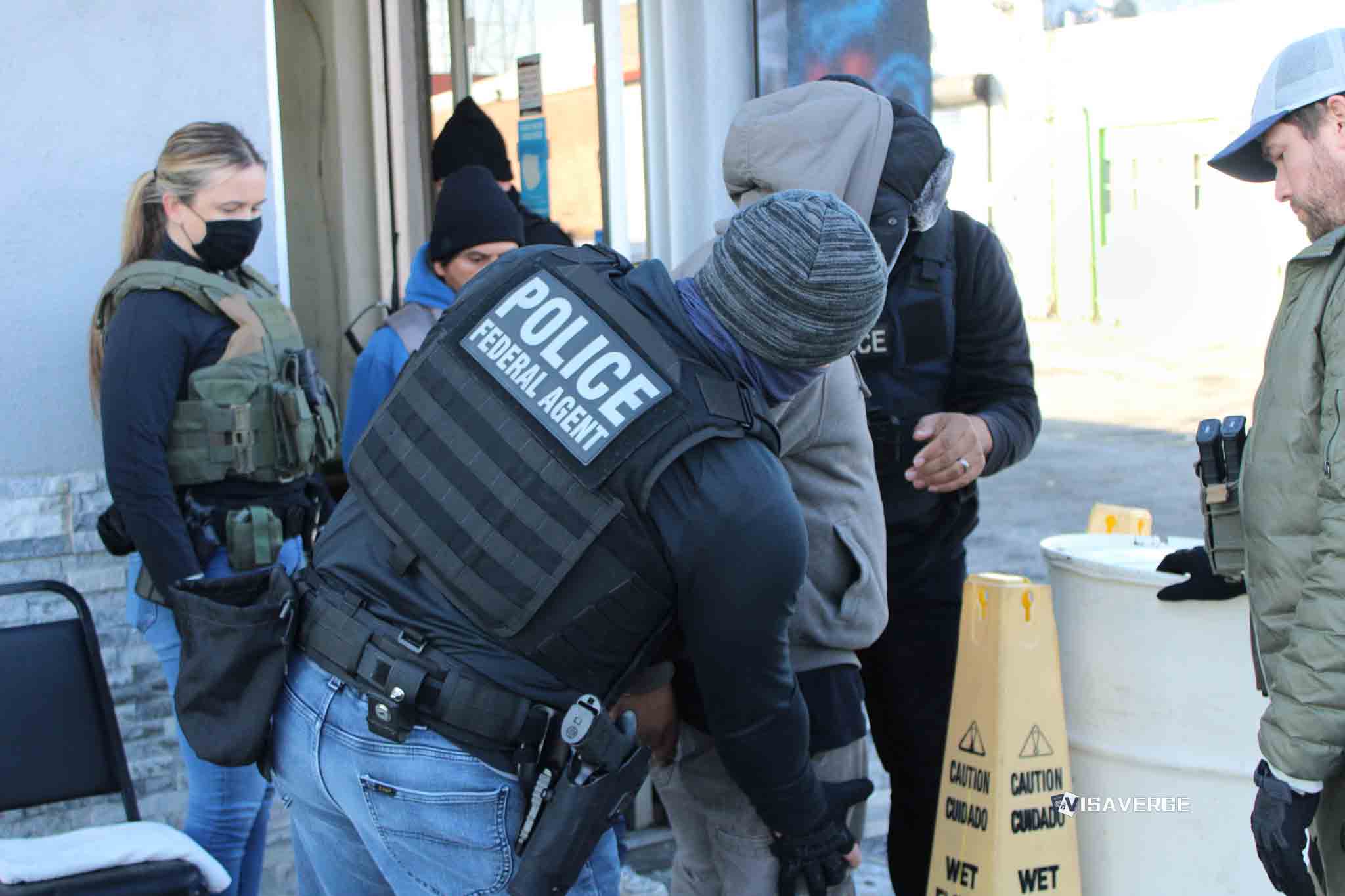
These protections sit at the center of the new ACLU lawsuit over the October 19, 2025 raid at La Catedral horse racing arena near Wilder, Idaho. The suit argues that law enforcement used criminal search warrants for a narrow gambling investigation as a gateway to broad immigration detentions at a Latino-heavy family event.
Legal basis (high level):
- Fourth Amendment (searches and seizures must be reasonable; warrants must be particular).
- Fifth Amendment (due process; protection against compelled self-incrimination).
- Equal protection principles (via the Fifth Amendment for federal actors; via the Fourteenth Amendment for state actors).
- INA § 292 (right to counsel at no expense to the government in removal proceedings).
- 8 C.F.R. § 287.8 (limits on immigration officers’ use of force, stops, and arrests).
- 8 C.F.R. § 1240.10 (immigration judge advisals, including the right to counsel in removal court).
simple: a badge does not erase the Constitution, and a search warrant is not a blank check.
Warning: People often lose protections by “agreeing” in the moment. If officers ask, “Do you mind if we look?” and you say “okay,” that is usually treated as consent. Consent can make later challenges harder.
1) Overview of the lawsuit (what is being alleged and why it matters)
On February 10, 2026, the ACLU filed a federal lawsuit in the U.S. District Court for the District of Idaho on behalf of Latino families who were detained during an October 19, 2025 operation at La Catedral (also described in reports as La Cotterell Horse Arena) in Wilder, Idaho.
Who is suing, and what happened to them (as alleged): The plaintiffs include people who say they were detained at a family-oriented, permitted county gathering. They include U.S. citizens and lawful residents, and the allegations also describe children being caught up in the sweep.
Core legal theory (in plain language): The complaint alleges that federal agents—including ICE and the FBI—and more than 200 state and local officers used criminal search warrants aimed at a small number of suspects to justify mass stops, detentions, and immigration screening of many attendees. The suit frames this as a civil-rights violation, not simply an immigration dispute.
Why it matters beyond this one day: Large-scale operations test the limits of:
- How far officers can go when executing a warrant at a public event.
- Whether people were detained based on appearance or perceived ethnicity rather than individualized suspicion.
- Whether people had meaningful access to family contact and legal counsel after detention.
- Whether local participation creates added accountability questions under civil-rights statutes.
The case is also a reminder that immigration enforcement often involves multiple agencies at once. That includes federal immigration officers, federal criminal investigators, and local police working together.
2) Raid details (what happened on the ground, and what warrants do—and do not—allow)
Date and setting (as reported): The operation occurred on October 19, 2025 at La Catedral Arena near the Idaho–Oregon border. Reports describe a permitted county event drawing hundreds of mostly Latino attendees for horse races and cultural celebration.
Scale and tactics (as alleged in the lawsuit and described in reporting): Accounts describe a large operation involving air support and armored vehicles. The allegations also include the use of flashbang grenades and rubber bullets, and officers pointing weapons at families while issuing orders. The complaint and reporting also describe racist epithets.
Alleged sorting by race or appearance: One of the most serious allegations is that officers sorted people based on skin tone and made assumptions about immigration status. If proven, that kind of conduct can be central to Fourth Amendment “reasonableness” and equal protection analysis.
What readers should know about warrants versus broad detentions at public events
A search warrant generally authorizes officers to search a specific place for specific items, described with “particularity.” It does not automatically authorize officers to:
- Detain everyone present for long periods, without individualized justification.
- Demand immigration papers from everyone because they are nearby.
- Use force that is disproportionate to the threat level.
Some limited detention can occur during execution of a search warrant. Courts have allowed certain temporary detentions to control a scene. But the scope and duration still must be reasonable. The facts matter.
If immigration officers are involved, they operate under additional rules. For example, 8 C.F.R. § 287.8 addresses when immigration officers may briefly detain someone and how force may be used.
How to exercise your rights during a large operation:
- Ask, “Am I free to leave?”
- If the answer is no, ask, “Am I being detained? For what reason?”
- You can say, “I do not consent to a search.”
- You can say, “I choose to remain silent.”
You should not physically resist. Resistance can lead to injury or criminal charges, even if the stop was improper.
3) Outcomes of the raid (detentions, arrests, and what happened next)
Who was detained (as reported): Reporting and the lawsuit describe hundreds of people being detained, including U.S. citizens, lawful residents, and children.
Competing narratives about purpose:
- Plaintiffs’ narrative: The operation used narrow criminal warrants as a pretext to conduct wide immigration enforcement at a Latino-heavy event.
- DHS narrative: DHS stated agents helped dismantle an illegal enterprise involving horse racing, animal fighting, and gambling, and that agents lawfully arrested more than 100 people described as “illegal aliens.”
Reported counts and charge mismatch: Reports state 105 people were arrested by ICE, while only 4–5 were arrested on gambling-related charges. This mismatch is likely to be litigated. It can matter to whether the operation is viewed as tailored or as a dragnet.
Reported deportations and alleged coerced “voluntary departure”: Reporting has described at least 75 removals, with allegations that some people were pressured into signing “voluntary departure” paperwork.
This is an area where outcomes can change quickly. Post-raid processing may involve transfers between facilities. People may be asked to sign forms in English. They may be exhausted or afraid.
Warning: Signing documents in custody can have lasting effects. “Voluntary departure” and stipulated orders can affect future admissibility. If you are detained, ask for time to speak with an attorney before signing.
4) Impacts on U.S. citizens and mixed-status families (why this matters legally, not only emotionally)
Large operations can ensnare citizens. That is not new. But the Wilder allegations are striking because they involve prolonged restraint, children, and property handling.
Citizen detention allegations: A U.S.-citizen security contractor, described as Carter, and five U.S.-citizen employees were allegedly handcuffed for hours. The allegations also say the contractor’s children, ages 12 and 14, were briefly detained.
Even for citizens, the question is whether the seizure was reasonable in scope and duration under the Fourth Amendment. If a citizen is held at gunpoint, handcuffed, or kept for hours, courts often scrutinize the justification closely.
Property and firearms: The allegations include confiscation of handguns and uncertainty about where they were taken. Property seizures can raise Fourth Amendment issues and due process questions about return procedures.
Mixed-status family ripple effects: When parents, children, and relatives have different statuses, a single operation can trigger:
- Immediate family separation.
- Childcare emergencies and school absences.
- Fear of reporting crimes or cooperating as witnesses.
From a civil-rights perspective, these impacts can support damages claims and requests for policy changes, depending on what the evidence shows.
Sources referenced in public accounts of this event include: the ACLU’s federal complaint, statements attributed to DHS, and reporting by national and regional outlets that have covered the raid and its aftermath.
5) Lawsuit allegations and legal claims (how these cases are typically built)
The complaint’s allegations can be grouped into four legal themes.
1) Pretextual use of criminal warrants to enable broad immigration stops
A central claim is that warrants tied to an illegal gambling probe named only five targets, yet the operation functioned like a mass immigration checkpoint. If plaintiffs show the warrant’s execution became a generalized search or generalized seizure, that can support Fourth Amendment claims.
2) Discrimination and racialized decision-making
Claims of racial slurs and sorting by skin color can be relevant to:
- Whether stops lacked individualized suspicion.
- Whether enforcement actions were motivated by discriminatory intent.
When federal officers are accused, equal protection principles usually run through the Fifth Amendment. When state or local officers are accused, the Fourteenth Amendment may apply.
3) State and local participation issues
The lawsuit also raises questions about local agencies assisting an operation that plaintiffs say became immigration enforcement. Local participation can matter for:
- Who can be sued.
- What immunity defenses apply.
- What policies and training are discoverable in litigation.
4) Transfers and barriers to counsel
Related filings described rapid out-of-state transfers that allegedly interfered with attorney access and court oversight. In removal proceedings, the right is to counsel at no expense to the government under INA § 292, and immigration judges must advise respondents of that right under 8 C.F.R. § 1240.10.
That right is not the same as the Sixth Amendment right to appointed counsel in criminal court. Still, interference with access can raise due process issues, depending on facts and jurisdiction.
What plaintiffs usually seek: Civil-rights suits often request a mix of:
- Injunctive relief (orders limiting certain practices).
- Declaratory relief (a ruling that conduct was unlawful).
- Damages for those harmed.
- Policy changes and training commitments.
None of these outcomes are guaranteed. Federal civil-rights litigation is slow and fact-intensive.
6) Agencies’ responses and disputed points (what the government says, and why it matters)
DHS’s stated rationale: DHS framed the operation as targeting an illegal enterprise and stated that more than 100 people were lawfully arrested.
Counsel-access arguments: In Oregon court filings described in reporting, the government argued its detention policies were sufficient and emphasized there is no constitutional right to unlimited attorney meetings in detention settings. The details of phone access, schedules, and facility practices can become key evidence.
Non-response issues: Reporting indicated ICE did not respond to certain media inquiries. In civil-rights cases, gaps in public answers do not prove liability. But they can raise questions that get tested in discovery.
Why these narratives matter in court: Judges often evaluate reasonableness by looking at:
- The government’s stated objective.
- The match between objective and tactics.
- Whether less intrusive approaches were feasible.
- What officers knew at the time.
Deadline alert: Civil-rights claims can have strict filing limits. The deadlines vary by claim type and jurisdiction. If you believe you were harmed in a raid, speak to an attorney quickly.
7) Broader context and implications (what to watch next)
Community trust in a small town: Wilder is a small community. When a large operation sweeps up families at a cultural event, fear can spread fast. That fear can deter people from reporting domestic violence, wage theft, or trafficking. Those effects often become part of the public record in litigation.
Operational questions raised by witnesses: Reporting quoted criticism that suspects could have been targeted outside the event to reduce collateral harm. That matters because courts sometimes consider whether tactics were proportionate to risks.
Why this could matter beyond Idaho: This lawsuit may function as a test of how courts police boundaries between:
- Criminal warrant execution, and
- Broad immigration enforcement at public gatherings.
It also tests accountability paths when federal immigration officers are accused of civil-rights harms.
What typically comes next in federal litigation: Expect early motions to dismiss, then discovery fights over body-camera footage, radio logs, and warrant materials. Plaintiffs may seek preliminary injunctions. Many cases also end in settlements.
Impact level: High.
If your rights were violated in an immigration raid: practical steps
- Write down facts immediately. Names, badge numbers, agency markings, time, location, and witnesses.
- Preserve evidence. Photos of injuries, torn clothing, property receipts, and medical records.
- Do not destroy documents. Keep any ICE paperwork, bond notices, or charging documents.
- Check custody status fast. If someone is detained, time matters for bond strategy and venue.
For immigration court information, see the EOIR site: EOIR information. For general immigration benefit information, see USCIS guidance. For constitutional text and references, Cornell’s Legal Information Institute is a reliable public resource: Fourth Amendment.
Legal help and referrals
- AILA Lawyer Referral: Find a lawyer
If you may have criminal exposure, consult a criminal defense lawyer as well. Parallel criminal and immigration issues can move on different timelines.
⚖️ Legal Disclaimer: This article provides general information about immigration law and is not legal advice. Immigration cases are highly fact-specific, and laws vary by jurisdiction. Consult a qualified immigration attorney for advice about your specific situation.