- The status indicates that USCIS has officially approved the Form I-129 petition.
- A formal Form I-797 notice is issued following the online status update.
- Premium processing guarantees a 15-day response time for a $2,805 fee.
(UNITED STATES) Seeing “Approval Case Decision Rendered” on a Form I-129 case usually means USCIS has approved the petition. For workers on H-1B visas, that status marks the end of adjudication and the start of the approval notice stage. It also tells the employer and beneficiary that the case has moved from review to action.
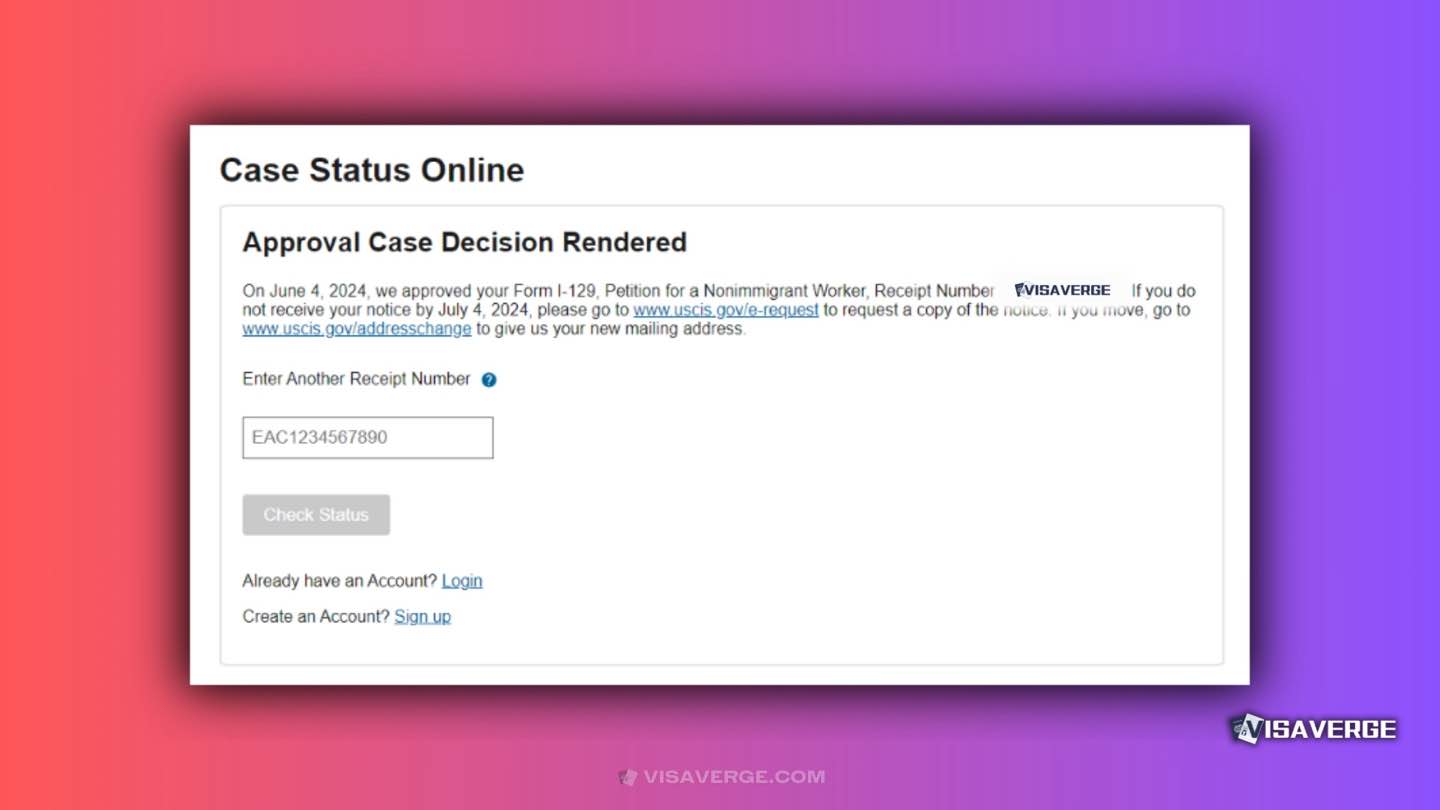
The phrase appears on USCIS case trackers after an officer finishes the file and signs off. For many petitioners, that is the most reassuring update in the whole process. It confirms that the petition has cleared the decision stage, whether the filing involved an H-1B, L-1, O-1, or another nonimmigrant worker category handled through Form I-129. VisaVerge.com reports that recent case patterns still treat the wording as a straight approval signal, not a temporary or conditional note.
What the status means for Form I-129 cases
“Approval” is the key word. “Case Decision Rendered” means USCIS has completed its review and issued the ruling. Once that happens, the online tracker often updates before paper notices arrive. The approval notice then becomes the next official document in the file.
Free toolH-1B Cost Calculator OnlineFor an H-1B petition, this means the employer-sponsored role has been approved under the terms listed in the petition. The worker can then move forward with the next legal step, whether that is starting work, extending stay, or applying for a visa stamp abroad.
USCIS explains Form I-129 on its official form page, and the agency’s premium processing page sets out the faster review option for eligible filings.
The approval notice that follows
After the status changes, USCIS issues Form I-797, Notice of Action. That notice goes to the petitioner, usually the employer, at the address on file. It is the paper record that confirms approval and lists the terms of the petition.
The notice normally shows:
- the petition classification
- the validity period
- the employer, job title, and worksite
- any change of status language
- any instructions tied to consular processing
For many initial H-1B approvals, the validity period is up to three years. Extensions can also run for up to three years if the underlying petition qualifies. The notice is the document employers, workers, and border officers rely on later.
Delivery time varies. Regular mail often takes one to two weeks after approval. Premium processing can shorten that to about one week to 10 days. Some petitioners also receive electronic alerts through their online account before the paper notice lands.
Premium processing and the 2026 fee
Premium processing remains the speed option for eligible Form I-129 filings. USCIS says it guarantees action within 15 business days once the agency accepts the request. That action can be approval, denial, request for evidence, or notice of intent to deny.
As of March 1, 2026, the premium processing fee is $2,805. The request is filed on Form I-907, which USCIS also posts on its official website. Online filing starts the clock faster because the agency can receive and accept the request more quickly.
The 15-business-day clock pauses if USCIS issues a request for evidence or a notice of intent to deny. A new 15-business-day period begins after the response arrives. If USCIS misses the deadline, it owes a refund of the premium fee.
Change of status and consular processing
What happens next depends on the petition type.
If the filing included a change of status request inside the United States, the approval can switch the person into H-1B status without needing a visa stamp first. In that path, the new approval notice and, when issued, the updated I-94 control the person’s work and stay authorization.
If the case follows consular processing, the approval means the petition is valid, but the worker still needs a visa stamp from a U.S. embassy or consulate abroad. That usually means filing the DS-160, paying the MRV fee, and attending an interview before entry to the United States.
The distinction matters a lot for timing. A person with change of status approval can often start or continue work right away if the petition terms allow it. A person abroad cannot enter and begin work until the visa is issued and the border officer admits them in the correct category.
What beneficiaries and employers should do next
The approval does not erase the need for careful compliance. The worker must follow the petition terms exactly. That includes the employer listed on the I-797, the role described in the filing, the wage level, and the worksite if one was listed.
Employers should distribute copies of the approval notice quickly. Workers should keep their own copies forever. These papers often matter later for payroll records, travel, future extensions, and port-of-entry questions.
If the case involved a change of status, the person should watch the I-94 record closely. If the case involved consular processing, the person should plan for the visa interview as soon as the approval notice arrives.
Travel also needs care. Leaving the United States before a change of status takes effect can end that benefit and force consular processing later. H-1B workers who travel should carry the passport, the approval notice, and the visa stamp when returning.
When the online record lags behind
USCIS case status sometimes updates slowly. A person can see “Approval Case Decision Rendered” online while the paper notice is still on the way. That delay does not usually mean a problem.
If the status stays frozen for too long, the usual steps are simple:
- Check the online USCIS account again.
- Review mail delivery and the address on file.
- Submit an electronic service request.
- Contact the employer or attorney handling the petition.
A move or mailing error can delay the notice. In that situation, the employer should update the address and, if needed, file the correct change through the USCIS system. The Form AR-11 page gives the official address-change process.
Why the wording still matters in 2026
As of March 2026, the meaning of the phrase has stayed steady. Recent filings still treat “Approval Case Decision Rendered” as a final approval signal. That consistency matters for H-1B workers facing cap deadlines, job start dates, and international travel.
Premium processing remains the fastest path for urgent filings. Regular processing still takes much longer, often stretching across months. For employers trying to fill hard-to-staff jobs, the status update can unlock onboarding, payroll setup, and relocation planning.
According to analysis by VisaVerge.com, the status often appears before the mailed notice, which is why many petitioners check online trackers daily once the case enters the final stage. That habit matters most when a start date is close or a visa interview is already scheduled.
Approval on a Form I-129 is not the end of responsibility. It is the start of a new compliance period. For H-1B workers, the notice, the job terms, the visa stamp, and the worksite rules all have to line up. When they do, the approval becomes the document that carries the case from filing to lawful employment.