(UNITED STATES) The 240-Day Rule is one of the most important protections for H-1B workers, because it can decide whether you keep your job and lawful status while an H-1B Extension is pending with USCIS. When used correctly, it lets many workers stay in the United States 🇺🇸 and continue working even after the date on their I-94 has passed, as long as their employer followed the rules and filed on time.
According to analysis by VisaVerge.com, confusion about the 240-Day Rule often leads to two dangerous mistakes: workers stopping work too early when they could legally continue, or workers staying on the job after their 240-day window has ended. Both situations can cause serious problems with status, future visa applications, and even green card plans.
Who can use the 240-Day Rule for H-1B extensions
The rule applies mainly to H-1B workers who are already in the United States and whose employer files an H-1B Extension with USCIS before the current period of authorized stay expires. In simple terms, you may qualify if:
- You are already in H-1B status inside the United States.
- Your employer files a timely H-1B Extension using Form I-129, Petition for a Nonimmigrant Worker with USCIS.
- USCIS receives the extension before your current I-94 record expires.
- You keep working only for the same employer that filed the extension.
- You have not broken the terms of your H-1B status (for example, no unauthorized work, no major violation of your H-1B terms).
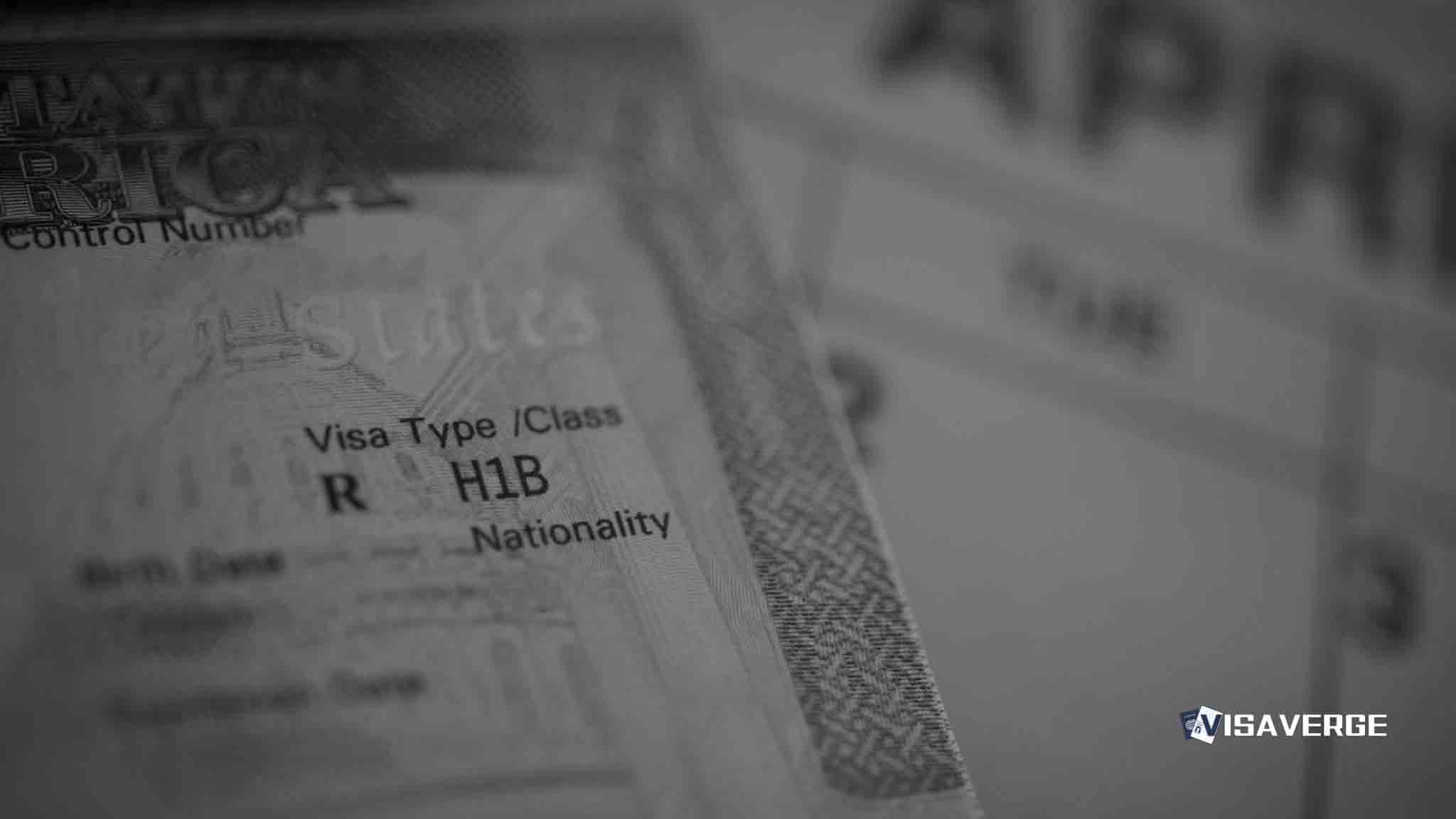
The I-94 is the record that shows how long you are allowed to stay in the United States. You can look up your I-94 online on the official Customs and Border Protection site or on your latest approval notice (Form I-797). The date on the I-94, not the visa stamp in your passport, controls when the 240-Day Rule starts.
Core requirements: timely filing and same employer
Two main conditions decide whether you can rely on the 240-Day Rule.
1. Timely filing of the H-1B Extension
A petition is “timely filed” only if USCIS receives it before your I-94 expiration date. It is not enough for your employer to drop it in the mail on the last day; USCIS must actually get it in time. For H-1B cases, the employer usually files Form I-129, Petition for a Nonimmigrant Worker.
- You can review the official instructions for Form I-129 on the USCIS website at https://www.uscis.gov.
- If the petition reaches USCIS even one day late, the 240-Day Rule does not apply, and you lose the automatic work permission after your current status ends.
2. Continuous work for the same employer
The rule lets you keep working only for the employer that filed the H-1B Extension. It does not give you permission to:
- Change employers,
- Start working for a new H-1B sponsor under “portability,” or
- Add a second H-1B job.
If you want to change employers, the new employer must file its own H-1B petition, and different rules apply. The automatic 240-day work authorization is tied strictly to the employer who filed your pending extension.
How the 240 days actually work
The 240-Day Rule gives you automatic work authorization for up to 240 days after the expiration date on your I-94, as long as the extension remains pending and has not been denied. You do not need a separate work card or new approval to keep working during this time.
Key points about how this period works:
- The 240-day clock starts the day after your I-94 end date.
- During this period, you are considered in a period of authorized stay while USCIS processes the extension.
- You do not accrue unlawful presence while the timely extension is pending, even if your old H-1B period has ended.
- You must stop working if one of the “end events” (see next section) occurs.
This protection is especially important now, since standard processing times for H-1B Extension cases can be much longer than in the past. Many workers would face long gaps in employment without this automatic extension of work authorization.
When the 240-day protection ends
Your right to work under the 240-Day Rule ends whichever happens first:
- 240 days have passed since your I-94 expired,
- USCIS approves your H-1B Extension (your new validity dates start), or
- USCIS denies your H-1B Extension.
If USCIS approves the H-1B Extension:
- Your status and work authorization are covered for the full approved period.
- Any time worked during the 240-day window is considered authorized.
If USCIS denies the petition:
- You must stop working immediately.
- You are expected to depart the United States as soon as possible.
- Staying longer may cause unlawful presence and can harm future visa or green card applications.
If the 240 days run out and the case is still pending:
- You must stop working on day 241.
- You may still be allowed to remain in the United States while USCIS finishes reviewing the petition, because the filing itself keeps you in a period of authorized stay.
- You should speak with an experienced immigration lawyer right away if you reach this point.
Important: small timing issues (even a single late day) can remove protection under the 240-Day Rule. Act proactively.
Strict travel limits while using the 240-Day Rule
One of the most common traps involves travel. While you are relying on the 240-Day Rule, international travel is extremely risky.
- If you leave the United States while your extension is pending and you are past the I-94 end date, you cannot use the 240-Day Rule to re-enter.
- You will usually need a valid H-1B visa stamp in your passport and an approved H-1B Extension approval notice to re-enter.
- Exiting the country can be treated as abandoning the extension application in some situations.
Because of this, workers should avoid travel while an H-1B Extension is pending and they are already beyond their I-94 date. If travel is absolutely necessary, speak with your company’s immigration attorney or a trusted immigration professional before making plans.
Timing strategy: filing early and using premium processing
With today’s longer USCIS processing times, careful planning around the H-1B Extension is essential. Many employers now aim to file extension petitions up to six months before the expiration date on the I-94.
Benefits of early filing:
- A longer safety window under the 240-Day Rule if regular processing is slow.
- More time to react if USCIS issues a Request for Evidence (RFE).
- A better chance of avoiding day 241 while the case is still undecided.
If 180 days have already passed since your I-94 expired and your H-1B Extension is still pending, many lawyers recommend that the employer consider premium processing. Premium processing, requested using Form I-907, gives a faster decision for an extra fee, which can help avoid hitting the 240-day limit without a final result.
Official information about premium processing and related services is available directly from USCIS at https://www.uscis.gov.
Use of the 240-Day Rule beyond six years of H-1B
The basic six-year limit on H-1B status creates extra worry for workers who are close to that cap but still waiting on green card steps. The good news is that the 240-Day Rule also applies to certain H-1B Extensions beyond six years when allowed by law.
You may qualify for H-1B time beyond six years if:
- You have a PERM labor certification or Form I-140 immigrant petition that has been pending for at least 365 days before your sixth year ends (then you may extend in one-year periods), or
- You have an approved I-140 and are waiting for a visa number to become current (then you may extend in three-year periods).
In both cases, once your employer files a timely H-1B Extension that meets these rules, the 240-Day Rule can protect your work authorization while USCIS processes that extension.
Practical tips for workers and employers
To use the 240-Day Rule safely and avoid status problems, both employees and employers should follow these practices:
- Track I-94 dates carefully. Put reminders in calendars at least six months, three months, and one month before expiry.
- Push for early filing. Ask your employer or HR team when they plan to file the H-1B Extension and confirm timely filing.
- Keep copies of everything. Save I-94 records, prior H-1B approval notices, and proof that USCIS received the extension (such as the I-797 receipt notice).
- Avoid job changes mid-pending. Do not change employers or job locations without legal advice, because this can affect the pending H-1B Extension and your ability to rely on the 240-Day Rule.
- Stay inside the United States when possible. Delay non-emergency travel until the extension is approved and you have a valid visa stamp if needed.
- Check with counsel if near day 180. If the case is still pending 180 days after your I-94 expired, talk to your employer about premium processing.
Key takeaway: Used correctly, the 240-Day Rule offers a strong safety net for H-1B workers, but it is not automatic in every situation. Small details—like one late filing day, an unplanned trip abroad, or a quiet job change—can remove its protection. Careful planning, close attention to dates, and early action with your H-1B Extension are the best ways to keep your status and your job secure while USCIS decides your case.
The 240-Day Rule lets H-1B workers continue working up to 240 days after their I-94 expires if their employer filed a timely Form I-129 and the worker remains with that employer. Protection ends on approval, denial, or after 240 days. Travel while pending is risky because leaving the U.S. usually prevents re-entry under this rule. Early filing, tracking I-94 dates, keeping receipts, and considering premium processing near day 180 reduce risks.