(UNITED STATES) U.S. tax residency can change your life in the United States 🇺🇸 as much as any visa rule, but many people don’t see it coming. Visa holders, green card applicants, students, and NRIs often plan around work authorization, travel limits, or long green card backlogs. Then they find out—sometimes after the fact—that they became a U.S. tax resident and now must report worldwide income, plus extra foreign account and asset details that can bring high penalties if missed.
For many foreign nationals, tax status (not immigration status) becomes the real long-term constraint that shapes immigration decisions: when to stay, when to leave, when to return, and whether to pursue permanent residence at all.
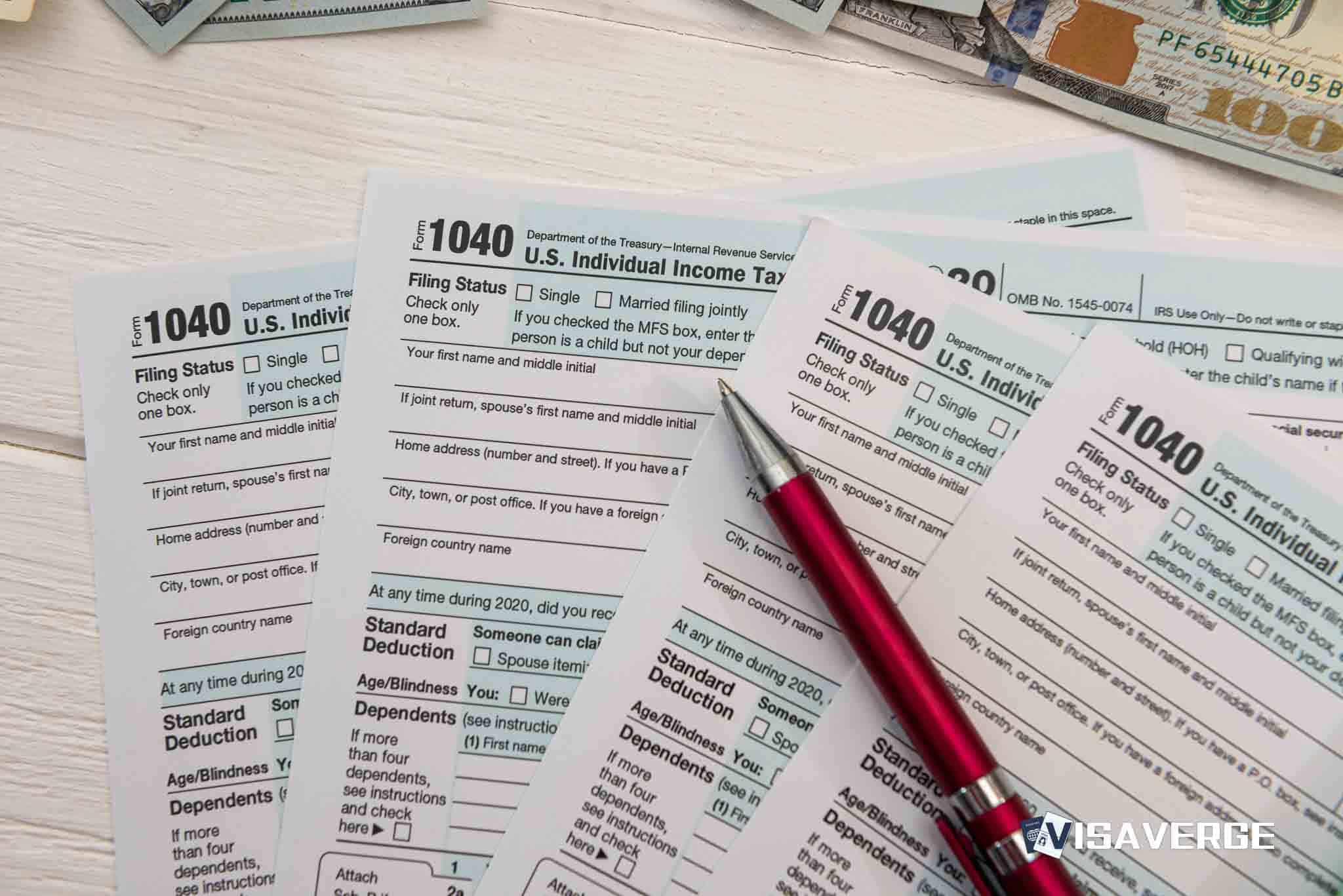
Core idea: immigration status and U.S. tax residency aren’t the same thing
Immigration status is set under immigration law and handled by DHS/USCIS. U.S. tax residency is set under the Internal Revenue Code and applied by the IRS. Because these systems don’t match, several common situations catch people off guard:
- You can be lawfully present on a visa but still be taxed like a U.S. resident.
- You can lose immigration status yet still be tax-resident for part of the year.
- You can hold a green card, live abroad, and still be treated as a U.S. tax resident.
That disconnect is where many costly mistakes happen, especially for students and working professionals who assume “temporary visa” means “temporary tax.”
Stage 1 — Before you arrive or extend a stay: the two tax residency tests that matter
The IRS mainly sorts people into “resident” and “non-resident” for tax. The difference is huge because U.S. tax residents generally report worldwide income. There are two common pathways into U.S. tax residency, and each lines up with a different real-life group.
Green Card Test: permanent residence usually means resident taxes
If you are a lawful permanent resident (a green card holder) at any time during the year, you are generally a U.S. tax resident — even if you:
- Live abroad
- Work outside the U.S.
- Rarely enter the U.S.
This is why some long-term green card holders who moved overseas later face unexpected U.S. filing duties. In practice, a green card can create “sticky” tax ties that last as long as you keep it.
Substantial Presence Test (SPT): days in the United States add up fast
Many non-immigrants—such as F-1 students, and workers in H-1B, L-1, and O-1 status—can be caught by the Substantial Presence Test, which counts days of physical presence over a three-year lookback.
Once triggered, the person is treated as a U.S. tax resident, and worldwide income can fall into the U.S. system.
For the IRS explanation of this test and how day counting works, read the agency’s page on the Substantial Presence Test.
Stage 2 — First months in the United States: build a “day-count habit”
If you might fall under the Substantial Presence Test, the most practical early step is simple: track your U.S. days from the start, even when you feel “new” and far from tax season.
Remember: immigration status and tax residency are separate. Track days, consider ties abroad, and plan moves so you don’t unexpectedly become a U.S. tax resident and face world-wide reporting.
People often start tracking only after they hear about SPT, but by then the key travel and stay decisions have already been made.
What to do early:
– Keep a simple travel log (entry dates, exit dates, and where you slept).
– Save records that match your timeline (boarding passes, passport stamps, I-94 history if you have it).
– Talk with a cross-border tax professional early if you have income, property, or family assets outside the United States.
This routine matters because small timing choices can change tax status for an entire year. A few extra days can move you from non-resident taxes to resident taxes, with a much wider reporting net.
Stage 3 — F-1 student years: “temporary” can become resident-tax treatment
Many F-1 students are exempt from the Substantial Presence Test for a limited number of years, which is why student taxes often look simpler at first.
The problem comes later for:
– Students in long academic programs
– PhD candidates
– Students moving into OPT and longer research roles
Once the exemption expires, a student can become a U.S. tax resident even while still a “temporary” non-immigrant under immigration law. That shift can pull in foreign income and family-linked assets that the student never thought would touch the U.S. system.
What this changes in real life:
– Whether you stay for OPT or choose a quicker exit
– Whether you accept a longer lab role or research position
– Whether you plan travel to avoid crossing into resident tax status in a key year
The emotional side is real: students may feel they’re making a career choice, but the hidden pressure is that U.S. tax residency can follow them into adulthood if they build deeper ties before they’re ready.
Stage 4 — H-1B and other full-time work visas: “easy tax exit” starts to fade
H-1B professionals often become U.S. tax residents quickly because full-time work tends to mean consistent physical presence. Once that happens:
- Worldwide income becomes reportable
- Foreign bank accounts can trigger reporting duties (e.g., FBAR/FinCEN Form 114)
- Investment income and rental income abroad can enter the U.S. tax picture
This is one reason some workers delay international job rotations, temporary returns to India, or remote-work travel plans. The barrier is not always visa law; it’s that exiting U.S. tax residency cleanly can be complex and risky if you don’t plan it, and mistakes can be expensive.
Practical steps during this stage:
1. Before taking a long trip, ask: “Will this change my tax residency this year?”
2. If you maintain strong financial ties abroad, list them out while things are calm, not during filing season.
3. If you’re considering a move out of the United States, plan the timing so you don’t get stuck with resident tax treatment longer than expected.
According to analysis by VisaVerge.com, more mobile workers now treat tax residency as a core part of their immigration strategy, especially when remote work makes border-crossing feel easy while tax rules stay strict.
Stage 5 — Green card planning: tax exposure can drive the decision more than security
A green card can feel like the finish line after years of visa renewals and backlog stress. But tax consequences can change the cost-benefit math.
Holding a green card generally means:
– Annual U.S. tax filing
– Global income reporting
– Possible estate and gift tax exposure
That’s why some people delay applying for a green card, and others surrender permanent residence after relocating abroad. The decision to keep or give up a green card can be driven as much by tax compliance and exposure as by immigration stability.
Questions to ask if you’re in this stage:
– Are you ready for long-term reporting of worldwide finances?
– Do you expect to live abroad for long stretches?
– Would permanent residence solve your immigration problem while creating a tax problem you didn’t plan for?
Stage 6 — Digital nomads and remote workers: immigration flexibility, tax rigidity
Remote work has made it easier for some foreign nationals to work for U.S. companies while traveling, spend extended time in the United States without traditional long-term employment setups, or mix study, short projects, and travel.
But U.S. tax residency rules don’t bend easily for nomadic life. The result is that a digital nomad may unintentionally become a U.S. tax resident, with foreign-sourced income pulled into U.S. tax. Tax treaty relief may help in some cases, but it can be partial or not available.
If your lifestyle is mobile, build checkpoints into your year:
– Before you spend an extended stretch in the United States, check day counts and where income will be treated as earned.
– If you plan to “dip in and out,” remember the IRS looks back over multiple years for SPT.
– Don’t assume that being allowed to enter or stay under immigration rules means your taxes stay simple.
Stage 7 — Travel and re-entry planning: when tax math quietly drives the plane ticket
Many immigrants shorten or avoid U.S. stays not because they fear a visa problem, but because they want to:
– Stay below substantial presence thresholds
– Keep non-resident tax treatment
– Avoid worldwide taxation in a transition year
This is especially common among NRIs visiting the United States, professionals between assignments, and retirees or semi-retired green card holders. For them, the deciding factor is often a calendar, not a consular officer.
Treat this stage as “tax-season planning done early.” If you wait until after the year ends, you may find your travel pattern already decided your tax residency.
Stage 8 — The India–U.S. reality for NRIs: dual ties can make the switch feel heavier
For Indians and NRIs, U.S. tax residency can matter even more because many keep:
– Ongoing income in India
– Property ownership
– Strong family financial ties
– Indian tax residency rules running at the same time
Becoming a U.S. tax resident can trigger dual reporting duties, heavier reliance on treaty positions, and higher compliance costs. That pressure can shape return-to-India timing, green card strategy, and how long someone chooses to stay in the United States in any single year.
Who does what: clear division between immigration and tax authorities
It helps to be clear about the split in roles:
- USCIS and other immigration agencies decide whether you may stay in the country under your status.
- The IRS applies tax rules that can treat you as a resident based on a green card or day counts.
No agency will automatically warn you that you’re about to cross into U.S. tax residency. That’s why planning beats panic: if you learn the rules early, you can make immigration decisions with open eyes, instead of discovering consequences after you’ve already stayed the extra days, accepted the extra project, or kept the green card through a major move abroad.
Key takeaway: Immigration standing and tax residency are separate systems. Track your days, inventory foreign ties early, and get cross-border tax advice before small timing choices lock in major tax consequences.
U.S. tax residency differs from immigration status and can unexpectedly force visa holders to report worldwide income. The IRS uses the Green Card Test and the Substantial Presence Test to determine residency. Key advice: track U.S. days, document travel, inventory foreign assets, and consult cross-border tax advisors early. Students, H-1B professionals, digital nomads, and NRIs should plan travel and career timing to limit tax exposure and avoid steep penalties.