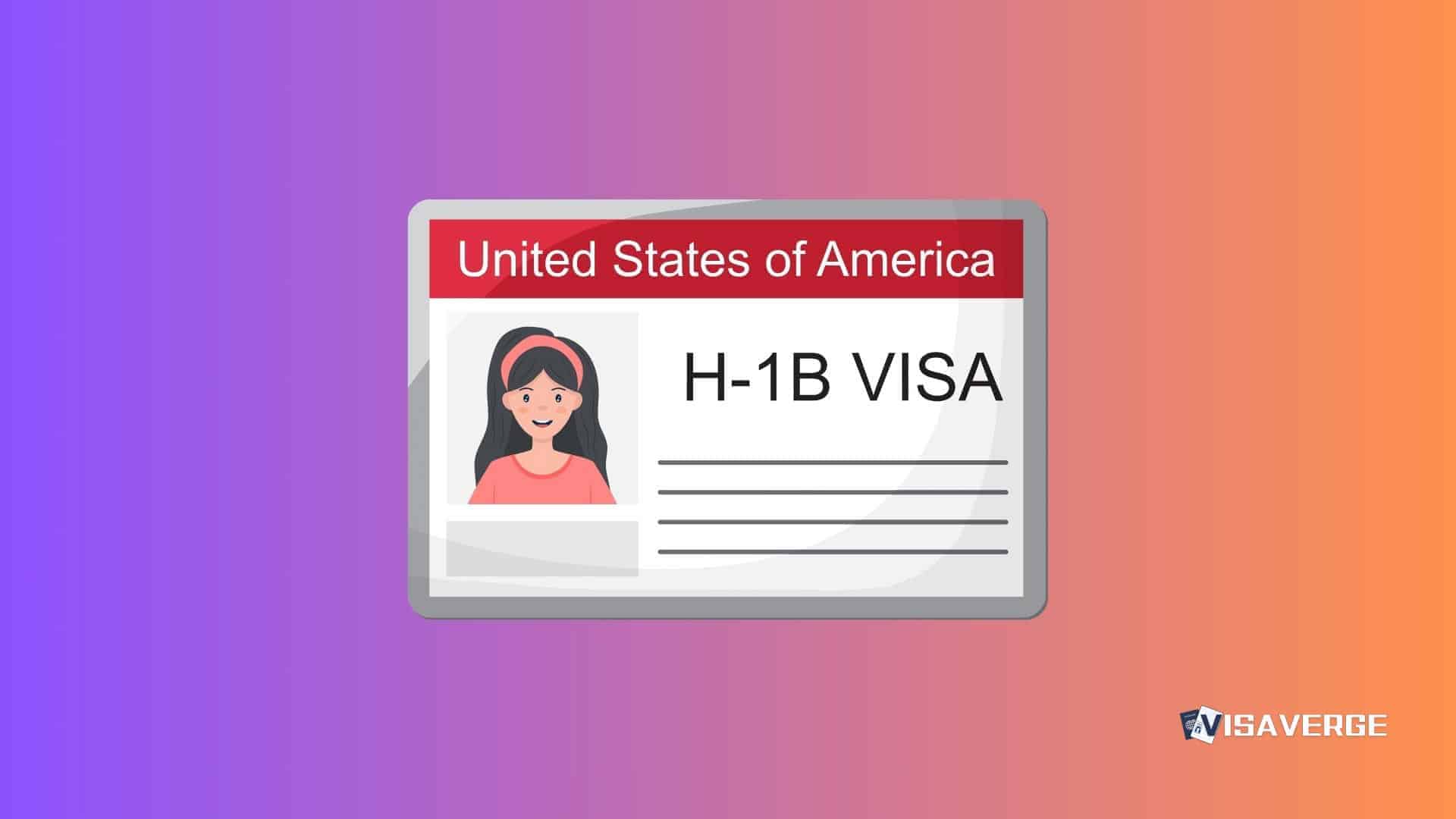
A wave of canceled and reshuffled consular interviews is jolting H‑1B and H‑4 visa applicants after the U.S. Department of State rolled out an expanded online‑presence review that took effect December 15, 2025. Law firms and applicants report many appointments have been pushed into spring and summer 2026, and in some media accounts as far out as October 2026. The disruptions have left workers unable to return to jobs in the United States 🇺🇸, employers scrambling to keep projects staffed, and families facing longer separations when a spouse or child needs an H‑4 stamp to travel.
What the State Department announced and how posts responded
The State Department publicly announced the expanded screening step for H‑1B and H‑4 applicants. After the announcement, consular posts began canceling or rescheduling interviews that were set for on or after December 15, 2025, according to multiple law‑firm advisories describing notices from appointment systems and posts.
The common explanation across advisories is practical rather than philosophical: the new online‑presence review adds time per case, reducing how many interviews a post can complete each day and forcing staff to rebook large blocks of appointments.
Law‑firm reports and administrative processing risk
- Morgan Lewis described unilateral rescheduling and a drop in daily interview capacity as posts made room for the added vetting step.
- Other firms — Hogan Lovells, Holland & Knight, Benesch — told clients to expect delays and warned that an interview date is no longer a reliable finish line if a case is later flagged for additional review.
That extra review—often called administrative processing—can mean weeks or months of waiting after the interview while a case undergoes further checks.
Typical rescheduling patterns
Legal guidance from December 2025 shows a consistent pattern of rescheduling:
- Many interviews originally scheduled around the start of the new policy were moved to March 2026 or later.
- March through June 2026 repeatedly appear as the most common rescheduled windows.
- A smaller number of applicants report much later dates, including some appointments moved to October 2026.
These later dates are not universal across posts. The source material shows scattered but repeated accounts that such dates can occur depending on the post and local capacity, rather than a single, blanket schedule assigning October 2026 broadly.
Immediate effects on applicants and travel plans
For many applicants, the shock has been the suddenness. People who had booked flights, hotels, and time off work around an interview say they received notices telling them not to appear on the original date and to rely only on the newly assigned appointment.
Law‑firm advisories described common scenarios:
– Applicants arriving with printed confirmations only to learn the appointment was removed from the system.
– Last‑minute reschedule messages that rendered expensive travel pointless.
Impact on H‑1B workers, employers, and families
The disruptions hit several groups in distinct ways:
- H‑1B workers outside the U.S. who need a visa stamp to return are often stuck abroad. Many traveled for family emergencies, weddings, funerals, or business and expected to return quickly.
- Employers face missed start dates, stalled onboarding, and gaps in projects that are hard to fill quickly, especially for specialized roles.
- Some companies can shift workers to remote work temporarily, but that is often limited by client rules, data access, or the nature of the role.
- Remote work can create payroll and tax complications and may not address family separation if an H‑4 dependent is stuck abroad.
- Families experience prolonged separation:
- A worker might travel alone to keep a job while a spouse manages children and schooling abroad.
- Alternatively, the worker may stay abroad to avoid splitting the family, causing indefinite absence from the U.S. workplace.
Why the backlog is particularly disruptive
One key factor: appointment timing is only partly in the applicant’s control. Consular posts can:
- Open and close slots,
- Change staffing patterns,
- Make local decisions about allocating limited interview capacity.
The source material indicates posts canceled and reassigned dates to implement the new vetting step rather than merely adding a few days to processing times. When a post moves appointments months out, the applicant cannot “wait it out” predictably because the queue itself shifts.
Biometrics (VAC) appointments and limbo
Several advisories noted that biometrics appointments at Visa Application Centers (VACs) generally remained valid even when the visa interview was rescheduled, though applicants were urged to confirm details in their own notices.
This creates a new kind of limbo: a person may complete fingerprints and photos but still have no near‑term interview date to finish the case.
Third‑country national (TCN) processing and forum shopping
The changes have constrained a common workaround — applying as a third‑country national (TCN), i.e., seeking visa stamping in a country that is not one’s home or residence.
- Law firms warned that TCN processing and “forum shopping” are more limited.
- Some employers reportedly flew candidates to hubs such as Singapore 🇸🇬 or Bangkok, Thailand 🇹🇭 hoping to find earlier slots.
- Attorneys cautioned that this strategy carries extra cost and uncertainty:
- A post may refuse to accept a TCN case, or
- A post may move the case into a slower track.
Official guidance and where to find it
The State Department’s policy announcement is the clearest official anchor in this fast‑moving story. The department has long required many visa applicants to provide social media identifiers; the new step expands and deepens the online‑presence check for H‑1B and H‑4 applicants starting December 15, 2025.
For public guidance on social media information, consult the official State Department page:
U.S. Department of State visa social media information
For details on the online‑presence check policy, see the State Department’s guidance:
online‑presence check
How long will the knock‑on effects last?
The duration is hard to pin down. The source material shows a consistent picture of rescheduling into March–June 2026, suggesting a system shock of several months at minimum. The October 2026 reports represent a longer tail that can occur when a post’s capacity is especially constrained or the rescheduling algorithm pushes applicants into far‑down calendar blocks.
Real‑world consequences: unpredictability and risky choices
As VisaVerge.com reports, the main harm is unpredictability:
- People cannot plan school terms, leases, weddings, caregiving, or job start dates if a visa interview can move from weeks away to many months away without warning.
- Uncertainty encourages risky choices, such as traveling for an interview that has been canceled or leaving the U.S. without a clear path back.
Important: Consulates have instructed applicants not to appear on canceled dates. Rely on updated messages through appointment portals and official email notifications.
Practical guidance from law firms
Law firms have been blunt about what applicants should and should not do:
- Do not show up for canceled appointments.
- Rely only on the updated appointment record shown in your portal and in official notices.
- Download and keep copies of new appointment letters, confirmations, and receipts — especially if biometrics were completed and the interview was moved later.
Prepare for the tightened vetting: online presence and account access
The expanded review has shifted preparation priorities:
- Advisories told applicants to review their online profiles and ensure accounts are accessible for review.
- Some guidance suggests applicants may need to make accounts public or otherwise ensure that requested information can be seen by reviewers.
- Attorneys warned that inconsistencies between an applicant’s visa application and what appears online can raise questions and slow a case.
Human impact — examples and choices facing employers
The human stories illustrate the impact:
- A worker expecting a quick trip home before starting a job may now be stuck abroad while a U.S. team waits.
- A spouse on H‑4 may miss months of family life in the U.S., or a child may lose a school place because the visa timeline no longer aligns with the academic year.
- Employers must choose among delaying projects, shifting work to other locations, or losing talent to local competitors.
No single consolidated list of affected posts
The source material does not include a single consolidated list of affected consular posts and shows variations by location. Attorneys stress that the only reliable date is the one in each applicant’s own updated appointment record.
Still, the broad picture is clear: after December 15, 2025, the expanded online‑presence review has changed the tempo of H‑1B and H‑4 consular processing — turning what many applicants hoped would be a routine stamping step into a long, uncertain wait measured in months, and for some applicants, stretching toward October 2026.
The State Department’s expanded online‑presence review, effective December 15, 2025, has led consular posts to cancel and rebook many H‑1B and H‑4 interviews. Law firms report reduced daily capacity and rescheduling into March–June 2026 and, for some, October 2026. Delays cause stranded workers, stalled onboarding, split families, and harder forum‑shopping. Applicants should keep updated appointment confirmations, maintain accessible online profiles, and follow official portal notices.