You can start a Green Card journey while on an H-1B and still keep going even if you later move to another visa. The key is to keep lawful status in the United States and to choose the right path, usually through an employment-based category, marriage, or a self-petition route. This guide walks through the full process, stage by stage, and explains what changes if you switch visas while your case is in progress.
According to analysis by VisaVerge.com, many workers wrongly think they must stay on H-1B from start to finish. In reality, the Green Card process is tied more to your job offer, your priority date, and the Green Card category than to the exact nonimmigrant visa you hold at each moment.
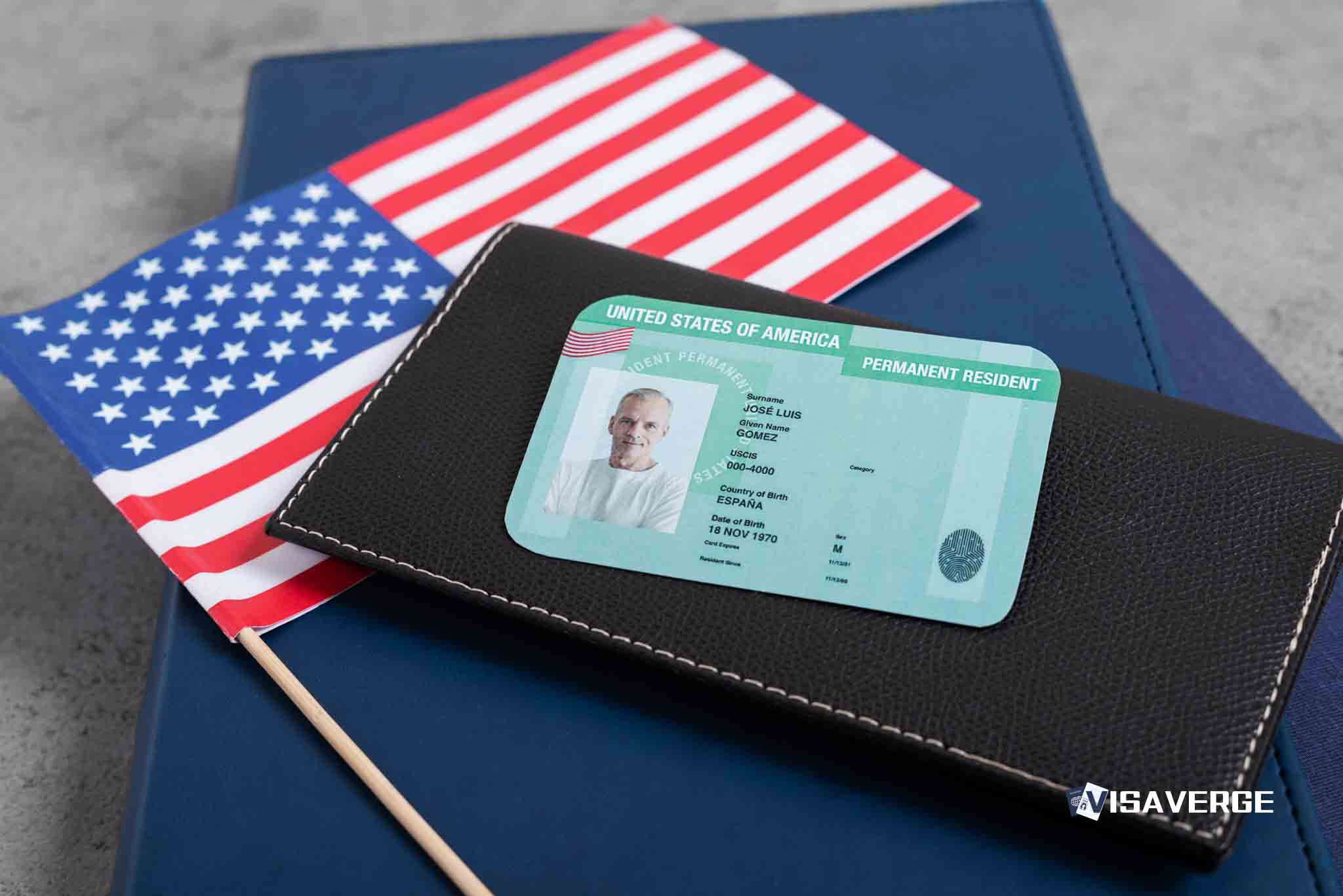
Choosing your main Green Card route
Most people who start on H-1B use an employment-based Green Card category such as EB-2 (advanced degree or exceptional ability) or EB-3 (skilled or professional workers). In these cases, a U.S. employer sponsors you.
Your main options are:
- Employer-sponsored Green Card (EB-1, EB-2, EB-3)
- Self-petition (EB-1A extraordinary ability, EB-2 National Interest Waiver)
- Marriage-based Green Card (spouse is a U.S. citizen or permanent resident)
You can learn about Green Card categories on the official USCIS Green Card page.
At this stage, your tasks are:
- Talk with your employer about sponsorship.
- Decide which category fits your background.
- Check the Visa Bulletin for expected waiting times for your country and category.
Start PERM and I-140 planning while you’re on H-1B, but keep a real job offer and valid status. Gather docs (degrees, letters) now, and discuss premium processing if appropriate to speed up the I-140.
Step 1 — PERM labor certification (for most EB-2/EB-3 cases)
For many EB-2 and EB-3 cases, the first formal step is PERM labor certification with the U.S. Department of Labor. Your employer files Form ETA-9089 to prove there are no ready, willing, and qualified U.S. workers available for the job.
More info: Permanent Labor Certification (Form ETA-9089).
What happens during PERM:
- Employer runs required job ads and recruitment steps.
- Employer files ETA-9089 and waits for approval or possible audit.
- This is a Department of Labor step — no USCIS form is filed yet.
Typical timeframe:
- 6–12 months for many straightforward cases; longer if audited.
Your role:
- Provide your CV, degrees, and work history.
- Maintain valid status (for example H-1B, L-1, O-1, or H-4 EAD).
If you change from H-1B to another work visa during PERM, the process usually can continue as long as the job offer remains real and your employer still wants to sponsor you.
Step 2 — I-140 immigrant petition and priority date control
Once PERM is approved, your employer files Form I-140, Immigrant Petition for Alien Worker, with USCIS. Official details: Form I-140, Immigrant Petition for Alien Worker.
Key points at this stage:
- Priority date is usually the date the PERM was filed.
- Once the I-140 is approved, you can often keep (or “port”) that priority date even if you later change employers.
- Under AC21 (American Competitiveness in the Twenty-First Century Act), if you move to a same or similar job with another employer, you can usually retain your old priority date.
USCIS actions:
- Reviews the employer’s financials and your qualifications.
- Approves or denies the I-140; may issue a Request for Evidence (RFE).
Your actions:
- Provide degree evaluations, experience letters, and other proof.
- Consider premium processing if available and useful.
If you switch from H-1B to another status (like L-1 or O-1) while the I-140 is pending, the I-140 can remain valid as long as the petitioning employer and job offer remain valid. Your nonimmigrant status and immigrant petition are separate but connected tracks.
Step 3 — Changing status while the Green Card is in progress
Many people move off H-1B during the process. Common changes include:
- H-1B → L-1 (intracompany transferee)
- H-1B → O-1 (extraordinary ability)
- H-1B → H-4 EAD (dependent of H-1B)
In most cases:
- Your employment-based Green Card can continue if the sponsoring employer and job offer remain.
- You can generally keep and use your approved I-140 priority date for a new job in a same or similar role.
Important duty:
- Always keep lawful status. Falling out of status, even briefly, can jeopardize the case and make adjustment of status inside the U.S. harder.
Step 4 — Filing the I-485 or consular processing
When your priority date becomes current, you can move to the final step:
- Form I-485, Application to Register Permanent Residence or Adjust Status if you are inside the United States, or
- Consular processing through a U.S. embassy or consulate abroad.
Official guidance: Form I-485, Application to Register Permanent Residence or Adjust Status.
What to expect if filing I-485:
- Submit forms, a medical exam, civil documents, and fees.
- You may receive work and travel authorization (EAD/AP) while the case is pending.
- USCIS may require biometrics and possibly an interview.
Your current visa can be H-1B, L-1, O-1, or even H-4 EAD, provided that:
- You’re in valid status when you file the I-485, and
- You did not violate the terms of your last entry.
Many people keep H-1B or L-1 status as a backup until the Green Card is approved.
Step 5 — Self-petition and marriage-based options
Self-petition routes:
- EB-1A (extraordinary ability) and EB-2 NIW (National Interest Waiver) allow you to self-petition.
- No employer is required; you file your own I-140 and later I-485 when eligible.
- Your current visa does not have to be H-1B.
Marriage-based route:
- If you marry a U.S. citizen or lawful permanent resident, you can pursue a marriage-based Green Card.
- This path is available regardless of whether you are on H-1B, L-1, O-1, or H-4, but you must follow marriage-based rules and prove the relationship is bona fide.
Step 6 — Visas that don’t fit well with a Green Card plan
Not every status supports a long-term Green Card strategy:
- B-1/B-2 tourist visas and similar categories are not intended for those who plan to immigrate.
- These visas typically do not clearly allow dual intent (simultaneous temporary stay and immigrant intent).
Avoid any status gaps or moving to a non-dual intent visa during the process, which can jeopardize your Green Card. Plan transitions carefully and maintain lawful status at all times.
If you are on such a visa but want a Green Card, many immigration attorneys recommend moving first to a dual intent status such as H-1B, L-1, or O-1 before filing immigrant petitions.
Step 7 — Working with an attorney and managing expectations
Rules for H-1B, status changes, and Green Card timing are complex and change over time. Small mistakes—such as a short period out of status or a move to a non–dual intent visa—can have long-term consequences.
A prudent plan usually includes:
- Written timelines from your employer’s immigration team or lawyer.
- Careful review of each filing before submission to DOL or USCIS.
- Backup plans for layoffs, company changes, or long visa backlogs.
Many people move from H-1B to other statuses while still reaching permanent residence. The essential elements are keeping lawful status, protecting your priority date, and choosing the right Green Card category for your long-term goals.
Quick summary table
| Stage | Key action | What to protect |
|---|---|---|
| PERM | Employer files ETA-9089 | Job offer, lawful status |
| I-140 | Employer files I-140 (or you self-petition) | Priority date, employer’s sponsorship |
| Status changes | Move to L-1/O-1/H-4 etc. if needed | Maintain lawful status |
| Final step | File I-485 or consular processing when current | Valid status at filing, no entry violations |
If you want, I can:
– Convert this into a printable checklist for your specific category (EB-2/EB-3/EB-1), or
– Draft a sample timeline you can discuss with your employer’s immigration counsel.
Beginning a Green Card while on H-1B is feasible if you maintain lawful U.S. status and select the appropriate route—typically employer-sponsored EB-2/EB-3, self-petition (EB-1A/NIW), or marriage-based. The process generally follows PERM, I-140, and then I-485 or consular processing when the priority date is current. Changing to L-1, O-1, or H-4 EAD usually does not interrupt progress if the sponsoring employer and job offer remain valid.