The B-1/B-2 visa interview is often the deciding factor in whether your application is approved or denied. Consular officers typically spend just 2-3 minutes per interview, so every answer matters. This guide covers the most common interview questions, sample answers, what documents to bring, and proven strategies to demonstrate your intent to return home.
⏱️
2-3 Minutes
Average Interview Length
❓
5-20 Questions
Typical Questions Asked
💰
$185
Visa Application Fee (MRV)
📅
Up to 10 Years
Visa Validity Period
⚠️
The #1 Reason for B-1/B-2 Denials
Consular officers deny applications under INA Section 214(b) when applicants fail to demonstrate strong ties to their home country and intent to return. Your interview must prove you have compelling reasons to go back home after your U.S. visit.
B-1 Business Visitor
PurposeBusiness activities
ExamplesConferences, meetings
Work Allowed?No (no U.S. salary)
Max Stay6 months (extendable)
B-2 Tourist/Visitor
PurposeTourism, family, medical
ExamplesVacation, visiting relatives
Work Allowed?No
Max Stay6 months (extendable)
💡
B-1/B-2 Combined Visa
Most applicants receive a B-1/B-2 combination visa, which allows both business and tourism purposes. You don’t need separate visas for each—one visa covers both.
Preparation is key to a successful B-1/B-2 visa interview
20 Interview Questions with Sample Answers
These are the most common questions consular officers ask during B-1/B-2 visa interviews. Prepare your answers in advance, but don’t memorize scripts—officers can tell when answers sound rehearsed.
Q1What is the purpose of your visit to the United States?
✓ Sample Answer (Tourism)
“I’m planning a two-week vacation to visit New York City and Washington D.C. I want to see the Statue of Liberty, the Smithsonian museums, and experience American culture. I’ve saved for this trip for two years.”
✓ Sample Answer (Business)
“I’m attending a technology conference in San Francisco from March 15-18. My company is sending me to learn about new software solutions we’re considering for our operations.”
💡Tip: Be specific about dates, locations, and activities. Vague answers like “just to visit” raise red flags.
Q2How long do you intend to stay in the United States?
✓ Sample Answer
“I plan to stay for 14 days, from April 5th to April 19th. I’ve already booked my return flight for April 19th.”
💡Tip: Provide exact dates. Having a return ticket (even refundable) strengthens your case. Shorter, well-defined trips are viewed more favorably.
Q3How will you finance your trip?
✓ Sample Answer (Self-funded)
“I’ll be using my personal savings. I have $8,000 in my bank account specifically saved for this trip. I’ve brought my bank statements for the last six months.”
✓ Sample Answer (Sponsor)
“My uncle in California will be sponsoring my trip. He’s a U.S. citizen and has provided an invitation letter and his bank statements showing he can support my visit.”
💡Tip: Self-funding is generally viewed more favorably than sponsorship. Bring 6 months of bank statements showing consistent balance, not sudden large deposits.
Q4What is your current occupation?
✓ Sample Answer
“I’m a senior software engineer at TechCorp Ltd., where I’ve worked for five years. I manage a team of 8 developers and we’re currently in the middle of an important project that I need to return for.”
💡Tip: Emphasize your job responsibilities and why returning is important. Mentioning seniority, projects, or team leadership shows strong ties.
Q5Do you have relatives in the United States?
✓ Sample Answer (With relatives)
“Yes, I have an uncle and aunt in Los Angeles. They’ve been there for 15 years and are U.S. citizens. I’ll be staying with them during my visit.”
✓ Sample Answer (No relatives)
“No, I don’t have any relatives in the United States. I’ll be staying at a hotel.”
💡Tip: Always be honest. Lying about relatives is a common reason for permanent visa ineligibility. If you have relatives, know their immigration status.
Q6Where will you stay in the United States?
✓ Sample Answer
“I’ll be staying at the Marriott Marquis in Times Square, New York for the first week, and then at my cousin’s home in New Jersey for the second week. I have the hotel reservation confirmation with me.”
💡Tip: Know the full address of where you’ll stay. Bring hotel reservations (refundable is fine) or an invitation letter from your host.
Q7Have you visited the United States before?
✓ Sample Answer (Previous visit)
“Yes, I visited in 2019 for two weeks. I went to Florida for a family vacation. I returned home on time as planned.”
✓ Sample Answer (First time)
“No, this will be my first visit to the United States. I’ve traveled to Europe and Asia before, and I always returned on time.”
💡Tip: If you’ve visited before and complied with visa rules, emphasize that. Previous compliant travel history (anywhere) is a positive signal.
Q8What is your monthly income?
✓ Sample Answer
“My monthly salary is approximately $4,500. I also have additional income from rental property of about $800 per month. I’ve brought my salary slips and tax returns.”
💡Tip: Be honest about your income. The officer may ask follow-up questions. Bring tax returns or salary slips as proof. Income relative to trip cost matters.
Q9Do you own property or have other ties to your home country?
✓ Sample Answer
“Yes, I own an apartment in Mumbai worth approximately $200,000. I also have elderly parents who depend on me, and my two children are in school here. My entire life is established here.”
💡Tip: This is where you prove “ties.” Mention: property, business, family dependents, children’s education, parents’ care—anything that would pull you back home.
Q10Do you have a leave approval from your employer?
✓ Sample Answer
“Yes, I have an approved leave letter from my company for April 5th through April 19th. It confirms that I’m expected back at work on April 21st. I have the letter here.”
💡Tip: An employment letter with approved leave dates is one of the strongest documents you can bring. It proves you have a job waiting for you.
Q11Have you ever been denied a U.S. visa before?
✓ Sample Answer (Previous denial)
“Yes, I was denied in 2022 under 214(b). Since then, I’ve been promoted to a director-level role, purchased a home, and my financial situation has improved significantly. I’ve brought documents showing these changes.”
✓ Sample Answer (No denial)
“No, this is my first time applying for a U.S. visa. I have traveled to Canada and Europe before and returned on time.”
💡Tip: Never lie about a previous denial. Officers can see your full application history. If you were denied, focus on what has changed since then.
Q12Are you married? Do you have children?
✓ Sample Answer (Married with children)
“Yes, I’m married and have two children aged 8 and 12. They’re both in school here and my spouse works as an accountant. They will stay at home while I visit the U.S. for two weeks.”
✓ Sample Answer (Single)
“I’m single. I live with my parents and work as a marketing manager. My parents depend on me, and I have a stable career that I need to return to.”
💡Tip: Family in your home country is a strong tie. If single, emphasize other ties like career, parents, or property. Don’t be defensive about being unmarried.
Q13Why did you choose the United States as your destination?
✓ Sample Answer (Tourism)
“I’ve always wanted to visit the Grand Canyon and the national parks in the western United States. My friend visited last year and recommended it. I’ve planned a 10-day road trip from Las Vegas through Arizona and Utah.”
✓ Sample Answer (Family event)
“My niece is graduating from college in May, and our family wants to be there for the ceremony. We plan to stay for one week and return right after.”
💡Tip: Give a specific, genuine reason. Officers want to see that you have a clear purpose, not a vague desire to “see America.”
Q14Do you plan to work or study while in the United States?
✓ Sample Answer
“No, I have no plans to work or study. This is strictly a vacation. I have a full-time job at home that I’ll be returning to, and my employer has approved my leave for this specific period.”
💡Tip: B-1/B-2 visas do not permit employment or enrollment in academic programs. Even casual mentions of “looking for opportunities” or “maybe taking a course” can trigger a denial. Be clear and definitive.
Q15Who will you be traveling with?
✓ Sample Answer (With family)
“I’ll be traveling with my spouse. We both applied for visas and have our interviews today. My children will stay with my parents at home.”
✓ Sample Answer (Alone)
“I’m traveling alone. My brother lives in Chicago and will pick me up from the airport. I’ll be staying at his home for the duration of my visit.”
💡Tip: If traveling with others, know their visa status. If your companion’s visa is denied, be prepared to explain whether you’ll still travel alone.
Q16What is your educational background?
✓ Sample Answer
“I have a master’s degree in business administration from Delhi University, which I completed in 2018. I’m currently working as a financial analyst and have been with my company for six years.”
💡Tip: Education shows stability. Mention your degree, the institution, and how it connects to your current career. This reinforces your home country ties.
Q17Do you have health insurance for your trip?
✓ Sample Answer
“Yes, I’ve purchased a travel health insurance policy that covers me for the full duration of my trip, including emergency medical treatment and evacuation. I have the policy document with me.”
💡Tip: While not required for B-1/B-2 visas, having travel health insurance shows planning and responsibility. It’s especially helpful for older applicants or those visiting for medical treatment.
Q18What will you do if your visa is denied today?
✓ Sample Answer
“If denied, I’d go back to work and continue with my life. I may reapply in the future when my circumstances change, but this trip isn’t essential. I just wanted to visit for tourism.”
💡Tip: This is a trap question. The officer wants to see that the trip isn’t so critical that you’d overstay or find another way in. Show that your life at home continues normally without this trip.
Q19Have you traveled to other countries recently?
✓ Sample Answer
“Yes, I visited the UK last year for 10 days and Thailand in 2024 for a week. Both were vacation trips and I returned home before my authorized stay expired. My passport has the stamps.”
💡Tip: A history of international travel with timely returns is one of the strongest indicators of credibility. Bring old passports with travel stamps if you have them.
Q20Do you know anyone who has overstayed their visa in the U.S.?
✓ Sample Answer
“No, I don’t know anyone who has overstayed. My relatives in the U.S. are all legal permanent residents or citizens, and my friends who have visited always returned on time.”
💡Tip: Be honest. If you do know someone who overstayed, don’t lie, but clarify that their situation has no bearing on your plans. Officers check connections.
📝
Test Your Interview Readiness
Think you know these answers? Take our free B-1/B-2 Interview Practice Quiz — 10 random questions, scored by category, with instant feedback on every answer.
While not all documents will be asked for, having them organized shows preparation and helps you answer questions with evidence. Bring originals and copies.
📋 Required Documents
✓Valid passport — Must be valid for 6+ months beyond intended stay
✓DS-160 confirmation page — With barcode
✓Interview appointment letter
✓Photo — Recent 2″x2″ photo meeting visa requirements
✓MRV fee receipt — $185 payment confirmation
💼 Supporting Documents
✓Bank statements — Last 6 months showing sufficient funds
✓Employment letter — Stating position, salary, leave approval
✓Tax returns — Last 2-3 years (ITR in India)
✓Property documents — Proof of real estate ownership
✓Travel itinerary — Flight bookings, hotel reservations
⚠️
Don’t Over-Document
Officers rarely look at every document. Organize them logically so you can quickly find what’s asked for. Don’t hand over a stack unprompted—answer questions verbally first, then offer documents if needed.
Interview Do’s and Don’ts
✅ Do
Arrive 15-30 minutes early — Security takes time
Dress professionally — Business casual is appropriate
Make eye contact — Shows confidence and honesty
Answer in English — If you can; it shows communication ability
Be concise — Answer the question asked, nothing more
Volunteer extra information — Answer only what’s asked
Argue with the officer — Remain respectful even if denied
Lie about anything — Even small lies cause permanent bans
Bring prohibited items — No phones, bags, electronics
Show nervousness as guilt — Nervous is okay, evasive is not
Mention immigrant intent — Even casually
📅 What to Expect on Interview Day
30 min beforeArrive at embassy — Join the security screening line. No electronics allowed.
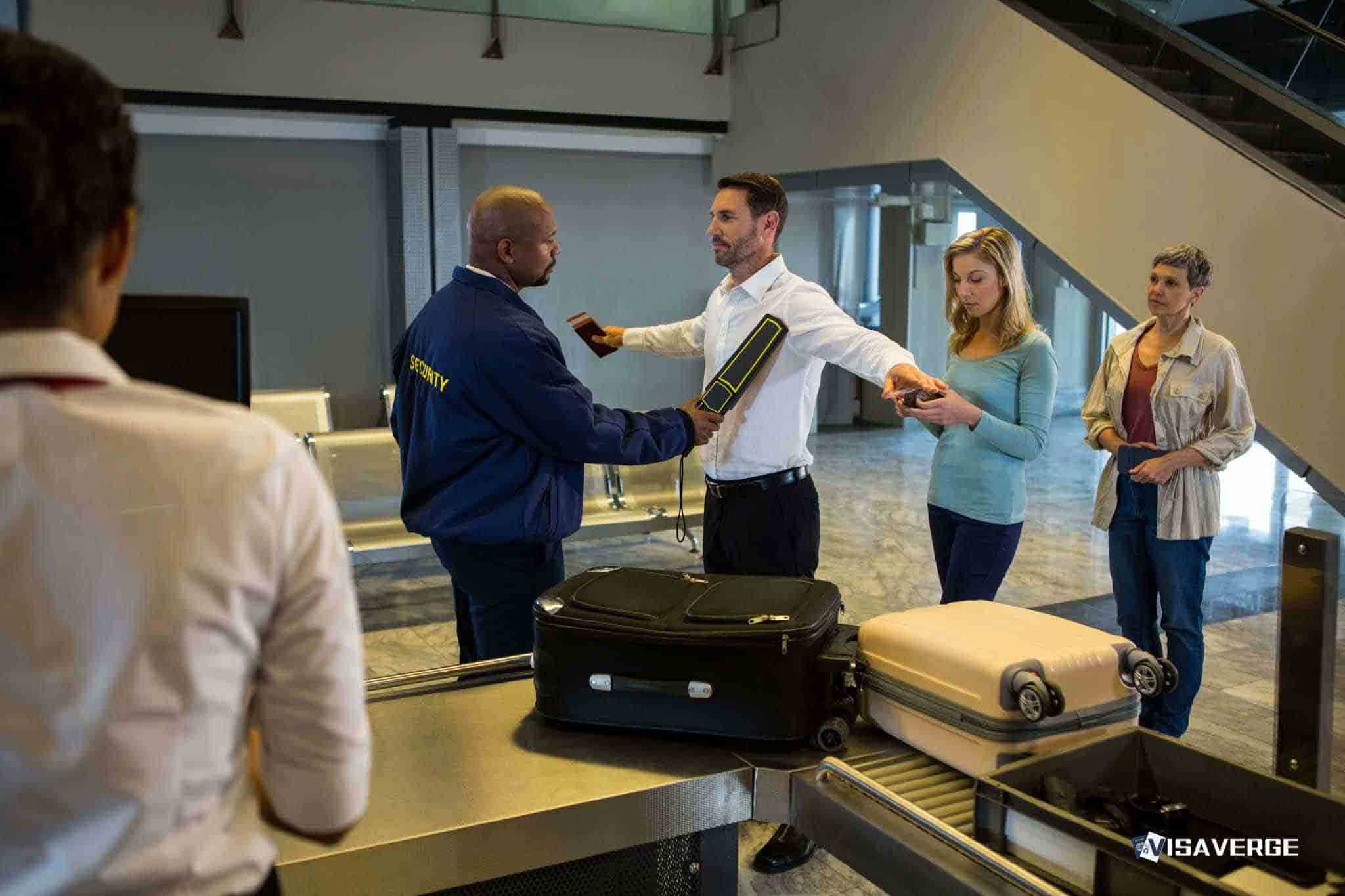
SecurityScreening — Similar to airport security. Leave phones in your car or at a locker.
Waiting areaSubmit documents — Hand in passport and DS-160 at the initial window.
BiometricsFingerprint scan — Digital fingerprints taken at a separate window.
2-3 minutesInterview — Conducted at a window. Officer asks questions and makes a decision.
DecisionApproved or 214(b)/221(g) — If approved, passport is kept for visa stamping.
Frequently Asked Questions
What if I get denied under 214(b)?
A 214(b) denial means the officer wasn’t convinced you’ll return home. It’s not a permanent ban—you can reapply immediately. However, reapplying with the same circumstances usually yields the same result. Wait until your situation changes (better job, property, marriage) or bring stronger evidence of ties.
Do I need to book flights before the interview?
It’s not required but recommended. Having a refundable round-trip ticket shows concrete plans. If denied, cancel for a full refund. Some applicants wait until after approval, which is also acceptable.
What language should I speak during the interview?
Speak English if you can—it demonstrates communication ability for travel. If you’re not comfortable, you can request an interpreter, but this may be viewed less favorably.
How soon can I reapply after a denial?
You can reapply immediately after a 214(b) denial—there’s no waiting period. However, you’ll need to pay the $185 MRV fee again. Most applicants wait 6-12 months to strengthen their case.
What does “221(g)” mean?
A 221(g) refusal means your case requires additional administrative processing. It’s not a final denial—your application is pending. You may need to submit additional documents or wait. Processing can take weeks to months.
Is a B-1/B-2 visa interview waiver possible?
Yes, in some cases. The Interview Waiver Program allows certain applicants to renew without an interview if: you’re renewing the same category, your previous visa was issued within 48 months, and you were never refused. Check your embassy’s eligibility criteria.
Disclaimer: This guide is for informational purposes only and does not constitute legal advice. Visa requirements and interview processes vary by country and individual circumstances. Always verify current information on the official U.S. Department of State website.
Robert Pyne, a Professional Writer at VisaVerge.com, brings a wealth of knowledge and a unique storytelling ability to the team. Specializing in long-form articles and in-depth analyses, Robert's writing offers comprehensive insights into various aspects of immigration and global travel. His work not only informs but also engages readers, providing them with a deeper understanding of the topics that matter most in the world of travel and immigration.





Thank you 😊 💓 this was helpful !.