- Major Middle Eastern airlines suspended all hub operations due to regional airspace closures affecting global travel.
- Emirates, Qatar Airways, and Etihad halted flights mid-journey or cancelled departures, causing widespread connection failures.
- Disruptions impact approximately 90,000 transit passengers daily across Dubai, Doha, and Abu Dhabi international gateways.
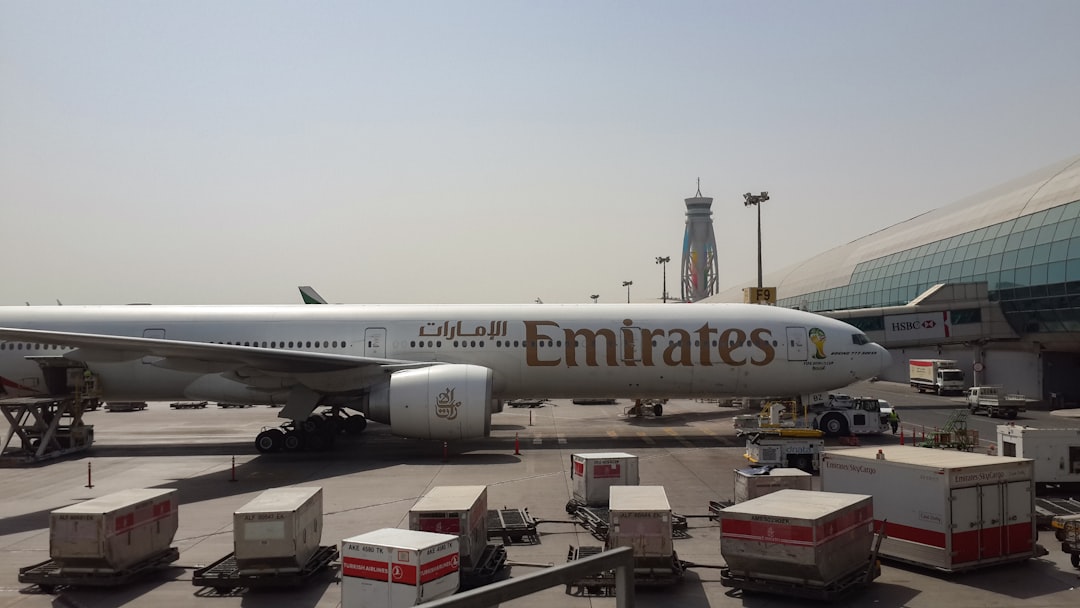
(DUBAI, DOHA) — Emirates temporarily suspended all operations to and from Dubai as multiple regional airspace closures rippled through Middle East air travel, forcing airlines to cancel, suspend, divert and reroute flights across key global connection points.
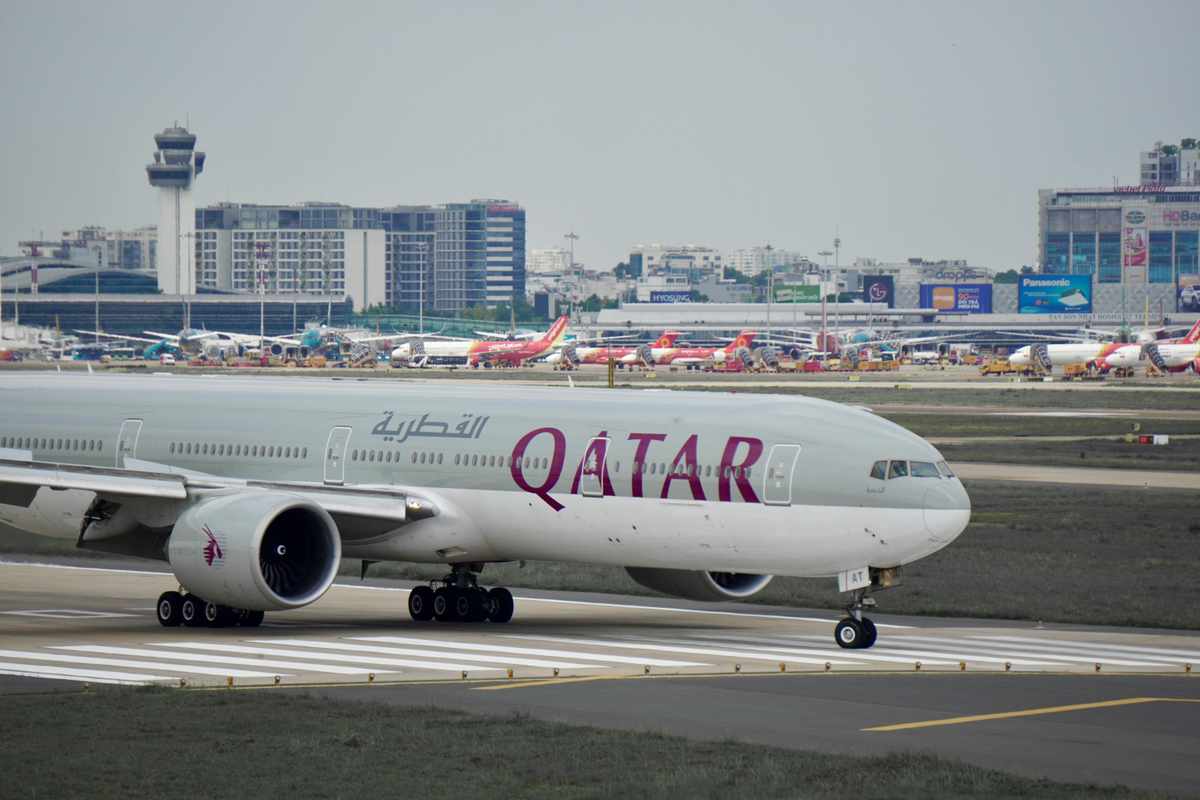
Qatar Airways also suspended all flights to and from its Doha hub, while Etihad Airways halted departures from Abu Dhabi for part of March 1, leaving passengers across Europe, Asia, Africa and North America facing missed connections and fast-changing itineraries.

By March 1, 2026, airlines had taken a range of actions that varied by carrier and route, from full hub shutdowns to selective destination suspensions and mid-journey turn-backs. Flight status and routing decisions can change rapidly as operating conditions shift.
Dubai and Doha matter far beyond the Gulf because they sit at the center of long-haul networks that rely on tightly timed onward connections. When a hub operation pauses even briefly, aircraft and crews fall out of position, rebooking capacity shrinks, and delays cascade to flights that never touch the region.
Abu Dhabi’s role is similar on a smaller scale, and disruptions there can still propagate across partner and interline arrangements. The effects spread quickly when passengers are connecting on separate bookings, or when flights depend on the same aircraft rotation arriving from elsewhere.
Emirates’ decision to suspend all operations to and from Dubai, tied to multiple regional airspace closures, effectively cuts off the airline’s home hub for both outbound and inbound travel. For travelers, that can mean a flight that never departs, a return to origin after takeoff, or a connection that fails because an incoming aircraft cannot arrive in time.
Qatar Airways’ suspension of all flights to and from Doha carried similar consequences at Hamad International Airport, with the additional complication of aircraft already en route. The airline’s flights from Birmingham, Edinburgh, Manchester, Dublin, and London Heathrow returned to their starting points, a scenario that can leave travelers back where they began but hours later, with onward plans already broken.
Etihad Airways suspended all flights scheduled to depart Abu Dhabi until 2pm UAE time (10am GMT) on March 1. A time-bounded pause like that can still cause broader disruption because the first wave of departures often sets up aircraft and crew for later flights, and missed slots can be hard to recover within the same day.
British Airways cancelled all Saturday flights from London Heathrow to Amman, Abu Dhabi, Dubai, and Doha, adding a separate grounding window for flights to Bahrain and Tel Aviv until March 3. For passengers, the distinction matters: a one-day cancellation from London Heathrow can be rebooked onto a later date, but a multi-day grounding can force longer delays or a complete rework of an itinerary.
Finnair cancelled all flights to and from Dubai and Doha between February 28 and March 1, 2026, and said it is not using the airspace of Iraq, Iran, Syria, or Israel. That combination of cancellations and airspace avoidance illustrates why a flight can be called off even if an airport is technically open: if a carrier cannot find a route that meets its operational and safety constraints, the service may not operate.
Lufthansa Group suspended flights to Beirut, Tel Aviv, Amman, Erbil, and Tehran until March 7, and set additional airspace restrictions until March 7 covering Israel, Lebanon, Jordan, Iraq, Qatar, and Iran. It also suspended flights to Dubai, Abu Dhabi, Riyadh, and Dammam until March 1, and said it is not using UAE airspace until March 1. For travelers, those overlapping timelines can be confusing, especially when a trip involves more than one segment or a connection onto another airline: a flight might operate to one city while a connecting segment remains suspended, or a return flight may face different restrictions than the outbound.
Wizz Air suspended all flights to and from Israel, Dubai, Abu Dhabi, and Amman with immediate effect until March 7. Low-cost carriers typically run tight schedules with limited spare aircraft, so a suspension on core routes can rapidly affect later flights as aircraft and crews become unavailable for planned rotations.
Turkish Airlines and LOT Polish Airlines provided examples of how disruption can unfold mid-journey, diverting flights originally heading to Dubai back to their starting points, Istanbul and Warsaw respectively. A diversion back to origin often preserves passenger immigration status and keeps the aircraft within a familiar operational base, but it can still produce widespread misconnects, especially for travelers continuing onward on separate tickets.
The net effect has been heavy strain at the region’s main gateways, including Dubai International Airport, Abu Dhabi International Airport, and Hamad International Airport in Doha, which the reports said have closed or suspended operations. When those hubs are disrupted, the problem is not limited to one departure board: it affects arrivals that can no longer land, parked aircraft that cannot reposition, and passengers already in transit who may be unable to continue.
The scale is amplified by the volume of connecting travelers who use these airports as midpoints between continents. The disruptions affect hubs that collectively handle approximately 90,000 transit passengers daily, a level that can quickly overwhelm rebooking options when multiple carriers halt services at the same time.
Passengers with itineraries that involve Dubai, Doha, or Abu Dhabi face several different failure points. A nonstop flight might be cancelled outright, while a connecting itinerary can collapse even if the first segment operates, because the onward flight is suspended or the connection time becomes impossible after delays and diversions.
Two-ticket travel can make the situation harder, because carriers may treat separate bookings as unrelated trips. Travelers who used one airline to reach a hub and another airline to continue may find that each carrier points to the other for assistance, particularly when a missed connection stems from a cancellation on a different reservation.
The language airlines use in advisories signals what a passenger should expect, and it is not interchangeable. “Suspended” often indicates a route or hub operation will not run for a period, while “cancelled” can apply to specific flights or dates that the airline has removed from the schedule.
“Diverted” can mean an aircraft lands at an alternate airport, but in this wave of disruption it has also included flights “returning to their starting points,” which is a specific outcome that can leave passengers back at the origin airport without having reached the region at all. “Not using” an airspace points to route constraints that can make previously routine flights operationally impractical, even when airports themselves are not the direct cause.
Airspace closures and avoidance have practical knock-on effects beyond the map. Longer routings increase fuel burn and can require payload limits, while detours can also trigger crew duty-time limits that force cancellations when a flight would run beyond legal or contractual work hours.
Aircraft positioning becomes a separate challenge when a carrier cannot fly into a hub to collect a plane scheduled for the next departure. A single stranded aircraft can cancel multiple later flights, and a multi-hub network can feel the impact as crews and equipment fail to line up.
Reroutes can also introduce complications that passengers do not see until the last minute. Airlines may need technical stops to refuel, or they may need to change the aircraft type to accommodate longer distances and different operational requirements, and either change can reduce the number of available seats for rebooking.
For travelers trying to decide whether to go to the airport, the first step is to confirm the operating status of the specific flight, not just the route. Checking the airline’s app or website, reviewing booking email and SMS updates, and comparing that information with airport departure boards can help reduce wasted trips to a terminal when flights have already been cancelled.
Rebooking pathways can differ sharply depending on whether the disruption is a one-day cancellation, a multi-day grounding, or a hub-wide suspension. In a hub suspension, even flights on alternate dates may be constrained because the airline must first restart the operation and then reposition aircraft, which can reduce near-term options for passengers trying to depart.
Partner flights can sometimes help, but hub closures and widespread airspace restrictions can limit the usefulness of alliance rerouting. Even when an airline can place a passenger on another carrier, seats may be scarce if many airlines are trying to rebook travelers at the same time.
Alternate airports and travel-date flexibility can matter more than usual in such conditions. A passenger booked to connect through one Gulf hub may need to consider entirely different routings, including departures on different days, because a single missed segment can trigger a chain of no-shows and cancelled onward reservations.
Travelers also face practical risks around overnight stays and missed connections. When flights return to origin or are cancelled after passengers have already started a journey, hotel needs can arise unexpectedly, and travelers can also be separated from checked baggage if it was tagged onward and the airline’s normal handling processes are disrupted.
Entry and visa issues can also arise when rerouting changes where a passenger lands, or when an itinerary shifts from a planned connection to an unexpected overnight stop. Travelers often need to confirm what documentation they may need for any unplanned transit point, especially if the new routing changes the country of entry.
Given the range of suspensions through March 1, March 3 and March 7, passengers with nonessential travel in the affected window may consider postponing until airline operations stabilize. The decision will depend on each traveler’s circumstances, but the cancellations and hub suspensions mean normal recovery patterns may not apply.
Monitoring official advisories and airport notices can help travelers understand whether a given airport has resumed operations and what constraints remain. Even after an airport reopens, route limitations can persist if airlines continue to avoid specific airspaces, and that can keep schedules unstable.
Information in this guide reflects current reports dated February 28, 2026 and status as of March 1, 2026, including airline actions tied to March 1, March 3 and March 7, 2026. Airline-by-airline operational updates referenced here include Finnair’s cancellations and airspace avoidance [1], Emirates, Qatar Airways, Etihad Airways, British Airways, Wizz Air, Turkish Airlines and LOT Polish Airlines actions [2], and Lufthansa Group suspensions alongside the estimate that affected hubs handle approximately 90,000 transit passengers daily [3].
Passengers should confirm the latest flight status directly with the operating carrier and the departure airport before traveling, because suspensions, cancellations and diversions can be implemented or lifted quickly as conditions change. The fastest-moving impact often falls on connecting travelers, whose journeys depend on multiple flights operating on time across the same disrupted hubs.