- Federal authorities opened a perjury probe into two ICE officers following a shooting in Minneapolis.
- Video evidence allegedly contradicts officers’ sworn testimony regarding the January 2026 enforcement operation.
- A federal judge dismissed felony assault charges against the two suspects with prejudice on February 13.
Section 1: Overview of the perjury probe
A federal perjury probe has been opened into 2 unnamed ICE officers after video evidence contradicted their sworn testimony about a January 14, 2026 shooting in Minneapolis, Minnesota. The inquiry has quickly raised practical questions for immigration enforcement: What happens when officers’ statements under oath conflict with video, and how can that affect cases, personnel decisions, and public trust? A “perjury probe” is an investigation into whether someone committed the federal crime of lying under oath. perjury usually focuses on whether a person knowingly made a false statement while sworn, and whether the statement mattered to the proceeding. An announcement of a probe does not prove a crime. It means federal investigators believe the issue is serious enough to examine as a potential criminal offense. Two tracks often run side by side in situations like this. One is the Department of Justice (DOJ) criminal investigation into possible perjury. The other is the agency’s internal employment and discipline process within U.S. Immigration and Customs Enforcement (ICE) and the Department of Homeland Security (DHS). Those processes can overlap, but they are not the same thing. At the center of the incident is Julio Cesar Sosa-Celis, described by authorities as a 24-year-old Venezuelan national. A second man, Alfredo Alejandro Aljorna, was also charged in the underlying case before those charges were later dismissed.
Section 2: Incident details and timeline
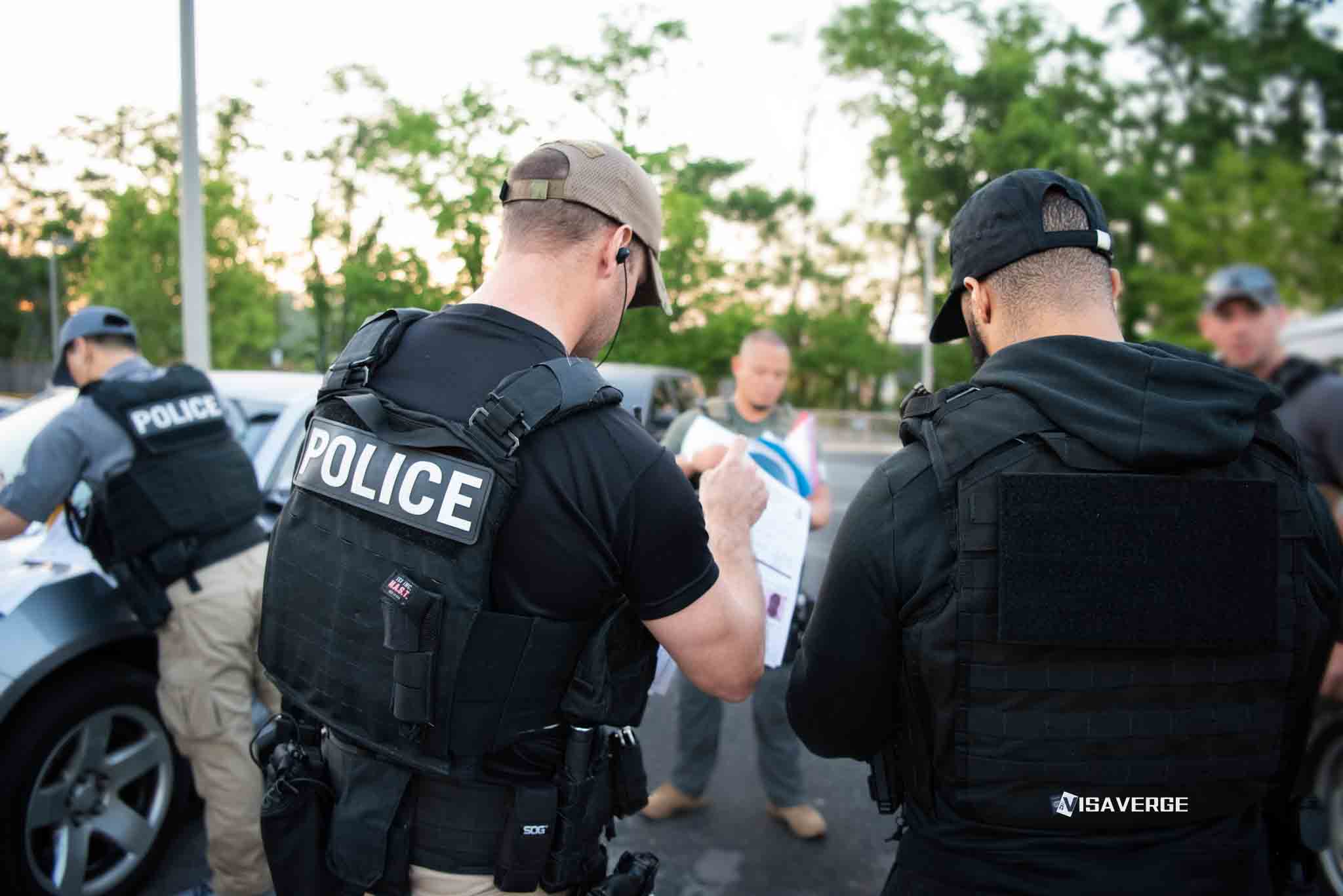
Minneapolis is where the events began. During an immigration enforcement operation on January 14, 2026, an ICE officer shot Julio Cesar Sosa-Celis in the leg. Early accounts in federal complaints described a violent confrontation. A DHS statement issued on January 15, 2026 described officers as being “ambushed and attacked,” and framed the incident as an attempted murder of federal law enforcement. Later, video became the turning point. Defense attorneys presented video that, as described in court filings and government statements, conflicted with the officers’ earlier sworn accounts. The video was described as showing the officer firing through a closed door into a residence while the men were retreating, rather than firing during a physical struggle in the street. That kind of conflict matters because contemporaneous evidence tends to anchor use-of-force reviews and perjury assessments. Video, dispatch logs, reports written close in time to the event, and body-worn or surveillance footage can all help investigators test whether sworn testimony matches what happened. Small differences can be innocent mistakes. Material differences can trigger deeper review. A myth-versus-fact comparison of the public claims in this case generally separates (1) initial descriptions of a street struggle and “ambush” from (2) later descriptions based on video review showing shots fired through a closed door as men moved away. The factual dispute is not just about wording. It goes to the core of what officers said under oath.
Table 2: Timeline of events and outcomes
| Date | Event | Source/Document |
|---|---|---|
| January 14, 2026 | ICE enforcement operation in Minneapolis; ICE officer shoots Julio Cesar Sosa-Celis in the leg | Federal complaints; incident reporting described in later DOJ/DHS statements |
| January 15, 2026 | DHS issues public statement describing officers as “ambushed and attacked” and framing it as attempted murder | DHS public statement (dated January 15, 2026) |
| February 13, 2026 | DOJ and ICE/DHS announce a criminal perjury probe into two ICE officers after video review | DOJ/ICE/DHS public announcements (February 13, 2026) |
| February 13, 2026 | Paul A. Magnuson, U.S. District Court judge, dismisses felony assault charges against Sosa-Celis and Alfredo Alejandro Aljorna with prejudice | U.S. District Court in Minnesota order; motion by Daniel N. Rosen citing newly discovered evidence |
Section 3: Official statements and quotes
Todd Lyons, ICE Director, framed the issue as one of oath and integrity. In the February 13, 2026 statements, he said: “Sworn testimony provided by two separate officers appears to have made untruthful statements. Violations of this sacred sworn oath will not be tolerated. ICE remains fully committed to transparency, accountability, and the fair enforcement of our nation’s immigration laws.” Lyons also emphasized potential criminal exposure: “Lying under oath is a serious federal offense. The men and women of ICE are entrusted with upholding the rule of law and are held to the highest standards of professionalism, integrity, and ethical conduct.” Tricia McLaughlin, Assistant DHS Secretary, described a joint review process tied to the video. She stated: “A joint review by ICE and the Department of Justice of video evidence has revealed that sworn testimony provided by two separate officers appears to have [included] untruthful statements.” McLaughlin added a personnel warning that was conditional, not a final outcome: “Upon conclusion of the investigation, the officers may face termination of employment, as well as potential criminal prosecution.” Agency language like “appears” and “may face” is common in active investigations. It signals a posture of accountability while leaving legal conclusions to the DOJ process. In practice, ICE and DHS can place officers on administrative leave quickly. The DOJ typically controls charging decisions.
Table 1: Key actors and their roles in the probe and related actions
| Actor | Affiliation/Role | Statement or Action |
|---|---|---|
| 2 unnamed ICE officers | ICE officers involved in the Minneapolis operation | Subject of a DOJ perjury probe; placed on administrative leave per DHS/ICE statements |
| Todd Lyons | ICE Director | Publicly stated sworn testimony “appears” untruthful; stressed oath, accountability, and seriousness of lying under oath |
| Tricia McLaughlin | Assistant DHS Secretary | Said ICE and DOJ jointly reviewed video; warned officers may face termination and possible criminal prosecution |
| Department of Justice (DOJ) | Federal prosecutor/investigative authority | Opened a criminal perjury probe tied to sworn testimony and video review |
| Julio Cesar Sosa-Celis | 24-year-old Venezuelan national | Shot in the leg on January 14, 2026; felony assault charge later dismissed with prejudice |
| Alfredo Alejandro Aljorna | Co-defendant | Felony assault charge later dismissed with prejudice |
| Paul A. Magnuson | Judge, U.S. District Court in Minnesota | Dismissed the felony assault charges with prejudice on February 13, 2026 |
| Daniel N. Rosen | U.S. Attorney | Filed the motion to dismiss, citing “newly discovered evidence” “materially inconsistent” with earlier allegations |
⚠️ Perjury investigations carry potential criminal penalties and personnel actions; follow official DOJ/ICE/DHS updates for confirmed outcomes
Section 4: Legal outcomes and court actions
The most concrete court action so far is the dismissal of charges. On February 13, 2026, Paul A. Magnuson of the U.S. District Court in Minnesota dismissed felony assault charges against Julio Cesar Sosa-Celis and Alfredo Alejandro Aljorna with prejudice, after a motion by Daniel N. Rosen. “Dismissed with prejudice” is a plain but powerful phrase. It generally means the case is closed for good in that court on those charges. Prosecutors cannot simply refile the same charges later, because the dismissal blocks another attempt based on the same alleged conduct. Rosen’s motion cited “newly discovered evidence” that was “materially inconsistent with the allegations.” “Materially inconsistent” is not just a minor mismatch. In many cases, it means the new information conflicts in a way that could affect probable cause, charging decisions, or credibility assessments. Courts and prosecutors pay close attention to credibility when sworn testimony is part of the case record. Even with dismissals, open questions remain. The perjury probe is an investigation, not a conviction. Administrative actions inside ICE can also evolve as facts are reviewed. New filings can emerge, but nothing is guaranteed, and any future step would typically require formal DOJ action.
Section 5: Significance and broader context
Perjury probes involving federal officers are not commonly announced in public, which is one reason this case has drawn attention. Credibility is the backbone of court proceedings. When sworn testimony is challenged by video, the dispute can spread beyond one incident. It can affect how judges, juries, and prosecutors evaluate officer statements in other matters. At a high level, cases like this can shape several legal arenas without predetermining outcomes. Prosecutors may reassess charging decisions. Defense teams in other cases may test officer credibility more aggressively. Civil-rights litigation risk can rise when use-of-force narratives change, though each claim still depends on facts and legal standards. Developments that usually carry the most weight are concrete ones: a filed criminal charge, an indictment, an inspector general finding, or a court order with factual determinations. Public statements matter, but filings and rulings tend to define what can be proven. An Impact Level Indicator for this incident would reasonably be described as: High. Key factors include: sworn testimony credibility, video evidence that contradicts earlier accounts, dismissal with prejudice, potential employment termination, possible federal criminal charges, and broader community trust during stepped-up enforcement activity.
✅ Readers should verify developments with DOJ announcements and ICE/DHS newsroom releases as the investigation progresses
Section 6: Impact on individuals
For the ICE officers, “administrative leave” usually means the officers are temporarily removed from duty while reviews proceed. It is not the same as termination. A later employment decision can range from reinstatement to discipline to firing, depending on findings and due process steps within DHS. Separately, a DOJ perjury probe can lead to federal criminal charges, but only if prosecutors decide evidence meets the legal standard. For Julio Cesar Sosa-Celis and Alfredo Alejandro Aljorna, dismissal with prejudice means the felony assault case ended in criminal court. That result, however, does not automatically answer immigration questions. Immigration enforcement and immigration court proceedings can operate on a separate track from local or federal criminal charges. In many situations, a person can face immigration detention decisions, detainers, or a Notice to Appear (NTA) even if criminal charges are dismissed. The reverse can also happen. Injury adds another layer. Sosa-Celis was reported to be recovering from a gunshot wound to his thigh. In many cases, medical records, photographs, and follow-up treatment notes become part of the documentation reviewed in investigations and later proceedings. People affected by a use-of-force incident often consider keeping complete records, while consulting qualified counsel for advice specific to their situation.
Section 7: Official sources and references
Readers tracking this case should rely on primary records and dated announcements. DOJ announcements and the U.S. Attorney’s Office updates are often the clearest indicators of criminal-investigation steps, including charges and public filings. The DOJ’s District of Minnesota page is here: DOJ U.S. Attorney’s Office—District of Minnesota Agency statements from ICE and DHS explain the government’s administrative posture, including leave status and internal review framing. ICE’s newsroom is here: ICE Newsroom DHS press releases are here: Cross-checking helps. Match the date (especially February 13, 2026), the court name (U.S. District Court in Minnesota), and the names involved (Paul A. Magnuson and Daniel N. Rosen) when reading claims and reposts.
This article covers a live, evolving legal matter with significant civil rights and immigration implications. Readers should not treat any statements as settled facts until official DOJ/ICE/DHS conclusions are released. All quoted statements reflect publicly released quotes and should be interpreted in context of ongoing investigations and potential charges.