- Air Canada ordered eight Airbus A350-1000 widebodies with deliveries beginning in the second half of 2030.
- The new jets target high-growth long-haul markets like India, Southeast Asia, and Australia from Toronto.
- A350-1000s offer 25% lower fuel burn and significant cargo capacity compared to previous generation aircraft.
Air Canada just picked its next long-haul “big jet,” and it matters because it hints at where you’ll be able to fly nonstop from Canada in the early 2030s. If you’re choosing between Air Canada’s future long-haul aircraft, book the Airbus A350-1000 when you want the most space, cargo-driven route stability, and the best odds of more premium seats. Pick the Boeing 787-10 when you care about a quieter ride on routes that can support steady demand. Choose the Airbus A321XLR when you want new, thinner nonstop routes and can live with a single-aisle experience.
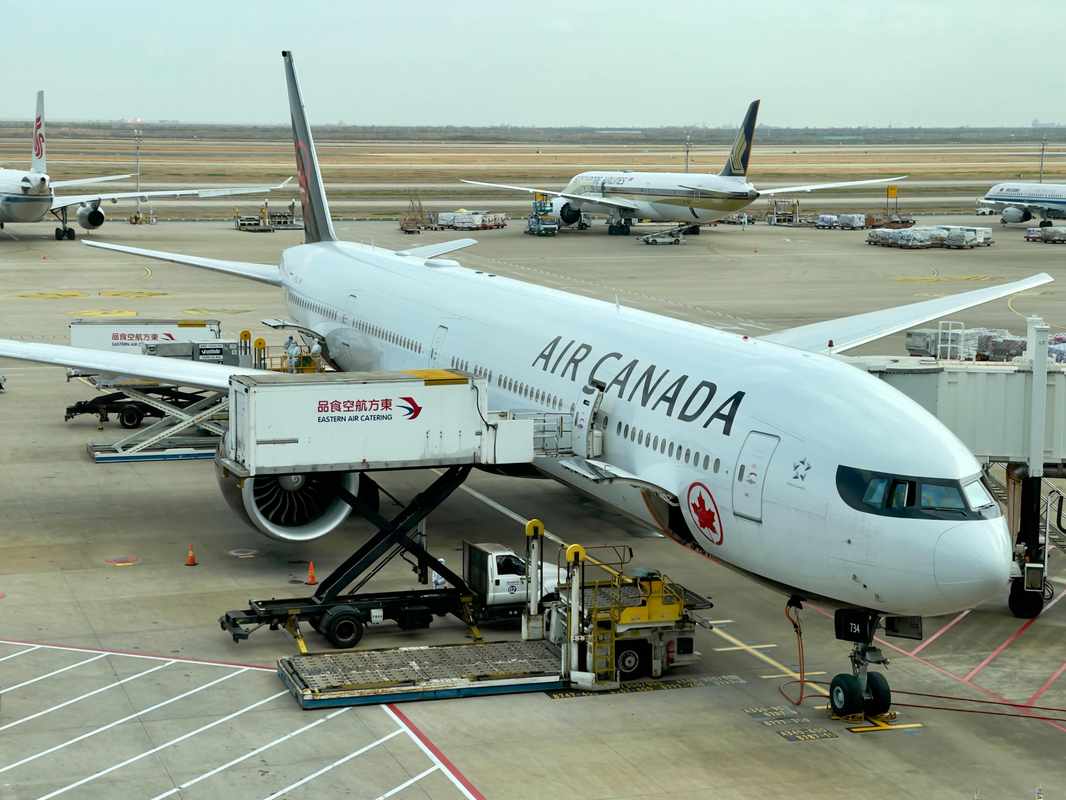
On Thursday, February 12, 2026, that’s the real takeaway from Air Canada’s February 11 announcement: eight Airbus A350-1000s are on order, with rights to buy eight more, and deliveries begin in the second half of 2030. This is a long runway. But in airline planning terms, it’s also a very loud signal.
Air Canada’s A350-1000 order: what was announced, and why the timing matters
Air Canada confirmed it will acquire eight Airbus A350-1000 widebodies, plus purchase rights for eight additional A350-1000s. That “rights” piece is important. It gives Air Canada a pre-negotiated path to grow faster if demand holds.
The delivery timing also matters. Air Canada said deliveries begin in the second half of 2030. “Begin” rarely means a single handoff. It usually means:
- A phased stream of aircraft arriving over multiple years
- Time for cabin design finalization, seat testing, and supplier sign-offs
- Crew training pipelines and maintenance program buildout
- Regulatory work, including long-haul operational approvals
Airlines typically need years between order and route headlines. Widebody route launches depend on cabin configuration, ETOPS approvals, and crew staffing. Schedule loading for new long-haul flying often appears 9–11 months before first flight. The hard work happens long before you see a new route in the booking engine.
Side-by-side: A350-1000 vs 787-10 vs A321XLR (what you’ll notice as a traveler)
Air Canada is building toward a three-piece international puzzle. The A350-1000 is the high-capacity, long-range hammer. The 787-10 is the efficient widebody for dense long-haul. The A321XLR is the long-range narrowbody that can open new city pairs.
Here’s the quick comparison, using what Air Canada has already put on the record for its fleet plan.
| Factor | Airbus A350-1000 (new order) | Boeing 787-10 (incoming) | Airbus A321XLR (incoming) |
|---|---|---|---|
| Air Canada plan | 8 firm + rights for 8 more | 14 incoming | First of 30 arriving soon |
| Deliveries | Begin 2H 2030 | Starting later in 2026 | Arriving soon |
| Role in network | Longest-haul growth, higher capacity | High-demand long-haul widebody | “Thin” long-haul and new nonstop routes |
| Passenger experience | Twin-aisle, larger cabin, more seats | Twin-aisle, quieter feel | Single aisle on long flights |
| Route style | Big hubs to far markets | Big hubs to major markets | Secondary long-haul, frequency experiments |
| Best for | Comfort + premium odds | Comfort + steady schedules | New nonstops, smaller markets |
This isn’t about one aircraft being “better.” It’s about which one fits your trip and your tolerance for a long flight.
Fleet modernization context: why Air Canada needs all three
Air Canada framed the A350-1000 as the next phase of modernization, and the surrounding fleet plan explains why.
The airline has several moving parts:
- 14 Boeing 787-10s starting later in 2026
- The first of 30 Airbus A321XLRs arriving soon
- 23 remaining Airbus A220s from a firm order of 65
- Five leased Boeing 737 MAX aircraft coming in 2026
This mix is not accidental. The A350-1000 complements, rather than duplicates, the 787-10 and A321XLR.
A350-1000 vs 787-10: both are twin-aisle long-haul aircraft, but they can be used differently. The A350-1000’s larger typical capacity gives Air Canada a tool for trunk routes, peak seasons, and high-cargo markets. The 787-10 can be a sweet spot for long-haul demand that is strong but not “largest-jet” strong.
A350-1000 vs A321XLR: these aircraft solve opposite problems. The A321XLR helps Air Canada try routes that cannot fill a widebody year-round. The A350-1000 helps when the market is big, far, or cargo-heavy.
A mixed fleet also helps operational recovery. When disruptions hit, more aircraft “shapes” can give scheduling teams more options. That can mean fewer cancellations and more aircraft swaps instead of outright scrapped flights.
Before 2030, bridging capacity matters too. The remaining A220 deliveries and leased 737 MAX capacity can keep the domestic and near-international network growing. That feeds long-haul banks at hubs.
A350-1000 specs, translated into what it enables for routes and comfort
The Airbus A350-1000 is Airbus’s largest twin-aisle aircraft. Its physical size and performance are the story.
Airbus lists the A350-1000 at 73.78 meters long, with a 64.75-meter wingspan and 17.08-meter height. For passengers, the more useful numbers are capacity, range, and cargo.
Capacity: frequency versus “gauge”
In a typical three-class setup, the A350-1000 seats roughly 350 to 410 passengers, with a stated maximum of up to 480. That range gives an airline choices.
- A premium-heavy layout can add business and premium economy seats.
- A higher-density layout can cut per-seat costs on leisure peaks.
For you, this affects upgrade odds and award seat supply. More total seats can mean more inventory to sell. It can also mean more award seats, especially close-in.
Range and performance: more nonstop options from Canada
The A350-1000 is cited at 16,700 km (9,000 nm) range at Mach 0.85. That kind of capability gives planners flexibility for:
- Headwinds on westbound flights
- Payload tradeoffs on ultra-long routes
- Alternate airports and route planning constraints
it increases the number of city pairs that can be flown nonstop from Canadian hubs.
Fuel burn and emissions: why it matters even if you don’t care about “green”
Air Canada pointed to 25% lower fuel burn and CO₂ emissions versus prior-generation aircraft. Airlines talk about emissions, but the economic angle is just as real.
Fuel is often an airline’s biggest cost. A more fuel-efficient jet can make marginal routes workable year-round. That’s how you get “new nonstop” that sticks past the first season.
Cargo: the hidden support for route stability
The A350-1000’s cargo capability was described as 14 pallets or 44 LD3 containers. Cargo revenue can underwrite passenger routes, especially to trade-heavy markets.
For travelers, cargo strength can mean better route durability. Airlines are more likely to keep a flight when both bellies are earning money.
Strategic rationale: why Toronto matters, and what “flexibility” really means
Air Canada explicitly tied the A350-1000 to high-growth markets in the Indian subcontinent, Southeast Asia, and Australia. Those are long stage lengths, with strong visiting-friends-and-relatives demand and growing premium traffic.
The core hub logic starts at Toronto Pearson (YYZ). Toronto works for multi-continent connectivity because it can support banked schedules. That means arrivals and departures timed to connect across:
- Canada and the U.S.
- Europe
- Asia-Pacific
- Latin America
When Air Canada says “flexibility,” it usually includes a few concrete levers:
- Unit costs: more seats can lower cost per seat on dense routes
- Payload-range: keeping cargo and bags on longer flights
- Maintenance planning: fewer aircraft types can reduce complexity
- Competitive response: adding capacity where rivals add flights
This is also where “rights to purchase eight more” matters. If a competitor grows faster, Air Canada can try to keep pace without starting from scratch.
Recent and upcoming route expansions: what’s already changing before 2030
Air Canada doesn’t have to wait for 2030 to grow. It has already pointed to near-term route adds that show its playbook.
For Summer 2026, examples include:
- Montréal–Catania
- Montréal–Palma de Mallorca
- Toronto–Shanghai
- Toronto–Budapest
- Vancouver–Bangkok (year-round)
For Winter 2026/2027, examples include:
- Quito from Montréal and Toronto
- Toronto–Manchester (year-round, using A321XLRs)
- Toronto–Copenhagen (year-round, using A321XLRs)
- Expanded Latin America service
This list also shows how Air Canada separates missions.
A321XLR routes won’t feel like a widebody
The A321XLR strategy is about long, thinner routes with a narrowbody. That can be great for nonstop convenience. It can also feel long in a single aisle.
You should expect different tradeoffs:
- Faster boarding and deplaning is not guaranteed on narrowbodies
- Fewer lavatories can matter on long sectors
- Turbulence can feel sharper in a smaller airframe
- Premium cabins are usually smaller, with fewer upgrade seats
Route experimentation is also easier with an aircraft like the A321XLR. Airlines can start seasonal. They can bump frequency. They can swap aircraft types if demand surprises.
The A350-1000, by contrast, usually comes after confidence is high. It is harder to “dabble” with a large widebody.
Executive perspectives: why commercial and finance both wanted this jet
Air Canada’s executives split the messaging in a classic way.
Commercial leadership, via EVP and Chief Commercial Officer Mark Galardo, emphasized global connectivity for customers. That’s the revenue and network side. It’s about where you can fly and how well the hubs connect.
Finance leadership, via EVP and CFO John Di Bert, stressed long-term cost efficiency and reliability. That’s not just spreadsheet talk. Reliability affects compensation costs, reaccommodation, and brand trust.
Air Canada also noted the order had been listed as “undisclosed” back in November 2025. That fits normal aircraft order disclosure patterns. Airlines and manufacturers sometimes delay details until financing and documentation are final.
Miles and points: what this means for Aeroplan earning and redemptions
A new aircraft type doesn’t change Aeroplan rules overnight. But it can change what’s available to book.
Here’s the practical effect for points collectors:
- More long-haul seats can mean more award seats, especially close to departure.
- New nonstop routes often bring early award space. That can dry up fast.
- Bigger premium cabins can increase upgrade inventory over time.
If you’re earning Aeroplan points via flying, remember that fare class still matters more than aircraft type. If you’re chasing elite status, long-haul premium cabins can move you faster. They often earn more status credit than deep-discount economy.
Competitive context matters too. Canadian travelers have long relied on a mix of Air Canada, U.S. carriers, and overseas airlines. More Air Canada capacity can mean better schedules. It can also pressure fares on certain city pairs.
⚠️ Heads Up: New routes often show strong cash prices at launch. Award space can be the better play if you book early.
Delivery timeline and what to watch next
“Deliveries begin in the second half of 2030” is the starting gun, not the finish line. Between now and then, there are a few milestones that will matter to travelers.
Expect to see, in roughly this order:
- Cabin reveal: seat types, layout, and premium cabin counts
- First aircraft rollout: the first A350-1000 in Air Canada livery
- Route assignments: initial city pairs, usually from Toronto first
- Schedules loaded for sale: when you can actually book
- Ramp-up: more frames arriving, more routes converting to the A350-1000
Purchase rights are the other chess piece. Air Canada can convert those rights into firm orders if demand rises, or if competitors add capacity. Macro factors matter too. Think fuel prices, economic cycles, and international traffic rules.
Air Canada’s safest bet is to start with high-demand, long-haul markets where cargo also performs. The airline already named the regions to watch: India, Southeast Asia, and Australia.
If you want to be first on these aircraft, set a calendar reminder for late 2029 into 2030. That’s when cabin details and first-route announcements usually start to harden. When schedules open, book early if you want premium seats with points, especially on brand-new nonstops.