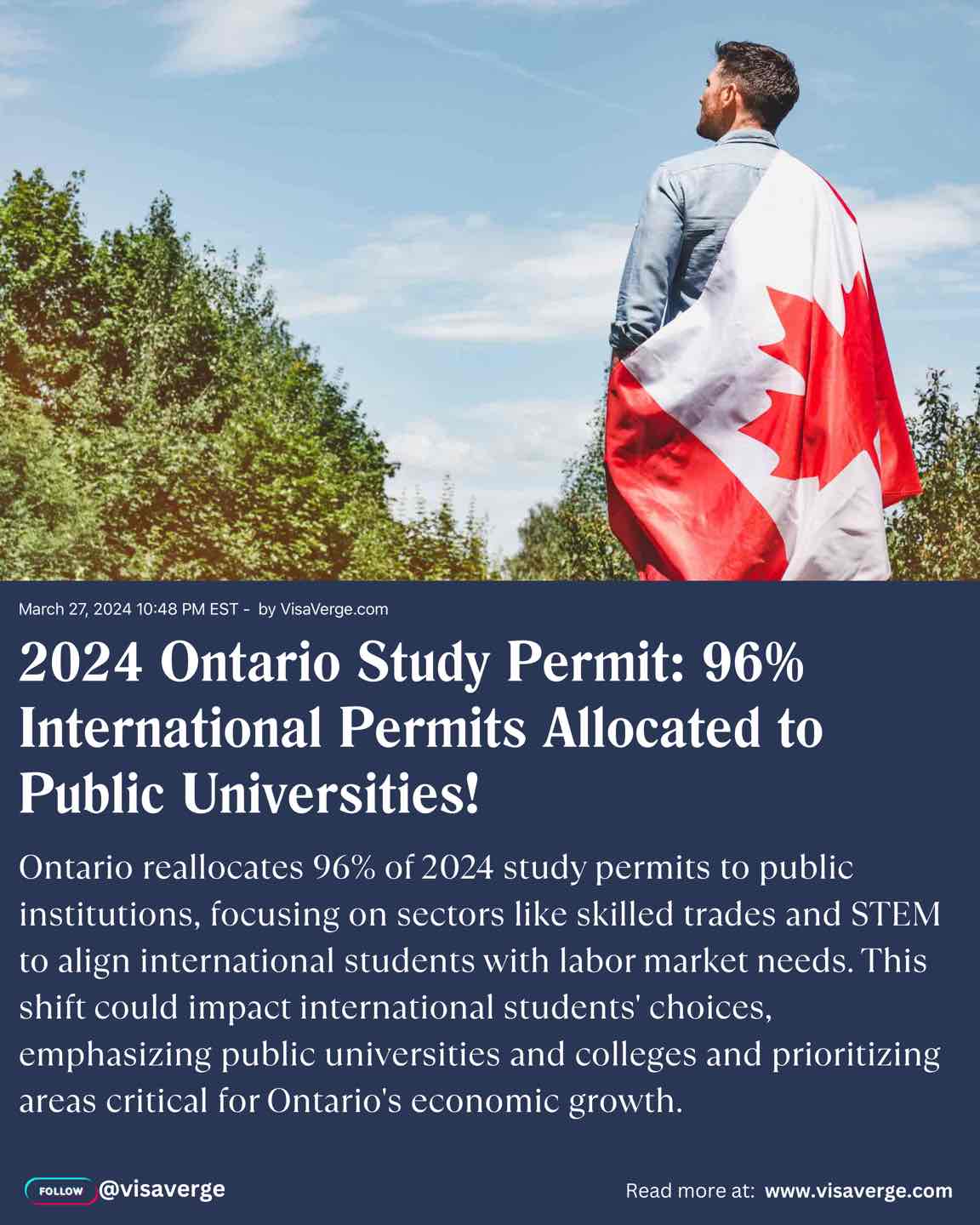
In a move that could significantly impact future international students’ choices and opportunities, the Government of Ontario recently announced a major shift in the distribution of study permits for 2024. This new directive sees a pronounced preference for public universities and colleges in Ontario, altering the landscape for thousands aspiring to pursue higher education in the province. Let’s dive deep into this subject, exploring what it means for international students, the rationale behind the decision, and its implications.
Understanding the New Allocation of Ontario Study Permits

Ontario has declared that a staggering 96% of international study permits for 2024 will be allocated to public universities and colleges across the province. This leaves only a minor portion, the remaining 4%, to be distributed amongst language schools, private universities, and other institutions. Such a significant skew towards public institutions signals a strategic pivot emphasizing the provincial government’s focus on channeling international talent into areas deemed crucial for Ontario’s labor market and economic growth.
Free toolCanada Express Entry Points CalculatorKey Areas of Focus
The provincial government has identified several high-demand areas that will receive priority in the allocation of study permits. These include:
– Skilled trades
– Health human resources
– Science, Technology, Engineering, and Mathematics (STEM)
– Hospitality
– Childcare
Additionally, the government has underscored the importance of boosting French-language enrollment, acknowledging the competitive edge that French-language skills can provide in the job market.
The Rationale Behind the New Distribution
This decision is reflective of Ontario’s intent to align international student intake with its labor market needs. By funneling international students towards programs and sectors where demand is high, Ontario aims to prepare a workforce ready to meet the province’s economic challenges. This approach is also seen as a measure to ensure that educational resources are utilized to contribute directly to areas with a notable shortage of skilled professionals.
How Does Ontario’s Allocation Compare?
Ontario’s allocation strategy marks a departure from how other provinces, such as British Columbia, distribute their study permits. For instance, British Columbia has opted for a more balanced allocation, splitting its permits approximately evenly between public and private institutions. These contrasting strategies highlight distinct provincial priorities and approaches to handling international student admissions, reflecting differing educational and economic objectives.
Impact on International Students and Institutions
For international students, this shift necessitates a reevaluation of their study plans in Canada, particularly those considering private institutions or less prioritized fields of study. Public universities and colleges in Ontario will likely see an increase in applications, given their substantial share of the permit allocation. Conversely, private institutions, language schools, and others might face challenges attracting international students, given the limited permits available for their prospective students.
Navigating the Changes: Provincial Attestation Letters (PAL)
In the wake of these changes, Ontario has indicated plans to introduce a Provincial Attestation Letter (PAL) system. Although details are still forthcoming, it’s expected that this system will facilitate the application process for international students by having Designated Learning Institutions (DLIs) apply on behalf of their students. For the most current and detailed information on how to navigate these changes, international students are advised to directly contact their chosen schools or stay tuned for official announcements from the Ontario government.
A Look at the Bigger Picture
This reallocation of study permits is part of a broader response to Immigration, Refugees and Citizenship Canada (IRCC)’s decision to cap the number of study permits issued to international students across Canada in 2024 and 2025. This move aims at managing the volume and distribution of international students more sustainably, ensuring that their influx corresponds with Canada’s educational resources and labor market capacities.
Final Thoughts
Ontario’s decision to prioritize public universities and colleges for international study permits in 2024 represents a significant shift in the province’s educational and economic strategy. By aligning international student admissions with labor market needs, Ontario aims to foster a more directly beneficial relationship between higher education and the province’s economic ambitions.
For international students, this change means a greater emphasis on researching and understanding the new parameters set by Ontario’s government. Successful navigation through this updated landscape will require staying informed, flexible, and proactive in aligning with Ontario’s prioritized sectors and institutions. As Ontario charts this new course, the broader implications for the province’s labor market, educational institutions, and international student community will be watched closely.
This Article In A Nutshell:
Ontario alters study permit distribution for 2024, favoring public universities plus key sectors like STEM and healthcare. Focus on French language, reflecting labor market needs. Students and institutions adjust plans. New Provincial Attestation Letter system planned. Strategy differs from other provinces. Aiming to align international student intake with economic demands.
— By VisaVerge.com
Read more:
- Navigating Canada’s New SOWP Rules in 2024: A Guide for Indian Students
-
Canada’s Renters Bill of Rights: Understanding Your New Protections