(INDIA) IndiGo’s mass disruption, which has forced the airline to cancel over a thousand flights in just a few days, is hitting not only holidaymakers and business travellers but also people moving across borders for work, study, and family reasons. For many of these passengers, a missed flight can mean a missed visa interview, an expired entry visa, or an overstay that brings legal trouble.
What happened and why it matters
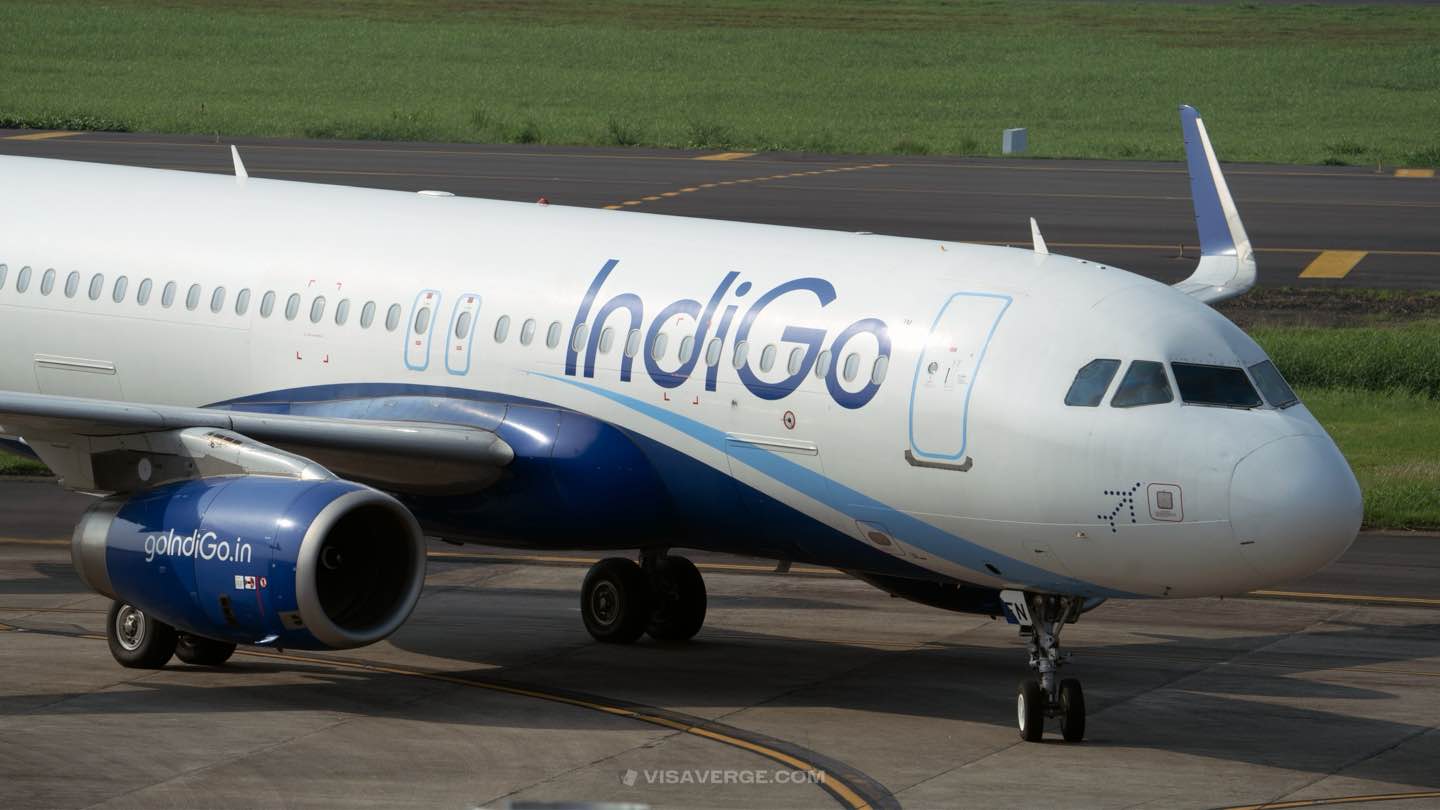
The cancellations, reported across IndiGo’s network, follow what Indian aviation outlets describe as a sudden and large shortfall in crew availability, combined with knock‑on problems in a tightly timed schedule. When several flights in such a network run late, aircraft and crew end up in the wrong cities, and the airline starts to lose control of its rotations.
Rather than operating extremely delayed services, IndiGo has been cancelling blocks of flights, creating a visible crunch at big hubs including Delhi, Mumbai and Bengaluru. Coverage from business and aviation media in India speaks of “hundreds” of cancellations each day for a short period, together adding up to well over a thousand affected flights, including some international sectors.
Each grounded aircraft represents hundreds of people who may have linked flights, expiring visas, or fixed immigration appointments at consulates and visa centres. According to analysis by VisaVerge.com, large‑scale schedule shocks can hit migrants and foreign workers hardest because they often travel on strict timelines set by embassies, employers, and universities.
The airline’s operational disruption is not just a travel delay — for many it becomes an immigration or legal risk.
Immediate impacts on travellers with immigration timelines
People holding short‑validity visas — such as time‑limited entry visas for work, study, or medical treatment — face particular pressure. If a visa is due to expire in a few days, losing even one travel day to a cancellation can make the difference between entering a country legally or being turned away at the border.
Key consequences include:
- Missed visa interviews (U.S., Schengen and other consulates), often treated as “no‑shows”
- Rebooking can be weeks or months later
- Applicants may have to repay visa fees
- Expiry of entry visas while en route or during delays
- Can lead to refusal of entry or visa cancellation in some countries
- Overstays for foreign nationals already in India
- May trigger fines, extra paperwork, or future entry restrictions
Passengers connecting from an IndiGo domestic leg to an international flight on another carrier may be stranded in the wrong city or arrive too late to board — jeopardising both their tickets and immigration status.
Real‑world examples of disruption costs
For applicants scheduled for overseas visa interviews at consulates in Mumbai, Delhi, Chennai, or Hyderabad, the stakes are especially high. A cancelled IndiGo flight on the morning of a long‑awaited interview can:
- Delay a migration plan by an entire semester or hiring cycle
- Force applicants to rebook appointments, sometimes months later
- Require additional fees and repeated documentation (medical exams, etc.)
IndiGo’s response and passenger remedies
IndiGo has publicly acknowledged the scale of the disruption and the impact on travellers, saying it recognises the “immense inconvenience and distress” caused and has promised to stabilise operations as quickly as possible.
Measures announced include:
- Automatic refunds to the original method of payment for cancelled flights
- Waived fees for cancellations and rescheduling on affected travel dates
- Promotion of the “Plan B” system, allowing travellers to switch to alternative IndiGo flights at no extra charge (subject to seat availability)
These options may be sufficient for travellers with flexible visa dates, but they often do not resolve problems for people locked into fixed immigration timelines.
Hidden risks from IndiGo’s business model
IndiGo’s difficulties stem largely from its business model. The airline runs one of the most utilisation‑heavy fleets in global aviation, scheduling aircraft and crew tightly to keep costs low and fares competitive. That model:
- Works well when operations are smooth
- Leaves little buffer for surprises (crew shortages, local disruptions, extra checks)
- Means that once delays start, aircraft and staff are scattered and the network can only be reset by cancelling large numbers of flights
For international travellers this creates additional risk because many book separate tickets: IndiGo for domestic legs and other carriers for long‑haul flights. When the domestic leg fails:
- The international ticket can be lost even if the domestic fare is refunded
- Passengers may face lost, non‑refundable international tickets and extra visa-related costs
Legal exposure and overstays in India
Foreign nationals planning to depart India on a fixed‑date visa may face legal exposure if they cannot leave on time. Potential consequences include:
- Short, unplanned overstays — often handled by fines and paperwork
- Serious cases — possible future entry restrictions
Official guidance on visas and overstay rules is available on the Government of India’s Bureau of Immigration website:
https://boi.gov.in
Travellers who are pushed past their permitted stay should check that site for the latest procedures.
Practical advice for travellers and planners
For would‑be migrants, students, and anyone with strict immigration timelines, this episode underlines the need to build buffer time into plans.
Recommendations:
- Build extra time into arrival dates (arrive a few days before a course start date, work start date, or registration deadline).
- Consider through‑tickets on a single carrier where possible so that one airline bears responsibility for re‑routing in case of disruption.
- Avoid tight connections between separate bookings when visa windows or fixed appointments are involved.
- Keep documentation and backups (appointment confirmations, employer/university letters) handy to explain missed windows if you must reschedule.
- Check official visa guidance (e.g., https://boi.gov.in) immediately if a disruption risks an overstay.
Broader implications and pressures on IndiGo
IndiGo faces rising pressure from passengers, consumer groups and the travel industry to explain how the crew availability issues escalated so rapidly, and to state what safeguards will be introduced going forward.
While the airline emphasises apologies, refunds and Plan B, many migrants and international students are primarily concerned with salvaging immigration timelines rather than recovering the cost of a single leg.
Final takeaway
As IndiGo works to restore its schedule, those most affected are often people whose lives are already in transition: workers heading to new jobs abroad, students leaving home for foreign universities, and families reuniting across borders.
For them, IndiGo’s struggles are not just a customer‑service problem — they are a stark reminder of how fragile the links between airlines, consulates and border controls can be, and how quickly a single cancelled flight can become a serious immigration risk.
IndiGo cancelled more than a thousand flights after a sudden crew shortage disrupted tightly timed rotations, especially at Delhi, Mumbai and Bengaluru. The mass cancellations risked missed visa interviews, expired entry visas and overstays for migrants, students and workers traveling on fixed timelines. IndiGo is offering refunds, waived fees and a Plan B rebooking option, but travellers with strict immigration windows should build extra time, consider through-tickets and consult official visa guidance to avoid legal consequences.