January 3, 2026
- Added specific project costs and timelines, including a €1 billion AIA tender in late 2025
- Included passenger traffic figures: AIA record 31.85 million in 2024 and 2025 projection near 34 million
- Added Heraklion runway closure dates (January 19–26, 2026) and operational limits for that period
- Updated nationwide completion target to late 2028 and AIA phased build through 2032 (half by 2028)
- Added operational details at AIA: capacity target 50 million, new routes, 30% PTC reduction, photovoltaic park and parking/retail upgrades
(GREECE) — Greece is pressing ahead with multi-billion-euro upgrades at its biggest airports in 2026, including Athens International Airport (AIA) and Heraklion on Crete, as authorities and operators try to curb persistent flight delays and expand capacity.

Scope and timing of the works
- Athens International Airport (AIA) tendered a €1 billion expansion in late 2025 that targets terminal growth to handle 50 million passengers annually by 2032, with phased construction aimed at minimizing disruptions.
- Heraklion Airport, Crete’s busiest, is set to begin a runway overhaul January 19–26, 2026, closing its main runway for resurfacing and shifting operations to a secondary runway with limits that could trigger minor delays.
- Greece plans improvements across all Greek airports by late 2028, targeting bottlenecks exposed during the 2024–2025 disruption period.
Why upgrades are needed
The works follow a period of heavy crowding and disruption affecting arrivals, baggage systems and border controls. These strains have squeezed tourists, business travelers, family visitors and other passengers moving through Greece’s main gateways.
- Athens International Airport recorded a record 31.85 million passengers in 2024, up 13% from 2023 and 24.6% above pre-pandemic levels, with 2025 projections nearing 34 million, VisaVerge.com reported.
- Much of the strain is attributed to high-volume “arrival banks,” clusters of flights landing in quick succession that can overwhelm passport control and ground handling, causing missed connections and long queues.
AIA expansion details
AIA’s announced program aims to more than double capacity from 26 million to 50 million passengers annually through modular additions.
Key components:
– Expanded check-in counters, security halls and lounges
– Phased construction through 2032, with half the work expected by 2028
– Modular build to keep the airport operational during works
Operational context:
– AIA added 14 new routes and five airlines in 2025, including transatlantic links to nine U.S. cities and route expansions to India by early 2026 (VisaVerge.com).
– Seasonality has smoothed: 2025 saw six months exceeding 3 million passengers, increasing demand for year-round capacity.
– Pricing incentives to support winter traffic included a 30% Passenger Terminal Facility Charge reduction (October 1, 2025–April 30, 2026), alongside sustainability discounts.
Sustainability and landside upgrades:
– Completed a photovoltaic park ahead of its 2025 net-zero emissions goal (25 years early).
– Expanded parking to 3,600 spaces.
– Introduced 18 new retail concepts and automated gates to ease congestion.
– Plans to add automated e‑gates for faster biometrics and improved segregation of Schengen and non‑Schengen flows.
Heraklion runway works (January 19–26, 2026)
Purpose:
– Resurface the main runway to handle rising traffic volumes.
Operational constraints during the one-week closure:
– Flights moved to a secondary runway limited to:
– Aircraft with max 72 seats
– Daylight hours only
– Larger international flights may be affected, and terminal flows could see extra pressure as airlines and tour operators prepare for the tourism season.
Traveler guidance from VisaVerge.com:
– Confirm airline adjustments early for travel during January 19–26, 2026.
– Expect that only smaller planes will operate and only in daylight hours.
– Allow 2–3 extra hours for check-in and security.
– Carry onward bookings, employer letters, visas, return tickets and proof of funds if required, especially for non‑EU nationals who need entry checks or stamps.
Even brief disruptions can create complications for passengers who need visa stamps or entry checks, raising risks of scrutiny if delays push travel close to stay deadlines.
Documentation and claims:
– Passengers affected by delays should retain boarding passes, rebooking emails and vouchers to demonstrate disruptions were unavoidable.
– For overnights or major schedule changes, request airline-written delay confirmations and keep revised itineraries.
Day‑of travel tips:
1. Monitor airport and airline apps for updates.
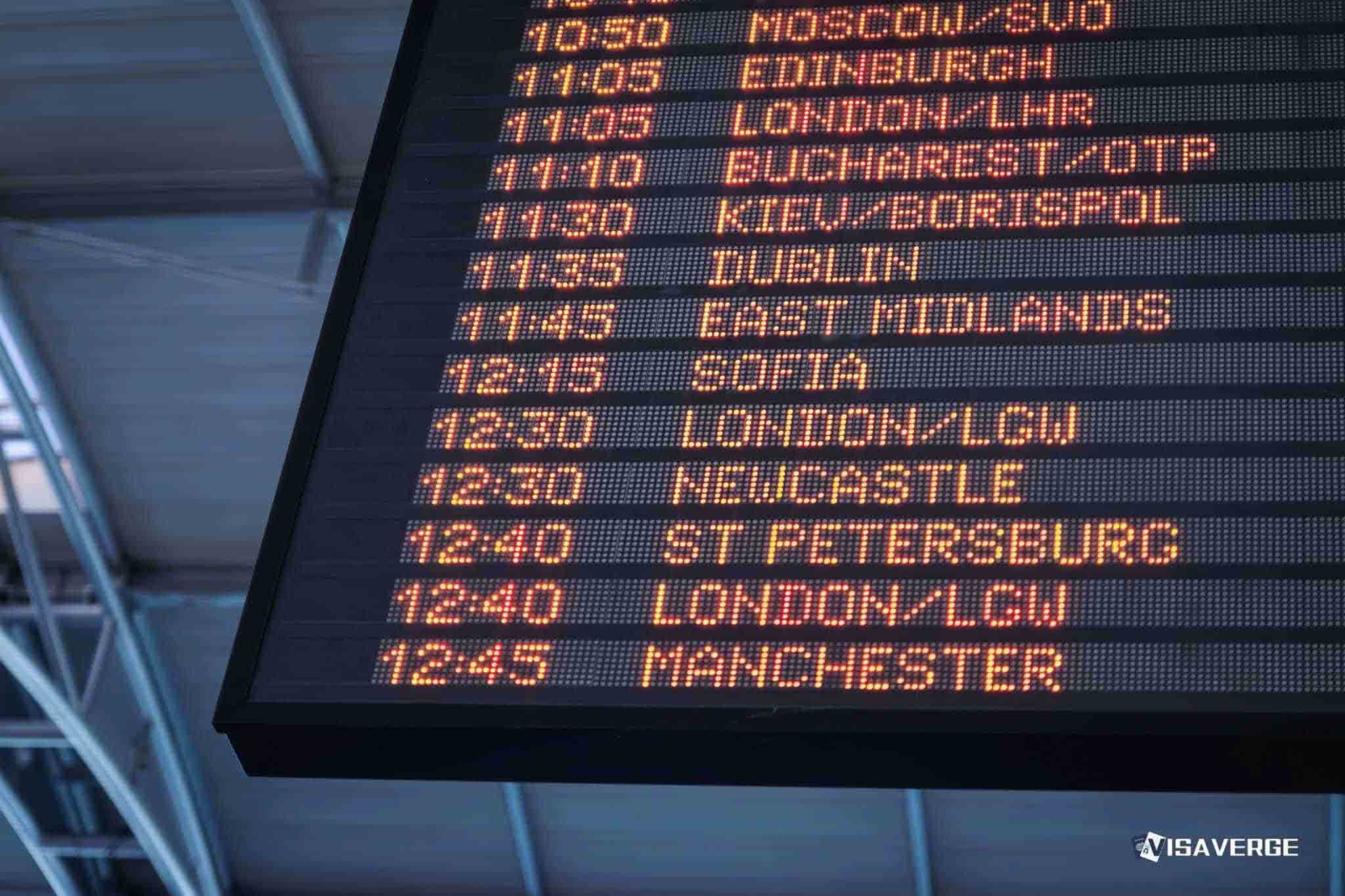
2. Scan departure screens frequently.
3. Pack light carry‑ons to ease gate changes.
4. Keep medications and essentials in hand luggage.
5. Keep both digital and paper copies of important documents.
Wider network implications
- Nationwide upgrades target bottlenecks identified in VisaVerge.com delay analyses: airport layouts, staffing shortfalls and coordination gaps.
- Delays have cascaded into snaking queues at passport control and overwhelmed ground handling, causing missed connections for domestic hops and island ferries.
- Small-island projects face material and logistics constraints; for example, Paros Airport’s projects were extended to April 2026 due to material shortages (VisaVerge.com).
Airline and traffic trends adding pressure
- Sky Express grew to AIA’s second-largest airline with 12% market share, up from 2.5% in 2019, and added routes to Berlin, Madrid, Lisbon, Hamburg and Lyon in late 2025 (VisaVerge.com).
- Greece is described by VisaVerge.com as Europe’s fastest-growing aviation hub, with 14% aircraft growth in recent years — intensifying pressure on airport operations and border processing.
Expected benefits of the upgrades
Primary operational targets:
– Quicker passport control queues during peak arrival flows
– Faster baggage delivery
– More reliable aircraft turnarounds to prevent delay cascades
Longer-term timeline:
– Nationwide resilience aimed by late 2028
– AIA expansion continuing through 2032
– Heraklion’s resurfaced runway expected to support higher‑volume operations after the January 19–26, 2026 restriction period
Key takeaways for travelers
- Build extra buffer time, especially for island connections during Heraklion’s closure window.
- Keep documentation accessible: boarding passes, rebooking confirmations, airline notes, onward reservations and employer letters.
- For time‑sensitive travel, email hosts/employers for confirmations and carry both digital and paper copies.
- Monitor airport sites and airline apps for the latest information, as airlines often notify passengers through apps first.
As Greece heads into another heavy travel year, the country’s main gateways are trying to keep pace with record passenger numbers while rebuilding the systems that move travelers from gate to baggage belt to border booth.
Greece is investing billions to upgrade its airport infrastructure, specifically targeting Athens International Airport and Heraklion. With Athens aiming for 50 million annual passengers by 2032 and Heraklion undergoing runway resurfacing in early 2026, the projects seek to alleviate overcrowding and chronic delays. These improvements include expanded terminals, automated biometric gates, and enhanced sustainability measures to handle the country’s rapid growth as a major European aviation hub.