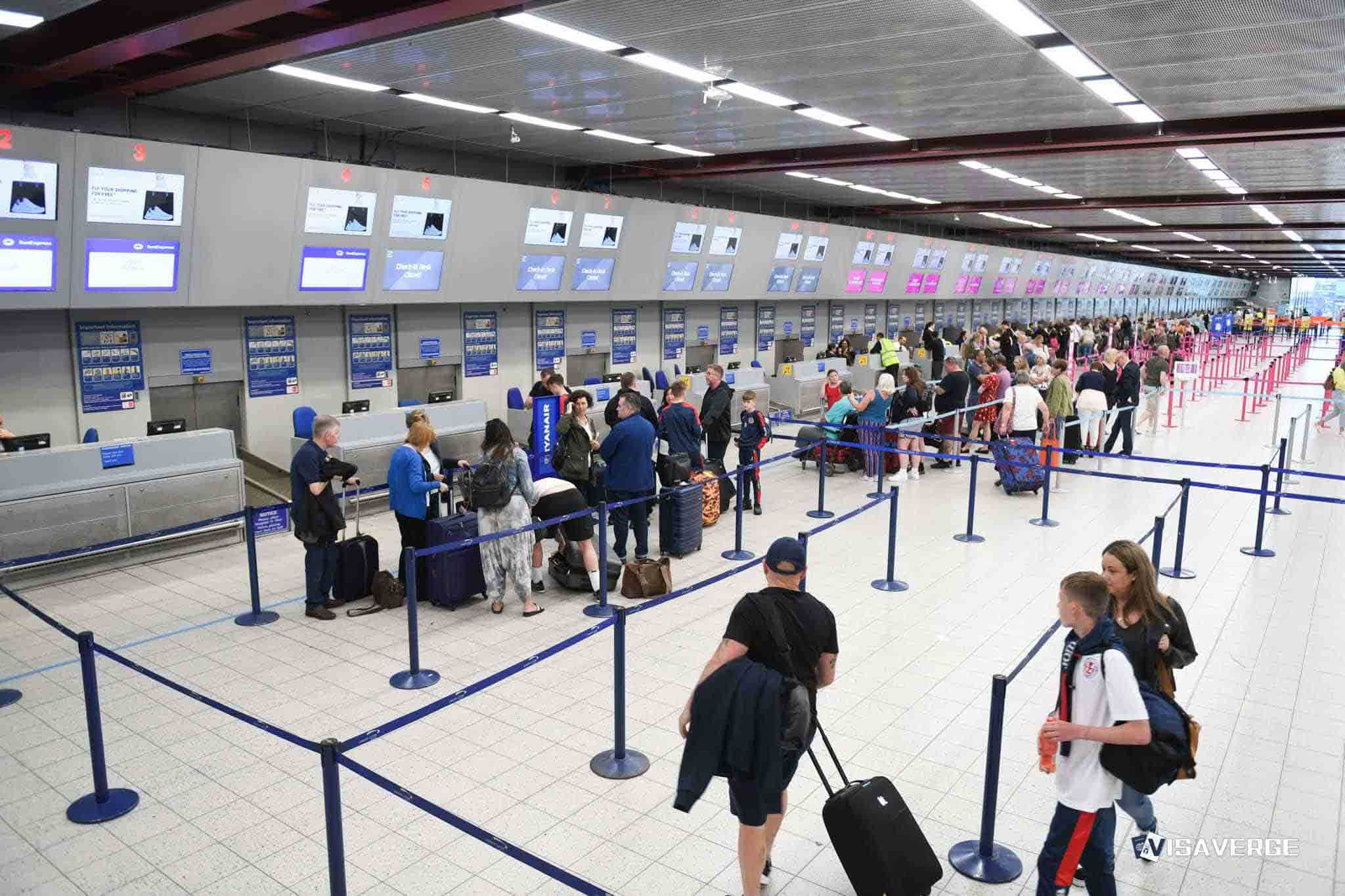
- The FAA is replacing aging 1980s radars to eliminate equipment-failure delays by mid-2028.
- RTX Collins Aerospace provides lower-risk integration for immediate stability at high-traffic hubs.
- Indra focuses on cyber security and domestic manufacturing for long-term air traffic resilience.
(UNITED STATES) — The FAA is finally ripping out decades-old radars, and that should mean fewer “mystery” delays caused by equipment failures. For travelers, the quickest takeaway is simple: RTX (Collins Aerospace) looks like the lower-risk, faster-on-ramp choice, while Indra is the bet on long-term resilience, cyber security, and U.S.-based manufacturing capacity.
If you fly often through busy hubs, both matter, because radar outages don’t just slow one airport. They can ripple across the network.

BNATCS, short for the Brand New Air Traffic Control System (BNATCS), is the umbrella for this push. The FAA’s early-January contract awards to RTX (Collins Aerospace) and Indra are a big piece of that plan.
The goal is to replace hundreds of aging ground-based radars, many dating to the 1980s, on an accelerated timeline that runs through mid-2028.
RTX vs. Indra at a glance (what matters to travelers)
| Category | RTX (Collins Aerospace) | Indra |
|---|---|---|
| What they’re delivering | Cooperative + non-cooperative radars for terminal and low-altitude surveillance | Next-generation surveillance radars designed for future traffic and cyber-secure operations |
| “Why you’d pick them” | Lower integration risk with today’s National Airspace System gear | Strong “build and sustain in the U.S.” posture with modern security and maintainability themes |
| Operational angle | Continuity and compatibility with existing interfaces and training | Long-term reliability, diagnostics, and supply-chain control through domestic production |
| Traveler-visible outcome | Fewer equipment-driven ground stops and flow restrictions at affected sites | Same outcome, plus stronger security and sustainment story over time |
| Timing narrative | Leans on a large installed base already in the NAS | Leans on proven overseas deployments plus U.S. production ramp-up |
| Best fit | “Stabilize fast” at high-traffic locations | “Modernize for decades” where sustainment and cyber hardening are top priorities |
1) BNATCS vision and scope: why the FAA is doing this now
BNATCS is the FAA’s high-speed modernization push across core air traffic systems. Radar replacement is the headline item, because it’s easy to understand.
When a radar fails, controllers lose a key surveillance input. That can trigger spacing increases, arrival rates cuts, ground stops, and reroutes.
The FAA’s own framing is blunt. Equipment-failure delays have jumped sharply, including a cited surge in 2025 compared with the prior long-run average. For you, that translates into the worst kind of delay: the delay with no weather to blame.
This is not just “new radars.” BNATCS is also a mindset shift. The agency wants fewer one-off configurations and more standardization to reduce training burden, parts complexity, and failure points when older components become hard to source.
A unified surveillance approach should help in three ways that matter on your next trip:
- Fewer equipment-outage ATC holds. Those are the delays that feel random at the gate.
- More predictable flow management. Stable surveillance supports smoother arrival rates.
- Better resiliency during peak periods. When the system is stressed, reliability matters more.
The replacement program is broad, and it runs through mid-2028. This is a multi-year “rolling” upgrade, not a single flip of a switch.
💡 Pro Tip: If you’re booking tight connections, prioritize hubs with strong on-time buffers. Radar work should reduce outage delays over time, but construction-era hiccups can still happen.
2) RTX (Collins Aerospace): what the award covers, in plain English
The RTX (Collins Aerospace) award centers on two surveillance modes that airlines rely on near busy airports: cooperative and non-cooperative surveillance.
Cooperative surveillance is when an aircraft helps ATC track it, through transponders and identity-rich returns. It’s the backbone for precise tracking in terminal airspace and supports stable spacing on arrivals and departures.
Non-cooperative surveillance is classic primary radar-style detection. It can “see” targets without onboard cooperation, which matters for safety, resiliency, and certain edge cases in low-altitude environments.
Terminals are complex: dense traffic flows, mixed-performance aircraft, and a need for constant tracking continuity. When surveillance inputs are stable, controllers can keep rates steadier; when they aren’t, you get bigger buffers and slower flows.
RTX’s biggest consumer-facing advantage is risk reduction through familiarity. Collins has a deep footprint in the National Airspace System already, which reduces integration pain across automation, displays, recording, maintenance tooling, and training.
- Fewer surprises during cutover. Compatibility can shorten transition time.
- More predictable maintenance. A mature support ecosystem helps uptime.
- Faster benefits at busy sites. Those are the places where minutes saved become real schedule integrity.
The policy-comparison tool on this page shows the exact contract value and system counts. The headline: it’s a large award tied to proven equipment types, with a focus on interoperability.
3) Indra: next-generation surveillance, cyber security, and U.S. production
Indra’s award is positioned around “next-generation” surveillance. In ATC terms, that usually boils down to three concrete themes: security, maintainability, and lifecycle support.
Why cyber-secure radar matters more now
Air traffic systems are critical infrastructure and face constant intrusion attempts. A modern radar program must assume persistent scanning and probing, supply-chain risks, and the need for regular patching without breaking safety certification.
Cyber-secure design is not only about encryption; it’s also about hardened update paths, controlled access, and the ability to sustain the system for decades.
Maintainability is the quiet win
Reliability is not just “it breaks less.” It’s also “it’s faster to fix.” Modern systems aim for better diagnostics, fewer single points of failure, and clearer swap-and-repair processes, which can reduce outage lengths.
Domestic production and jobs: why travelers should care
Indra’s Kansas City-area facility and job creation matter beyond headlines. Domestic manufacturing can shorten logistics chains for spares, reduce lead times for repairs, and keep sustainment consistent during global supply disruptions.
Indra also points to proven deployments in other countries, which can lower technical risk. U.S. certification and integration remain their own hurdle, so timeline friction is a risk if integration takes longer than planned.
⚠️ Heads Up: The early rollout phase can create localized delays. Airlines may pad schedules at affected airports before benefits show up.
4) Funding: contract totals vs. the bigger BNATCS bill
It’s tempting to look at the RTX and Indra awards and assume the job is “funded.” That’s not how programs like this work. Radar contracts are one slice of a broader modernization.
BNATCS includes communications, automation, facilities work, and Alaska-specific modernization. Deployment costs include site prep, telecom backhaul, redundancy, certification testing, and transition operations.
The FAA and DOT are describing current funding as a “down payment.” That signals a multi-year appropriations story, with future dollars needed to keep the rollout on schedule.
Why should travelers care about funding mechanics?
- Sequencing depends on money arriving on time. If funding slips, the FAA can delay lower-priority sites.
- High-traffic airspace gets attention first. That’s good for network reliability but can leave smaller sites waiting.
- Near-term gains will be uneven. You may see improvements at one hub while another still runs legacy gear.
The funding tool on this page breaks out the line items and totals. The traveler takeaway is that this is a long-horizon build with real benefits, but it won’t land everywhere at once.
5) Timeline and rollout: what “rolling basis” really means
Installations are starting in early 2026, and the plan runs through mid-2028. “Rolling basis” means the FAA will phase sites through a predictable sequence.
- Site selection and readiness. Power, shelter, comm links, and physical constraints.
- Installation and integration. Hardware is the easy part. Interfaces are the hard part.
- Testing and certification. Safety cases, operational testing, and reliability checks.
- Parallel operations and cutover. Redundancy matters. ATC does not do big-bang flips.
- Training and stabilization. Controllers and tech ops need repetition, not just manuals.
High-traffic areas tend to go first because the payoff is bigger: one radar outage near a major hub can snarl hundreds of flights. Fixing that site yields outsized network reliability gains.
What will you notice as a passenger? Not a shiny “new radar” announcement at the gate. The early signal will be subtler: fewer days where ATC restrictions pop up on clear-sky afternoons due to equipment failures.
6) Leadership statements: what to watch that’s measurable
DOT and FAA leaders are emphasizing safety, reliability, and modernization speed. Vendors emphasize capability, trust, and U.S. jobs. Travelers should translate that into scorecards with measurable indicators.
- Fewer equipment outage events. Not “less delay,” but fewer outage-driven programs.
- Shorter recovery time when failures happen. Mean time to restore service is a big deal.
- Milestones hit on commissioning. You want steady site activations, not long pauses.
- Reduced configuration sprawl. Standardization is boring, and that’s the point.
Keep expectations realistic. Weather will still dominate delays in many seasons. The win here is reducing avoidable, technology-driven disruptions.
7) BNATCS beyond radar: the progress metrics that tell you if this is real
Radar is only one modernization bucket. BNATCS spans five categories: communications, surveillance, automation, facilities, and Alaska. Tracking only radar replacements misses dependencies that make radar useful.
The biggest hidden dependency is telecom. Surveillance data has to move reliably, and voice systems must be stable. Fiber replacement, radio deployments, and digital voice switching are unglamorous, but they enable everything else.
Governance matters too. BNATCS has a prime integrator role, with Peraton named for major integration phases. The hardest part of modernization is coordinating interfaces, testing, sequencing, and accountability across dozens of sites.
Oversight like the ROTOR Act discussion is worth watching because congressional attention tracks schedule risk, cost growth, and operational safety impacts near airports. That’s where modernization can clash with day-to-day traffic pressure.
The progress-indicators tool on this page shows exact counts for telecom and surface deployments. Those numbers are the “are we actually building?” proof points.
Choosing RTX vs. Indra: which approach fits your priorities?
This is not a consumer purchase, but it does affect your travel experience. Here’s a practical way to think about the two awards.
Choose RTX (Collins Aerospace) if you care most about near-term stability
RTX’s story is about continuity with today’s NAS environment, which tends to reduce cutover drama.
- faster integration with existing systems
- lower training and maintenance friction
- quicker reductions in outage-driven restrictions at big airports
Choose Indra if you care most about long-term sustainment and security
Indra’s story centers on modern security posture and a U.S. production base.
- supply-chain resilience and domestic sustainment
- cyber-hardening and modern update practices
- a system designed for future traffic growth and new air mobility concepts
The U.S. is not alone in replacing surveillance infrastructure. Europe and other regions have been modernizing incrementally for years, and Indra’s overseas deployments reflect that. The U.S. difference is scale, complexity, and the pace BNATCS is promising.
If BNATCS hits its dates, it will be one of the more aggressive timelines among large, complex airspace systems.
What this means for your miles, points, and status plans
BNATCS won’t change award charts, but it can change the reliability math behind how you book.
- Tight connections become slightly less risky over time. That helps when you’re chasing same-day mileage runs.
- Fewer ATC equipment meltdowns can reduce misconnects. That protects upgrade instruments and premium cabin awards.
- Irregular operations still happen. Weather remains the big driver; keep buffers on last flights of the day.
If you’re booking with points, the play is still the same: take earlier flights when possible, avoid ultra-tight international-to-domestic connections, and protect high-value awards with same-alliance backups.
BNATCS is a rare kind of aviation story: it’s “infrastructure news” that should show up in your on-time percentage. If you’re planning heavy travel in 2026 and 2027, watch which airports are first in line for commissioning, then book tighter connections only after those sites show steady performance for a full season.
The FAA’s BNATCS program is overhauling the U.S. radar infrastructure to curb rising equipment-related delays. Through dual contracts with RTX and Indra, the agency is balancing immediate system stability with long-term cyber security and domestic supply chain resilience. Installations begin in early 2026, targeting a 2028 completion to ensure smoother transitions and higher reliability across the nation’s busiest aviation hubs.