- Ryanair CEO O’Leary rejected Starlink internet installation for the airline’s fleet of over 600 Boeing aircraft.
- The airline claims antennas would create a two percent fuel penalty costing millions annually.
- Elon Musk responded by calling the CEO an idiot and disputing the fuel impact data.
Ryanair just signaled, very publicly, that free fast Wi‑Fi isn’t a priority right now. If you pick flights based on staying connected, this spat with Elon Musk and Starlink matters because it could keep Ryanair flights offline—or push the airline toward a paid, limited option instead.
What you should do: treat “Wi‑Fi” as a per-flight feature, not an airline promise, and book accordingly if connectivity is part of your trip plan.

Why the Ryanair–Starlink spat matters to travelers
Starlink-style connectivity is satellite internet designed to deliver higher speeds and lower latency than older onboard systems. In plain terms, it’s the difference between basic messaging and something closer to “real internet” in the air.
Airlines look at satellite Wi‑Fi for a few reasons:
- Passengers increasingly expect connectivity, even on short hops.
- Reliable Wi‑Fi can sell higher fares in premium cabins.
- It can also drive loyalty, especially when it’s free or bundled.
Low-cost carriers judge add-ons differently than full-service airlines. Ryanair’s entire model is built around base fares and optional extras. A feature that adds cost to every flight can be hard to justify if most customers won’t pay for it.
That’s why this dispute isn’t just executive drama. It’s really about what ends up on your aircraft: Wi‑Fi availability, how much it costs, and whether it actually works.
Some airlines are moving in the opposite direction. Air France has committed to free Starlink Wi‑Fi, and others are lining up behind the same idea. If Ryanair stays out, it risks feeling dated on a key comfort item.
Timeline of the feud (what happened and when)
Ryanair’s CEO Michael O’Leary and Elon Musk didn’t quietly disagree behind closed doors. This escalated fast and played out in public.
- Jan. 14, 2026: In a Reuters interview, O’Leary dismissed installing Starlink on Ryanair aircraft. He argued the antenna adds weight and drag.
- Jan. 15, 2026: On Newstalk radio, O’Leary doubled down with sharper language. He called Musk “an idiot,” and criticized X.
- Jan. 16, 2026: Musk responded on X, calling O’Leary an “utter idiot” and saying Ryanair should fire him. Ryanair’s official account also joined the sparring.
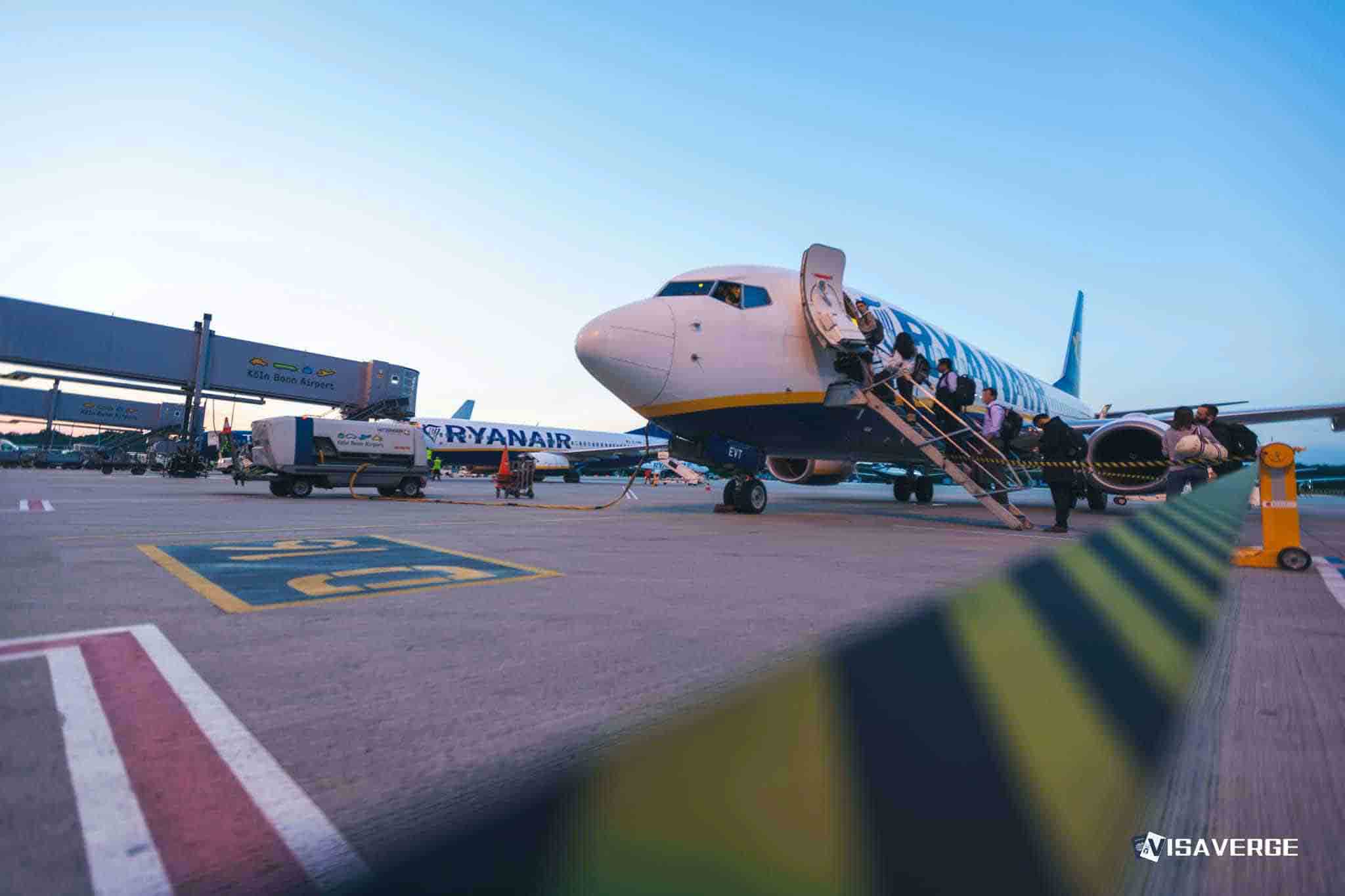
The operational backdrop matters. Ryanair operates a fleet of 600+ Boeing 737s, with the 737‑800 as a core workhorse. Any fleetwide change multiplies quickly across aircraft, flights, and fuel bills.
Starlink cost claims vs. counterclaims (how to evaluate them)
Here’s the policy change in practical terms: Ryanair’s CEO publicly reaffirmed the airline’s stance that it won’t install Starlink, citing fuel costs. Starlink’s side says the fuel impact is far smaller.
Before/After: where Ryanair stands on onboard connectivity
| Before (expectation) | After (as of Jan. 16, 2026) | |
|---|---|---|
| Ryanair position on Starlink | No public commitment to add it | Public rejection, framed as too costly |
| Claimed fuel impact | N/A | O’Leary: 2% fuel penalty |
| Claimed annual cost impact | N/A | O’Leary: $200–$250 million per year |
| Passenger price implication | N/A | O’Leary: about $1 per passenger on ~1-hour flights |
| Starlink counterclaim | N/A | Starlink: about 0.3% fuel increase on 737‑800 |
| Musk’s claim | N/A | Musk: could be below 0.1% |
So what does “2% fuel penalty” really mean for you? O’Leary framed it as roughly $1 extra per passenger on Ryanair’s typical short-haul flights averaging about one hour. If Ryanair thinks customers “won’t pay for Wi‑Fi,” that $1 has nowhere to go except higher fares or fees.
Starlink argues the penalty is closer to 0.3% on the 737‑800, and Musk suggested it could fall below 0.1%. If Starlink’s numbers are closer to reality, the “per passenger” math shrinks a lot.
Both arguments can be plausible because small changes in drag and weight do matter. The antenna, radome, installation, and certification all add complexity. Fuel sensitivity also depends on:
- Route length and typical cruise time
- Fuel prices in a given quarter
- Aircraft utilization and scheduling
- Whether the system drives new revenue onboard
Airlines ultimately decide on total cost of ownership. They also look at ancillary revenue potential and customer satisfaction. Competitive pressure is a real factor too. United, for example, is betting big on connectivity with Starlink Wi‑Fi.
Public statements and rhetoric: separating signal from noise
Musk’s core message was business-focused, even if the language wasn’t. He pushed back on fuel claims and warned customers would choose rivals with onboard internet.
Starlink executives echoed that line with the 0.3% fuel figure for the 737‑800. Their goal is clear: make the cost argument feel small enough that “free Wi‑Fi” becomes an easy decision.
O’Leary’s approach was different. He mixed cost objections with repeated insults. Ryanair’s social channels also leaned into the trolling, including mocking Musk during an X outage.
For travelers, the key is separating headlines from what will change onboard. Public fights can run for weeks while engineering and procurement decisions move slowly. The loudest quote rarely decides what gets installed on 600 airplanes.
What passengers actually get from in‑flight Wi‑Fi (and what to expect on low-cost carriers)
Most passengers don’t need “perfect internet.” They want something predictable. Your needs usually fall into a few buckets:
- Messaging: iMessage, WhatsApp, Signal, and similar apps
- Email and light browsing: basic work tasks and confirmations
- Streaming and social video: heavy data use, more prone to throttling
- VPN and real work: sensitive to latency, captive portals, and dropouts
Even with satellite internet, you can still hit common constraints. Expect some mix of coverage gaps, congestion at peak times, device limits, blocked services, and clunky payment flows.
On low-cost carriers, Wi‑Fi usually becomes another product. It’s often sold as:
- A time-based pass
- A tiered plan by speed
- A bundle with seats or priority services
- An ad-supported experience
This fits the same logic covered in the great unbundling across budget airlines. Connectivity becomes a line item, not a guaranteed amenity.
Amenities List (typical Wi‑Fi realities to expect):
- Coverage gaps
- Congestion
- Device limits
- Blocked services
- Payment flow
- Portal authentication
Also remember: onboard connectivity is still tied to onboard rules. Airplane mode remains required, even if Wi‑Fi is strong. The confusion is common, which is why airplane mode keeps coming up in cockpit Q&As.
Mileage and points angle: Ryanair doesn’t run a traditional miles program, so you won’t “earn more” from Wi‑Fi. The real play is using a travel rewards card that reimburses onboard purchases, if your issuer codes it as travel.
Governance, EU ownership rules, and what happens next (Ryanair’s incentives)
Musk joked about buying Ryanair to remove O’Leary. That runs into a hard wall in Europe. EU airlines must be 51% EU-owned and EU-controlled, which complicates any non‑EU takeover scenario.
Governance matters because major partnerships and fleet mods are long-term commitments. They touch regulators, aircraft certifiers, and supplier contracts. Even if executives tweet at each other, the internal process stays slow.
Ryanair’s negotiating posture also reflects its strength. O’Leary has run the airline since 1994 and owns about 4%. Ryanair carried 206 million passengers in 2024, and it sells fares as low as €15 ($17.40). The airline also posted €1.72 billion after-tax profit in its latest quarter, up 20% year over year.
That context sits behind stories like O’Leary’s possible €100M bonus and Ryanair’s role in Ireland’s aviation lead.
Near term, three outcomes are most likely:
- Continued public sparring, with no immediate cabin change
- A limited trial on a subset of aircraft
- A delayed rollout, or a decision to skip Starlink entirely
📅 Key Date: Jan. 14–16, 2026 is when Ryanair’s leadership publicly reinforced the “no Starlink” stance and traded remarks with Elon Musk.
⚠️ Heads Up: Don’t book Ryanair assuming Wi‑Fi will appear soon. Plan as if you’ll be offline on short-haul flights.
If you need connectivity on a specific trip, verify Wi‑Fi at booking and again at check-in, since aircraft swaps happen. For work trips, pick carriers already committed to fast satellite Wi‑Fi, and save Ryanair for flights where the low fare matters more than being online.