- Middle East airspace closures are disrupting Africa and Southeast Asia carriers like Ethiopian and Garuda.
- Travelers should consider Ethiopian Airlines as a top fallback due to its resilient Addis Ababa hub.
- Over 1,800 flights are affected, with suspensions extending until further notice for many regional routes.
(DUBAI) — Middle East airspace closures are now hitting Africa and Southeast Asia carriers hard, and if you’re booked via Dubai, Doha, or Abu Dhabi this week, you should expect last-minute cancellations and longer reroutes. For most travelers, Ethiopian Airlines is the best “Plan B” airline thanks to its large Addis Ababa hub and broad long-haul network, while Kenya Airways is a solid fallback for East Africa once UAE flying resumes.
This disruption moved fast starting Feb. 28, 2026, with EgyptAir, Garuda Indonesia, Kenya Airways, and Ethiopian Airlines suspending or canceling multiple Middle East services. The near-term outlook is volatile. Airlines are making safety-first calls that can change within hours.
Overview: why this crisis is now disrupting airlines beyond Europe and Asia
When tensions spike, airline operations don’t change on a neat schedule. They change when the risk picture changes.
Here’s why it can shift so quickly:
- NOTAMs and security advisories can restrict entire flight corridors with little warning.
- Airlines then run internal safety and insurance assessments. Those can trigger route pauses even if airports reopen.
- Disruptions cascade because aircraft and crews are rarely “in the right place” after a closure.
- Hubs amplify problems. A single hub day can involve hundreds of arrivals and departures.
In the next 24–72 hours, the most common traveler-facing problems will look like this:
- Suspensions “until further notice,” which can extend day-by-day.
- Last-minute cancellations even for flights that looked “on time” earlier.
- Reroutes around restricted airspace, which add flight time and fuel.
- Missed connections, especially on tight hub itineraries.
- Overnight holds if crews time out or aircraft get displaced.
If you’re starting from Dubai, the pain is sharper. Dubai is a mega-connector, not just an endpoint.
Side-by-side comparison: which airline is the best choice right now?
The “best” airline in a crisis is usually the one with (1) the most rebooking options, (2) the strongest partner network, and (3) the most resilient hub.
Here’s the practical comparison for EgyptAir, Garuda Indonesia, Kenya Airways, and Ethiopian Airlines.
| Factor | EgyptAir | Garuda Indonesia | Kenya Airways | Ethiopian Airlines |
|---|---|---|---|---|
| Home hub | Cairo (CAI) | Jakarta (CGK) / Denpasar (DPS) | Nairobi (NBO) | Addis Ababa (ADD) |
| Alliance | Star Alliance | SkyTeam | SkyTeam | Star Alliance |
| Current disruption pattern | Multiple Middle East route suspensions affecting Gulf connectivity | Doha suspended; other routes generally continue | Dubai and Sharjah halted, including cargo, “until further notice” | Multiple Middle East cancellations tied to security situation |
| Best for during disruption | Africa–Europe via Cairo, when Gulf connections aren’t required | Indonesia travel that doesn’t rely on Doha transfers | East Africa connections via Nairobi once UAE routes reopen | Africa–global connections via Addis with many frequency alternatives |
| Miles strategy | Strong Star Alliance earning and redemptions | SkyTeam earning; redemption value varies widely by program | SkyTeam earning; useful for Delta/Air France-KLM crediting | Strong Star Alliance earning and redemptions |
| Comfort “safe pick” | Varies by aircraft; check seat maps per flight | Often a strong onboard product on flagship long-haul | Mixed fleet; focus on schedule reliability first | Generally consistent long-haul experience; prioritize operational resiliency |
| Who should avoid | Travelers needing Dubai/Doha/Abu Dhabi transfers now | Anyone whose itinerary requires Doha | Anyone who must transit the UAE immediately | Travelers whose itinerary requires affected Middle East points |
Airline-specific suspensions: what’s paused, what still flies, and what it means for you
The most important thing to know is the language airlines use.
- “Until further notice” usually means the airline will review daily. It can extend repeatedly.
- A fixed end time can still change. Recovery logistics can force cancellations beyond the window.
EgyptAir: multiple Middle East routes suspended
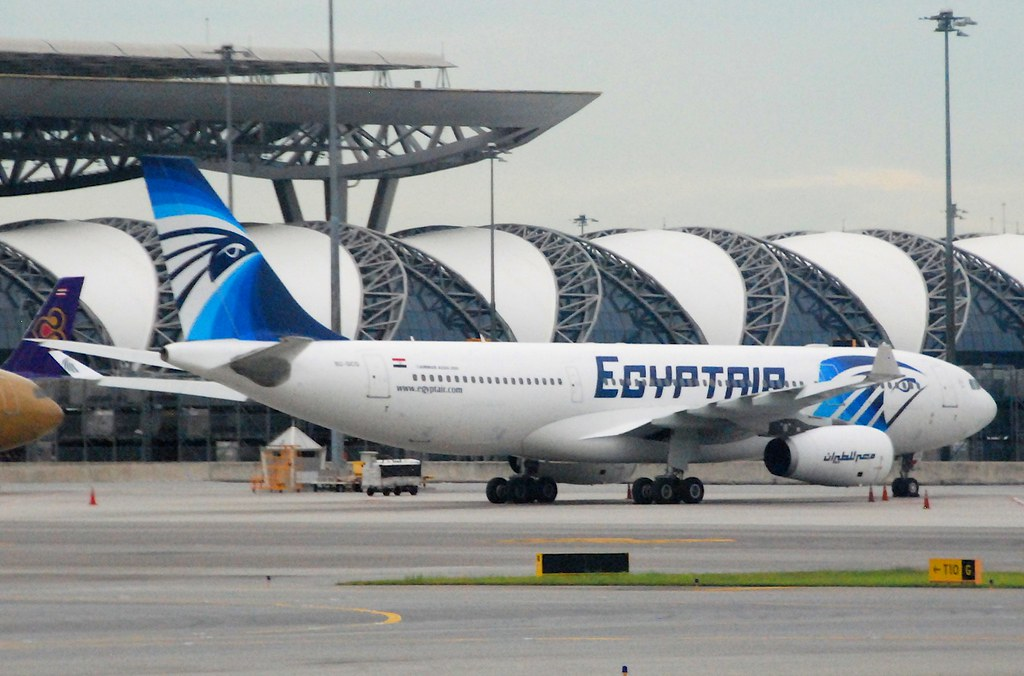
EgyptAir has suspended several Middle East routes, including Dubai, Doha, Manama, Abu Dhabi, Beirut, and Baghdad.
What this means if you connect via Cairo:
- Cairo is a strong connecting hub for Africa, Europe, and parts of the Middle East.
- But if your itinerary relied on Cairo → Gulf as your second leg, you may lose the entire trip.
- You may be offered rebooking via alternate points that still have operating corridors, or a refund.
Practical rebooking pathways:
- If your final destination is not in the Gulf, ask to be rerouted via Cairo to Europe, then onward.
- If your final destination is in the Gulf, be ready for a wait. Inventory can vanish quickly.
Mileage and status angle:
- EgyptAir is in Star Alliance, so credits can be valuable.
- If you’re chasing Star Alliance-related status, rebooking onto Star partners can protect earnings.
Garuda Indonesia: Doha suspended, other routes continuing
Garuda Indonesia has suspended Doha “until further notice,” while stating other services continue.
This is a classic “one spoke down” problem:
- If Doha was your bridge between Southeast Asia and onward travel, your ticket may break mid-journey.
- Even if your long-haul flight still operates, your onward ticket validity can become the issue.
What to do if you were transiting:
- Confirm whether your itinerary was single-ticket or separate tickets.
- Single-ticket travelers usually have better rebooking protection.
- Separate tickets can mean you’re on the hook for missed onward flights.
Miles and points angle:
- Garuda is in SkyTeam.
- If you credit to Flying Blue or Delta, keep an eye on rebooked fare classes.
- Some rebookings can post differently for miles and status credit.
Kenya Airways: Dubai and Sharjah halted (passenger and cargo)
Kenya Airways has halted Dubai and Sharjah services “until further notice,” including passenger and cargo flying.
This hits harder than it sounds:
- Nairobi is a major hub for East Africa connections.
- UAE routes also matter for business traffic and freight.
- When cargo schedules get pulled, passenger recovery can slow. Aircraft rotations get messy.
If you’re connecting via Nairobi:
- You may still reach Nairobi, then get stuck for the UAE leg.
- If Dubai was just a connection point, ask Kenya Airways to reroute you via another stable hub.
Miles and status angle:
- Kenya Airways is SkyTeam.
- If you’re building SkyTeam status, rebooking onto another SkyTeam carrier can preserve your qualification path.
- Keep boarding passes until miles post. Irregular operations create posting errors.
⚠️ Heads Up: Don’t travel to the airport on a “normal” schedule during mass cancellations. Confirm your flight is operating first.
Ethiopian Airlines: cancellations to several key points
Ethiopian Airlines canceled service to Amman, Tel Aviv, Dammam, and Beirut due to the security situation.
Why this matters beyond those cities:
- Addis Ababa is a high-frequency hub with many onward options.
- When a few spokes cancel, Ethiopian can often still reroute you.
- But seats can tighten quickly as other airlines also reroute through safer corridors.
If you’re booked on Ethiopian right now:
- Ask for rebooking that keeps you on a single ticket to your final destination.
- A single protected itinerary is your best shield against missed connections.
Miles and points angle:
- Ethiopian is Star Alliance, which is useful in a crisis.
- If you hold Star Alliance Gold, you may keep lounge and priority benefits even on rebookings.
- That can matter when airports are crowded and rebooking lines are long.
Broader regional impact: why Dubai, Doha, and Abu Dhabi disruptions hit everywhere
This isn’t a small operational hiccup. More than 1,800 flights were canceled across the region, making it one of the biggest shocks since COVID-era disruptions.
Major hubs matter because they concentrate connections:
- Dubai is a global transfer engine. When it slows, seat availability evaporates worldwide.
- Doha is similarly connection-heavy, especially for Africa–Asia flows.
- Abu Dhabi can become a pressure valve, but only if airspace and staffing allow.
Rerouting is not just “take a different path.” Airlines must manage:
- Avoiding specific flight information regions and restricted corridors.
- Fuel planning for longer tracks and potential holding.
- Crew duty limits, which can force en-route diversions or cancellations.
- Aircraft being in the wrong city for the next day’s schedule.
What you’ll notice when booking or rebooking:
- Longer travel times, sometimes with odd departure times.
- Fewer seats, especially in premium cabins.
- Fare volatility, because remaining routings become scarce.
- More itineraries that look legal but are high-risk for misconnects.
Other notable airline actions and timelines: the Saudia example
Saudia announced a time-boxed suspension to several cities, with a cutoff listed as 23:59 UTC on March 2.
UTC matters because it may not match the local date on your ticket:
- A flight departing shortly after midnight local time could still fall within a UTC window.
- A flight that “looks” like March 3 locally might be March 2 in UTC.
Even inside a posted window, schedules can still change:
- Aircraft and crews may be out of position.
- Airlines may prioritize repatriation or high-demand routes first.
- Airports can reopen while airspace remains constrained.
The best places to verify changes:
- The airline app and manage-booking page first.
- SMS and email alerts, if you’re subscribed.
- Airport departure boards, but treat them as secondary during fast-moving events.
Government and regional responses: how to use advisories without guessing
Kenya’s government and the African Union have urged caution and de-escalation. For travelers, those signals matter because they influence airline risk posture.
What to do with official advisories:
- Check your passport country’s travel advice for transit areas, not just the destination.
- Watch civil aviation updates, especially around airspace restrictions.
- Be prepared for sudden changes in transit permissions and security procedures.
What can change quickly:
- Whether airlines are willing to overfly certain corridors.
- Insurance constraints that trigger route pauses.
- Airport processing times, including extra screening.
Practical guidance: a step-by-step plan if you’re affected
- Confirm flight status before you move. If widespread cancellations are ongoing, do not assume your flight is operating.
- Prioritize getting to a stable hub. In this region-wide disruption, hubs with broad onward options matter more than brand loyalty.
- Rebook for resilience, not speed. Choose longer connections. Add buffer time. Protect your onward flights.
- Decide refund vs. rebooking based on your trip purpose.
- If the trip is discretionary, refunds can be cleaner.
- If you must travel, accept a reroute that keeps you on one ticket.
- Document everything. Take screenshots of cancellation notices. Keep receipts for hotels and meals. Save boarding passes and rebooking confirmations.
- Know what compensation rules really mean. Your rights depend on route, operating carrier, and disruption reason. Many regimes treat security events differently than controllable delays. Focus on practical outcomes: reroute, refund, and duty-of-care where applicable.
💡 Pro Tip: When rebooking, ask for the “next available flight with protected connections,” not the earliest departure.
Choose X if… scenarios for travelers starting from Dubai (or connecting through the UAE)
Choose Ethiopian Airlines if:
- You need the best chance at a workable reroute within 48–72 hours.
- You can connect via Addis Ababa instead of Gulf hubs.
- You want Star Alliance flexibility for miles and partner rebooking options.
Choose Kenya Airways if:
- Your trip is centered on East Africa and Nairobi connections.
- You can delay UAE segments until services restart.
- You credit to SkyTeam programs and want to keep your earning plan intact.
Choose EgyptAir if:
- Your itinerary can route through Cairo without relying on suspended Gulf legs.
- You want Star Alliance earning options and decent partner compatibility.
- You can accept that Middle East connectivity may remain patchy in the near term.
Choose Garuda Indonesia if:
- Your travel is Indonesia-focused and does not require Doha.
- You can route via other gateways and keep a single ticket.
- You want to avoid risky self-connects during this period.
The smartest move today is to reprice your trip around a stable connection point and book with longer buffers. If you’re exposed to time-boxed suspensions, treat March 2 at 23:59 UTC as a hard planning line, and lock in a protected reroute before seats disappear.