- Air Transat will suspend all U.S. flights by mid-June 2026, impacting Montreal-based leisure travelers.
- Final flights to Orlando and Fort Lauderdale are scheduled for May and June 2026 respectively.
- Travelers should consider Air Canada or WestJet as reliable alternatives for summer 2026 U.S. travel.
Air Transat is exiting the U.S. market for summer 2026, so if you were counting on nonstop Florida flights from Montreal, you’ll want to lock in an earlier date or switch carriers now. For most travelers, Air Canada is the safest replacement for schedule stability and flight options, while WestJet can still work if you’re fine connecting through its hubs and watching for further cuts.
Air Transat’s U.S. suspension: what’s changing, and who should care
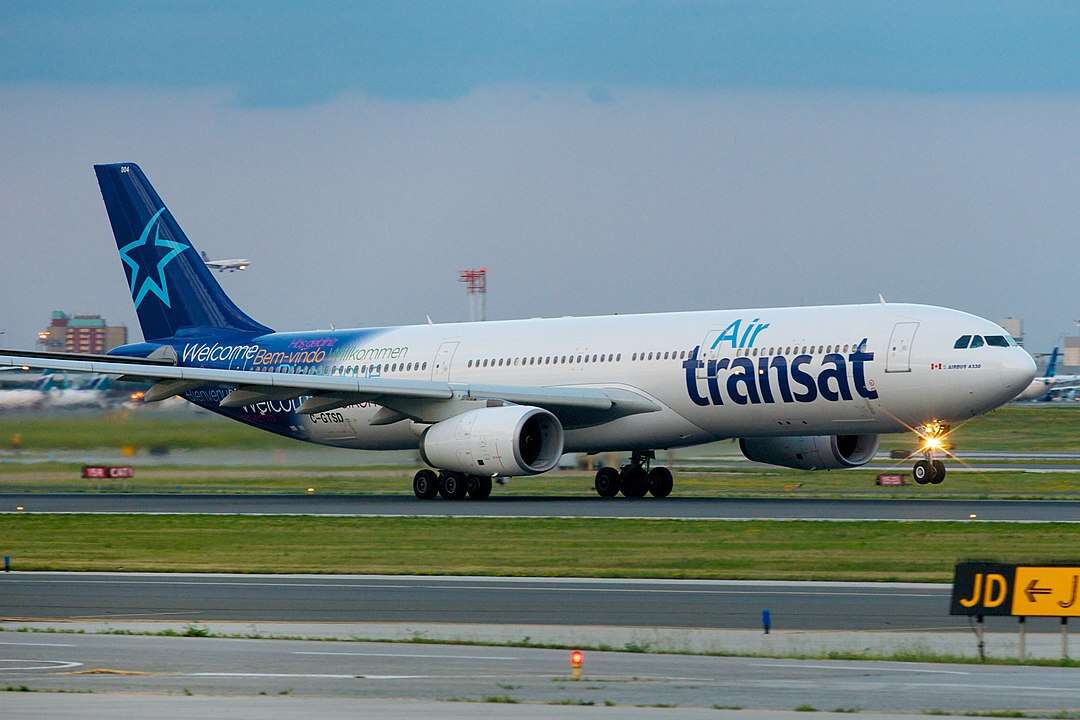
Air Transat is suspending all flights to the U.S. starting spring 2026, with its final U.S. departures ending by mid-June 2026. In plain English, that means there will be no Air Transat-operated flights to the U.S. after the final dates, so you should not plan on Air Transat for summer 2026 Florida travel.
The one exception is two flights to San Juan (Puerto Rico) in December 2026. Puerto Rico is a U.S. territory, but it’s not going to help if your goal is Orlando or Fort Lauderdale.
This hits a few groups hardest:
- Montreal-based leisure travelers who liked simple nonstop Florida flights.
- Anyone with a connecting itinerary built around an Air Transat U.S. segment.
- Families traveling during school breaks, who often plan far ahead.
Schedules can still shift as the cutoff approaches. Plan as if these routes won’t be there for summer 2026.
⚠️ Heads Up: If you already booked Air Transat to Florida for late spring or summer 2026, check your reservation weekly. Route suspensions often trigger schedule changes before the final cancellation notice.
The last Air Transat U.S. routes (and what the end dates really mean)
Air Transat has pulled its remaining three U.S. routes from sale. Here are the final operating dates that matter if you’re planning from Montreal or nearby.
| Route | Final scheduled operating date |
|---|---|
| Montreal (YUL) → Orlando (MCO) | May 4, 2026 |
| Quebec City (YQB) → Fort Lauderdale (FLL) | May 30, 2026 |
| Montreal (YUL) → Fort Lauderdale (FLL) | June 13, 2026 |
How to read these cutoffs before you book
These dates are best treated as the last planned departure dates, not a promise that every flight will operate exactly as published.
A few practical implications:
- If your trip straddles the cutoff, your outbound might still run while your return gets changed.
- The “final date” can move earlier if the airline consolidates flights.
- If you see a major schedule change, act quickly. Rebooking options tend to be best early.
Also, don’t forget the basics for U.S. entry. You’ll want to confirm your passport validity and any required authorizations well before departure, especially if you rebook onto a different routing.
Why would Air Transat walk away from the U.S. at all?
This is the part that surprises casual flyers. Air Transat is Montreal-based, and Florida is a classic Canadian leisure market. Still, Air Transat says its U.S. flying is only about 1% of total capacity, spread across a network of 67 destinations.
When a route category is that small, it’s often the first place an airline trims. Planes are finite, and airline scheduling is a constant juggling act. The goal is to keep aircraft flying where the returns look best.
Air Transat’s rationale is straightforward: it’s managing capacity proactively and focusing on stronger-performing regions like:
- Europe
- The Caribbean
- Mexico
Air Transat spokesperson Marie-Ève Vallières also confirmed the Florida pullback is for the 2026 summer season, with a gradual wind-down in spring. She added that winter 2026–2027 Florida scheduling will be decided later.
That wording matters. It leaves the door open to a seasonal return. It does not guarantee one.
The wider Canada–U.S. demand slump (and why airlines react fast)
Air Transat isn’t making this move in a vacuum. Canada–U.S. demand has softened sharply.
Statistics Canada reported 1.6 million Canadian-resident return trips from the U.S. in January 2026, down 24.3% versus January 2025. The breakdown is telling:
- Car trips: down 26.8% to 1.1 million
- Air trips: down 17.8% to 493,400
For airlines, the air decline matters most. But the car decline also signals something broader. Many Florida trips are discretionary. When sentiment drops, so does demand.
The factors cited include February 2025 tariffs and political friction. Airlines respond the same way they always do when demand weakens:
- redeploy aircraft to markets selling better
- trim frequencies
- cut seasonal routes first
Month-to-month stats can swing. Still, a drop this big makes airlines cautious for summer planning.
Your options now: Air Transat vs Air Canada vs WestJet (and how to protect yourself)
If you were planning Air Transat flights to the U.S. from Montreal, you now have three realistic paths:
- Fly Air Transat before the cutoff
- Rebook onto another airline for summer 2026
- Change your destination to where Air Transat is still strong (Caribbean, Mexico, Europe)
Air Transat also isn’t alone. WestJet is cutting 15 Canada–U.S. routes for summer 2026, which reinforces the theme: transborder leisure flying is getting trimmed.
Side-by-side comparison: which airline is the best replacement?
This table focuses on what matters for travelers based in Montreal who want flights to the U.S., especially Florida.
| Category | Air Transat | Air Canada | WestJet |
|---|---|---|---|
| Best for | Last-chance nonstop Florida dates in spring 2026 | Most options and schedule depth year-round | Often decent pricing, especially if you can connect efficiently |
| Montreal (YUL) fit | Historically strong leisure departures | Major hub carrier with broad U.S. network | Montreal is not its core hub, but options exist via connections |
| Summer 2026 U.S. outlook | Not available after mid-June 2026 | Strongest bet to keep flights operating | Cutting routes; still viable, but watch schedules closely |
| Connections | Limited when routes end | Many routings via hubs | Many routings via hubs, but depends on the city pair |
| Loyalty angle | Can matter if you earn/redeem through partner programs tied to Air Transat | Aeroplan is widely usable, with many partners | WestJet Rewards is simpler, but fewer global partners |
| Reaccommodation in disruptions | Depends on remaining network and partner options | Typically more same-day alternatives | Can be solid, but depends on frequency on your route |
What to expect if your Air Transat flight changes or cancels
When a route is suspended, airlines typically do a few things:
- send an email or app notification
- offer a choice between rebooking and reimbursement
- set a deadline to accept an option
Treat every message like a ticking clock. The best rebooking inventory goes first.
Keep your own paper trail, too:
- screenshots of the original itinerary
- email confirmations
- any chat transcripts or agent notes
- receipts for added costs tied to the disruption
Those documents matter if you later need to contest a refund amount or file an insurance claim. They also help if your credit card trip coverage asks for proof.
💡 Pro Tip: If your Air Transat flight is moved or canceled, price out alternatives the same day. Even if you accept a refund, you’ll want a backup before fares jump.
Miles and points: don’t sleep on the loyalty angle
This change has a real points impact, especially if you’re Montreal-based and used Air Transat as a leisure workhorse.
A few points to keep in mind:
- Air Canada (Aeroplan): If you switch to Air Canada, you’re earning into a program that’s easy to use across many partners. That can be a big plus for families building balances.
- WestJet Rewards: It can be straightforward for cash-like redemptions, but it’s less flexible outside WestJet’s own network.
- Air Transat loyalty/partner earning: If you were counting on earning through partner arrangements tied to Air Transat flights, those earning opportunities disappear on U.S. routes after the cutoff.
On redemptions, you may see a mixed effect. Fewer nonstop leisure seats can mean fewer easy bargains. But if demand is genuinely down, promos can still appear on remaining routes.
Use-case scenarios: choose X if, choose Y if
Choose Air Transat if…
- You can travel before May 4 (Orlando) or before June 13 (Fort Lauderdale from Montreal).
- You specifically want a nonstop from Montreal on those dates.
- You’re comfortable with the risk of a schedule change and you’ll monitor your booking.
Choose Air Canada if…
- You need summer 2026 flights to the U.S. and want the best chance your schedule holds.
- You want more same-day backup options if irregular operations hit.
- You care about building a broadly useful points balance through Aeroplan.
Choose WestJet if…
- The price is meaningfully better and the connection is reasonable.
- Your origin isn’t strictly Montreal, or you can position easily.
- You’ll keep an eye on the schedule, given the carrier’s own summer 2026 cuts.
Consider changing airports or dates if…
- You’re flexible and can drive to another Quebec or Ontario airport with better service.
- You can move the trip earlier into spring 2026 to grab Air Transat’s last nonstop window.
- You’re traveling with a big group and need to follow capacity where it exists.
How we got here: from a peak of nine U.S. routes to zero
Air Transat’s U.S. footprint had already been shrinking. Earlier this year, it operated nine U.S. routes at its March peak. It has now scaled down to zero for the post-spring 2026 period.
The next thing to watch is the winter 2026–2027 schedule, which the airline says will be decided later. If Florida returns, it’s most likely to come back seasonally. That would mirror how Canadian leisure demand typically behaves.
For now, treat Air Transat’s U.S. flying as a spring-only option. If you need Montreal-to-U.S. travel after June 13, 2026, start shopping Air Canada and WestJet now, and re-check your Air Transat booking if you’re still inside the final operating window.