- Germany and nine other nations reintroduced internal border controls across the Schengen area through 2026.
- Travelers face random identity checks at land, air, and sea borders due to security concerns.
- New digital systems like EES are tracking traveler biometric data to prevent overstays and fraud.
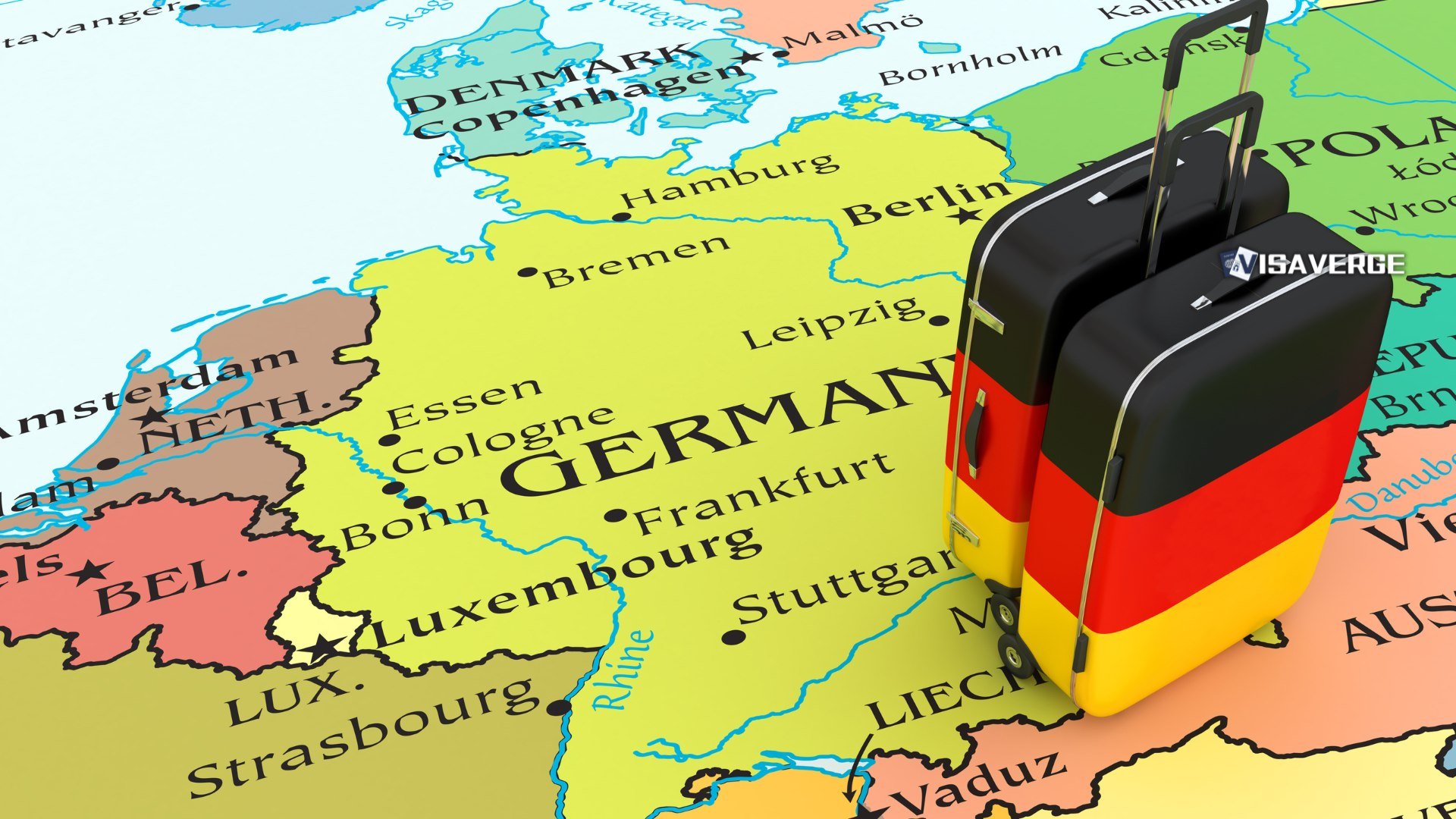
(GERMANY) — Germany is enforcing internal border controls on all nine of its land frontiers through September 15, 2026, part of a broader tightening across the Schengen area that now affects ten member states and is reshaping travel across Europe.
The measures apply at Germany’s borders with France, Luxembourg, Belgium, the Netherlands, Denmark, Austria, Switzerland, the Czech Republic, and Poland. German authorities cited continued serious threats to public security and order posed by high levels of irregular migration and migrant smuggling, strain on the asylum reception system, and the wider security climate tied to Russia’s war of aggression against Ukraine and instability in the Middle East and Central Asia.
Across Schengen, travelers now face a patchwork of checks that can mean longer waits, document inspections and questioning even on routes that once operated without routine border stops. The controls do not amount to full border closures, but they do suspend normal passport-free movement in affected corridors.
Ten Schengen countries have active internal border controls in place as of March 2026. Alongside Germany, Austria, Poland, Slovenia, Italy, France, the Netherlands, Denmark, Sweden and Norway have all extended or reintroduced checks for reasons that range from irregular migration and organized crime to terrorism threats and major public events.
Current Border Controls Across Schengen
Austria is maintaining checks at land and river borders with Slovakia and land borders with the Czech Republic, Hungary and Slovenia through June 15, 2026. Authorities there pointed to continuous threats linked to irregular migration via the Balkan routes, pressure on the asylum reception system and basic services, Russia’s ongoing war against Ukraine, and the security situation in the Middle East aggravated by terrorist groups.
Poland has extended controls through October 1, 2026 at its land borders with Germany and Lithuania. Polish officials cited persistent migratory pressure along both frontiers, especially irregular migration and migrant smuggling from Belarus at the Lithuanian-Polish border.
Slovenia is keeping checks at land borders with Croatia and Hungary through June 21, 2026. Its stated concerns include threats to public policy and internal security tied to the Winter Olympics in Italy, high levels of terrorist threats and organized crime, risks of terrorist infiltration through migratory flows via the Western Balkans, hybrid threats from the Russian Federation and Belarus, and instability in the EU neighborhood.
Italy has imposed controls at its land border with Slovenia through June 18, 2026. Italian authorities cited high levels of irregular migration, the strong presence of criminal smuggling and trafficking networks, risks of terrorist infiltration through irregular migration flows particularly along the Western Balkan route, and enhanced public safety risks during the Winter Olympic and Paralympic Games celebrations.
France is maintaining checks at all internal air and sea borders and at land borders with Belgium, Germany, Luxembourg, Switzerland, Spain and Italy through April 30, 2026. French officials said jihadist threats, antisemitic attacks and irregular migration at the Franco-British border drove the decision.
The Netherlands has checks at land borders with Belgium and Germany and at intra-Schengen air borders through June 8, 2026. Dutch authorities cited serious threats to public policy from high levels of asylum applications, irregular migration, migrant smuggling and secondary movements, along with overburdening of the migration and asylum systems, particularly reception capacity.
Denmark is maintaining checks at land and sea borders with Germany through May 11, 2026. The government cited serious threats to public policy and internal security due to possible sabotage actions from Russia, the continuous threat of terrorism and organized crime in connection with the Israeli-Hamas conflict, and group radicalization that could lead to attacks on Jewish and Israeli targets.
Sweden has implemented controls at all internal borders, by land, air and sea, and Denmark through May 11, 2026. Swedish authorities pointed to serious threats to public policy and internal security stemming from organized cross-border crime and other criminal activities, the involvement of foreign state actors leveraging criminal gangs, and persistent threats from violent Islamist groups and individuals.
Norway is maintaining controls at ports with ferry connections to the Schengen area through May 11, 2026. Norwegian authorities cited threats targeting the energy sector, risks of sabotage in connection with the war in Ukraine, and measures to increase protection of critical infrastructures.
Legal Basis for the Controls
The legal basis for the measures comes from the Schengen Borders Code, which allows member states to temporarily reintroduce border control in cases tied to terrorism or organized crime, high-scale public health emergencies, massive and unauthorized movements of third-country nationals between Schengen states, and major or high-level international events.
Under those rules, border control must remain a last resort measure used in exceptional circumstances. Its scope and duration must be proportionate to the level of threat and restricted to what is absolutely necessary to contain it.
For foreseeable cases of serious threat, member states can reestablish border control for 30 days, renewable in further 30-day periods for no longer than 6 months. In exceptional circumstances, that can be prolonged up to 2 years maximum. For unforeseeable threats demanding immediate action, a member state can reintroduce control for 1 month, with renewals that cannot exceed 3 months.
Once a country reestablishes border control, it must notify simultaneously the European Parliament, the European Council, the European Commission and all Schengen countries. The code also says that prerogative of member states cannot be disputed by any European authority or other state.
What Travelers Can Expect
On the ground, the checks are random and non-systematic rather than full shutdowns of crossings. Law enforcement officers can stop travelers in case of suspected breach, ask for identification, check data through the Schengen Information System, verify whether alerts exist against a traveler, and review visa validity dates.
That means travelers moving within Schengen should carry a valid ID document at all times, including a passport or national identification card. Border authorities may also ask about travel plans, including purpose and duration, to ensure compliance with Schengen entry rules.
Visa-exempt travelers remain limited to staying no more than 90 days within a 180-day period in the Schengen zone. Delays are expected to be most noticeable at busy crossings and transit points, particularly during holiday periods and other peaks in travel demand.
EES and ETIAS Changes
Alongside the return of internal border controls, the European Union’s Entry/Exit System, or EES, is now operating across the Schengen area in stable technical conditions. The system tracks short stays by visitors from outside the bloc and records biometric and travel data.
According to eu-LISA, the EU agency that manages large-scale IT systems for migration and border control, “the system is now in a normal, technically speaking, operational mode and fully stabilised”. Authorities said EES has already identified approximately 4,000 cases of travelers overstaying their permitted time in the Schengen area and recorded about 16,000 refusals of entry since the system began operating.
Border authorities cited fraudulent documents, identity mismatches and attempts to enter the area using different passports among the reasons for refusal. Some border posts have reported longer processing times during busy travel periods, with equipment problems at certain locations slowing the registration of fingerprints and facial images.
The European Commission expects all participating countries to register 100% of third-country nationals entering the Schengen area once the rollout is complete. That expansion is part of a wider shift toward digitized border management that sits alongside the temporary controls now in force.
Later in 2026, the bloc plans to launch ETIAS, the European Travel Information and Authorization System. ETIAS will require visa-exempt tourists from certain countries to complete an online authorization before entering the Schengen Area, with applications valid for three years.
Airports and land borders in Europe’s Schengen area are also expanding biometric EES kiosks, with automated facial recognition checks and other biometric verification methods. For travelers, that means the older model of frictionless internal movement is increasingly being paired with digital screening, identity checks and more visible enforcement.
The temporary border measures differ from EES and ETIAS in purpose and design. Internal border controls are emergency tools used in response to security threats, migration pressures or major events, while EES is a permanent system tracking entries and exits of third-country nationals and ETIAS is a pre-travel authorization system for visa-exempt visitors.
Recent Schengen Changes
Recent changes to the Schengen framework have also widened the backdrop for these decisions. An amended Schengen Borders Code took effect in mid-2024, allowing EU-wide travel restrictions in the event of large-scale public health emergencies, clarifying rules on internal border controls, and giving member states greater authority to reduce the number and operating hours of border crossing points and increase border surveillance measures.
Schengen also expanded on January 1, 2025, when Bulgaria and Romania completed their integration into the area and dropped land border checks. Even as the zone widened, however, more governments chose to restore checks inside it.
For travelers in 2026, the result is a Europe where free movement still exists, but less predictably than before. With Germany’s controls running until September 15, 2026, Poland’s until October 1, 2026, and ETIAS still to come later this year, crossing a Schengen border now often means carrying documents, allowing extra time and preparing for checks that had once largely vanished.