(SALT LAKE CITY, UTAH) — ICE agents conducted multiple arrests of immigrants inside Salt Lake City’s Scott M. Matheson Courthouse on Monday and Tuesday, February 9-10, 2026, as defense attorneys and court officials traded accounts of how the detentions unfolded in secure interior spaces.
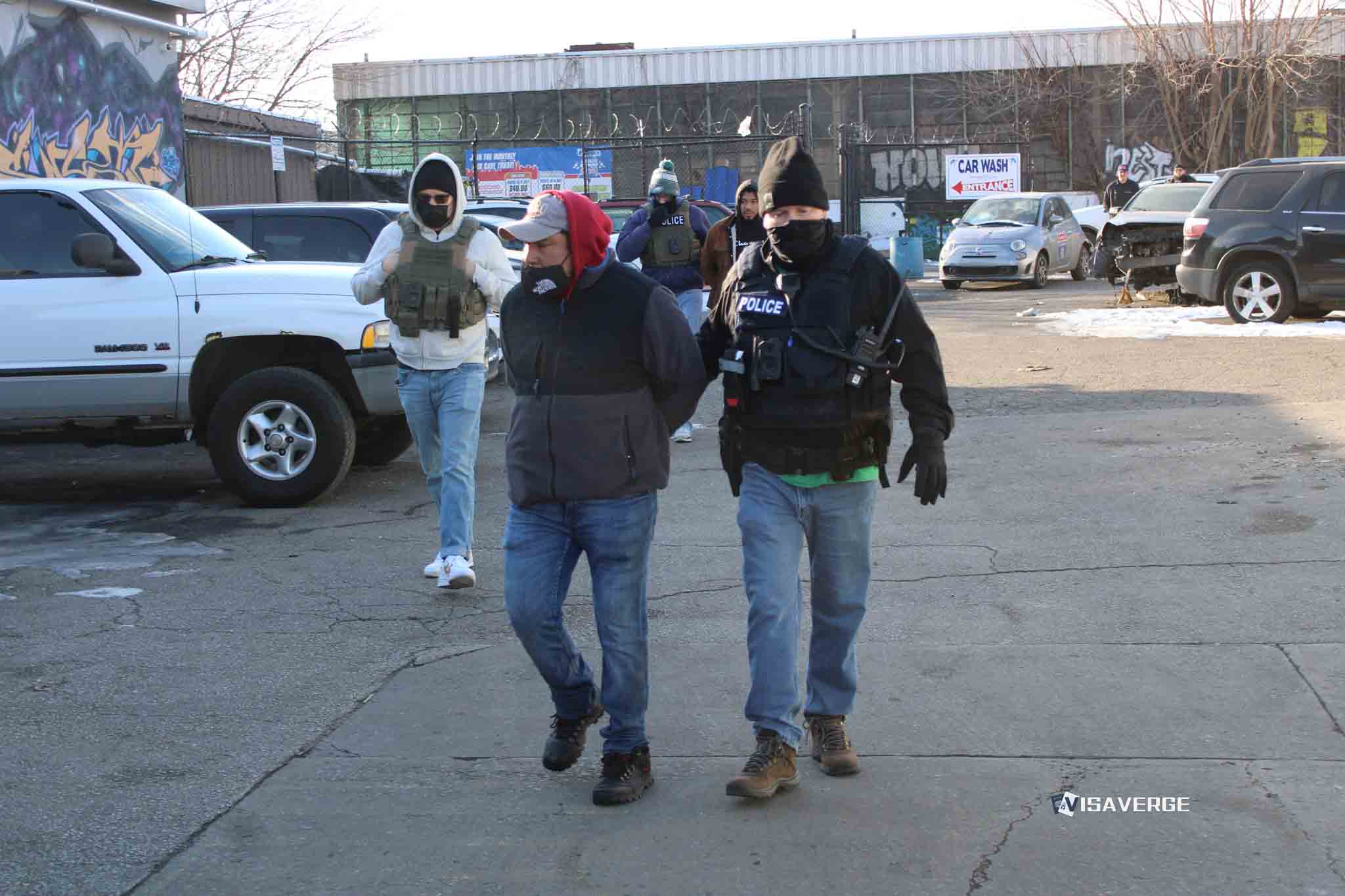
Court bailiffs helped handcuff detainees and escorted them through areas such as holding cells and elevators, defense attorneys said, describing arrests that occurred immediately after court proceedings ended.
Attorneys said the courthouse activity matters because it can reshape whether immigrants feel safe appearing in court as victims, witnesses or defendants, even when the underlying cases involve low-level allegations or end in dismissals.
Lacey Singleton, an attorney with the Salt Lake Legal Defender Association, and Dee, a public defender, said they watched a pattern take hold that they had not expected to see inside the courthouse.
Singleton described one case in which a client accused of a low-level misdemeanor was handcuffed by court staff and taken to a holding cell, where plainclothes ICE officers arrested him after his case was called.
Dee described another case in which a judge dismissed a client’s charges, but bailiffs pulled him into a holding cell for ICE detention.
Defense attorneys said the flow in these encounters left little doubt about timing: people came out of court, then moved into non-public spaces, and ICE took custody out of public view.
A specific incident involved Kevin Alexander Ortiz Barros, a 21-year-old Colombian whose Special Immigrant Juvenile Status, known as SIJS, had been approved, attorneys said.
Barros was detained by ICE minutes after his immigration case dismissal on January 20, 2026, and shifted into expedited removal proceedings, according to his attorney, Adam Crayk.
Crayk said the sequence alarmed him because Barros had complied with court orders.
Crayk also said Barros had no criminal record.
SIJS is a form of immigration relief available to some young people who meet legal criteria tied to state juvenile court findings, and an approval can play a central role in how a person seeks to remain in the United States.
Expedited removal is a fast-track deportation process that can limit access to hearings in immigration court, and attorneys said the courthouse arrests raised fears that people could be placed into that process with little opportunity to argue their case.
The courthouse arrests came as Utah courts pointed to guidance that limits what state courts can do when federal immigration agents carry out lawful enforcement.
A February 2025 Utah Supreme Court memo states courts cannot prevent ICE from lawful enforcement in or around courthouses.
Tim Woulfe, a court spokesperson, confirmed that bailiffs coordinate with ICE for safe arrests in non-public areas but do not partner in enforcement.
Chris Bronson, with the Salt Lake County Sheriff’s Office, said they are “just part of the court process” without using county resources.
Defense lawyers disputed that the court’s role is so limited, arguing courts could restrict ICE use of holding cells and other interior spaces that are controlled by courthouse operations.
They framed the secure areas as a dividing line between what happens in public courtrooms and what happens once a person is moved behind doors controlled by court staff.
Singleton said the bailiff involvement caught defense attorneys off-guard, and she said similar incidents occurred in other Utah courts this week.
Defense attorneys described the bailiff participation as unusual and said it was potentially frightening for people who are not accused of serious crimes but must still show up in court to resolve legal matters.
The attorneys said they worry the courthouse arrests could discourage participation by victims and witnesses, as well as defendants, because people may fear that any court appearance could end with ICE detention.
They described that fear as a “chilling effect,” saying it threatens the routine functioning of the justice system by making people less willing to come forward.
Mayor Erin Mendenhall criticized recent ICE tactics as “completely and utterly deplorable” in her January 2026 State of the City address.
Mendenhall vowed to protect residents’ dignity.
ICE did not respond to media inquiries about Utah courthouse operations, attorneys said.
The courthouse dispute sits within a broader set of immigration enforcement developments in Utah that defense attorneys said has accelerated since early 2025.
Attorneys tied the latest incidents to early 2025 Utah courthouse arrests and to ICE interim guidance allowing courthouse operations where local laws permit, while arguing that local practice can still shape how enforcement plays out inside a courthouse.
As of February 5, 2026, Salt Lake County jails held ICE detainees via U.S. Marshals contracts, according to the information provided by defense attorneys and court officials.
Outside the courthouse, anti-ICE protests followed the arrests.
On Friday, four people were arrested after blocking streets, including Hayden Coccaro, 19, who was charged with felony assault on officers, Benjamin Green, 18, accused of assault with a metal cane, and Serenity Burrup, 25, accused of disorderly conduct.
Attorneys and court watchers drew a line between the street protests and what they described inside the courthouse, but they said both reflected a growing anger and fear around ICE arrests and what they view as blurred boundaries between court operations and federal enforcement.
Legal challenges have also followed, with attorneys using habeas corpus petitions as a recurring tool to contest detention decisions.
Habeas corpus is a court filing that asks a judge to review the legality of a person’s detention, and defense attorneys said they have used it to challenge ICE custody when they believe someone has been wrongly held or denied an opportunity for release.
Crayk said he filed about 20 habeas corpus petitions since 2025, and he put the cost at $12,000-$18,000.
Those petitions sought to win bond hearings, attorneys said, in a system reshaped by a September 2025 Board of Immigration Appeals ruling that barred immigration judges from granting bond to those entering without inspection.
Bond hearings are proceedings where a judge decides whether someone can be released from detention while an immigration case proceeds, often with conditions and a financial bond.
Defense lawyers said the combination of courthouse arrests and limits on bond has changed how quickly a person can move from a routine court appearance into detention and potential deportation proceedings.
Court officials, for their part, described coordination with ICE as a safety measure rather than an enforcement partnership, emphasizing the use of non-public areas to avoid confrontations in public hallways.
Woulfe’s statement that bailiffs coordinate for safe arrests in non-public areas, while not partnering in enforcement, became a central point of dispute between court administrators and defense attorneys.
Bronson’s characterization of the Sheriff’s Office role as “just part of the court process” without using county resources added another layer to the debate over where routine court security ends and active participation in enforcement begins.
Defense attorneys said the reported use of holding cells and interior routes matters because those spaces are under local control, and they argued that allowing ICE to use them embeds immigration enforcement into the courthouse experience.
They said that difference is not merely logistical, because it changes how defendants and families experience the justice system, especially when an arrest follows immediately after a judge dismisses a case or calls a matter that appears minor.
The attorneys also said secrecy compounds distrust, because arrests that happen in secure spaces are less visible to the public and can be hard for family members to track in real time.
Court officials stressed their view that they cannot block lawful federal enforcement in or around the courthouse, while defense attorneys argued that the practical choices about access to non-public areas remain contested.
By Thursday, February 26, 2026, the clash had widened beyond any single case into a larger argument about court access, due process and public confidence.
Defense attorneys said victims and witnesses may avoid appearing in court if they fear ICE arrests, and they warned that outcomes could ripple through prosecutions, protective orders and other proceedings that rely on community cooperation.
Local officials and court representatives, meanwhile, pointed to safety and procedure, describing coordination as an effort to manage arrests away from crowded public areas.
What remains contested is how far that coordination goes, how transparent the process should be, and whether community trust erodes when immigrants view a courthouse as a place where a case can end in dismissal yet still lead to detention minutes later.
ICE Makes Secret Arrests at Salt Lake City Courthouse, Targeting Special Immigrant Juveniles
ICE arrests inside a Salt Lake City courthouse have sparked controversy as defense attorneys allege that court staff assisted in detentions. These arrests, often occurring in non-public areas like holding cells, have targeted individuals even after their charges were dismissed. While officials cite safety protocols and legal obligations to cooperate with federal agents, critics warn that the practice erodes trust in the justice system and creates a chilling effect.