(UNITED STATES) — Congressional negotiators pressed ahead Tuesday with Department of Homeland Security funding talks that have turned a dispute over whether to ban masks for federal officers into a flashpoint, as lawmakers warned a stalemate could trigger a partial government shutdown.
Democrats have pushed to restrict face coverings for federal immigration agents and add accountability measures as part of the DHS funding package, while Republicans and President Trump have resisted, citing safety and privacy for officers.
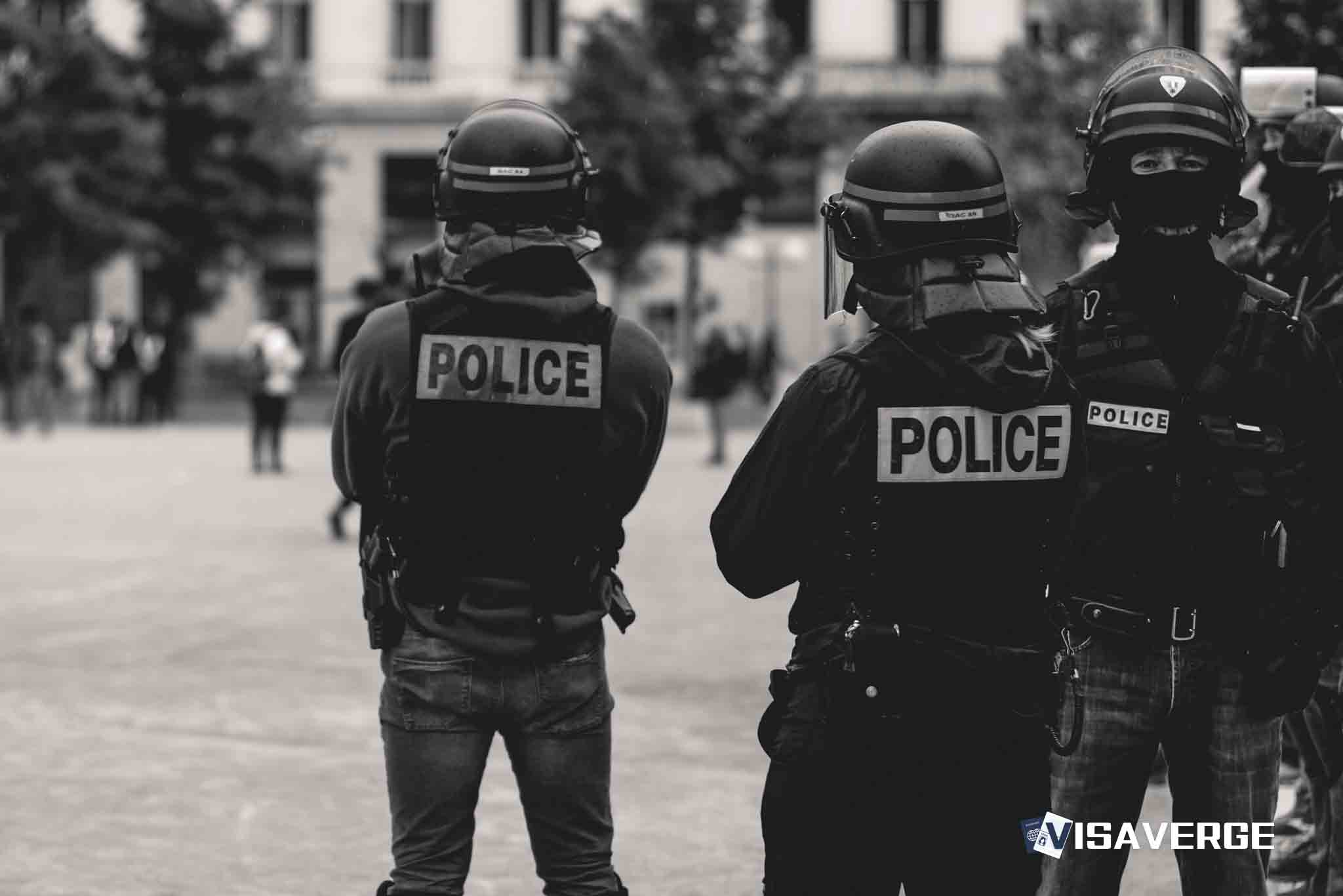
Despite political claims circulating around Capitol Hill, no evidence had emerged as of February 25, 2026, that a House committee had taken up a specific bill to ban masks on police and immigration agents. The mask debate instead played out inside the broader funding negotiations, where either side could try to attach policy conditions.
The clash has fused operational questions about immigration enforcement with the leverage points that come with annual funding deadlines. With DHS funding unresolved, negotiators have treated questions about masks, body cameras and patrol practices as bargaining chips rather than stand-alone legislation.
Democrats’ demands, as described in the negotiations, include limits on masking for Immigration and Customs Enforcement and Customs and Border Protection personnel, requirements for body cameras, and an end to “roving patrols.” Republicans and the White House have argued those steps could endanger agents and expose them to harassment.
President Trump cast the mask restrictions as a direct threat to law enforcement this month. “Totally vulnerable,” he said Thursday, arguing it would be “very, very hard to approve.”
Senate Minority Leader Chuck Schumer attacked masked operations from the Senate floor Thursday, criticizing “masked secret police” actions without warrants or oversight. His remarks amplified Democratic arguments that anonymity undermines accountability and public trust.
Republicans have countered that the debate ignores the reality of threats and online targeting. They have argued that immigration agents, in particular, face risks of doxxing and harassment, and that masks can reduce the chance that an officer’s family becomes a target.
The policy fight has widened beyond a simple yes-or-no question on face coverings. Democrats have coupled mask limits with body camera requirements, while Republicans have questioned whether expanded recording rules can be implemented without substantial funding and clear oversight structures.
In the closed-door talks, each side has treated the DHS funding deadline as leverage. Democrats have sought to tie new oversight conditions to appropriations, while Republicans have signaled they will not accept terms they see as constraining enforcement or exposing officers to harm.
Those discussions have not produced enacted law or a confirmed committee-marked bill, but they have shaped how agencies and lawmakers describe the operational stakes. For immigration agents in the field, the outcome could affect routine decisions about identification, recording encounters and patrol practices.
ICE Acting Director Todd M. Lyons told a Senate panel Thursday he prefers agents unmasked, while also describing what he portrayed as real risks to families. Lyons said he hesitates because of threats and doxxing, and he favored holding people accountable for doxxing rather than requiring officers to remove face coverings.
Lyons’ position put a senior enforcement official between the competing demands. His preference for unmasked agents aligned in part with calls for visibility, but his warning about family threats echoed the arguments Republicans have made in resisting a ban.
CBP Commissioner Rodney Scott drew a related line between oversight and resources. Scott told a House committee Tuesday he supports expanding body cameras, but he said he needs more funding for oversight.
Scott’s testimony offered Republicans another argument in the negotiations: accountability requirements, even when supported by agency leaders, carry costs that must be funded. Democrats, meanwhile, have argued that cameras and visible identification are basic tools for oversight.
Ben Johnson, executive director of the American Immigration Lawyers Association (AILA), criticized what he described as insufficient White House steps. Johnson said White House oversight “tweaks” remain insufficient.
Taken together, the comments from Lyons, Scott and Johnson sketched the triangulation at the center of the talks: officers’ safety concerns, demands for accountability and the budget implications of implementing new requirements at scale.
The debate has also generated confusion as separate state-level moves on police face coverings draw attention. In Washington state, the Washington Senate passed a ban on police face coverings, a development that some lawmakers and advocates have pointed to as proof that restrictions can be enacted.
State-level policing rules, however, do not set policy for federal immigration agency practices. ICE and CBP operate under federal authorities, and the mask issue at the federal level remains bound up with DHS funding negotiations rather than a clearly confirmed committee track.
That contrast has mattered in Washington, D.C., where the phrase “House committee” has circulated in political messaging even as the central action has remained the funding standoff. The mask issue has become a symbol in a larger fight over how aggressively to police immigration enforcement, and under what oversight constraints.
The funding talks have paired the mask issue with proposals for body cameras and changes to “roving patrols,” creating a bundle that makes agreement harder. Each component has its own constituency, and negotiators have had to balance concerns about safety, privacy, transparency and operational flexibility.
Republicans and President Trump have repeatedly framed unmasking rules as an invitation to harassment. Trump’s warning that law enforcement would be “totally vulnerable” captured the White House’s argument that restricting masks could expose officers’ identities and put them in danger.
Democrats have argued the opposite, pressing the view that masks reduce accountability and can enable misconduct. Schumer’s charge of “masked secret police” has served as a rallying point for that critique, as Democrats tie mask limits to broader oversight demands.
Lyons’ Senate testimony illustrated how the debate can split along lines that are not purely partisan. He described a preference for unmasked agents, but his hesitancy, tied to threats against families, highlighted the conditions under which senior officials may resist a categorical rule.
Scott’s House testimony underscored that body camera requirements, often treated as a straightforward solution, come with administrative burdens. His support for expansion coupled with the call for more funding for oversight placed the issue squarely inside appropriations politics.
Johnson’s criticism from the immigration lawyers’ group reflected a different concern: that piecemeal changes will not deliver meaningful accountability. By calling White House oversight “tweaks” insufficient, he aligned with Democrats and advocates pressing for stronger conditions in the DHS package.
The immediate stakes go beyond the mask debate. Negotiators have warned that if DHS funding is not resolved, the impasse risks a partial government shutdown, raising pressure on lawmakers to reach a deal or accept a stopgap.
Shutdown pressure can reshape what lawmakers demand and what they will concede, because deadlines compress time and raise the political costs of failure. In this case, the mask-ban fight has become one of several points where negotiators have tested how much policy can be tied to funding.
For DHS, the outcome could influence how immigration agents present themselves during enforcement actions and how encounters are documented. It could also determine whether oversight mechanisms expand in ways agencies say require additional funding and management capacity.
With no confirmed House committee move on a specific mask-ban bill for police and immigration agents as of February 25, the next signals are expected to come from the text of any funding package, official committee schedules, and additional statements from agencies and lawmakers as talks continue.
House Committee Considers Ban on Masks for Police and Immigration Agents
Lawmakers are currently embroiled in a tense negotiation over DHS funding, centered on whether to prohibit federal agents from wearing masks. While Democrats seek transparency through mask bans and body cameras, Republicans cite officer safety as a reason to maintain anonymity. This policy clash has become a significant hurdle, with leaders warning that the impasse could lead to a partial government shutdown if a compromise is not reached.