Spanish
Official VisaVerge Logo Official VisaVerge Logo
  • Home
  • Airlines
  • H1B
  • Immigration
    • Knowledge
    • Questions
    • Documentation
  • News
  • Visa
    • Canada
    • F1Visa
    • Passport
    • Green Card
    • H1B
    • OPT
    • PERM
    • Travel
    • Travel Requirements
    • Visa Requirements
  • USCIS
  • Questions
    • Australia Immigration
    • Green Card
    • H1B
    • Immigration
    • Passport
    • PERM
    • UK Immigration
    • USCIS
    • Legal
    • India
    • NRI
  • Guides
    • Taxes
    • Legal
  • Tools
    • H-1B Maxout Calculator Online
    • REAL ID Requirements Checker tool
    • ROTH IRA Calculator Online
    • TSA Acceptable ID Checker Online Tool
    • H-1B Registration Checklist
    • Schengen Short-Stay Visa Calculator
    • H-1B Cost Calculator Online
    • USA Merit Based Points Calculator – Proposed
    • Canada Express Entry Points Calculator
    • New Zealand’s Skilled Migrant Points Calculator
    • Resources Hub
    • Visa Photo Requirements Checker Online
    • I-94 Expiration Calculator Online
    • CSPA Age-Out Calculator Online
    • OPT Timeline Calculator Online
    • B1/B2 Tourist Visa Stay Calculator online
  • Schengen
VisaVergeVisaVerge
Search
Follow US
  • Home
  • Airlines
  • H1B
  • Immigration
  • News
  • Visa
  • USCIS
  • Questions
  • Guides
  • Tools
  • Schengen
© 2025 VisaVerge Network. All Rights Reserved.
Citizenship

Restoring a Rigorous, Holistic Good Moral Character Standard for Naturalization

USCIS reinstated a totality-of-circumstances Good Moral Character review under INA 101(f). Permanent statutory bars like murder and aggravated felonies (post-November 29, 1990) remain absolute. Applicants must prove eligibility by preponderance of the evidence, presenting clear documentation of community service, tax compliance, stable employment, education, caregiving, and rehabilitation.

Last updated: August 16, 2025 3:57 pm
SHARE
VisaVerge.com
📋
Key takeaways
USCIS restored a holistic Good Moral Character standard using INA 101(f) totality-of-circumstances review.
Permanent bars include murder and aggravated felonies for offenses on/after November 29, 1990; no exceptions.
Standard of proof is preponderance of the evidence; applicants must present strong, credible positive documentation.

(U.S. Citizenship and Immigration Services) USCIS has restored a rigorous, holistic standard for assessing Good Moral Character in naturalization cases. The agency will now weigh an applicant’s full life story—both positive contributions and any misconduct—under a “totality of circumstances” approach guided by section 101(f) of the Immigration and Nationality Act (INA).

While certain crimes permanently bar naturalization, many cases will turn on whether the applicant shows real community ties, responsibility, and reform. The standard of proof is “preponderance of the evidence,” meaning you must show it is more likely than not that you meet all requirements.
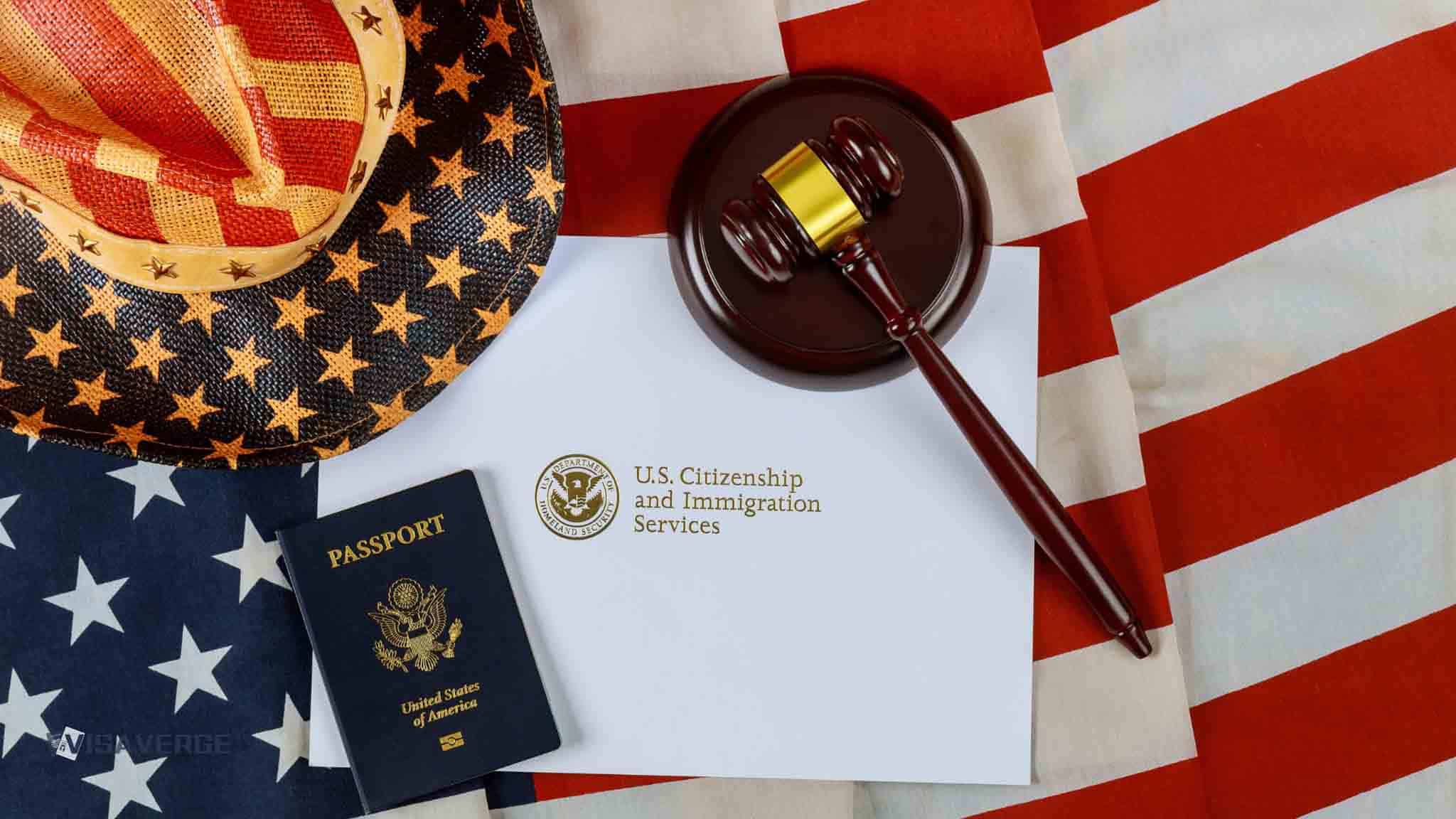
Restoring a Rigorous, Holistic Good Moral Character Standard for Naturalization

Who can qualify under the renewed Good Moral Character standard

USCIS evaluates Good Moral Character by asking whether your character matches the standards of average citizens in your community. You must show you “have been and still are” a person of Good Moral Character during the statutory period under INA 316(a).

Officers will now place greater weight on affirmative proof of strong character. Positive factors include:

  • Sustained community service or civic involvement
  • Family caregiving and responsibility in the United States
  • Educational attainment and progress
  • Stable, lawful employment and workplace achievements
  • Length of lawful residence in the United States
  • Timely tax filing, payment of taxes, and general financial responsibility

According to analysis by VisaVerge.com, USCIS’s renewed focus on the whole person means applicants should present clear, credible evidence of their day-to-day conduct, not just the absence of arrests or charges.

What can disqualify you: permanent bars, conditional bars, and other conduct

USCIS will scrutinize any act that undermines Good Moral Character. The law sets out both permanent and conditional bars. Officers may also consider conduct that falls short of community standards even if the act is not a crime.

  • Permanent bars to Good Moral Character
    • Murder
    • An “aggravated felony” as defined in INA 101(a)(43) (for offenses on or after November 29, 1990)
    • Heinous acts such as persecution, genocide, torture, or severe violations of religious freedom
      If a permanent bar applies, no exception exists.
  • Conditional bars to Good Moral Character
    • Controlled substance violations
    • Multiple DUI convictions
    • False claim to U.S. citizenship
    • Unlawful voter registration or unlawful voting
    • Certain fraud or misrepresentation
      These can defeat Good Moral Character unless offset by strong, credible evidence and circumstances, as allowed by the INA’s catch-all clause in 101(f).
  • Other acts contrary to community standards
    • Even technically lawful behavior can count against you if it shows poor civic responsibility.
    • Examples: reckless or habitual traffic violations, harassment, or aggressive solicitation.

Court and agency decisions support this balanced approach. For example:
– In Hussein v. Barrett, a federal court noted that education, family duties, and employment matter when weighing character.
– In Matter of Castillo-Perez, the Attorney General explained that repeated criminal conduct—like multiple DUIs—undermines Good Moral Character unless rebutted with clear proof of reform.

Evidence that helps show Good Moral Character

Because USCIS uses a totality-of-circumstances review, the best cases present a layered record. Useful documentation can include:

  • Community letters from credible sources (faith leaders, teachers, coaches, union stewards, nonprofit directors) describing concrete, recent contributions
  • Proof of family caregiving: guardianship records, special-needs care plans, or consistent child support payment history
  • Education records: diplomas, transcripts, industry certificates, English or civics class completion
  • Employment records: pay stubs, HR letters, awards, work safety or training certificates, steady W-2s
  • Tax compliance: IRS transcripts, filed returns, proof of payment plans fully met
  • Length of lawful residence: leases, mortgage statements, utility bills, school registrations, community membership records

If you had past problems, evidence of rehabilitation can strongly support Good Moral Character, such as:

  • Proof you corrected overdue child support or other family obligations
  • Court records showing successful completion of probation or other conditions
  • Mentoring or outreach to help others avoid similar mistakes
  • Community testimony about your sustained reform
  • Full repayment of any overpaid public benefits
  • Full payment of overdue taxes and fees

How USCIS evaluates: standard of proof and interview focus

The law requires USCIS to apply the preponderance of the evidence standard for all naturalization requirements, including Good Moral Character. Officers may grant or deny after weighing all relevant evidence, favorable and adverse.

The INA’s catch-all clause allows a finding that a person lacks Good Moral Character even when no listed bar applies, if the conduct shows poor character under community standards.

At the interview, officers may:

  1. Review records from courts and agencies.
  2. Ask detailed questions about arrests, citations, voting, tax filing, and benefits.
  3. Probe the reasons behind any misconduct and what you’ve done since then.
  4. Evaluate how your daily life shows responsibility and respect for the law.

USCIS has stated it will “review all available documentation and question” applicants about actions that raise concern, including patterns of reckless driving or harassment.

Important: Officers will weigh both favorable and unfavorable evidence. Be prepared to explain past conduct and show supporting documentation of reform and responsibility.

Rehabilitation and second chances

The restored policy highlights genuine reform. If you made mistakes, USCIS will look for real change over time, not just promises. Strong signs of rehabilitation include:

  • Reliable work history after the incident
  • Completed treatment or education tied to the issue (e.g., alcohol education after a DUI)
  • A clean record since the event, with no repeat conduct
  • Concrete service to the community and family
  • Verified repayment of debts, taxes, or benefits

Practical tips to prepare and common concerns

  • Be honest and complete. Failing to disclose an arrest, citation, or vote is often worse than the event itself.
  • Document the good. Build a clear file of community service, family care, study, and work progress—for several years if possible.
  • Fix what you can. Pay taxes, child support, fines, or fees; complete any classes or counseling ordered by a court.
  • Avoid new violations. Even minor repeat issues can sway officers against you.
  • Gather credible voices. Ask respected community members for letters that describe specific examples of your civic behavior.
  • Explain past conduct. Prepare a simple, truthful statement of what happened, why it was wrong, and how your life is different now.
  • Bring records to back up every claim. Officers rely on documents more than promises.
  • Know that some bars are absolute. If a permanent bar applies, speak with qualified counsel before applying.

Official resource

For USCIS’s official guidance on Good Moral Character, see the USCIS Policy Manual, Volume 12, Part F: https://www.uscis.gov/policy-manual/volume-12-part-f

This renewed approach by U.S. Citizenship and Immigration Services (USCIS) restores balance: the law still blocks the gravest offenses, but many applicants can meet the Good Moral Character requirement by showing steady, responsible lives, real ties to their communities, and credible proof of reform where needed.

Frequently Asked Questions

Q1
What is the new USCIS standard for Good Moral Character?
USCIS uses a holistic “totality of circumstances” test under INA 101(f), weighing positive life factors and misconduct to decide Good Moral Character.

Q2
Which actions permanently bar naturalization?
Permanent bars include murder, aggravated felonies (from Nov 29, 1990), persecution, genocide, torture, or severe religious-rights violations.

Q3
What evidence best proves Good Moral Character?
Provide community letters, employment and education records, tax transcripts, caregiving proof, residence documents, and rehab or court completion records.

Q4
How should I address past arrests or DUIs at my interview?
Be honest, bring court records, proof of rehab or compliance (probation, classes, payments), and letters showing sustained reform and responsibility.

VisaVerge.com
Learn Today
Good Moral Character → Legal standard assessing whether an applicant meets community conduct norms during statutory naturalization period.
INA 101(f) → Catch-all clause allowing USCIS to weigh all circumstances when evaluating Good Moral Character claims.
Aggravated felony → Serious offense category under INA 101(a)(43) that can permanently bar naturalization for post-1990 convictions.
Preponderance of the evidence → Standard requiring proof that it is more likely than not the applicant meets naturalization requirements.
Form N-400 → USCIS naturalization application form used to request U.S. citizenship through the naturalization process.

This Article in a Nutshell

USCIS restored a holistic Good Moral Character review under INA 101(f), weighing misconduct and positive contributions. Applicants should submit layered evidence: community service, tax compliance, stable employment, education, caregiving, and records of rehabilitation to meet the preponderance-of-the-evidence standard during N-400 naturalization interviews and adjudication.

— VisaVerge.com
Share This Article
Facebook Pinterest Whatsapp Whatsapp Reddit Email Copy Link Print
What do you think?
Happy0
Sad0
Angry0
Embarrass0
Surprise0
Jim Grey
ByJim Grey
Content Analyst
Follow:
Jim Grey serves as the Senior Editor at VisaVerge.com, where his expertise in editorial strategy and content management shines. With a keen eye for detail and a profound understanding of the immigration and travel sectors, Jim plays a pivotal role in refining and enhancing the website's content. His guidance ensures that each piece is informative, engaging, and aligns with the highest journalistic standards.
Subscribe
Login
Notify of
guest

guest

0 Comments
Inline Feedbacks
View all comments
H-1B Workforce Analysis Widget | VisaVerge
Data Analysis
U.S. Workforce Breakdown
0.44%
of U.S. jobs are H-1B

They're Taking Our Jobs?

Federal data reveals H-1B workers hold less than half a percent of American jobs. See the full breakdown.

164M Jobs 730K H-1B 91% Citizens
Read Analysis
February 2026 Visa Bulletin Predictions: Complete Analysis and Forecast
Guides

February 2026 Visa Bulletin Predictions: Complete Analysis and Forecast

Bali Travel Rules 2026: Visa, All Indonesia App & Tourism Levy Explained
Travel

Bali Travel Rules 2026: Visa, All Indonesia App & Tourism Levy Explained

Customs Duty-Free Gold Carrying Limits to USA and India
Guides

Customs Duty-Free Gold Carrying Limits to USA and India

New Jersey Advances 3 Immigrant Protections Against ICE
Immigration

New Jersey Advances 3 Immigrant Protections Against ICE

Florida 2025: No State Income Tax and Residency Proof Basics
Taxes

Florida 2025: No State Income Tax and Residency Proof Basics

2025 SEP IRA Limits: 25% of Net Earnings or ,000
Knowledge

2025 SEP IRA Limits: 25% of Net Earnings or $70,000

Sri Lanka Visa-on-Arrival: Key Details and Recent Changes Explained
Visa

Sri Lanka Visa-on-Arrival: Key Details and Recent Changes Explained

India 2026 official Holidays Complete List
Guides

India 2026 official Holidays Complete List

Year-End Financial Planning Widgets | VisaVerge
Tax Strategy Tool
Backdoor Roth IRA Calculator

High Earner? Use the Backdoor Strategy

Income too high for direct Roth contributions? Calculate your backdoor Roth IRA conversion and maximize tax-free retirement growth.

Contribute before Dec 31 for 2025 tax year
Calculate Now
Retirement Planning
Roth IRA Calculator

Plan Your Tax-Free Retirement

See how your Roth IRA contributions can grow tax-free over time and estimate your retirement savings.

  • 2025 contribution limits: $7,000 ($8,000 if 50+)
  • Tax-free qualified withdrawals
  • No required minimum distributions
Estimate Growth
For Immigrants & Expats
Global 401(k) Calculator

Compare US & International Retirement Systems

Working in the US on a visa? Compare your 401(k) savings with retirement systems in your home country.

India UK Canada Australia Germany +More
Compare Systems

You Might Also Like

Officials Warn of Rising Scams Targeting Immigrant Communities
Canada

Officials Warn of Rising Scams Targeting Immigrant Communities

By Visa Verge
UK Overhauls Asylum Policy, Cutting Refugee Protections Across Borders
Immigration

UK Overhauls Asylum Policy, Cutting Refugee Protections Across Borders

By Robert Pyne
State Department to Launch Office of Remigration in Immigration Overhaul
Immigration

State Department to Launch Office of Remigration in Immigration Overhaul

By Visa Verge
Canadian court labels APC and PDP terrorist groups, denies Nigerian asylum
Canada

Canadian court labels APC and PDP terrorist groups, denies Nigerian asylum

By Oliver Mercer
Show More
Official VisaVerge Logo Official VisaVerge Logo
Facebook Twitter Youtube Rss Instagram Android

About US


At VisaVerge, we understand that the journey of immigration and travel is more than just a process; it’s a deeply personal experience that shapes futures and fulfills dreams. Our mission is to demystify the intricacies of immigration laws, visa procedures, and travel information, making them accessible and understandable for everyone.

Trending
  • Canada
  • F1Visa
  • Guides
  • Legal
  • NRI
  • Questions
  • Situations
  • USCIS
Useful Links
  • History
  • USA 2026 Federal Holidays
  • UK Bank Holidays 2026
  • LinkInBio
  • My Saves
  • Resources Hub
  • Contact USCIS
web-app-manifest-512x512 web-app-manifest-512x512

2026 © VisaVerge. All Rights Reserved.

2026 All Rights Reserved by Marne Media LLP
  • About US
  • Community Guidelines
  • Contact US
  • Cookie Policy
  • Disclaimer
  • Ethics Statement
  • Privacy Policy
  • Terms and Conditions
wpDiscuz
Welcome Back!

Sign in to your account

Username or Email Address
Password

Lost your password?