- The Supreme Court granted Trump administration authority to terminate Temporary Protected Status for approximately 350,000 Venezuelans.
- A 2025 ruling overturned lower court decisions that previously blocked the executive branch from ending humanitarian protections.
- Affected individuals face loss of work authorization and deportation protections starting in 2026 as the program winds down.
(UNITED STATES) — The Supreme Court allowed the Trump administration on May 19, 2025, to end Temporary Protected Status for Venezuelans, clearing the way for the government to revoke deportation protections and legal work authorization that had covered about 350,000 people.
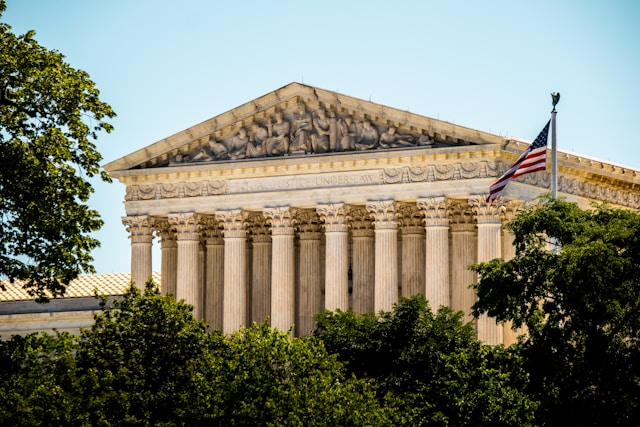
The ruling left Venezuelan TPS holders facing a changed legal position in 2026. The Court sided with the administration’s argument that the executive branch has the authority to decide when humanitarian protections such as TPS should end, and it overturned lower court decisions that had kept those protections in place.
For Venezuelans already covered by TPS, the decision carried immediate weight. Many had been living and working in the United States under a program that protected them from removal and allowed them to work legally while conditions in Venezuela remained unsafe.
What the Supreme Court did not do was decide a separate deportation issue involving another law. Two days earlier, on May 17, 2025, the Court ruled that the Trump administration could not use the Alien Enemies Act of 1798 to quickly deport Venezuelans labeled as “enemies” or members of a designated terrorist group.
The TPS case was narrower. It dealt with whether the president and the administration, rather than lower courts, control decisions to end or extend Temporary Protected Status for Venezuelans.
How TPS Works
Congress created TPS to let people from certain countries remain in the United States when war, natural disasters, or other temporary emergencies make return unsafe. The protection is temporary, not permanent, but it gives recipients lawful presence for a set period and permission to work.
For Venezuela, the U.S. government designated the country for TPS in 2021 because of humanitarian and political troubles there. Secretary of Homeland Security Alejandro Mayorkas made that designation, and the status was later extended.
The 2021 designation provided protection through September 10, 2025. A redesignation in 2023 extended the date further to October 2, 2026.
That timeline became the center of the court fight. In March 2025, Judge Edward Chen, a federal judge in San Francisco, ruled that TPS for Venezuelans had to continue, preserving protections for holders while the case moved forward.
President Trump’s administration challenged that decision and asked the Supreme Court to step in. Solicitor General D. John Sauer argued for the administration that the lower courts had taken decision-making power away from the Executive Branch, and the justices agreed.
By overturning the lower court rulings, the Supreme Court gave President Trump the authority to stop TPS for Venezuelans. The Court’s action also reinforced the administration’s broader view that immigration decisions of this kind belong primarily to the executive branch.
For Venezuelans trying to understand their status in 2026, that distinction matters. The Court did not create TPS for a new period, and it did not preserve the earlier protections that lower courts had kept alive. It allowed the administration to move forward with ending them.
At the same time, the decision did not mean that every affected person would lose status the moment the ruling came down. The administration still had to move through the formal process of ending protections and notifying those affected.
When TPS ends for a country, the government usually provides a “wind-down” period. That period is often 6, 12, or 18 months, giving recipients time to prepare to leave the country or seek another lawful status if one is available.
Work, Family, and Community Impact
That point also shapes the work authorization picture. As long as Venezuelans had TPS, they were allowed to live and work in the United States without fear of being deported. If TPS ends, they lose that legal right to work unless they qualify for another immigration status that permits employment.
For employers, the case reaches beyond immigration law. Companies that hired Venezuelan TPS holders could lose workers they had relied on for years, particularly in sectors such as healthcare, construction, and hospitality.
Schools and colleges also face consequences. Students with TPS, along with children of TPS holders, may have to change education plans if families lose lawful status or decide they have to leave.
Churches, charities, and local groups could also feel the strain. Communities that supported Venezuelan families under TPS may have to respond if people lose jobs, face removal risks, or try to find another path to remain in the United States.
The Court’s ruling affects one of the largest groups of TPS holders to lose protection in recent U.S. history. That number is about 350,000 Venezuelans.
That scale helps explain why the case drew national attention. TPS often operates in the background of immigration policy, but the Venezuelan program had become a lifeline for families who fled political violence, food shortages, and social disruption.
Many of those families had built lives in the United States. They found jobs, enrolled children in school, and formed ties in communities across the country while their status remained in place.
The Legal and Political Debate
The legal ruling also sharpened a long-running argument about what TPS is meant to be. Supporters of the administration’s position argued that the executive branch should retain control over national immigration policy and that Temporary Protected Status, by definition, was never meant to become a permanent answer.
Critics took the opposite view, saying the end of TPS for Venezuelans would put people at risk by sending them back to dangerous conditions and would damage local economies by stripping lawful workers of status. Some also argued that Congress needs to rewrite immigration law so that people fleeing prolonged crises are not left dependent on decisions by a single administration.
The Supreme Court’s action did not settle that political debate. It answered a legal question about who decides.
That answer carries weight beyond Venezuela. The ruling may influence how courts handle future fights over TPS and similar humanitarian programs for other nationalities, because it emphasizes presidential authority and limits how far lower courts can go in blocking the executive branch.
Still, the decision in the Venezuelan TPS case remained tied to that program and that nationality. It was specific to Temporary Protected Status and Venezuelan nationals.
That is another point the ruling did not decide. It was not a broad order on every form of immigration relief available to Venezuelans, and it was not the same as the separate case over the Alien Enemies Act of 1798.
What Venezuelans Should Watch
For Venezuelan nationals trying to assess what options remain, the practical advice is direct. People with TPS should pay close attention to government news and deadlines, check the USCIS Venezuela TPS page often for updates, and talk to trusted immigration lawyers or nonprofits before making big decisions.
They should also consider whether another form of immigration relief or legal status may be available. The article does not identify which alternatives might apply to particular people, but it makes clear that some may try to pursue another path while others may have no option left.
That uncertainty defines the present state of TPS for Venezuelans in 2026. The Supreme Court gave the Trump administration the legal authority to end the protections, reversed lower court rulings that had kept them in place, and left hundreds of thousands of people exposed to the loss of lawful work and protection from deportation.
The broader history explains why the stakes are so high. Congress created TPS in 1990 as a temporary measure for nationals of countries hit by war, disaster, or other emergency conditions. Over the last 35 years, people from countries including El Salvador, Haiti, and Syria have received it, and some have remained in the United States for decades under repeated extensions.
Venezuela joined that history in 2021, when the United States concluded that conditions there justified protection. The later redesignation in 2023 pushed the end date further out to October 2, 2026, but the Supreme Court’s May 19, 2025 ruling allowed the administration to cut that protection off.
For many Venezuelans, the result is not an abstract dispute over presidential power. It is a question of whether they can keep working, keep their families together, and avoid being sent back to a country they left because they believed it was not safe.
That is why the Court’s decision continues to matter in 2026. It confirmed that the president holds wide power over TPS, but it also left about 350,000 Venezuelans measuring their next steps against the possible loss of the protections that had allowed them to build a life in the United States.