- Saudi Arabia has restricted Makkah entry starting April 13, 2026, to prepare for the upcoming Hajj season.
- All Umrah visa holders must depart by April 18, with new visa issuances suspended until after the pilgrimage.
- Strict health and vaccine requirements, including meningitis and COVID-19 shots, are mandatory for all Hajj 2026 pilgrims.
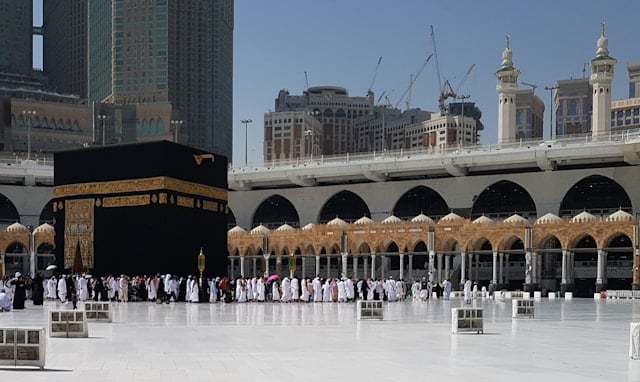
(MAKKAH, SAUDI ARABIA) — Saudi Arabia imposed new entry restrictions on Makkah starting April 13, 2026, halted new Umrah visas weeks before the annual pilgrimage season and ordered all Umrah visa holders to leave by April 18, 2026 as authorities prepared for Hajj 2026.
The measures limit access to the city to people with permits from the relevant authorities, including holders of residency permits issued in Makkah and those carrying Hajj permits or work permits for the Holy Sites. Authorities also barred entry to, or stay in, Makkah during this period without a Hajj visa.
The timetable compresses the final weeks before Hajj into a tightly controlled window. Saudi authorities suspended new Umrah visa issuance around March 19-21, 2026, set the last entry for Umrah pilgrims at April 2 or 3, 2026, and stopped new Umrah permits through the Nusuk platform from April 18 to May 31, 2026.
Those restrictions are tied to preparations for Hajj 1447 AH, which is expected to fall on May 25-30, 2026. Saudi ministries said the steps are aimed at crowd control, safety during expected temperatures above 45°C, and prevention of unauthorized stays.
Makkah entry controls now sit at the center of that effort. The General Directorate of Passports opened permit applications for resident workers through Absher and Muqeem, extending access to categories that include GCC citizens, Premium Residency holders, investors, mothers of Saudi citizens, domestic workers, non-Saudi family members and employees of Makkah-based establishments.
Absher handles applications for several resident and family categories, while Muqeem is used for employees of establishments based in Makkah. The system places permit checks inside the same digital framework Saudi authorities are using to monitor entry and exit ahead of the pilgrimage.
Saudi officials also paired those checks with stricter hotel and transport licensing rules. The combined approach gives authorities more control over who enters the city, where pilgrims stay and how they move as Hajj approaches.
The Umrah schedule has become especially tight for foreign visitors already in the kingdom. Saudi authorities said Umrah visas that expired on Ramadan 8, or February 25, 2026, could still be used for departure without extension until April 18 through international ports.
After that date, all Umrah visa holders must have left. Saudi authorities warned that overstayers face fines, imprisonment, deportation and multi-year bans, and that hosts who assist overstayers also face penalties.
The suspension of Umrah visas creates a clear break in travel flows before Hajj 2026. Saudi authorities set the last Umrah visa issuance at March 19, 2026, though some notices cited March 20 or March 21, and the last entry date at April 2 or April 3, with airlines and border crossings enforcing those deadlines even for travelers holding valid visas.
That closure extends beyond visa issuance to the permit system used for worship in the holy cities. No new Umrah permits will be issued through Nusuk between April 18 and May 31, 2026, and Umrah visas are expected to resume around June 10-11, 2026, after the Hajj season ends.
Hajj registration remains available through Nusuk, the platform Saudi authorities use for pilgrimage services. Indian pilgrims face the same Umrah visa deadlines and exit requirements as other international travelers.
Health screening has become another hard gate for Hajj 2026. The Saudi Ministry of Hajj and Umrah tied medical fitness to visa approval and requires pilgrims to receive the Meningococcal Meningitis vaccine, ACWY, within 10 days to 5 years before arrival if they received the conjugate version, or within 3 years if they received the polysaccharide version.
Saudi authorities also require COVID-19 vaccination for travelers aged 12+. The health rules go further than vaccination, listing medical conditions that disqualify some applicants from travel altogether.
The ministry’s red-list conditions include kidney failure requiring dialysis, advanced heart failure, liver cirrhosis and chronic obstructive pulmonary disease requiring oxygen. It also includes dementia, Alzheimer’s disease, severe psychiatric disorders, uncontrollable tremors, active chemotherapy or radiotherapy, tuberculosis and other contagious diseases.
Pregnancy restrictions remain in place as well. Women in the last trimester of pregnancy, or those with high-risk pregnancies, cannot travel for Hajj under the current rules.
Age-based conditions add another layer to the screening process. Pilgrims aged 65+ must travel with a fit companion aged 18-60 years.
Authorities said they will monitor compliance at ports of entry and at pilgrimage sites, and unfit pilgrims can be deported at their own expense. That gives Saudi officials a final checkpoint after visa approval and arrival, rather than treating the medical review as a one-time document exercise.
The timing reflects the scale of the annual movement into western Saudi Arabia, where Hajj and Umrah flows overlap before being separated by administrative controls. Umrah visas typically support year-round pilgrimage, but the kingdom closes that channel in the weeks before Hajj to reserve Makkah and the Holy Sites for pilgrims holding the required Hajj authorizations.
This year’s measures also show how Saudi authorities are relying more heavily on digital enforcement. Permit applications, entry controls, visa deadlines and departure tracking now run through linked systems designed to reduce unauthorized stays and tighten oversight of pilgrim housing and transport.
For travelers, agencies and sponsors, the practical effect is immediate even without any change to the ritual calendar itself. A pilgrim who enters on an Umrah visa cannot remain in Makkah into the Hajj period, and a visitor without a Hajj visa cannot enter or stay in the city once the restrictions that began on April 13, 2026 took effect.
Those rules make the weeks before Hajj 2026 less flexible than in ordinary months. Entry depends on permit status, departure is fixed at April 18 for Umrah visa holders, and any attempt to stay beyond that point exposes both the overstayer and anyone assisting that stay to punishment.
By the time the Hajj season begins in late May, Saudi Arabia aims to have cleared Makkah of Umrah visitors, narrowed access to approved pilgrims and workers, and screened arrivals against strict health requirements. The policy leaves little room for improvisation in a city preparing for one of the world’s largest annual religious gatherings.