- President Trump reversed policy in January 2025, allowing ICE arrests at schools and churches.
- North Carolina laws expanded local cooperation with federal immigration enforcement through 2026.
- Communities are asserting legal rights by requiring judicial warrants for entry into private spaces.
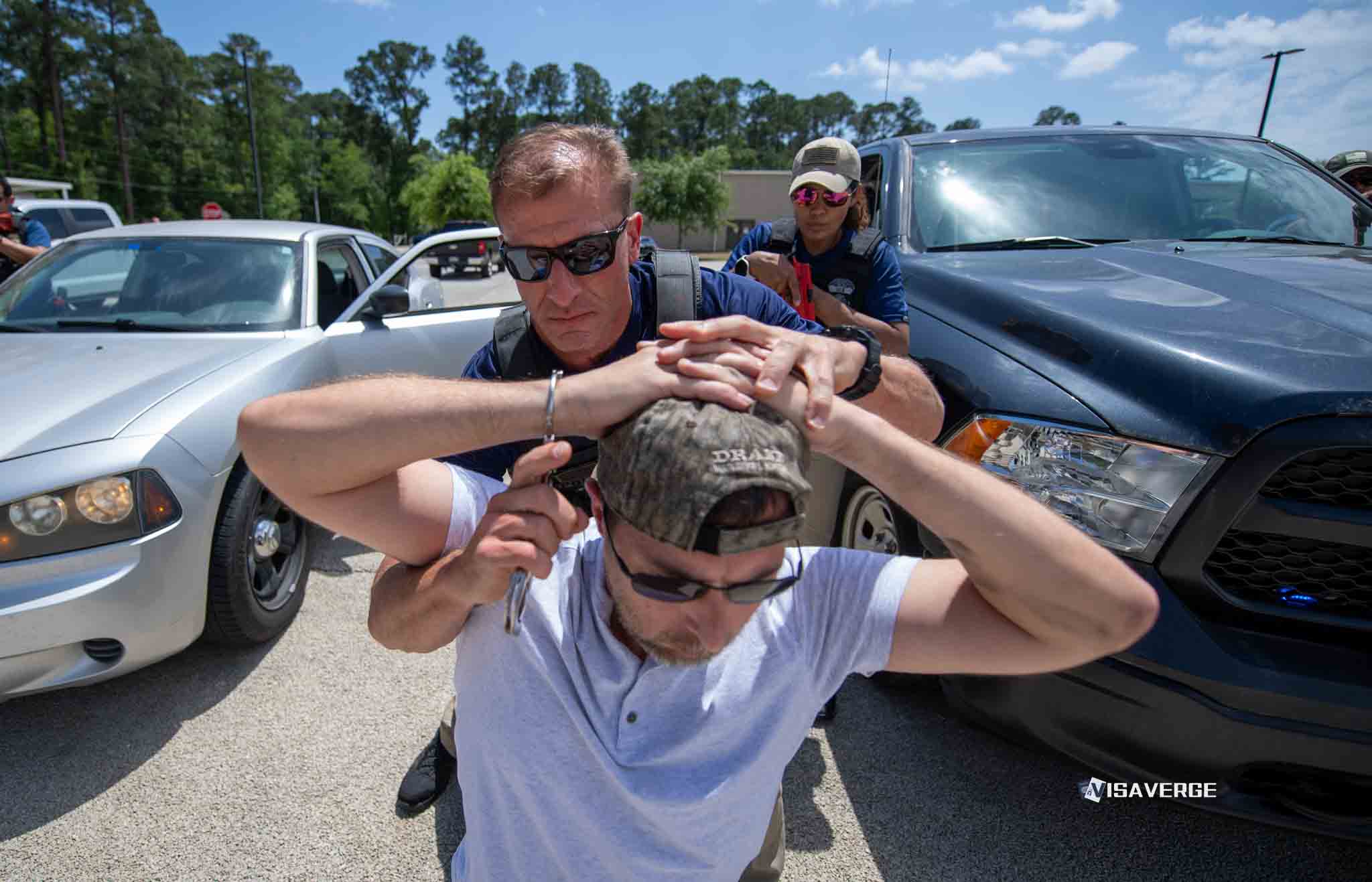
(NORTH CAROLINA) — President Trump reversed a long-standing federal policy in January 2025, allowing ICE to carry out arrests at schools, churches and other formerly protected sensitive locations in North Carolina and nationwide.
The change ended guidance first adopted in 2011 that had generally barred enforcement at schools, hospitals, places of worship and similar sites unless exigent circumstances existed or supervisors approved the action. As of March 2026, no later federal reversal has restored those safeguards.
That means ICE can legally make arrests at schools and churches in North Carolina under current policy. Agents still need proper legal authority, including judicial warrants for entry into private spaces such as church buildings and other non-public areas.
North Carolina’s Expanding Cooperation with ICE
The shift comes as North Carolina has also expanded cooperation with federal immigration enforcement. Over the past 15 months through early 2026, state lawmakers approved three measures that widened local participation in detainers, immigration status checks and 287(g) agreements with ICE.
The Protect North Carolina Workers Act (2025) required sheriffs to comply with ICE detainers and expanded 287(g) programs, letting trained local deputies perform immigration functions such as database checks and detainer issuance in jails. The Criminal Illegal Alien Enforcement Act (2025) required immigration status checks for anyone charged with felonies, certain violent misdemeanors, domestic violence protective order violations, or driving while impaired.
Lawmakers later approved the North Carolina Border Protection Act in late 2025/early 2026. That law required state agencies including the Department of Public Safety, Adult Correction, Highway Patrol, and State Bureau of Investigation to enter 287(g) agreements with ICE.
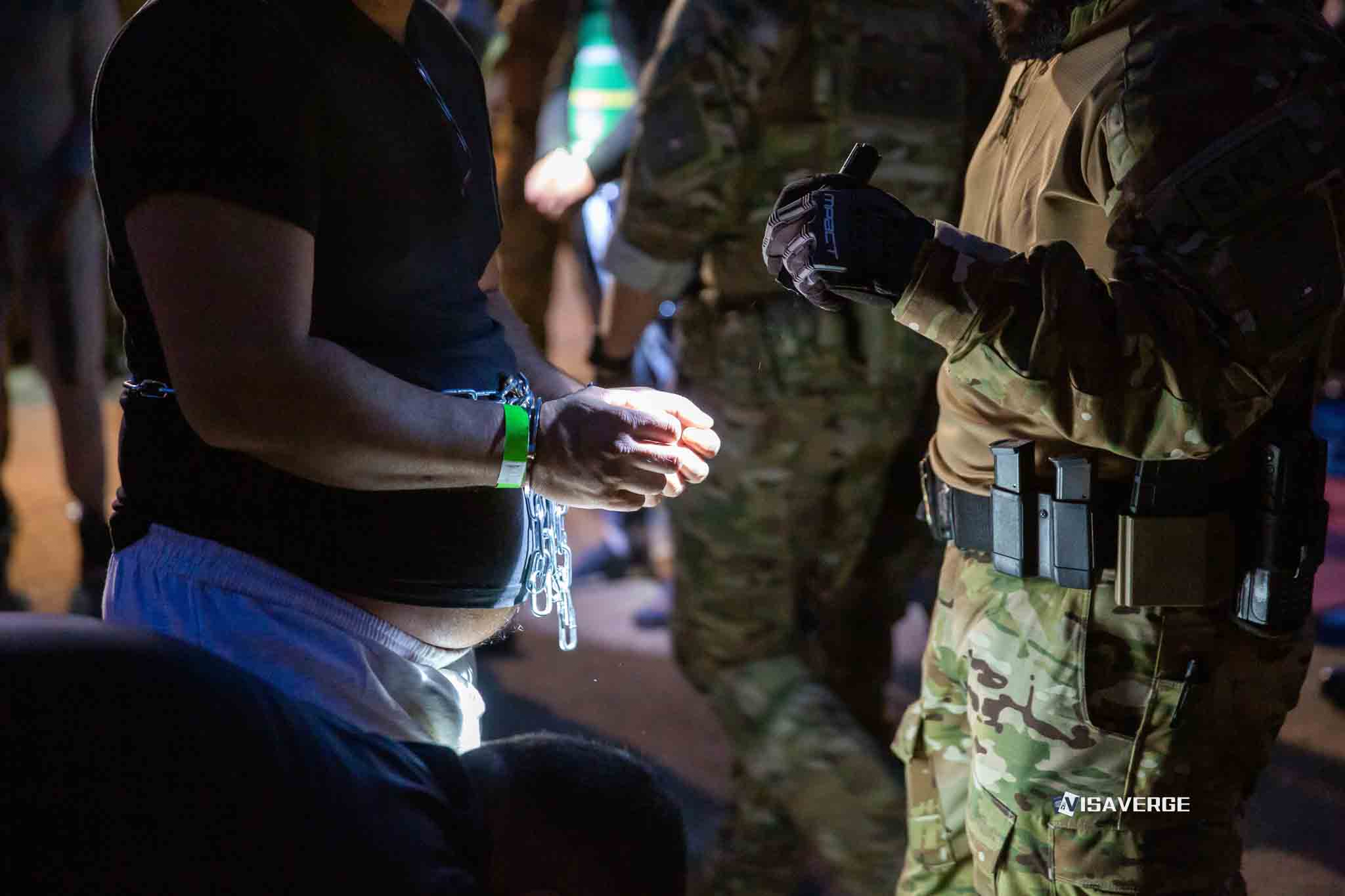
By 2026, more than 25 sheriff’s offices and police departments in North Carolina participated in 287(g). Those programs contributed to hundreds of jail-based arrests.
ICE arrests also climbed sharply. Nationwide, officers recorded over 220,000 apprehensions in the first nine months of the term through October 2025, while ICE arrested more than 3,300 individuals in North Carolina from January 20 to October 15, 2025, double the total for all of 2024.
Daily arrest rates had more than doubled by March 2026 compared with late Biden-era figures, rising from about five per day to higher volumes focused on criminal offenders. Most North Carolina arrests came from jails and prisons.
The broader enforcement push has raised fears that activity could spill into classrooms, church parking lots and school pickup lines. High-profile operations such as “Operation Charlotte’s Web“ in November 2025 produced 425 arrests in Charlotte alone, with hundreds more in Raleigh and Durham.
Schools Under the New Policy
At schools, the legal picture changed quickly after the federal rollback. ICE no longer needs special permission tied to sensitive locations policy, but school officials can still demand that agents show credentials and warrants before entering non-public areas.
Public schools remain obligated to educate children regardless of immigration status under the Supreme Court’s Plyler v. Doe (1982) ruling. Districts such as Charlotte-Mecklenburg Schools have trained staff to ask for judicial warrants, notify parents when agents arrive and refuse consent to searches without proper documentation.
No widespread reports had confirmed school-based arrests in North Carolina as of March 2026. Even so, the possibility has driven districts, parents and advocates to prepare for encounters.
Charlotte-Mecklenburg Schools serves more than 140,000 students from 175 countries, including nearly 21,000 potentially affected by enforcement. District leaders have warned of rising absenteeism and family fears around school drop-off and pickup.
Faith leaders have responded by placing clergy at schools during pickup times as what the source described as “human deterrents” after reports of ICE activity nearby. Community trainings in Charlotte have drawn hundreds of people seeking guidance on how to verify warrants and support neighbors.
For families, the practical effect reaches beyond the school gate. Undocumented students still have the right to attend school, but absences driven by fear can trigger truancy problems, even as districts offer flexibility.
Advocates have warned that persistent absenteeism can cause long-term educational damage. They have also pointed to higher dropout risks among mixed-status families.
Churches and Places of Worship
Churches face a similar change. Places of worship are no longer presumptively off-limits, and ICE can now operate on or near church property under the revised policy.
That has unsettled a long sanctuary tradition. Since 2017, more than 50 cases had involved migrants seeking refuge in churches, but the January 2025 rollback weakened the practical protection that tradition once offered.
In May 2025, armed ICE agents reportedly staged at Central United Methodist Church in Charlotte during preschool pickup. No detentions occurred, but faith groups condemned the operation as a “chilling effect” and said it violated calls to “welcome the stranger.”
Jennifer Copeland, executive director of the North Carolina Council of Churches, urged ICE to avoid sacred properties. More than 250 arrests statewide since late 2025 have led some congregants to stop attending services, while churches have posted signs telling agents that they need judicial warrants for entry.
More than 250 faith leaders have publicly denounced the crackdown. Republican state leaders have backed the broader enforcement campaign, while Democrats have opposed it, deepening a political divide over how North Carolina should work with ICE.
Legal Rights During ICE Encounters
Legal rights during encounters remain central for schools, churches and families. People can remain silent when agents ask about immigration status, and ICE cannot enter homes or private buildings without consent or a judicial warrant.
That distinction matters in both religious and educational settings. Administrative ICE warrants do not carry the same authority for entry into private spaces as judicial warrants.
Churches have advised staff and members to document encounters from a safe distance and contact legal aid if agents appear. Groups have also organized volunteer networks to monitor enforcement activity and spread alerts.
Siembra NC trained more than 4,000 volunteers by late 2025 to monitor and support communities through tools including the OJO Obrero app, which maps agent sightings. In Charlotte, more than 1,000 people volunteered after “Operation Charlotte’s Web.”
Know-your-rights workshops have multiplied across the state. Churches in Charlotte have hosted events drawing hundreds of people, and organizations have also worked to counter false alarms, including a 2025 fake ICE truck hoax in Durham that spread panic.
Preparing Families and Communities
Mixed-status families have focused on emergency planning. Advocates have urged parents to prepare powers of attorney for children, gather proof of U.S. citizenship for family members who have it and designate guardians in case parents are detained.
The enforcement climate also touches local government. In Durham, Mayor Leo Williams has said city police will not act as extensions of ICE, even as state law has pushed broader cooperation in jails and state custody.
House Bill 318 (2026) added to that trend by further standardizing residency checks in state custody. The measure signaled that North Carolina’s state-level enforcement push would continue into 2026.
Mental health strain, avoidance of services and economic effects in immigrant-heavy sectors have followed. Families have adjusted routines, sought legal help and leaned more heavily on neighborhood and faith networks.
The atmosphere has become especially tense around institutions once viewed as safe. Schools must still educate all children, and churches can still insist on judicial warrants for entry into private spaces, but the blanket federal restraint that once covered those settings is gone.
For administrators, that has turned protocol into frontline policy. School staff now prepare for unannounced visits, and pastors weigh how to protect congregants while keeping doors open.
For families, the stakes are immediate. Parents have been told to carry school dismissal authorization forms, learn pickup procedures and avoid leaving children home alone.
North Carolina’s enforcement numbers help explain the urgency. From May-October 2025, the state recorded 17.4 ICE arrests per 100,000 residents.
Frank Garcia of ICS framed the anxiety in daily terms. “No one should worry about safety at school, doctor’s, or church.”
That concern now sits at the center of the debate over sensitive locations in North Carolina. ICE can arrest people at schools and churches under current federal policy, but communities across the state have built their response around one premise: knowing the rules and asserting legal rights before an encounter turns into a detention.