- Federal authorities detained Annie Ramos at Fort Polk, Louisiana, despite her marriage to an Army Staff Sergeant.
- A 2005 in absentia removal order remains the primary legal barrier preventing her from securing status.
- Military service no longer guarantees protection from arrest under current Department of Homeland Security enforcement policies.
(LOUISIANA) — Federal authorities detained Annie Ramos after she arrived at Fort Polk, Louisiana, with her husband, U.S. Army Staff Sgt. Matthew Blank, in a case that has put new attention on the risks facing mixed-status military families.
Ramos, a Honduran-born 22-year-old, was at the base as the couple tried to begin military-benefits processing and take steps toward a green card. The case has drawn attention because it shows how ICE Detention can still reach a military spouse even when the family is pursuing an immigration path tied to marriage and military service.
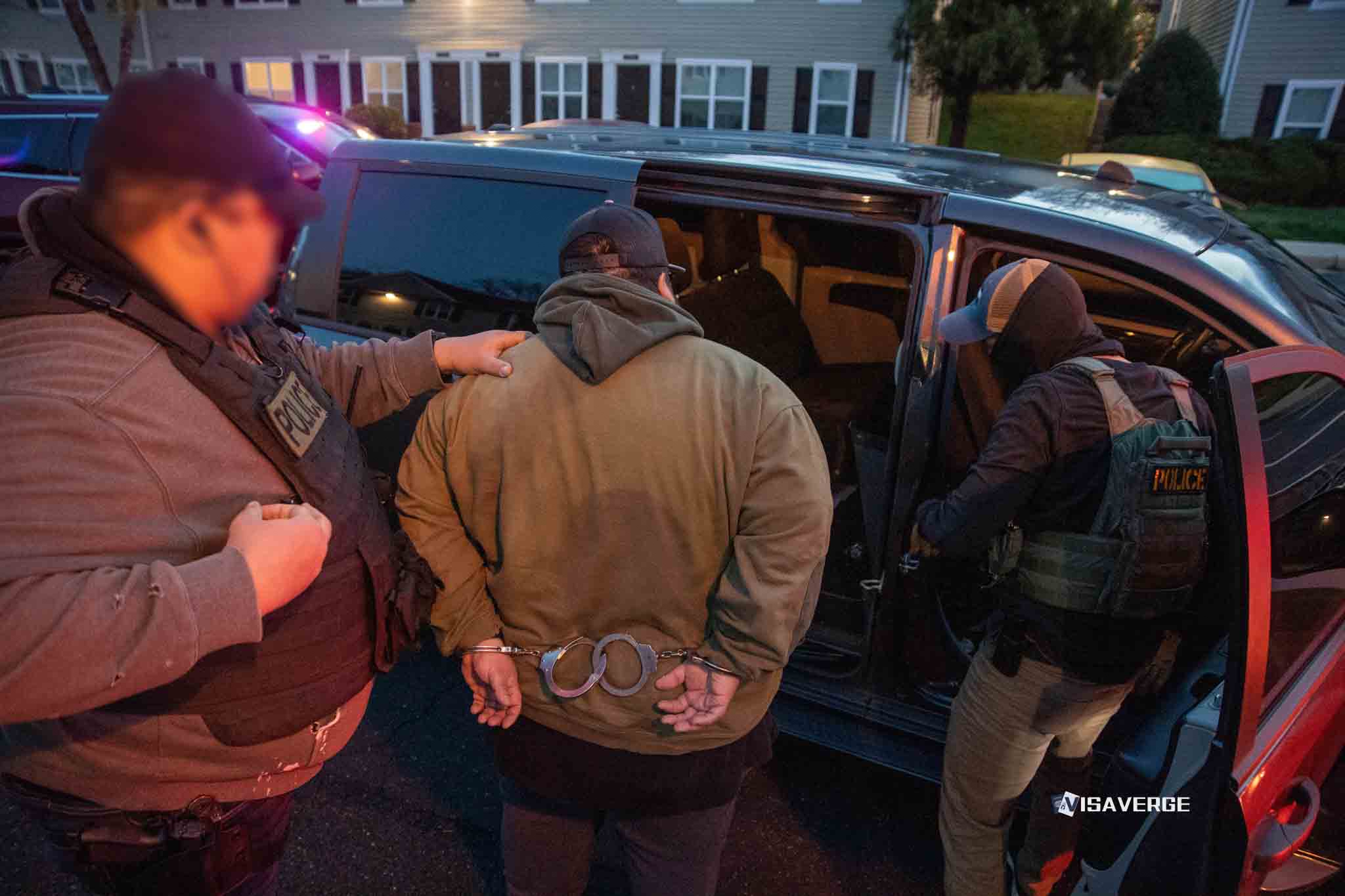
DHS said Ramos entered the United States in 2005, that her family missed an immigration hearing that year, and that a final removal order followed. The department said, “She has no legal status to be in this country,” and that the administration would not “ignore the rule of law.”
That sequence matters far beyond one family. For undocumented spouses of U.S. service members, the legal danger often turns less on the marriage itself than on whether an old removal order is still active, whether the person was ever formally admitted or paroled, and whether any military-family relief was secured before contact with enforcement authorities.
In immigration court, an in absentia removal order is issued when a person misses a hearing. EOIR says there is no direct appeal from that order.
The main remedy is a motion to reopen and rescind it. In removal proceedings, that motion must show exceptional circumstances, lack of proper notice, or that the person was in custody through no fault of their own.
EOIR also says lack-of-notice or custody-based motions may be filed at any time. Removal is automatically stayed while a motion to reopen to rescind an in absentia order is pending before the immigration judge.
For families, that legal structure can collide with assumptions about marriage-based immigration. A U.S. citizen marriage does not erase a final removal order, and it does not automatically stop authorities from making an arrest before eligibility questions are sorted out.
That is the lesson many military households miss. A pending green card strategy may exist on paper, but an old order can still control what happens first.
Ramos’ case also highlights the narrow reach of military-family protections. USCIS offers discretionary options for certain family members of active-duty service members, reservists, veterans and some enlistees, including parole in place and deferred action.
Those options extend to spouses, widow(er)s, parents, sons and daughters of qualifying military members. USCIS says military parole in place may be granted in one-year increments.
Even so, those protections are discretionary. They are not automatic, and they do not resolve every procedural problem in a case.
Where an old removal order already exists, a USCIS filing may not be enough by itself. Families may need a court strategy and a benefits strategy at the same time, because the prior order and the current application can move on separate tracks.
That distinction can be hard to see from outside the system. A household may believe a marriage to a U.S. citizen service member creates a straightforward path, only to find that older court history still drives the case.
The enforcement climate has also changed. DHS ended a 2022 policy that treated military service by an immediate family member as a “significant mitigating factor” in enforcement decisions.
A newer policy states that military service alone does not exempt noncitizens from immigration consequences. That means service ties may still help, but they no longer guarantee protection from arrest, detention or renewed case activity.
For mixed-status families on or near military installations, that change carries a direct message. Service in the family may support a request for discretion, but it does not place the noncitizen relative outside the enforcement system.
Ramos’ immigration history includes another point that can cause confusion inside families. She applied for DACA in 2020, and the application remained unresolved amid litigation over the program.
That stalled history matters because a pending or unresolved DACA application can create false confidence. Being described socially as a Dreamer does not itself provide legal status or prevent enforcement.
Families often group together several facts that feel protective: a long U.S. residence, entry as a child, a U.S. citizen spouse and military affiliation. Yet those facts do not necessarily cancel a missed hearing from years earlier or a final removal order entered after that hearing.
For military spouses and fiancés, the first question is often not whether a petition can be filed. It is whether any prior immigration court record exists.
That means checking for a missed hearing, an old Notice to Appear or a removal order that may have been entered in childhood. Those issues can stay legally potent for years until a judge reopens and rescinds the order.
Families often discover that history late. A base visit, a worksite check, a traffic stop or a USCIS filing can prompt a deeper records review and bring an old case back into focus.
The second question is different, and many households blend it into the first. “Can we file an I-130?” is not the same as “Can the spouse safely adjust status now?”
A marriage petition may be approvable while the noncitizen spouse still faces detention risk, inadmissibility issues or a court-order problem that must be resolved first. Ramos’ detention shows how a green-card plan can appear viable while enforcement exposure remains immediate.
Military-family relief can still be part of the answer. USCIS confirms that parole in place and deferred action exist for some relatives of military members.
But those forms of relief require a full screening of the case posture. Court history, unlawful entry, prior orders and any criminal or fraud issues can all affect what should happen first and where.
Timing also matters. Relief pursued before enforcement contact can look very different from relief sought after an arrest.
In cases involving in absentia orders, notice issues may become central. EOIR says lack of proper notice is one of the grounds for rescinding such an order.
A motion based on lack of notice may be filed at any time. For long-settled families, that can be the legal hinge between immediate danger and a real chance to reopen the case.
That is why old court paperwork matters so much. A missed hearing from childhood may sound like a distant administrative event, but in practice it can shape detention risk decades later.
The Louisiana case has also sharpened a broader policy debate about military households. When a spouse appears for benefits processing or begins steps to regularize status and ends up in custody, the system sends a message about the risks of coming forward.
Advocates have warned that this dynamic affects morale and readiness. The concern is not only legal. It touches daily life for families who must decide whether seeking lawful status could trigger detention first.
That pressure falls hardest on mixed-status households trying to comply with the system while navigating old records they may not fully understand. A spouse may assume marriage to a service member opens the door to stability, only to find that a prior removal order turns the encounter into an enforcement event.
The case also shows the limits of informal assumptions that once circulated among military families. Some households believed service ties would discourage arrest or detention, especially when the family was trying to move toward legal status.
Current policy does not support that assumption. Military service by a relative may count in discretionary decisions, but it does not exempt a person from immigration consequences.
For lawyers and families alike, the practical lesson is blunt. Before treating marriage, military affiliation or a pending application as protection, the underlying court history must be checked closely.
That review starts with the oldest parts of the file, not the newest. A recent petition or benefits appointment may matter less at the moment of contact than a removal order issued years earlier after a missed hearing.
The legal and emotional stakes can diverge sharply. A family may see itself as taking steps toward compliance, while the government sees an unresolved order that remains enforceable until a judge changes it.
That gap between expectation and legal reality sits at the center of Ramos’ case. Her detention did not create the rule that an old in absentia order can outweigh a marriage-based strategy and a military connection. It showed how quickly that rule can surface.
For mixed-status military households, the message is hard to miss. Marriage to a U.S. citizen, service in the family and a pending plan for legalization may all matter, but none of them automatically neutralizes an old removal order.