- ICE agents detained Ever Alvarenga Rios following a vehicle collision during a targeted arrest operation in Baltimore.
- Conflicting reports emerged regarding injuries and legal access after the suspect and two officers were hospitalized.
- Maryland Senator Chris Van Hollen criticized the detention conditions and alleged due process violations involving attorney access.
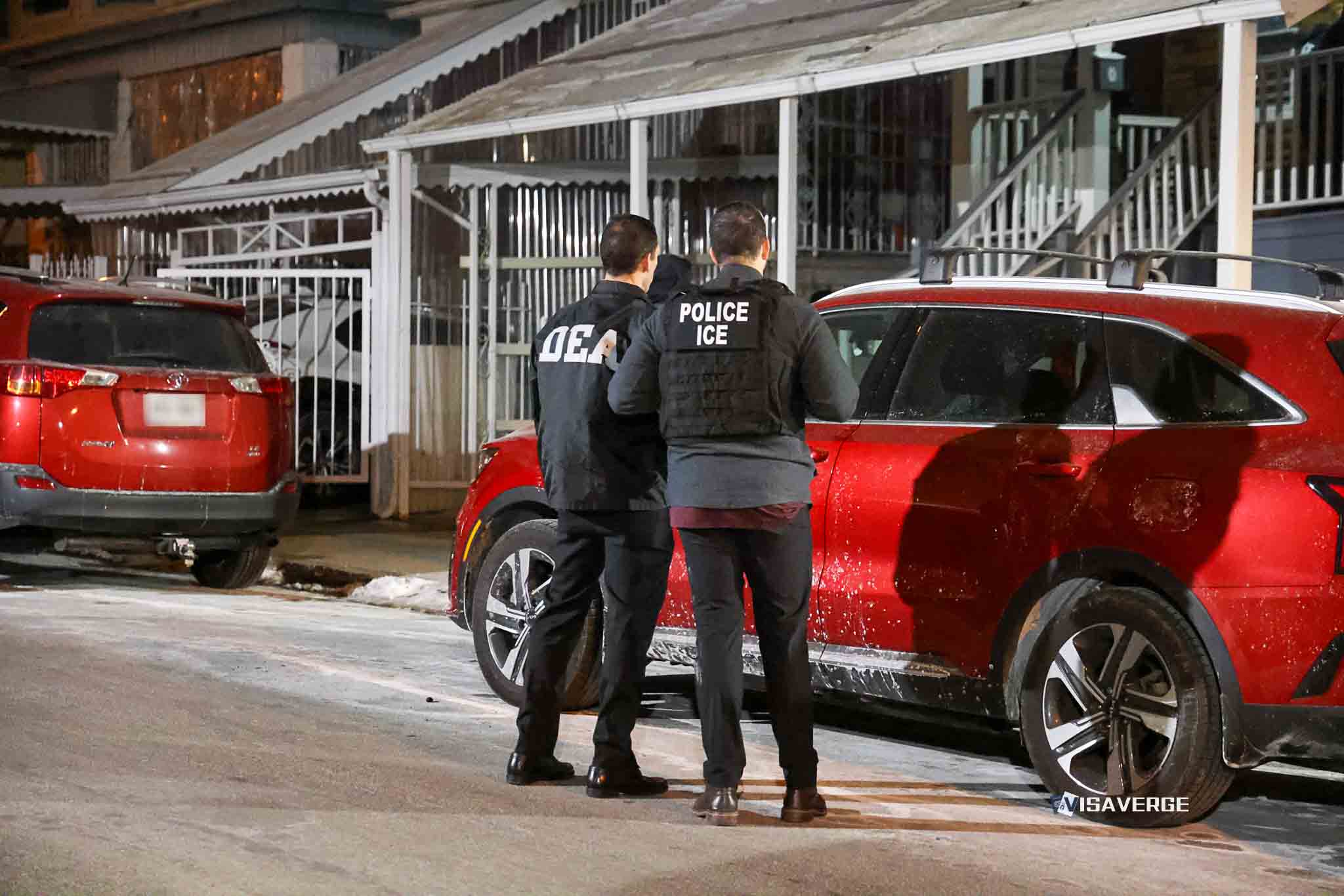
(BALTIMORE, MARYLAND) — U.S. Immigration and Customs Enforcement officers detained Ever Alvarenga Rios after a crash involving ICE agents in Baltimore on April 2, 2026, at approximately 7:36 a.m. on the 200 block of South Haven Street in the Highlandtown neighborhood.
Rios, identified by ICE as a 32-year-old Honduran national with a final order of removal, remained in ICE detention as of April 10, 2026. The agency said officers had launched a targeted arrest operation when the collision occurred.
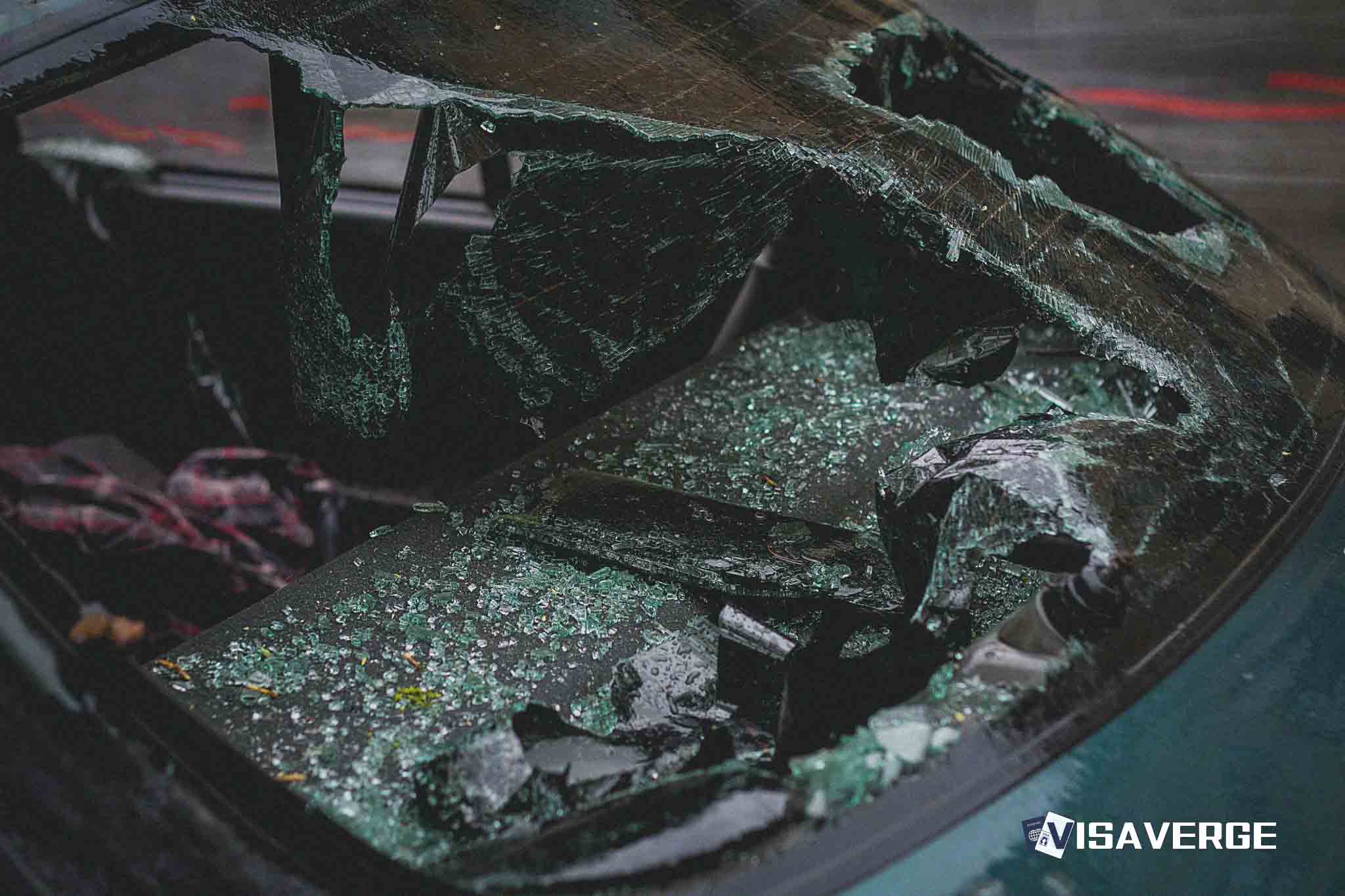
Baltimore Police confirmed officers responded to a two-vehicle crash involving a DHS-operated vehicle. Police said both drivers suffered injuries and were taken to hospitals, and they classified the injuries as minor.
ICE Baltimore Acting Field Office Director Vernon Liggins said the operation focused on Rios, who entered the U.S. in 2014, was released under the Obama administration, and received a final order of removal from a federal immigration judge in 2018. That immigration history has become central to the sharply different accounts from federal officials, Rios’ lawyers and his family.
Federal officials described the encounter as an enforcement action against a man already under a final order of removal. Attorneys representing Rios and a Democratic senator from Maryland cast it as a case raising questions about injuries, detention conditions and access to counsel.
The clash over those issues unfolded after the morning crash in Southeast Baltimore, where the street-level details quickly gave way to a wider political and legal dispute. At issue are both the events of the collision itself and what happened to Rios after he was hospitalized and then transferred into federal custody.
DHS said Rios drove recklessly, ignored a vehicle stop, slammed on his brakes causing a multi-car pileup, attempted to flee on foot and disobeyed law enforcement commands. According to the department, two ICE officers were injured and required hospital treatment.
Liggins praised the officers’ conduct and rejected allegations that agents cut Rios off from outside contact. “Our officers displayed exceptional training and professionalism. Any claims that the alien in custody was denied access to his family or legal counsel are completely false,” he said.
Acting Assistant Secretary Lauren Bis offered an even harsher account of the arrest and its aftermath. “This illegal alien broke our laws, resisted arrest, sent two ICE law enforcement officers to the hospital, and endangered the general public,” Bis said.
Rios’ attorneys and relatives disputed that version and said ICE agents caused the crash by violently rear-ending his white van. They said the impact left him with a concussion, an arm fracture requiring a cast, knee brace needs, and injuries to his head, chest, back, and hands.
Clarissa Lindsey, one of his attorneys, said the case raised constitutional concerns beyond the physical injuries. She alleged ICE denied access to counsel at the hospital and later at the holding facility, calling it a “due process violation under the 5th and 14th amendments.”
Lindsey also said it remained uncertain whether all of Rios’ injuries came from the crash itself or from physical interaction with agents after the vehicles stopped. That allegation has added another layer to the dispute over what happened on South Haven Street and whether force used during the arrest will face further scrutiny.
Sen. Chris Van Hollen, a Maryland Democrat, publicly weighed in on the case and highlighted both Rios’ injuries and what he described as restrictions on attorney access. Van Hollen posted on X that Rios, an asylum seeker driving to work and seeking citizenship for eight years, suffered significant injuries and was denied private attorney meetings after his detention.
That public intervention from one of Maryland’s U.S. senators pushed the matter beyond a local traffic collision and into a broader debate over immigration enforcement tactics. It also amplified attention on how federal officers conduct targeted arrests in populated neighborhoods during morning commuting hours.
The location itself added to that focus. The 200 block of South Haven Street sits in Baltimore’s Highlandtown neighborhood, an area where a crash involving federal agents, a white van and multiple vehicles quickly drew notice because of both the injuries and the immigration enforcement backdrop.
Police and federal officials also differed in emphasis, even where some facts overlapped. Baltimore Police described a two-vehicle crash with minor injuries, while DHS said Rios’ driving caused a multi-car pileup and sent two ICE officers to the hospital.
Neither account softened the immediate outcome for Rios. After receiving treatment at Johns Hopkins Bayview Medical Center, he was discharged late Sunday, April 6, 2026, and transferred directly into ICE custody at the Baltimore holding facility.
He received medication on Monday, according to the account from his side. By Friday, April 10, 2026, he was still being held by ICE.
His detention status left unresolved what, if anything, would happen next beyond the existing final order of removal. No updates had emerged on removal proceedings or on any new charges beyond the final order already reported.
That lack of public movement on the legal front kept attention fixed on the collision, the injuries and the conditions of detention. For ICE, the episode remained an example of officers carrying out a targeted arrest against a person the agency said had already been ordered removed. For Rios’ lawyers and family, it stood as a test of whether due process protections remained intact once he was taken into custody.
The timing also sharpened interest in the incident because it was at least the second ICE-involved crash in Maryland within a week. The earlier incident occurred in Annapolis on April 1, 2026, and no one was injured.
Taken together, the two episodes raised fresh scrutiny over enforcement operations on public roads. In Baltimore, that scrutiny centered on a single detainee, Ever Alvarenga Rios, whose immigration history, medical treatment and final order of removal now sit alongside competing claims about how agents carried out an arrest in the Highlandtown neighborhood.
For residents following the case, the dispute has not turned on one question alone. It has become a set of overlapping ones: how the crash began, how severe the injuries were, whether access to counsel was blocked, and how federal immigration enforcement unfolds when an arrest operation collides with rush-hour traffic on a Baltimore street.
ICE has answered those questions by pointing to the conduct of its officers and to Rios’ own actions behind the wheel and after the crash. His lawyers and family have answered by pointing to his injuries, his hospital treatment and what they describe as barriers to confidential legal access after he entered custody.
Those competing narratives remain unresolved. What is clear is that the April 2 encounter on South Haven Street ended with Rios in federal detention, two ICE officers sent for hospital treatment, and a Baltimore arrest operation turning into one of the most closely watched immigration enforcement incidents in Maryland this month.